
Transitioning a child from a crib to a toddler bed is a major developmental milestone that requires careful attention to structural safety. While many brands market their products with appealing designs and promises of security, parents must look beyond aesthetic appeal and promotional claims. Evaluating a toddler bed involves analyzing physical design elements, verifying international safety certifications, and understanding how materials behave under daily use.
In Singapore, where families navigate various imported furniture brands and local retail options, understanding these safety benchmarks is essential. A safe transition relies on selecting a bed that physically prevents falls, eliminates entrapment hazards, and uses non-toxic materials that do not compromise indoor air quality. By focusing on verifiable specifications and structural standards, you can make an informed decision that protects your child throughout their early years.
Key Safety Features to Evaluate Across Brands
Guardrails are the primary defense against nighttime falls, making them a critical feature to inspect when comparing brands. A safe guardrail must be high enough to prevent a rolling child from tumbling over the edge, typically extending at least 12.7 centimeters above the top of the mattress. The length of the guardrail is equally important; it should cover at least half the length of the bed to provide security while still leaving a safe exit point at the foot of the bed.
Products mentioned in this guide
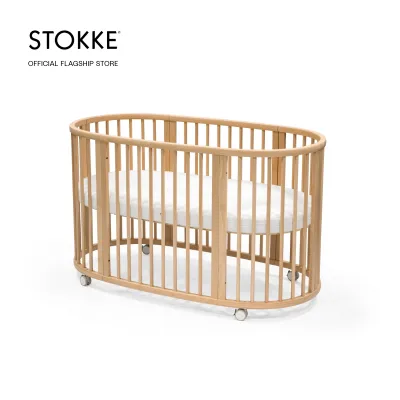
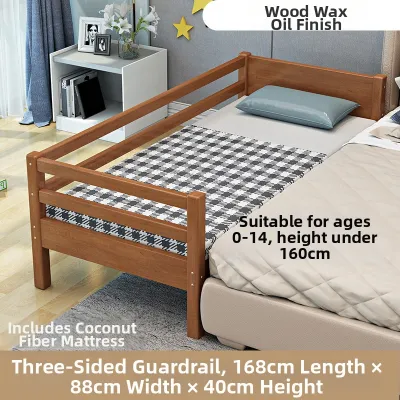
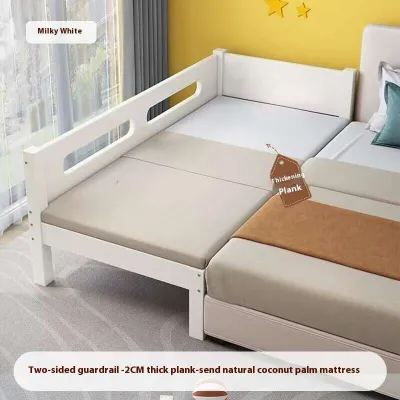
Prices are valid at publication and may change. Please refer to the product page for the latest price.
The spacing between guardrail slats or spindles must be strictly evaluated to prevent head or limb entrapment. Industry safety guidelines dictate that the gap between slats must be less than 6 centimeters. If the gaps are wider, a toddler’s body could slip through, leaving their head trapped, which poses a severe safety hazard. Verify these dimensions in the manufacturer’s technical specifications before purchasing.
Structural stability is another vital factor, as toddler beds must withstand more than just quiet sleeping. Toddlers frequently climb, jump, and play on their furniture, putting sudden and concentrated stress on the frame. Look for beds with a low center of gravity, ideally with the mattress platform positioned close to the floor to minimize the impact of any accidental falls. The joints of the frame should be reinforced with metal-on-metal hardware, such as barrel nuts and bolts, rather than simple wood screws that can loosen or strip the wood over time.
Weight capacity ratings provide a clear indication of a bed’s structural integrity. While a toddler may only weigh 12 to 18 kilograms, a bed rated for a higher capacity, such as 45 kilograms or more, offers a greater safety margin. This extra capacity ensures the frame can safely support a parent sitting on the edge during bedtime stories or withstand the dynamic force of an active child. Prioritize brands that clearly state their maximum weight limits.
Edge finishing and hardware concealment are subtle details that prevent minor injuries and skin abrasions. Ensure all corners, edges, and joints of the bed frame feature smooth, rounded profiling rather than sharp angles. Furthermore, all assembly hardware must be countersunk or covered with smooth caps so that loose clothing, threads, or hair cannot snag on protruding bolt heads.
Understanding Safety Certifications and Material Standards
Navigating the world of safety certifications requires distinguishing between mandatory regional laws and voluntary third-party testing. In the global furniture market, two primary structural standards govern toddler bed safety: ASTM F1821 in the United States and EN 1725 (along with related children’s furniture standards) in Europe. These standards subject bed frames to rigorous laboratory testing, simulating years of use, impact, and load-bearing stress to ensure the frame will not collapse or tip over.

When evaluating a brand, look for explicit statements of compliance with these standards rather than generic “safety tested” claims. Manufacturers who pass these tests can provide a Children’s Product Certificate (CPC) or an official test report. If a brand cannot share this documentation, assume the product lacks independent validation.
Chemical safety is a major concern for parents, as children spend a significant portion of their day inhaling air in close proximity to their bed frame and mattress. Volatile organic compounds (VOCs) emitted from paints, varnishes, and engineered woods can degrade indoor air quality and irritate developing respiratory systems. To mitigate this risk, look for products certified under the Greenguard Gold program. This certification ensures that the furniture meets some of the world’s most stringent standards for low chemical emissions.
For textile components, such as fabric headboards or mattress covers, the OEKO-TEX Standard 100 certification is the global benchmark. This independent testing system verifies that textiles are free from harmful levels of regulated and non-regulated chemicals, including heavy metals, formaldehyde, and allergenic dyes. Similarly, if the bed mattress contains polyurethane foam, ensure it carries the CertiPUR-US certification, which guarantees the foam is manufactured without ozone depleters, PBDE flame retardants, or mercury.
Verify certifications using official public databases, such as the UL SPOT database for Greenguard Gold status or the OEKO-TEX label check tool. Be wary of vague marketing terms like “eco-friendly” or “natural” that lack official certification marks and unique license numbers.
Pre-Purchase and Assembly Verification Checklist
Verify the compatibility of your chosen bed frame and mattress before purchasing. A mismatch in dimensions can create dangerous gaps along the sides, headboard, or footboard. To prevent entrapment, the gap between the mattress and the frame must not exceed 3 centimeters. If you can easily insert more than two fingers in this gap, the fit is too loose.
Review the instruction manual for age, weight, and developmental warnings before use. Most toddler beds are rated for children who are at least 15 months old and can climb in and out independently. Transitioning a child too early increases the risk of falls and unsupervised wandering.
Follow the assembly instructions precisely, using only the provided hardware. Do not substitute missing screws with random hardware, as incorrect thread pitches or lengths can weaken joints. Ensure all wooden dowels are fully seated and metal bolts are tightened securely without cracking the wood.
Before use, shake the assembled frame from multiple angles to check for wobbling or loose joints. Inspect the surface for splinters, rough patches, or exposed hardware. In humid climates like Singapore, re-check and tighten all structural bolts after two to three weeks of use as the wood adjusts.
Decision Framework: Choosing the Right Toddler Bed
Select a bed that balances your child’s physical development, household layout, and the frame’s structural characteristics. For highly active children who climb or roll aggressively, a low-profile floor bed frame is ideal. These designs eliminate fall risks and allow easy entry and exit.
If your child transitions early or is highly active, prioritize a certified, solid wood model with reinforced joints. Hardwoods like beech, birch, or rubberwood offer superior density and resistance to splitting compared to particleboard. This structural resilience ensures a longer, safer product lifespan.
A basic, compliant model is suitable for short-term use, supervised naps, or temporary lodging. In these scenarios, a simpler design is acceptable if it carries essential safety certifications and passes physical inspection. Never compromise on secure guardrails and non-toxic finishes.
Measure your nursery space carefully before purchasing. Position the bed away from windows, electrical outlets, and blind cords to eliminate strangulation and fall hazards. Ensure a clear path around the bed so your child can safely navigate the room at night.
Frequently Asked Questions (FAQ)
Is a convertible crib safer than a standalone toddler bed?
Convertible cribs and standalone toddler beds are both safe options, provided they meet their respective international safety standards. A convertible crib offers excellent structural stability because it utilizes the same heavy-duty frame and solid base as the original crib. However, because convertible cribs retain the larger footprint and higher profile of a crib, they may sit higher off the ground than dedicated toddler beds. Standalone toddler beds are often designed specifically to be very low to the floor, which can make them easier and safer for younger or smaller toddlers to navigate independently.
What is the maximum safe gap between the mattress and the bed frame?
The maximum safe gap between the mattress and any part of the bed frame is 3 centimeters (approximately 1.2 inches). Any gap wider than this creates a risk of entrapment, where a child’s arm, leg, or head could become wedged between the mattress and the frame. To ensure a safe fit, always purchase a mattress that matches the exact dimensions specified by the bed frame manufacturer. You can verify the fit at home by attempting to slide your fingers between the mattress and the frame; if you can easily fit more than two fingers into the gap, the mattress is too small and should not be used with that frame.

Community discussion
Share your experience or ask a question. Comments are reviewed before publication.