
Finding the right diaper for a growing baby is a journey of trial and observation for many parents in Singapore. As infants transition into medium-sized diapers, typically around the time they become more active, finding a balance between reliable leak protection and skin comfort becomes a priority. The market offers several prominent options, with Rascals M tape diapers increasingly compared alongside established household names like Pampers and Huggies.
Choosing between these brands is rarely about finding a single, universally ideal option. Instead, the ideal choice depends heavily on your baby’s unique body shape, skin sensitivity, and your daily caregiving routine. A diaper that fits one infant perfectly might lead to frequent leaks for another due to differences in thigh circumference or waist proportions.
To make an informed decision, caregivers must evaluate these products across three core dimensions: absorbency, fit, and overall value. By understanding how each brand approaches these design elements, you can select a diaper that keeps your baby dry and comfortable throughout the day and night.
Products mentioned in this guide
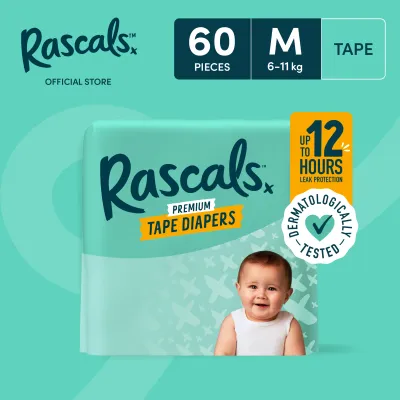
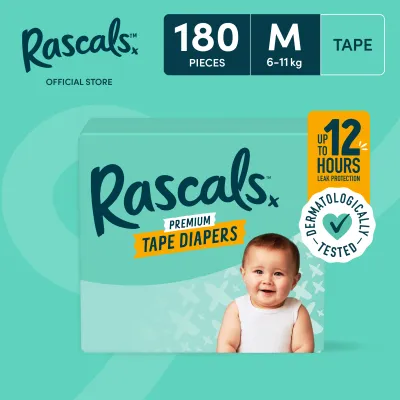
Prices are valid at publication and may change. Please refer to the product page for the latest price.
Core Criteria for Comparing Tape Diapers
When evaluating tape diapers, absorbency is the first line of defense against discomfort and skin irritation. However, absorbency is not merely about how much liquid a diaper can hold in total. Caregivers must look at absorption speed—how quickly the core draws moisture away from the skin—and surface dryness, which refers to how dry the inner lining feels to the touch after use. In Singapore’s warm and humid climate, a diaper that remains damp on the surface can quickly lead to skin irritation or diaper rash.
Fit is the second critical pillar, directly influencing how well a diaper prevents leaks. A diaper’s fit is determined by its overall cut, the elasticity of its waistband, and the design of its leg cuffs. Leg cuffs, or gathers, act as barriers to contain liquid, while the waistband ensures the diaper stays secure as your baby rolls, crawls, or sits. If the fit is too loose, leaks are inevitable; if it is too tight, it can cause discomfort and leave red marks on your baby’s delicate skin.
Finally, material breathability and skin compatibility are essential for daily comfort. Because babies wear diapers almost continuously, the materials used must allow air to circulate to minimize heat and moisture buildup. Caregivers should pay close attention to how their baby’s skin reacts to different material blends, fastening tapes, and elastic components, as sensitivities can vary widely from one child to another.
How to Evaluate Absorbency and Leak Protection
To truly understand how a diaper performs, caregivers should rely on real-world observation rather than marketing claims. One of the most practical ways to evaluate absorption speed and surface dryness is to check the diaper’s inner lining during a routine change. After your baby has worn the diaper for a few hours, gently press a dry tissue against the inner surface. If the tissue remains dry, it indicates the core is successfully locking moisture away; if the tissue dampens, the surface dryness may not be sufficient for your baby’s skin.

Monitoring for leaks during different activities is another crucial test. Observe how the diaper holds up during active daytime play when your baby is constantly moving, as well as during overnight sleep when they remain in one position for longer periods. Leaks that consistently occur around the leg gathers often suggest that the cuffs are not sealing properly against your baby’s thighs, while leaks at the back of the waistband during sleep may point to a need for a wider back design or better elastic tension.
Additionally, always inspect the manufacturer’s packaging for details on their specific absorbent core technologies. Many modern diapers utilize specialized channels or pocket designs to distribute liquid evenly and prevent sagging. You should also check for the presence of a wetness indicator—a color-changing strip on the outside of the diaper—which provides a quick visual cue for when a change is needed, helping you avoid unnecessary changes or prolonged exposure to wetness.
Checking Fit and Comfort for Medium-Sized Babies
As babies reach the medium size range, their body shapes can vary significantly; some babies have rounder bellies, while others have chubbier thighs. To ensure a proper fit, caregivers should perform a simple two-finger check. Once the diaper is fastened, you should be able to easily slide two fingers under the waistband and around the leg openings. If the space is too tight, the diaper may restrict movement or cause chafing; if it is too loose, leaks are highly likely.
Another key indicator of fit is the presence of red marks. When changing your baby, inspect their thighs, hips, and waist. Persistent red marks or indentations suggest that the elastic gathers or fastening tapes are too restrictive, indicating that the diaper’s cut may not suit your baby’s current proportions. Different brands employ distinct design philosophies: some favor a wider back and higher waistband to prevent blowouts, while others focus on contoured leg openings that allow for greater freedom of movement.
Because sizing standards are not uniform across brands, it is essential to verify the manufacturer’s recommended weight range for size M on the physical packaging before purchasing. A medium size in one brand might accommodate a weight range of 6 to 11 kilograms, while another brand might specify 7 to 12 kilograms. Always use these guidelines as a starting point, but let your baby’s physical comfort and leak patterns be the final guide.
Calculating Value and Cost per Diaper
Managing household expenses is a key consideration for families in Singapore, and diaper costs can accumulate quickly. To compare the financial value of different brands objectively, caregivers should calculate the true cost per diaper rather than comparing total pack prices. The formula is straightforward: divide the total price of the pack in S$ by the number of diapers contained inside. This unit price allows for an accurate comparison across different pack sizes and retail options.
The cost per unit can vary significantly depending on where and how you purchase them. Buying in bulk on major e-commerce platforms or during promotional events often yields substantial savings compared to purchasing single packs at local supermarkets. Many online marketplaces also offer subscription services or bundle discounts that can lower the ongoing cost of your preferred brand.
However, calculating value goes beyond the initial purchase price. Caregivers must factor in the diaper’s actual performance. For instance, a slightly more expensive diaper that offers excellent absorbency and prevents leaks might require fewer changes throughout the day and eliminate the need for extra laundry from leaks. Conversely, a cheaper diaper that requires frequent, premature changes or leads to leaks may end up costing more in both money and time. True value is achieved when the cost per diaper aligns with reliable performance and skin comfort.
Decision Framework: Choosing the Right Brand for Your Baby
Selecting the right diaper brand involves matching your baby’s physical needs and your family’s budget with the specific characteristics of each product. Because there is no one-size-fits-all solution, caregivers can use a structured decision framework to guide their choice.
You might choose Rascals M tape diapers if your baby responds well to their specific material blend and you find that their cut fits your baby’s body shape without causing leaks. This option is often suitable for caregivers who appreciate a diaper that balances modern design features with a competitive price point, especially when purchased during online promotional events.
On the other hand, Pampers may be the preferred choice if your primary focus is a specific type of surface dryness technology designed to keep moisture away from the skin during long periods, or if your baby’s waist-to-thigh ratio is better accommodated by their particular contoured fit. This brand is often favored by parents who prioritize established, widely available options with a history of reliable performance.
Alternatively, Huggies could be the right fit if your baby requires a distinct leg cuff design to prevent side leaks, or if you prefer the specific grip and placement of their tape fastening system. Their design is often well-suited for babies who are highly active and need a secure, flexible fit that moves with them.
Regardless of the brand you consider, if your baby has highly sensitive skin or is prone to severe diaper rash, it is crucial to verify the materials first. In such cases, consult a qualified pediatrician for professional guidance. It is also highly recommended to purchase a small trial pack to test the diaper’s compatibility with your baby’s skin before committing to bulk purchases.
Frequently Asked Questions (FAQ)
How do I know if it is time to size up from M tape diapers?
Knowing when to transition to a larger size is key to maintaining leak protection and comfort. Observable indicators that your baby has outgrown their medium-sized diapers include persistent red marks or chafing around the thighs and waist, frequent leaks that did not occur previously, and difficulty fastening the tapes securely near the center of the waistband. If the diaper looks like a low-rise fit or does not fully cover your baby’s bottom, it is time to check the manufacturer’s weight and size guidelines on the packaging to confirm if a transition to size L is appropriate.
Can I mix different tape diaper brands for day and night use?
Yes, mixing different diaper brands for daytime and nighttime use is a practical strategy used by many caregivers to manage both absorbency needs and household costs. For example, you might choose a highly absorbent, premium brand for overnight sleep to ensure your baby stays dry and undisturbed for longer hours. During the day, when changes are more frequent, you might switch to a more breathable or cost-effective brand. If you adopt this strategy, closely monitor your baby’s skin for any signs of irritation or redness, as switching between different materials and adhesives can sometimes trigger sensitivities.

Community discussion
Share your experience or ask a question. Comments are reviewed before publication.