
Comparing Nino Nana Size S to other budget diapers in Singapore requires looking beyond the price tag to evaluate the exact weight range, physical material labels, and the calculated cost-per-piece. While Nino Nana positions itself with specific eco-conscious and skin-friendly claims, its value compared to traditional budget brands depends on your baby’s unique physical build, how frequently you change them, and your household’s monthly diapering budget. By calculating the cost per piece in S$ and verifying fit indicators, parents can determine whether this diaper or a lower-cost alternative offers the most practical balance of performance and affordability.
Navigating the diaper aisle in Singapore can be overwhelming for new parents, especially with the wide variety of brands claiming superior dryness and comfort. Size S is a critical transition size, often used during the months when a baby’s growth rate is highly variable and their skin remains exceptionally delicate. Choosing a diaper during this stage involves balancing the need for reliable leak protection with the reality of a household budget that must accommodate frequent daily changes.
While budget diapers are highly appealing for their lower upfront cost, they can sometimes differ significantly in material quality, sizing consistency, and overall absorbency. Evaluating Nino Nana Size S against these alternatives is not about finding a single universal winner, but rather about understanding how different design choices affect your baby’s daily comfort and your wallet. This guide provides a structured approach to comparing these options based on observable physical features, practical fit checks, and clear financial calculations.
Products mentioned in this guide
![Nino Nana MegaCase Tape Diapers [Bundle of 4] NB (up to 4kg) | S (4-6kg) | M (6-10kg) | L (9-13kg)](https://img.lazcdn.com/g/p/3fc3b9f5a8fb7ecc76723e5fc4f72abd.png_400x400q80.png_.webp)
Prices are valid at publication and may change. Please refer to the product page for the latest price.
Checking the Size S Weight Range and Fit
Diaper sizes are not universally standardized across the manufacturing industry, meaning a “Size S” from one brand may fit quite differently than a “Size S” from another. Typically, Size S diapers are designed for infants weighing between 3 and 8 kilograms, but the exact weight brackets vary by manufacturer. Parents must carefully inspect the weight guidelines printed on the Nino Nana packaging and compare them directly with the charts of alternative budget brands available in Singapore.
A baby’s unique body shape—whether they have chubby thighs, a round tummy, or a long, lean torso—greatly influences how a diaper fits in real-world conditions. Even if your baby falls squarely within the recommended weight range on the package, a diaper that runs narrow may cause red marks, while a diaper that runs wide or short might lead to frequent blowouts. This makes it essential to look at the physical dimensions of the diaper rather than relying solely on the weight label.
When testing Nino Nana Size S against other budget options, observe the physical fit indicators during active use. Check the leg cuffs to ensure the inner leak guards stand upright and wrap comfortably around the thighs without digging into the skin. The elastic waistband should offer enough stretch to allow a snug fit without restricting your baby’s breathing or movement, particularly after feedings when their tummy expands.
Evaluate the fastening tapes by ensuring they secure symmetrically on the front landing zone. If the tapes sit too far outward near the hips, or if you find yourself pulling them tightly to prevent gaps, it is usually a sign that the diaper is too small. Conversely, if the tapes overlap or the diaper bunches up around the thighs, the diaper is likely too large, which increases the risk of leaks.
Comparing Physical Features and Material Labels
Evaluating budget diapers requires looking past generic marketing buzzwords like “ultra-soft” or “premium dry” to examine the actual material specifications printed on the packaging. High-quality budget diapers often feature a textured top sheet designed to channel liquid away quickly, paired with a breathable back sheet that allows heat and moisture to escape. In Singapore’s hot and humid climate, a diaper’s breathability is a critical factor in maintaining skin dryness and preventing heat rash.

Look closely at the functional design elements of the diaper. A reliable wetness indicator—typically a line that changes color when wet—helps caregivers avoid unnecessary changes while preventing prolonged exposure to moisture. Double-layered leg cuffs provide an extra physical barrier against leaks, which is crucial for active infants who are starting to wiggle and roll.
Examine the fastening system of the diaper. High-quality hook-and-loop tapes can be refastened multiple times without losing their grip, whereas lower-grade adhesive tapes may fail if they come into contact with baby oil or powder.
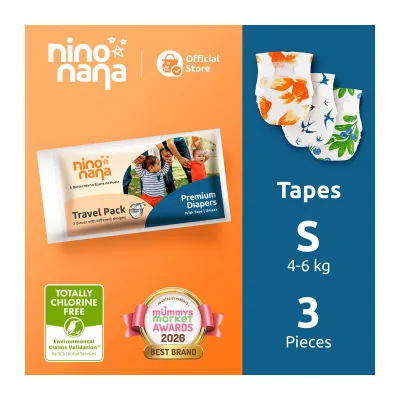
Many brands, including Nino Nana, highlight specific material attributes such as chlorine-free processing, biodegradable components, or hypoallergenic certifications on their packaging. Parents should treat these claims as items to verify independently, checking the manufacturer’s website for official testing standards or third-party certifications rather than taking packaging labels at face value. If your baby has highly sensitive skin, look for diapers free from added fragrances and lotions, as these additives can sometimes trigger contact dermatitis.
Calculating the True Cost Per Diaper in S$
To determine the true financial impact of choosing Nino Nana Size S over other budget brands, parents must calculate the cost per individual diaper rather than comparing the shelf price of a single pack. Because pack sizes vary significantly between brands—some containing 40 pieces and others up to 80—the upfront cost can be highly misleading.
Use a simple formula to find the unit cost: divide the total retail price of the pack by the exact number of diapers inside to get the cost per piece in S$. For example, if a pack costs S$24 and contains 60 diapers, the cost per piece is S$0.40. Perform this calculation for Nino Nana and several alternative budget brands to establish a clear baseline.
Factor in the various purchasing channels and promotional structures common in Singapore. Buying in bulk, setting up recurring subscriptions on local ecommerce platforms, or purchasing during major online shopping festivals can significantly lower the cost per piece. Many local retail chains also offer bundle deals or loyalty points that reduce the long-term expense of diapering.
Consider the absorbency-to-change ratio when evaluating overall value. A lower-priced diaper that has a lower absorbent capacity may require changing every two hours to prevent leaks, whereas a slightly more expensive diaper might keep your baby dry for four hours. If you end up using twice as many cheap diapers per day, the cheaper brand will ultimately cost your household more over the course of a month.
Decision Framework: Choosing the Right Budget Diaper
Selecting the right diaper involves balancing your baby’s physical comfort with your household’s financial boundaries. You may find that Nino Nana Size S is the right choice if its specific weight range matches your baby’s current growth stage, its material features align with your preferences for skin care, and the calculated cost per piece fits comfortably within your monthly budget.
Conversely, an alternative budget brand may be more suitable if your baby’s body shape requires a different fit profile, such as a higher waistband or wider leg openings to prevent leaks. You might also opt for a different brand if you prioritize specific third-party environmental certifications or require a diaper that is more widely available for immediate, last-minute restocking at your neighborhood supermarket.
Regardless of the brand or price tier you choose, always prioritize your baby’s skin health and physical comfort. If you observe persistent signs of friction, redness, diaper rash, or frequent leaks, these are clear indicators that you need to adjust the fit, switch to a different size, or try a different material composition. If skin irritation persists despite changing brands and sizes, consult a pediatrician or qualified healthcare professional for personalized medical advice.
Frequently Asked Questions (FAQ)
How often should I change a budget diaper compared to a premium one?
Diaper changes should be guided by your baby’s comfort, the wetness indicator, or a regular time interval rather than the price tier of the diaper. While some premium diapers feature high-capacity absorbent cores designed for extended wear, budget diapers may require more frequent checks to prevent moisture buildup against the skin. As a general rule, newborn and young infant skin is highly sensitive, so changing the diaper promptly after every bowel movement or when the wetness indicator changes color is essential to maintain skin health, regardless of the brand you use.
Can I mix different budget diaper brands for day and night use?
Mixing different diaper brands for daytime and nighttime use is a highly practical and cost-effective strategy for many families in Singapore. You can safely use a lighter, highly breathable budget diaper during the day when changes are frequent and your baby is active, and transition to a more absorbent diaper for overnight sleep to minimize disruptions. Ensure that both brands fit your baby properly and do not cause skin irritation or allergic reactions when used interchangeably.

Community discussion
Share your experience or ask a question. Comments are reviewed before publication.