
Quick Answer: Is Mamypoko XXL the Right Choice for Your Toddler?
Selecting the right diaper for a growing toddler is a highly individualized decision, as no single brand offers a universal solution for every child. While many parents in Singapore consider Mamypoko XXL a staple for active toddlers, the ideal choice ultimately depends on your child’s unique body shape, skin sensitivity, and whether you need a diaper primarily for daytime play or overnight sleep.
Mamypoko XXL is widely recognized for its stretchy waistband and convenient pant-style design. This configuration is particularly beneficial for mobile toddlers who resist lying down during diaper changes. However, to determine if this brand or an alternative is the most suitable and cost-effective option for your household, you must evaluate several key performance indicators such as fit, absorbency, and overall value.
How to Evaluate XXL Diaper Fit and Comfort
When toddlers reach the XXL size range, their physical activity increases significantly. This makes diaper fit and comfort critical to preventing leaks and skin irritation. To assess the fit of any XXL diaper, start by examining the waistband elasticity. Look for manufacturer descriptions of 360-degree stretch technology or highly flexible waist materials. A well-designed waistband should expand easily when your toddler sits or eats, and contract securely during movement without leaving deep red marks on the skin.
Products mentioned in this guide

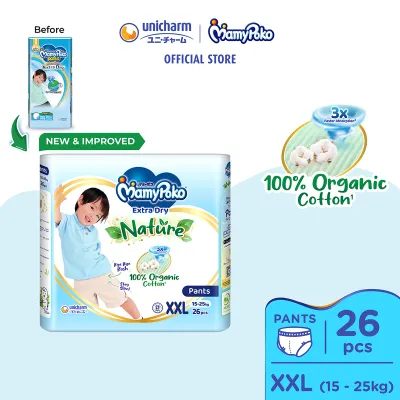
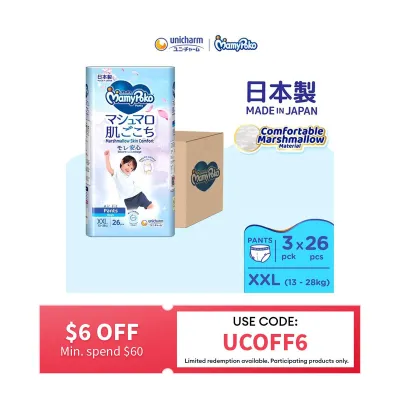

![MamyPoko Air Fit Marshmallow Pants Super Premium Baby Diapers [GIRL] XXL26 (3 Packs) (13 - 28kg)](https://img.lazcdn.com/g/p/9e635e643a164e1d30d3f2a97fbf7113.jpg_400x400q80.jpg_.webp)
![MamyPoko Air Fit Marshmallow Pants Super Premium Baby Diapers [BOY] XXL26 (3 Packs) (13 - 28kg)](https://img.lazcdn.com/g/p/70fae47b949b514995f5835a013094c1.jpg_400x400q80.jpg_.webp)
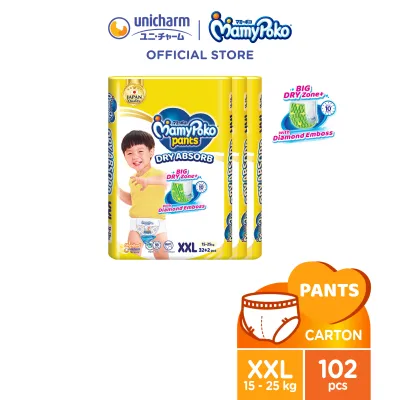
![Mamypoko Airfit Japan Tape & Pants [Carton Sales] - NB to XXL sizes](https://img.lazcdn.com/g/p/c0b1edea94375e8da7368b87443b1644.jpg_400x400q80.jpg_.webp)
Prices are valid at publication and may change. Please refer to the product page for the latest price.

Leg cuff design is another vital area to inspect. Active toddlers require flexible, double-layered leak guards that hug the thighs without causing friction. When changing your toddler, check the inner leg cuffs to ensure they stand upright and wrap comfortably around the thighs. If you notice chafing, red indentations, or frequent leg leaks, the cuff design may not be compatible with your toddler’s leg shape, or it may be time to adjust the sizing.
Singapore’s hot and humid climate presents unique challenges for diaper wearers. Trapped heat and moisture can quickly lead to discomfort and skin issues. When comparing brands, check the packaging for specifications regarding air-flow covers, breathable back sheets, or micro-pores. These features are designed to facilitate air circulation, helping to keep your toddler’s skin cool and dry even during outdoor play.
Sizing transitions should always be guided by physical measurements rather than age milestones. Diaper packaging lists weight ranges (such as 15 to 25 kg for typical XXL sizes), which serve as the primary reference point. Because toddlers distribute weight differently—some having rounder tummies and others thicker thighs—you may need to transition to an XXL size even if your toddler’s weight is on the lower end of the recommended range.
Comparing Absorbency and Leak Protection Standards
Absorbency is the core function of any disposable diaper, yet performance can vary widely between brands depending on their design focus. To compare absorbency standards without relying on vague marketing claims, look for specific core technology indicators on the packaging. Many modern diapers utilize superabsorbent polymers (SAP) and specialized liquid distribution layers. These materials are engineered to quickly draw wetness away from the surface and distribute it evenly throughout the core, preventing pooling and sagging.
It is also helpful to differentiate between daytime and overnight diapering needs. Daytime diapers are often designed to be slimmer and more lightweight, prioritizing freedom of movement and a discreet fit under clothing. In contrast, overnight diapers feature high-capacity absorbent cores designed to secure wetness for up to 10 to 12 hours. If your toddler is a heavy wetter, using a dedicated overnight diaper or a brand known for high-capacity cores during sleep can prevent midnight wake-ups and sheet changes.
To evaluate how well a diaper performs in your daily routine, conduct simple observational checks. Monitor how frequently leaks occur and note when they happen—such as during naps, high-activity play, or car rides. Observe how much the diaper sags when wet; excessive sagging can pull the waistband down and cause gaps. Finally, check your toddler’s skin dryness during changes; the skin should feel dry to the touch, indicating that the core is successfully locking away moisture.
Skin sensitivity must also be factored into your absorbency evaluation. When moisture is held against sensitive skin, the risk of irritation increases. If your toddler is prone to contact rashes, look for labels indicating dermatological testing, hypoallergenic materials, or fragrance-free formulations. Some brands also exclude chlorine processing or optical brighteners, which can be beneficial for highly reactive skin types.
Assessing Value: Calculating Cost and Convenience
Evaluating the true value of Mamypoko XXL versus other brands requires looking beyond the initial price tag of a single pack. Because diaper packaging configurations and sheet counts vary significantly between brands and sizes, comparing the upfront cost can be misleading. Instead, calculate the cost per diaper using a simple formula: divide the total price of the pack by the exact number of diapers inside. For example, a pack costing S$24 containing 32 diapers results in a unit cost of S$0.75 per diaper. This unit cost allows for an accurate, head-to-head financial comparison.
Purchasing channels in Singapore also play a major role in overall convenience and cost. You can find toddler diapers across local supermarkets, official brand stores, and major online marketplaces. While supermarkets offer immediate availability for urgent needs, online marketplaces and official brand stores frequently run promotional campaigns, flash sales, and offer platform vouchers that can significantly lower the cost per diaper.
When trying a new brand or transitioning to XXL, avoid the temptation to buy in bulk immediately. While multi-pack boxes offer a lower unit cost, they present a financial risk if the diaper turns out to be a poor fit, causes leaks, or triggers a skin reaction. Instead, purchase single packs or look for official trial packs. Once you have verified that a specific diaper works well for your toddler, you can safely transition to bulk purchasing.
For long-term savings, explore subscription and bundle deals. Many online retailers and official brand stores offer auto-replenishment services that deliver diapers to your doorstep on a set schedule, often accompanied by a percentage discount. Multi-carton bundles are another excellent way to secure a lower cost per diaper, provided you have adequate storage space in your home and are confident your toddler will remain in the XXL size for several months.
Decision Framework: Choosing Between Mamypoko XXL and Alternatives
To simplify your selection process, use this condition-based decision framework to choose between Mamypoko XXL and alternative options available in the Singapore market.
- Choose Mamypoko XXL if: Your toddler is highly active, prefers standing up during diaper changes, and you require a highly elastic, pant-style waistband that accommodates constant movement and stretching without slipping.
- Choose sensitive or eco-focused alternatives if: Your toddler has highly reactive skin, is prone to frequent diaper rash, and your household prioritizes diapers with verified hypoallergenic certifications, chlorine-free manufacturing, or plant-based materials.
- Choose overnight-focused alternatives if: Your primary challenge is managing heavy wetting during long sleep stretches, and you require a diaper with an extra-thick, high-capacity absorbent core rather than a slim daytime profile.
- Verify first if: Your toddler's weight is on the boundary between XL and XXL sizes, or if they have a unique body shape. Always start with a single pack or trial sample to observe the fit and skin compatibility before committing to a bulk carton purchase.
Frequently Asked Questions (FAQ)
When should I transition my toddler to XXL diapers?
You should transition your toddler to XXL diapers primarily based on the weight guidelines printed on the product packaging, rather than their age. Physical indicators also play a crucial role in this decision. If you notice deep red marks around your toddler’s waist or thighs, experience frequent side leaks, or find that the diaper looks overly stretched and sits too low on their waist, it is generally time to move up to the next size.
Are pant-style diapers better than tape-style for XXL sizes?
Pant-style diapers are highly beneficial for active, mobile toddlers because they can be pulled on quickly while the child is standing, making changes much easier during active play. They also tend to offer excellent waistband flexibility. Tape-style diapers, however, allow you to customize the fit around the waist and thighs more precisely. They are also easier to remove cleanly when your toddler is lying down or during messy bowel movements.
How can I prevent diaper rash when using XXL diapers in a humid climate?
To minimize the risk of diaper rash in Singapore’s humid climate, change your toddler’s diaper promptly after it becomes soiled. Ensure the diaper area is completely clean and thoroughly dry before putting on a new diaper, as trapped moisture is a primary cause of irritation. Additionally, check manufacturer labels for highly breathable materials, and consult a pediatrician or qualified healthcare professional if you notice persistent redness, skin breakdown, or signs of infection.

Community discussion
Share your experience or ask a question. Comments are reviewed before publication.