
Finding an overnight diaper that successfully prevents leaks for a heavy wetter can feel like an ongoing trial-and-error process. While MamyPoko Night XXXL is a widely recognized option designed specifically for older toddlers and larger children, determining whether it is the right choice for your child requires a close look at its structural design compared to other leading brands. Every child has a unique body shape, sleeping position, and wetting pattern, meaning a diaper that works perfectly for one family might lead to morning leaks for another. Rather than relying on brand reputation alone, parents must evaluate specific physical features—such as core distribution, leg cuff height, and waistband elasticity—to find the most reliable overnight solution.
Managing heavy wetting during the night is not just about convenience; it directly impacts your child’s sleep quality and skin health. A diaper that saturates too quickly or fails to lock moisture away can cause your child to wake up cold and uncomfortable, disrupting the entire household’s rest. By understanding what makes a high-capacity diaper effective and learning how to systematically compare MamyPoko Night XXXL against alternative overnight options, you can make an informed decision that keeps your child dry and comfortable until morning.
Understanding Overnight Diaper Needs for Heavy Wetters
To choose the right overnight diaper, it is essential to understand how night-time diapering requirements differ fundamentally from daytime needs. During the day, diapers are typically changed every few hours, and children are upright and active. Daytime diapers prioritize thinness, flexibility, and ease of movement. In contrast, an overnight diaper must perform reliably for 10 to 12 hours of continuous wear. It must possess a significantly higher fluid capacity and a specialized core that can rapidly absorb multiple wetting episodes while keeping the surface dry against your child’s skin.
Products mentioned in this guide
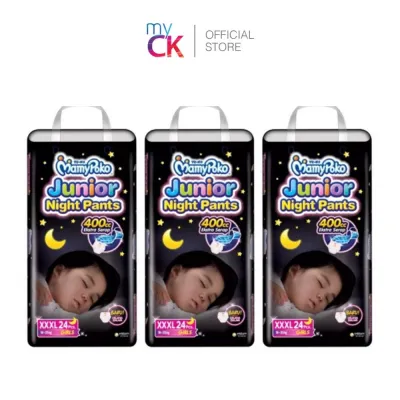

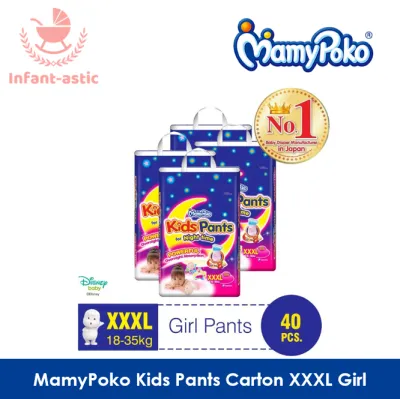
![[1 Carton] MamyPoko Kids Night Pants Girl Size XXXL (10s x 4)](https://img.lazcdn.com/g/p/5cd1d51f3f38022473905b5d9ef8cdf2.png_400x400q80.png_.webp)
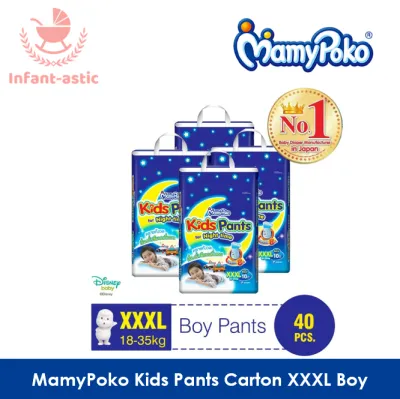
![[1 Carton] MamyPoko Kids Night Pants Boy Size XXXL (10s x 4)](https://img.lazcdn.com/g/p/753e7b87fdbdc341bf5ee40660b08367.png_400x400q80.png_.webp)
Prices are valid at publication and may change. Please refer to the product page for the latest price.
Sleep positions play a critical role in where leaks are most likely to occur. For instance, stomach sleepers put immense pressure on the front of the diaper, which often leads to leaks along the front waistband if the absorbent material does not extend high enough. Back sleepers require robust coverage in the rear, while active rollers who constantly twist and turn need highly flexible, tall double-leg cuffs to prevent side gaps. Understanding your child’s preferred sleeping posture helps you identify which areas of the diaper require the most reinforcement.
Sizing is another crucial factor, particularly when dealing with older toddlers or larger children who require XXXL sizes. The XXXL size bracket is generally designed for children who have outgrown standard toddler sizes but still need overnight protection. However, weight ranges on packaging are only general guidelines. A child’s unique build—such as having slim thighs or a rounder belly—will heavily influence how a diaper fits. A diaper that is too small will quickly overflow due to insufficient capacity, while a diaper that is too large will leave gaps around the legs and waist, rendering even the most absorbent core ineffective.
Evaluating MamyPoko Night XXXL: Features and Fit
When evaluating MamyPoko Night XXXL, your first step should be to carefully inspect the manufacturer’s packaging. Look for the specified weight limits, recommended developmental stages, and any specific night-time design claims. Because sizing standards vary significantly between brands, you should never assume that an XXXL in one brand fits identically to an XXXL in another. Checking the package instructions ensures you are using the product within its intended parameters and helps you verify if the diaper is designed to handle the volume of a heavy wetter.

Next, examine the physical structure of the diaper itself. MamyPoko Night XXXL is a pant-style diaper, which features a 360-degree elastic waistband. Feel the texture of the waistband; it should be soft and highly stretchable, allowing it to conform to your child’s waist without digging into the skin. Turn the diaper inside out to inspect the absorbent padding. Note how far up the front and back the padding extends. For heavy wetters, a core that reaches almost to the top of the waistband is ideal. Additionally, run your fingers along the inner leg gathers to assess the height and elasticity of the double-barrier cuffs, which are your child’s primary defense against side leaks.
Finally, assess how the diaper fits on your child. When pulling the pant diaper up, ensure the waistband sits comfortably above the hips and is not sagging. Gently run your finger around the leg openings to make sure the inner cuffs are fully flared outward and not tucked inside, as tucked cuffs are a common cause of immediate leaks. Observe your child as they move, bend, and lie down. If you notice any visible gaps around the thighs or waist, or if the elastic leaves deep, persistent red marks on their skin, the fit is incorrect, and you may need to adjust the size or try a different diaper cut.
Comparing Core Dimensions: MamyPoko Night XXXL vs. Alternatives
To make an objective decision, you can compare MamyPoko Night XXXL against alternative overnight diapers using a structured framework of observable features. Rather than relying on vague marketing claims, focus on concrete design elements that you can physically inspect and compare.
| Comparison Dimension | MamyPoko Night XXXL | Alternative Brand A | Alternative Brand B |
|---|---|---|---|
| Leg Cuff Height | Verify inner barrier height and elasticity | Compare cuff tension and double-barrier design | Check for soft, flexible leg gathers |
| Waistband Stretch | Inspect 360-degree elastic pant style | Check for adjustable tape or elastic back | Evaluate waist elasticity and snugness |
| Padding Distribution | Observe front-to-back core coverage | Check if core is concentrated in the center | Inspect thickness and length of absorbent pad |
| Breathability Indicators | Look for cloth-like outer cover | Check for micro-pores or breathable backing | Verify material softness and air circulation |
In addition to physical design, evaluating the cost-per-diaper is essential for managing your household budget. Because overnight diapers are a daily necessity, small differences in unit price can add up significantly over time. To calculate this accurately, divide the total price of the pack by the number of diapers inside to find the cost-per-piece, using current prices from local supermarkets or online marketplaces in Singapore. Keep in mind that larger sizes like XXXL generally have a higher cost-per-diaper because fewer pieces are included in each pack. You must weigh this unit cost against the diaper’s performance; a slightly more expensive diaper that completely prevents leaks may save you money and time by reducing the need for daily bedsheet laundering.
The style of the diaper cut also plays a major role in leak protection for heavy wetters in the XXXL size range. Pant-style diapers, like MamyPoko Night XXXL, are highly convenient for older toddlers who prefer to stand during changes and offer a secure, wrap-around fit that stays in place even with active movement. However, tape-style diapers allow you to customize the tightness around both the waist and the thighs independently. If your child has a unique body shape, such as a very slim waist but chunky thighs, a tape-style alternative might allow for a more tailored, leak-resistant fit than a standard pant-style diaper.
How to Test and Choose the Right Overnight Diaper
Finding the perfect overnight diaper requires a systematic home trial rather than buying bulk quantities of a single brand immediately. Start by purchasing a single pack or obtaining sample packs of MamyPoko Night XXXL and any alternatives you wish to test. Conduct a trial over three to five consecutive nights for each brand, keeping your child’s fluid intake and bedtime routine consistent. Each morning, perform a thorough inspection of the diaper and your child’s skin to gather objective data.
First, check for any signs of dampness on your child’s pajamas or bedding, noting the exact location of any leaks. Next, gently feel your child’s skin inside the diaper area; a high-performing overnight diaper should leave the skin feeling relatively dry, indicating that the core has successfully locked the moisture away. Finally, observe how the diaper has expanded. A well-designed diaper will swell evenly without clumping or sagging excessively, which helps maintain a secure fit even when the diaper is fully saturated.
There are several clear signs that a diaper is failing and that you need to make a change. Consistent morning leaks, damp clothing, or a heavy, sagging diaper that pulls away from the waist are obvious indicators of insufficient capacity or a poor fit. Physical signs on your child’s body are equally important. Deep red indentations around the waist or thighs indicate that the elastics are too tight, while a persistent diaper rash or skin redness suggests that the diaper’s core is failing to keep moisture away from the skin.
If you experience persistent leaks, try adjusting the fit or pulling the leg cuffs outward before switching brands. If leaks continue despite a correct fit, it is time to try a different size or an alternative brand with a different cut or core distribution. However, if your child’s heavy wetting is sudden, extreme, or accompanied by other symptoms—such as excessive daytime thirst, pain during urination, or sudden changes in bathroom habits—stop adjusting diapers and consult a pediatrician or qualified healthcare professional to rule out any underlying medical concerns.
Frequently Asked Questions (FAQ)
Should I size up to XXXL for better overnight absorbency?
Sizing up is a common strategy used by parents to increase overnight absorbency, as larger diapers naturally contain more absorbent material and can hold a larger volume of fluid. However, this approach only works if the larger diaper still fits your child securely. If you size up too early, the leg openings and waistband of the XXXL diaper may be too loose, creating gaps that allow urine to escape before it can reach the absorbent core. You should always check the manufacturer’s weight guidelines on the packaging as a starting point. Only consider sizing up if your child is approaching the upper weight limit of their current size and you observe that their current diaper is completely saturated to its limit without any gapping.
Are overnight diapers safe for sensitive skin?
Overnight diapers are designed for extended wear of up to 12 hours, which means your child’s skin will be exposed to a warm, humid environment for a prolonged period. To protect sensitive skin, it is crucial that the diaper features a high-quality top sheet that rapidly draws wetness away and a highly breathable outer layer to promote air circulation, which is especially important in Singapore’s warm and humid climate. Parents should carefully inspect the ingredient and material list on the packaging to verify the absence of known irritants, such as added fragrances, latex, or elemental chlorine. Monitor your child’s skin closely during any diaper trial; if you notice persistent redness, irritation, or a rash, discontinue use of that specific diaper and consult a healthcare professional for appropriate skin care advice.

Community discussion
Share your experience or ask a question. Comments are reviewed before publication.