
Finding the right baby steamer and blender in Singapore requires balancing your daily preparation style, available kitchen space, and your child’s developmental stage. While the local market features a diverse selection of international and regional brands across various S$ price points, the most reliable appliance is one that fits seamlessly into your household routine. Rather than relying on generic top-ten lists, parents should evaluate how specific design elements, material safety standards, and maintenance requirements align with their feeding goals. This guide provides a practical framework to compare these appliances, ensuring you invest in a durable, safe, and efficient tool for your weaning journey.
Key Features to Compare Across Brands
When comparing different brands, the steaming capacity and basket design should be your first consideration. Some brands offer compact, single-basket designs that are ideal for preparing fresh, single-portion meals daily. Other brands feature multi-tier baskets that allow you to steam different ingredients, such as vegetables and fish, simultaneously without mixing their flavors. This multi-tier setup is highly beneficial for batch-cooking, a popular strategy for busy parents in Singapore who prefer to prepare and freeze a week’s worth of baby food at once.
Blending texture control is another critical feature that varies significantly across manufacturers. Early weaning stages require an ultra-smooth, fine puree to prevent choking hazards, while older infants transition to thicker, chunkier textures to encourage chewing. Look for brands that offer variable speed settings or manual pulse control rather than a single automated blend cycle. This flexibility allows you to adjust the consistency precisely as your child’s feeding capabilities develop over time.
Products mentioned in this guide
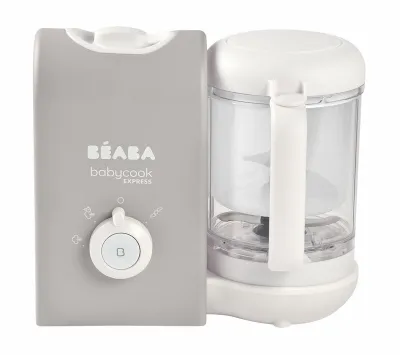
![[SAFETY MARK] Einmilk Baby Food Maker 4-in-1 Multifunctional Baby Food Maker Blends Steam Warm Defrost Food](https://img.lazcdn.com/g/p/6394940590e82cbbbf2670f44b4f221c.jpg_400x400q80.jpg_.webp)
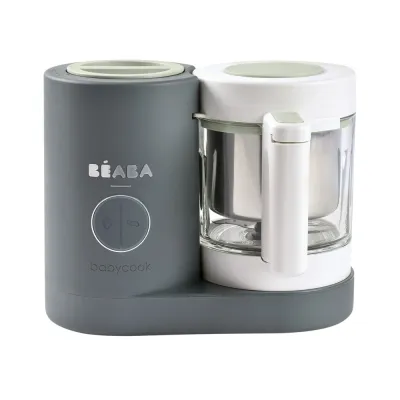
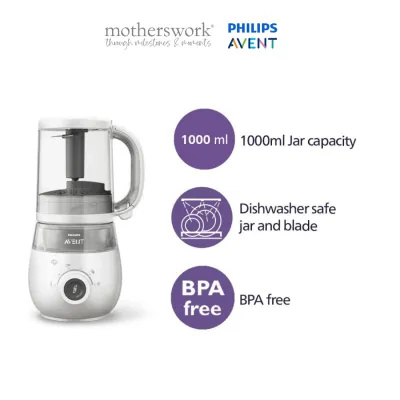
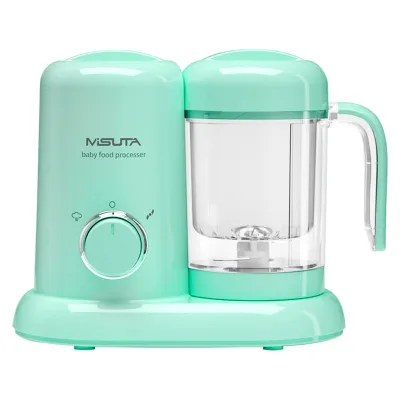
![[SG SELLER] MISUTA 4 in 1 Baby Food Processor Blender and Steamer (SG Local Plug)](https://img.lazcdn.com/g/p/0bb929f86db64c43ec3edea4ec41e195.jpg_400x400q80.jpg_.webp)
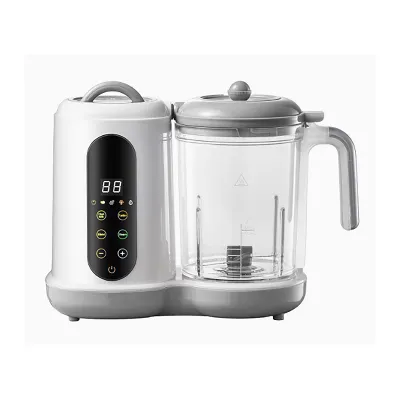
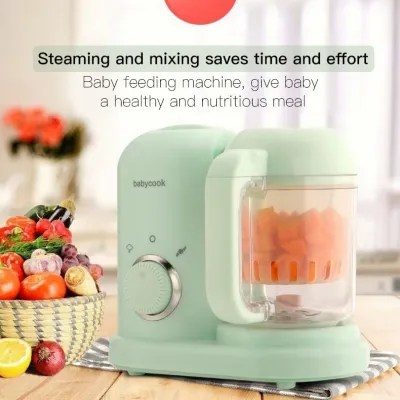
Prices are valid at publication and may change. Please refer to the product page for the latest price.
Convenience functions can greatly streamline your daily kitchen routine. Many premium brands incorporate automatic keep-warm, reheating, and defrosting capabilities directly into the appliance. Defrosting functions are particularly useful for quickly warming pre-portioned frozen purees safely without losing essential nutrients. Additionally, look for models with intuitive digital timers or auto-shutoff features that prevent dry boiling if you are distracted by your baby.
Finally, consider the physical footprint and cord management of the appliance. Singaporean kitchens, especially in modern HDB flats and condominiums, often have limited countertop space. A baby food maker with a compact, vertical design and integrated cord storage will help keep your food preparation area organized and clutter-free.
Evaluating Build Quality and Material Safety
Because these appliances combine high-heat steaming with high-speed blending, verifying material safety is paramount. Always check the manufacturer’s product labels and user manuals to ensure that all plastic parts in contact with food are certified BPA-free, phthalate-free, and lead-free. Some brands offer glass or high-grade stainless steel blending jars as alternatives to plastic. While glass is heavier and requires careful handling, it offers superior resistance to scratching, staining, and odor retention over long-term use.

The physical durability of the motor housing and sealing mechanisms is a strong indicator of overall build quality. Inspect the sturdiness of the unit’s base; a heavier base with non-slip suction feet prevents the appliance from vibrating or shifting on the countertop during high-speed blending. Furthermore, examine the silicone sealing rings around the blade assembly. High-quality seals should fit tightly and resist degradation from heat, preventing liquids from leaking into the motor housing and causing electrical failures.
Before finalizing your choice, review the manufacturer’s warranty terms and the local availability of replacement parts. A reliable brand should offer a comprehensive warranty that covers both the motor and the heating element for at least one year. It is also wise to check if consumable parts, such as replacement silicone gaskets, blades, or extra steaming baskets, are easily purchasable in Singapore, as these components naturally wear out over time with daily use.
Electrical safety compliance is non-negotiable for high-wattage kitchen appliances. In Singapore, ensure the model you select carries the local SAFETY Mark issued by the safety authority. This certification guarantees that the appliance, including its internal wiring and the standard 3-pin UK plug, has been rigorously tested to meet local electrical safety standards, reducing the risk of short circuits or electrical hazards in your home.
Assessing Reliability and Ease of Maintenance
Daily maintenance can quickly become a chore if the appliance is difficult to clean. When comparing brands, identify which removable parts are explicitly marked as dishwasher-safe by the manufacturer. Even if you prefer to wash the components by hand, a dishwasher-safe rating generally indicates that the materials can withstand higher temperatures and more rigorous cleaning without warping or degrading.
The design of the water tank is a critical factor in the long-term reliability of the heating element. Over time, mineral deposits from tap water will accumulate inside the tank, reducing heating efficiency and potentially harboring bacteria. Look for brands that feature a wide-opening water tank that allows you to easily inspect the interior and physically scrub away residue. Avoid designs with narrow, enclosed water chambers that make thorough cleaning and descaling nearly impossible.
Thoroughly inspect the accessibility of the blending blade assembly. Food particles can easily become trapped in the crevices beneath the blades, leading to mold growth if not cleaned properly. Brands that allow you to completely detach the blade assembly from the blending jar make deep cleaning significantly easier and safer. Ensure the design does not require specialized tools to remove the blades, as this can discourage regular maintenance.
Lastly, look for consistent patterns in user feedback regarding long-term motor longevity and seal degradation. While occasional negative reviews are normal for any appliance, widespread complaints about premature motor burnout or persistent leaking usually indicate underlying design flaws. Choosing a brand with a proven track record of physical durability will save you the hassle of frequent replacements during your baby’s weaning journey.
Where to Buy and Verify Authenticity in Singapore
To ensure you receive a genuine product backed by a valid local warranty, purchase your baby food maker directly from official brand websites or authorized physical maternity and baby specialty stores. Buying from authorized retailers guarantees that you are getting authentic stock that has been properly imported and stored, minimizing the risk of receiving counterfeit or defective goods.
When shopping on major online marketplaces, always navigate to the brand’s official flagship store rather than purchasing from unauthorized third-party sellers. Unauthorized parallel imports may seem cheaper initially, but they often lack the correct local safety certifications, feature incompatible power plugs, and are typically excluded from local warranty coverage and customer support.
Upon delivery, perform a quick physical check to verify the authenticity of your purchase. Look for local distributor stickers on the packaging, a valid warranty card, and the correct regional 3-pin UK power plug. Avoid using travel adapters with high-wattage heating appliances, as poor connections can lead to overheating and pose a fire hazard in your kitchen.
Additionally, understand the retailer’s return and exchange policies before making your purchase. A reputable seller should offer a clear, straightforward process for exchanging the appliance if you encounter an out-of-box failure or a defective heating element within the initial return window, ensuring your investment is fully protected.
Decision Framework: Narrowing Down Your Brand Shortlist
To make your final decision, align the appliance’s design with your specific household constraints and feeding goals. If your kitchen counter space is highly limited and you prefer preparing single, fresh portions for each meal, prioritize compact, all-in-one models. These units occupy a minimal footprint and are highly efficient for daily, small-scale food preparation.
If you prefer to batch-cook and freeze multiple portions over the weekend to save time during the busy workweek, opt for brands that offer larger capacities or multi-basket systems. These models allow you to steam a variety of ingredients simultaneously without mixing flavors, making batch preparation highly efficient.
For families who anticipate heavy, daily use of the appliance, prioritize brands that maintain dedicated local service centers in Singapore. Having a physical location where you can drop off the unit for repairs or purchase immediate replacement parts minimizes downtime, ensuring you are never left without a way to prepare your baby’s meals.
Finally, always verify the specific model’s user manual before finalizing your purchase. Check the exact minimum and maximum capacity limits, as well as the recommended age-appropriate texture settings, to ensure the appliance aligns perfectly with your child’s developmental needs and your cooking habits.
Frequently Asked Questions (FAQ)
Can I use a regular kitchen steamer and blender instead of a dedicated baby food maker?
Yes, you can use standard kitchen appliances, but dedicated baby food makers offer distinct practical advantages. Standard blenders are typically designed for larger volumes and often struggle to process the very small portions required during the early stages of weaning, which can result in uneven textures or food getting trapped under the blades. Additionally, all-in-one baby food makers streamline the entire process by allowing you to steam and blend in the same vessel, reducing the number of dishes to wash and saving valuable time for busy caregivers.
How often should I descale the water tank of a baby steamer and blender?
Most manufacturers recommend descaling the water tank every one to four weeks, depending on the hardness of your water and how frequently you use the appliance. Visual signs of mineral buildup include white, grey, or rust-colored deposits on the heating element. To descale, follow the specific brand’s instructions, which typically involve heating a mixture of water and food-grade citric acid or white vinegar in the tank, followed by several rinse cycles with clean water to ensure no residue remains.

Community discussion
Share your experience or ask a question. Comments are reviewed before publication.