
Choosing the right baby food steamer blender brand in Singapore comes down to matching the appliance’s capacity, footprint, and automation level with your daily parenting routine. While many brands promise effortless meal preparation, the reality of managing a busy household means you need a machine that fits your specific kitchen space, cleaning preferences, and budget. Rather than chasing a single popular label, the most practical approach is to evaluate how different brand categories align with your lifestyle.
Preparing homemade purees and solid meals for your little one should simplify your day, not add to your kitchen chores. By focusing on key hardware specifications, safety certifications, and long-term usability, you can narrow down the options to find a reliable appliance. This guide breaks down the essential comparison criteria, safety checks, and decision frameworks to help you confidently select the right baby food maker for your home.
Core Criteria for Comparing Steamer Blender Brands
When comparing different brands, the capacity of the steaming basket and blending jar is one of the most critical factors to consider. If you prefer to prepare fresh meals daily in small portions, a compact model with a capacity of 300ml to 500ml will prevent food waste and blend small quantities more efficiently. Conversely, if you plan to batch-cook and freeze meals for the week, look for brands that offer larger jars of 1 liter or more to save time and effort.
Products mentioned in this guide
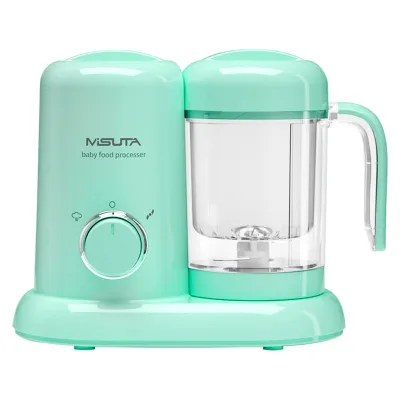
![[SG SELLER] MISUTA 4 in 1 Baby Food Processor Blender and Steamer (SG Local Plug)](https://img.lazcdn.com/g/p/0bb929f86db64c43ec3edea4ec41e195.jpg_400x400q80.jpg_.webp)
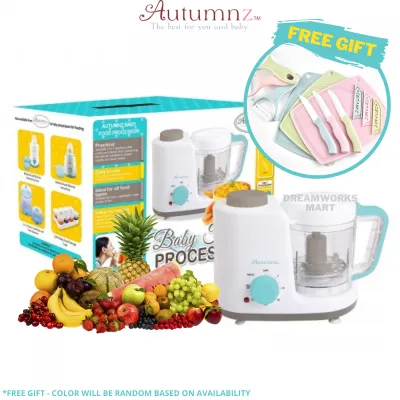
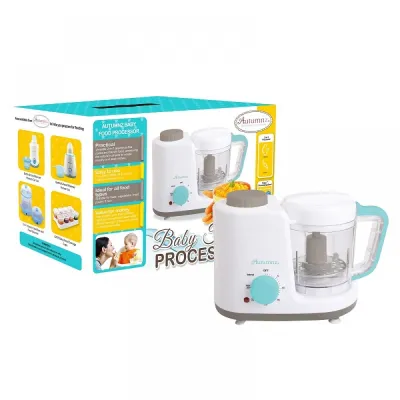
![[SAFETY MARK] Einmilk Baby Food Maker 4-in-1 Multifunctional Baby Food Maker Blends Steam Warm Defrost Food](https://img.lazcdn.com/g/p/0ba46ba074e1803f0999d0e19de98318.jpg_400x400q80.jpg_.webp)
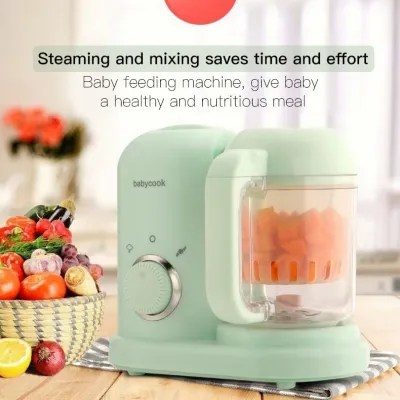
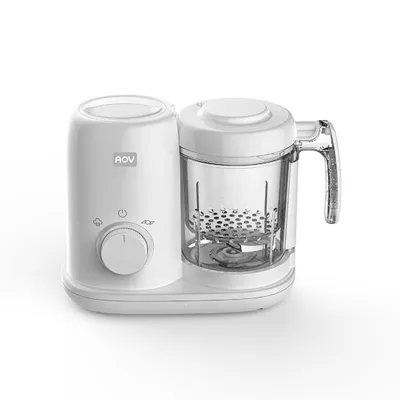
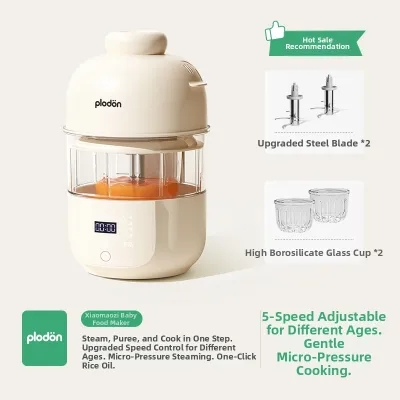
Prices are valid at publication and may change. Please refer to the product page for the latest price.
Another major differentiator is the workflow of the steam-and-blend cycle. Some brands feature fully automated, single-container designs where you can set a timer to steam and then automatically blend the food without opening the lid. Other brands require a manual transfer, where you steam the ingredients in a basket and then pour them into a separate blending bowl. While automated models offer hands-free convenience, manual-transfer models often provide better control over the final texture of the puree.
Kitchen space is a premium commodity in many Singapore apartments, making the physical footprint of the appliance a key consideration. Vertical designs take up minimal counter space and are easy to tuck away in a cabinet when not in use. Horizontal multi-station units, while offering more features or dual-basket steaming, require a dedicated spot on your countertop and may feel too bulky for smaller kitchens.
Finally, evaluate how easy the appliance is to disassemble and clean after each use. Look for brands that feature dishwasher-safe components, removable blades, and wide-mouth water tanks. Water tanks that are difficult to access can quickly accumulate limescale or mold in Singapore’s humid climate, making a highly accessible heating reservoir essential for maintaining hygiene.
Evaluating Reliability and Safety Standards
Because this appliance prepares food for your developing baby, material safety must be verified before making a purchase. Parents should check product labels and manufacturer specifications to ensure that all plastic components in contact with food are certified BPA-free, phthalate-free, and lead-free. Some premium brands offer borosilicate glass jars, which are highly durable, resistant to thermal shock, and completely free of chemical-leaching risks.

Essential operational safeguards are another hallmark of a reliable brand. Look for models equipped with an automatic shut-off feature that turns off the heating element when the water reservoir runs dry. This prevents the machine from overheating and reduces fire risks. Additionally, safety locks that prevent the blending blades from spinning unless the jar and lid are securely locked into place are crucial for preventing kitchen accidents.
Warranty terms and local customer support are vital when investing in a specialized kitchen appliance. Prioritize brands that offer at least a one-year local warranty backed by an authorized service center in Singapore. This ensures you can easily source replacement parts, such as new silicone seals, blending blades, or steaming baskets, without having to pay expensive international shipping fees.
Physical design safety should also be assessed during your comparison. Look for appliances with cool-touch exteriors that remain safe to handle even during a high-temperature steaming cycle. The steam vent should be positioned to direct hot air away from the handle and the user, minimizing the risk of accidental steam burns during operation.
Assessing Value and Long-Term Usability
To determine if a higher-priced baby food maker is worth the investment, analyze its multi-functionality. Premium brands often justify their cost by incorporating extra features such as defrosting, reheating, bottle warming, or even self-sterilizing cycles. If you do not already own a bottle warmer or a microwave, these all-in-one capabilities can save you both money and countertop space.
Consider how well the appliance adapts as your baby transitions from smooth stage-one purees to chunkier toddler meals. Brands that offer variable blending speeds or a manual pulse button allow you to control the texture precisely, extending the machine’s usability well into the toddler years. If a machine only offers a single, high-speed blending option, you may find it less useful once your child needs textured, mashed foods rather than liquid purees.
Factor in the ongoing costs and availability of proprietary accessories. Some brands include storage pots, spatulas, and descaling powders in the box, while others require you to purchase these items separately. Check the prices of these accessories beforehand, as they can add significantly to the total cost of ownership over time.
Lastly, consider the energy and water efficiency of the appliance. While most baby food makers are used for relatively short cycles daily, models with efficient heating elements steam food faster, saving electricity. Reviewing the wattage of the steamer and blender components can give you a clear picture of the appliance’s resource consumption.
Decision Framework: Which Type of Brand Fits Your Routine?
To simplify your decision, match your daily routine and kitchen constraints to one of the three main categories of baby food maker brands.
If you have a flexible budget, ample counter space, and want maximum convenience, a premium, multi-functional brand is highly suitable. These brands offer automated steam-and-blend programs, larger capacities for batch cooking, and extra features like defrosting. They are ideal for busy parents who want to minimize active cooking time and do not mind a slightly larger appliance on their countertop.
If you have a compact kitchen, prefer a lower initial investment, or only plan to make fresh, single-serving meals, a compact, single-function brand is the practical choice. These models focus purely on basic steaming and blending, featuring a small vertical footprint that fits easily into any cabinet. They are straightforward to operate and highly efficient for daily, small-batch preparation.
If you already own a high-quality blender or food processor, you might prefer a modular approach. Instead of buying an all-in-one machine, you can choose a brand that offers a dedicated, reliable baby-food steamer or simply use your existing kitchen tools. This option avoids duplicating appliances you already own and saves storage space, though it does require manually transferring hot food between containers.
Before finalizing your choice, always verify that the brand’s models are fully compatible with Singapore’s electrical standards. Ensure the appliance is rated for 220V-240V voltage and comes with a standard 3-pin Type G plug. Purchasing imported or grey-market models designed for different voltages can lead to electrical malfunctions or require bulky, unsafe voltage adapters.
Where to Buy and What to Verify Before Checkout
To ensure you receive an authentic product with valid warranty coverage, purchase your baby food maker from official brand websites, authorized department stores, or verified flagship stores on major e-commerce platforms. Avoid buying from unverified third-party sellers, as these units may lack local safety certifications or warranty support.
When buying locally, look for the Safety Mark on the appliance or its packaging. In Singapore, controlled electrical appliances must carry this mark to certify they have been tested and meet local safety standards. This is a crucial step to protect your household from electrical hazards.
Review the retailer’s return and exchange policies before completing your purchase. Ensure there is a clear policy covering defective units, missing parts, or damage sustained during delivery. A reputable retailer should offer a straightforward exchange process within the first 7 to 14 days of purchase.
Once your appliance arrives, unbox it immediately to inspect the components. Check that the silicone seals are intact, the blades are sharp and securely fitted, and all listed accessories are included. Run a test steaming cycle with plain water to clean the system and verify that the heating element and auto-shutoff functions work correctly before registering your warranty online.
Frequently Asked Questions (FAQ)
Can I use a regular food steamer and blender instead of a dedicated baby food maker?
Yes, you can certainly use a standard household food steamer and a regular blender or immersion blender to prepare baby food. However, dedicated baby food makers offer significantly more convenience by combining these two steps into a single appliance, reducing the number of dishes you need to wash. Additionally, standard household blenders are often designed for larger quantities and may struggle to blend the very small portions typical of early baby meals. Using a dedicated appliance also minimizes the risk of cross-contamination from adult foods, such as strong spices, chili, or common allergens, that may linger on your regular kitchen blender.
How long should a baby food steamer blender typically last?
A quality baby food steamer blender is typically designed to last through the entire weaning phase, which generally spans from around 6 months to 18 months of age. Many families find the appliance remains useful well into the toddler years for making quick soups, fruit purees, or steamed snacks. To maximize the lifespan of your machine, perform regular maintenance, such as descaling the water reservoir with food-grade citric acid or vinegar to prevent mineral buildup. Stop using the appliance immediately and seek a replacement if you notice signs of physical wear, such as cracked plastic housing, worn silicone seals that cause leaks, a straining motor, or dull blades that no longer blend smoothly.

Community discussion
Share your experience or ask a question. Comments are reviewed before publication.