
Selecting a baby changing table in Singapore requires balancing space constraints, material durability, and long-term utility. Because Singaporean homes, such as HDB flats and condominiums, often feature compact nursery layouts, a one-size-fits-all recommendation does not exist. Instead, the market offers a diverse range of brand profiles, from minimalist Scandinavian flat-packs to premium, solid-wood convertible dressers. Finding the right option depends on how you weigh immediate convenience against future storage needs.
By focusing on structural design, storage accessibility, and material resilience against local humidity, you can identify which brand profile aligns with your home. This guide breaks down the essential comparison dimensions, safety verification steps, and cost considerations to help you make an informed decision for your nursery.
Key Dimensions for Comparing Changing Table Brands
Evaluating different baby changing table brands requires a standardized set of criteria to ensure the furniture fits both your physical space and your daily parenting routine. The first major dimension to consider is the physical footprint and overall space efficiency of the unit. Standalone changing tables with slim frames occupy minimal floor space, making them highly suitable for tight corners or shared master bedrooms. In contrast, wide changing dressers require a permanent, larger footprint but offer a dual-purpose surface that eliminates the need for separate storage furniture.
Products mentioned in this guide
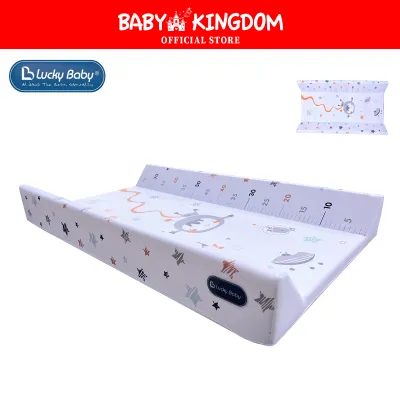
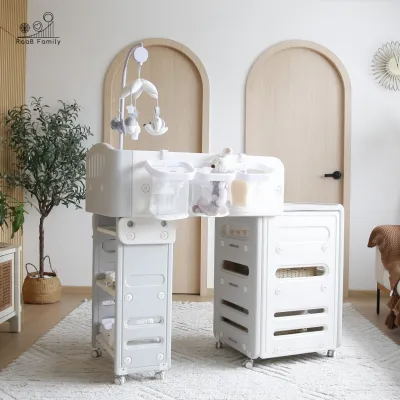
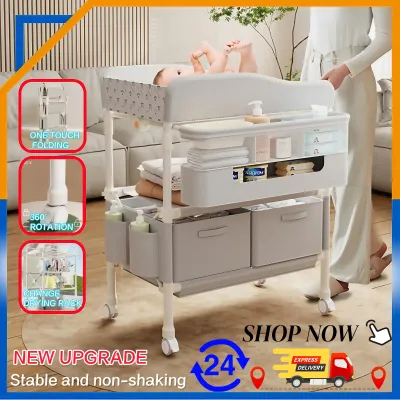
![【SG Happy Baby】 [diaper changing table]Baby Diapers Changing Table Foldable Newborn Multifunctional 0-3 Years Old Care Diaper Nursing Table LAPN 3445208002](https://img.lazcdn.com/g/p/cb8e257cb4999e10de1572619c195db0.jpg_webp_400x400q80.jpg_.webp)
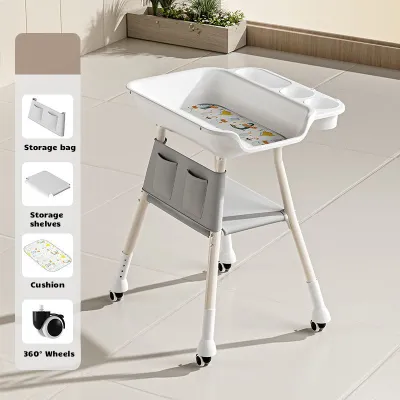
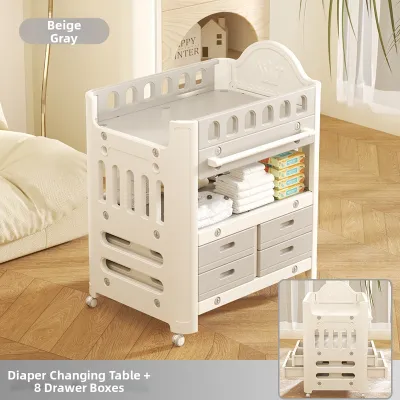
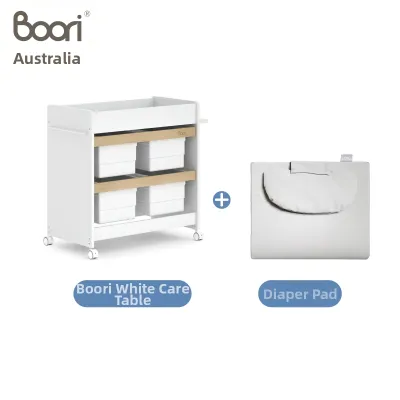
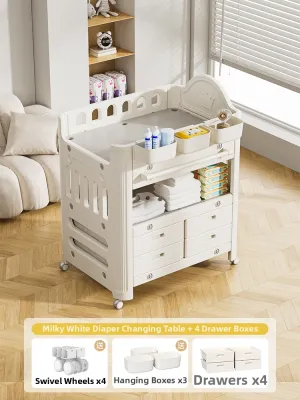
Prices are valid at publication and may change. Please refer to the product page for the latest price.
Storage configuration is another critical factor that distinguishes brand designs. Some brands prioritize open shelving, which allows you to grab diapers, wipes, and fresh clothes with one hand while keeping your other hand securely on your baby. Other brands feature deep, closed drawers that keep nursery essentials organized and dust-free. While closed drawers offer a cleaner aesthetic, they require sufficient physical clearance to open fully, which can restrict placement options in smaller rooms.
Material composition directly impacts the durability and lifespan of the changing table, especially under Singapore’s humid tropical climate. Low-grade engineered wood or poorly sealed medium-density fibreboard (MDF) can absorb moisture over time, leading to swelling, warping, or peeling laminates. Brands utilizing solid hardwoods, such as beech, birch, or sustainably sourced pine, generally offer superior structural integrity and resistance to humidity. When evaluating engineered wood options, look for high-density boards with robust, moisture-resistant finishes that can withstand frequent sanitizing.
Convertibility features determine whether the changing table remains useful after your child outgrows diapers. Many premium brands design modular systems where the changing topper can be completely removed, transforming the unit into a standard chest of drawers or a shelving unit. Other innovative designs allow the frame to convert into a toddler play table, a study desk, or a toy storage organizer. Investing in a convertible model often yields higher long-term utility, extending the furniture’s lifespan from a couple of years to a decade or more.
Safety Standards and Verification Checks
Safety is the paramount consideration when selecting any nursery furniture, and parents must independently verify safety features rather than relying solely on brand reputation. One of the most critical safety components for any tall furniture piece is an anti-tip wall anchor kit. Because changing tables and dressers can become top-heavy when drawers are pulled out or when a child attempts to climb them, securing the unit to the wall is essential. Before purchasing, verify whether the brand includes heavy-duty anchoring hardware and check if your home’s wall structure can support secure installation.

The design of the changing surface itself must prevent accidental falls. Look for tables with raised safety barriers on all four sides, ideally measuring at least 5 to 10 centimeters in height. If you plan to use a separate changing pad, ensure the table frame features a secure attachment mechanism, such as brackets or non-slip straps, to keep the pad from sliding during use. Many safety-conscious brands also include built-in safety straps on the changing pad itself to help keep active infants secure.
Manufacturer weight limits and developmental guidelines dictate how long a changing table can be safely used. Standard standalone tables typically support weights up to 11 to 15 kilograms, though some heavy-duty wooden dressers can accommodate more. Always locate the manufacturer’s official specifications to verify these limits. Additionally, be prepared to transition away from elevated changing surfaces as soon as your baby reaches the maximum weight or begins demonstrating developmental milestones like rolling over, sitting up, or pushing up on hands and knees.
To ensure rigorous quality control, look for compliance labels indicating that the product meets recognized international safety standards. Common certifications include the European standard EN 12221 or the American standard ASTM F2388, which govern the stability, structural strength, and chemical safety of changing units for domestic use. These labels are typically printed on the product packaging, instruction manual, or a permanent sticker on the frame itself, providing peace of mind that the materials and construction have undergone independent testing.
Evaluating Price, Value, and Longevity
Navigating the pricing of baby changing tables in Singapore involves understanding the trade-offs between initial cost, material quality, and long-term utility. Budget-friendly standalone tables, often constructed from lightweight wood, metal, or plastic, generally range from S$50 to S$150. These models are highly functional and accessible but may lack advanced storage or convertibility. Mid-range options, typically priced between S$200 and S$500, often feature sturdier wood construction, basic drawer storage, or modular designs that adapt as your child grows.
Premium convertible dressers represent a more significant upfront investment, often ranging from S$600 to well over S$1,000. While the initial cost is high, these units are built as heirloom-quality furniture pieces designed to transition into standard bedroom decor. When calculating your budget, check whether the changing pad is included in the purchase price or must be bought separately. A high-quality, waterproof, contoured changing pad can add an extra S$30 to S$100 to your overall expenditure, so factoring this in early prevents unexpected costs.
Long-term value is also closely tied to secondary market demand in Singapore. Well-known, high-quality furniture brands often retain excellent resale value on local secondhand marketplaces. If you maintain the furniture well and choose a brand recognized for durability, you can often recoup a reasonable portion of your initial investment when your child outgrows the unit. Conversely, budget models or highly customized designs may have lower resale appeal, making them better suited for families planning to use them across multiple consecutive children.
Finally, review the manufacturer’s warranty terms to assess the brand’s confidence in its product’s durability. Premium brands frequently offer multi-year warranties covering structural components, drawer glides, and hardware defects. Budget models may only offer limited return windows or basic structural warranties. Understanding what is covered—and for how long—helps protect your investment against premature wear and tear, especially under the daily demands of infant care.
Decision Framework: Matching Brand Profiles to Your Needs
To simplify your selection process, you can categorize the available market options into distinct brand profiles based on your living space, budget, and storage preferences. If you reside in a compact apartment or anticipate moving homes in the near future, a Space-Saving or Budget Profile is highly practical. These brands focus on lightweight, foldable, or exceptionally narrow frames that can easily fit into small nurseries or be tucked away when not in use. They provide a straightforward, cost-effective diapering station without committing valuable floor space to permanent furniture.
For families seeking a permanent addition to their home, a Convertible or Premium Profile offers the greatest longevity. These brands design solid-wood dressers with removable changing toppers, allowing the unit to serve as a beautiful chest of drawers throughout childhood and adolescence. While they require a larger initial budget and a dedicated footprint, their multi-functional nature eliminates the need to purchase separate bedroom storage later on, making them a highly efficient choice for long-term planning.
If your primary concern is operational convenience during hectic diaper changes, an Open-Shelving Profile is often the most user-friendly. These brands feature two or three wide, open shelves directly beneath the changing surface, keeping baskets of diapers, wipes, swaddles, and changes of clothes fully visible and within arm’s reach. This layout minimizes the need to bend down or search through closed drawers while managing an active baby, though it does require regular organizing to maintain a tidy appearance.
Before finalizing your choice, always verify your room’s physical layout against the specific dimensions of your preferred model. Measure the depth of the changing table and ensure there is comfortable standing room for you, as well as adequate clearance for any drawers or cabinet doors to open fully without blocking walkways. Taking these precise measurements beforehand ensures that your chosen changing table integrates smoothly into your daily routine without creating unnecessary physical bottlenecks in the nursery.
Frequently Asked Questions (FAQ)
Do I really need a dedicated baby changing table?
While a dedicated baby changing table is not strictly mandatory, it offers significant ergonomic and organizational benefits that many parents find indispensable. Diaper changes occur multiple times a day, and bending over a low bed, sofa, or floor can place substantial strain on your back and shoulders over time. A changing table provides a comfortable, waist-height surface that promotes better posture during these frequent tasks. Additionally, it serves as a centralized hub for all diapering supplies, ensuring that wipes, creams, and clean clothes are always organized and immediately accessible when you need them most.
If space or budget constraints make a dedicated table impractical, a high-quality, portable changing pad placed securely on top of an existing chest of drawers can serve as an excellent alternative. This setup provides the same ergonomic height advantages while maximizing your existing furniture. However, if you choose this route, you must ensure the chest of drawers is at a safe working height, completely stable, anchored to the wall, and wide enough to accommodate the changing pad securely without any risk of sliding.
When should I stop using a changing table?
You should stop using a changing table as soon as your baby reaches the manufacturer’s specified weight limit or begins demonstrating developmental milestones that compromise safety on an elevated surface. Most standard changing tables have a weight limit ranging between 11 and 15 kilograms, which many toddlers reach between 12 and 24 months of age. Always refer to your specific product manual to verify the exact weight threshold for your model.
Developmental milestones are often more critical safety indicators than age or weight alone. Once your baby can roll over vigorously, sit up independently, or attempt to pull themselves up to a standing position, the risk of accidental falls from an elevated surface increases dramatically. At this stage, it is highly recommended to transition to changing diapers on a clean mat on the floor, or to practice standing diaper changes, which are much safer for an active, mobile toddler.

Community discussion
Share your experience or ask a question. Comments are reviewed before publication.