
Selecting the right wet bag for a cloth-diapered outing is key to maintaining an organized diaper bag. The ideal size and style depend directly on how long you plan to be away and your activities. A quick trip to a local park in Singapore’s humid climate requires a different setup than a full-day excursion. By matching storage capacity to your diapering needs, you avoid carrying unnecessary bulk while ensuring secure space for soiled items.
To estimate baseline diaper needs, start with your baby’s age and changing frequency. Newborns generally require changes every two hours, while older infants might go three to four hours. Feeding stages also play a role, as breastfed or formula-fed infants typically have more frequent, liquid stools compared to toddlers on solids. Multiply your baby’s average hourly change rate by the duration of your outing to establish your starting diaper count.
Beyond diapers, account for extra items that accompany a change. Cloth wipes, wipe solutions, diaper creams, and soiled clothing changes all require space. If you use cloth wipes, you need room for both dry wipes and the damp, soiled wipes you bring back. A blowout or messy feeding session can also result in soiled clothes that must be isolated from clean gear.
Products mentioned in this guide
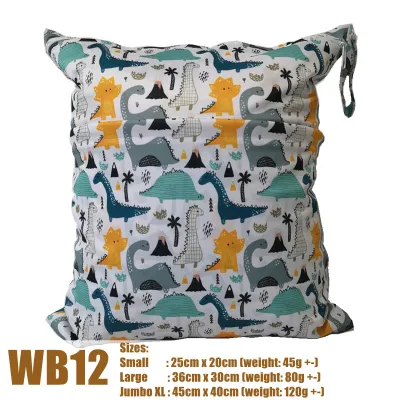
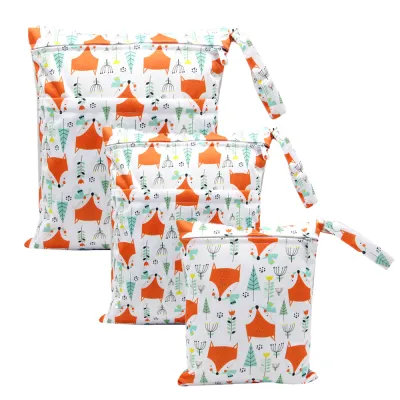


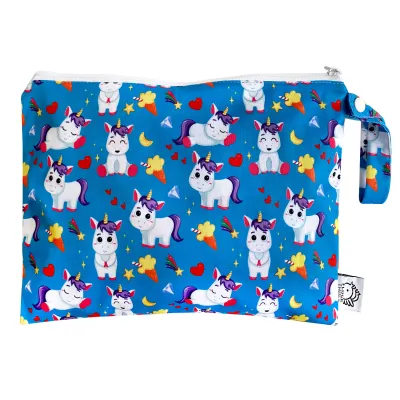

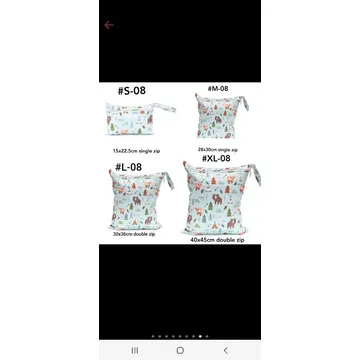
Prices are valid at publication and may change. Please refer to the product page for the latest price.
Always add a buffer of at least one or two extra diapers and a spare change of clothes. Unexpected delays, traffic, or sudden digestive surprises can easily extend your time away. Having a slightly larger wet bag than your minimum calculation ensures you can accommodate these unexpected additions without struggling to zip the bag shut or risking leaks.
Matching Wet Bag Sizes to Your Outing Duration
Choosing the right wet bag size balances carrying capacity with keeping your diaper bag manageable. As your time away increases, the physical bulk of cloth diapers—which are thicker than disposable alternatives—compounds quickly. Before purchasing, measure the interior dimensions of your primary diaper bag or stroller basket to ensure the packed wet bag fits comfortably alongside other daily essentials.
Short Errands and Quick Trips
For brief outings lasting under two hours, such as a quick run to the supermarket, you will rarely need more than one or two diaper changes. A mini or small-sized wet bag, typically measuring around 20 by 25 centimeters, is the perfect companion. These compact bags slip easily into a small backpack, a stroller organizer, or a standard handbag, allowing you to leave the heavy diaper bag at home.
The primary advantage of a small wet bag is its space-saving convenience, keeping your load light and highly mobile. However, this compact size comes with a clear trade-off: there is virtually no room for unexpected messes or bulky clothing changes. If your baby experiences a major blowout, a mini bag may struggle to contain both the thick cloth diaper and a full set of soiled clothes, requiring careful folding.
Full Day Outings and Playdates
When you plan to be away for four to eight hours, such as during a family gathering or a long playdate, your storage needs increase. A typical full-day outing requires packing four to six cloth diapers, along with wipes and at least one change of clothes. A medium-sized wet bag, usually measuring approximately 30 by 40 centimeters, is designed specifically to handle this volume without becoming overly cumbersome.
These medium bags balance adequate capacity with everyday portability, fitting neatly into standard diaper backpacks or under-stroller storage baskets. They provide enough physical space to hold several wet diapers, damp cloth wipes, and soiled bibs without compressing items so tightly that moisture is forced through the seams. To manage the weight, place the loaded bag at the bottom of your diaper bag to maintain a comfortable center of gravity.
Overnight Stays and Travel
Multi-day trips, weekend holidays, or long-haul travel require a high-capacity storage solution, especially when you do not have immediate access to washing facilities. For these scenarios, you will need to store multiple days’ worth of soiled diapers—potentially 10 to 15 diapers—before you can run a laundry cycle. Large travel wet bags, often designed as hanging wet bags with large zippered openings, are essential for keeping these items contained and odor-free.
These large travel bags are built to hold a significant volume of heavy, wet items, placing extra stress on the bag’s seams and handles. When selecting a travel-sized wet bag, look for robust construction, reinforced stitching, and wide straps that allow you to hang the bag from a closet rod or hotel bathroom hook. Because a fully loaded travel bag can become heavy, distributing the weight evenly and ensuring the bag is securely suspended will prevent damage.
Evaluating Wet Bag Styles and Functional Features
Beyond selecting the correct size, the style and functional features of a wet bag greatly influence how easy it is to use, carry, and clean. Closure types are a critical consideration for containing both moisture and odors during your travels. Zippers offer the most secure seal, effectively trapping dampness and smells inside the bag, which is particularly important in warm, humid climates. Drawstrings or simple snap closures provide quicker access but may allow odors to escape or moisture to seep out if the bag is tipped over.

Handle designs also play a major role in daily convenience, especially when changing a baby in public restrooms. Wet bags equipped with snap-top handles or adjustable straps can be easily looped around stroller handlebars, changing table frames, or bathroom door hooks. This keeps the bag off dirty floors and within arm’s reach while you navigate a diaper change. Some handles can also be snapped together to form a convenient carrying loop for quick trips.
A double-pocket, or wet/dry, configuration features two separate compartments: a dry pocket on the outside for clean diapers and clothes, and a waterproof-lined pocket for soiled items. This dual-pocket setup allows you to carry your entire diapering kit in a single bag, keeping clean and dirty items completely isolated.
When evaluating materials, check manufacturer labels for water resistance and lining durability. Most high-quality wet bags utilize a polyester fabric bonded with a waterproof polyurethane laminate (PUL) or thermoplastic polyurethane (TPU) lining. These materials are breathable yet waterproof, preventing leaks while allowing heat to escape to minimize odor buildup. Ensure the lining is securely bonded and matches your household washing routine.
Organizing Your Diaper Bag Around the Wet Bag
Integrating your wet bag into your main diaper bag requires a systematic approach to packing. When your wet bag is empty or only partially filled, use space-saving techniques such as rolling or folding the bag flat. Many wet bags can be rolled tightly and secured with their own snap handles, reducing them to the size of a small umbrella and leaving maximum space for other essentials.
For larger diaper bags, consider using a secondary mini-bag to hold immediate changing essentials like a single diaper, wipes, and cream. This allows you to grab just the mini-bag for quick trips to a public changing room, leaving the main diaper bag securely stored in your stroller. Once the change is complete, transfer the soiled diaper into the main wet bag, keeping your immediate-use kit clean.
Maintaining strict hygiene is essential when storing soiled items alongside clean baby gear. Always ensure soiled diapers are folded inward and secured tightly before placing them into the wet bag to minimize the spread of bacteria. Keep the wet bag zipped completely shut, and store it in a dedicated compartment away from baby bottles, snacks, or toys. Once home, empty the wet bag directly into your diaper pail or washing machine to prevent mold growth.
Frequently Asked Questions (FAQ)
Can I use a regular plastic bag instead of a reusable wet bag?
While a regular plastic bag might seem like a convenient alternative, it falls short in several key areas compared to a reusable wet bag. Plastic bags offer poor odor containment, allowing unpleasant smells to escape easily into your diaper bag. They are also prone to tearing, punctures, and seam failures, which can lead to messy leaks onto your clean baby gear. From an environmental and financial perspective, investing in durable, washable wet bags is far more sustainable and cost-effective over your diapering journey, as they can be washed and reused hundreds of times.
How do I wash and maintain my wet bags to prevent odors?
To keep your wet bags hygienic, wash them alongside your cloth diapers according to the specific temperature and cycle guidelines on the manufacturer’s label. Generally, wet bags should be washed every two to three days to prevent mold and deep-seated odors from developing. Avoid using fabric softeners, chlorine bleach, or harsh chemical additives, as these can degrade the waterproof PUL or TPU lining and compromise the bag’s water resistance over time. Line drying in a well-ventilated area is the gentlest method for preserving the waterproof barrier, though many manufacturers allow low-temperature tumble drying.

Community discussion
Share your experience or ask a question. Comments are reviewed before publication.