
Cleaning a baby’s delicate ears and nose requires specialized tools that prioritize safety, precision, and physical gentleness. In Singapore, where humid weather can increase perspiration and air-conditioned interiors can dry out nasal passages, parents often look for thin cotton buds to manage daily grooming. The most suitable thin cotton buds for infants are those specifically manufactured with ultra-fine tips, sturdy yet flexible paper stems, and tightly wound, lint-free cotton. Rather than relying on generic marketing terms, choosing the right product involves verifying physical dimensions, checking material compositions, and understanding the specific design features that prevent accidental injury.
A baby’s grooming routine is not about deep cleaning internal canals, but rather about gently clearing visible debris from the outer areas of the ears and nose. Standard adult cotton buds are far too large and rigid for this purpose, presenting a high risk of pushing blockages deeper or scratching sensitive tissues. By focusing on specialized infant-grade options, parents can safely maintain their child’s comfort. This guide outlines the essential criteria for selecting thin cotton buds in Singapore, compares different tip designs, and details the safe usage practices every caregiver must follow.
Why Babies Need Specially Designed Thin Cotton Buds
An infant’s physical anatomy is remarkably delicate, with ear canals and nasal passages that are only a fraction of the size of an adult’s. During the first few years of life, these passages are highly sensitive and still developing. Standard cotton buds designed for adults feature large, bulbous tips that can easily block a baby’s tiny airways or ear canals entirely during cleaning. When a tool matches or exceeds the diameter of the opening, it acts as a plunger, compressing and pushing debris further inside rather than extracting it.
Products mentioned in this guide
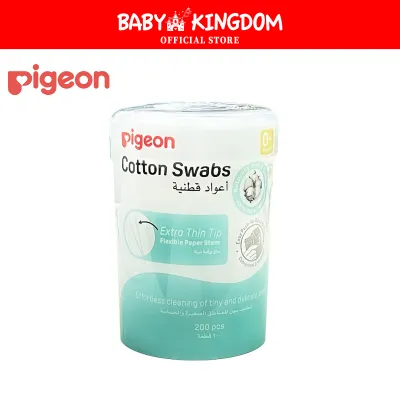
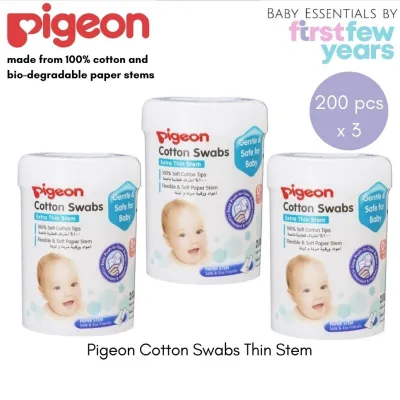
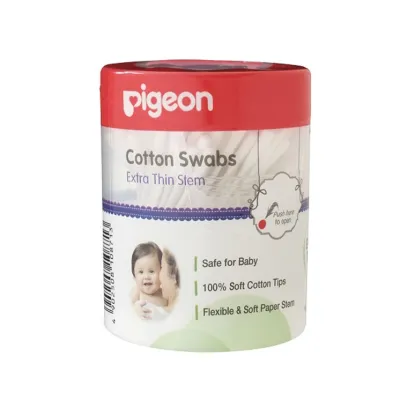
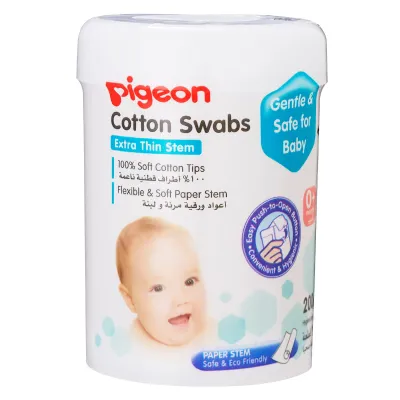
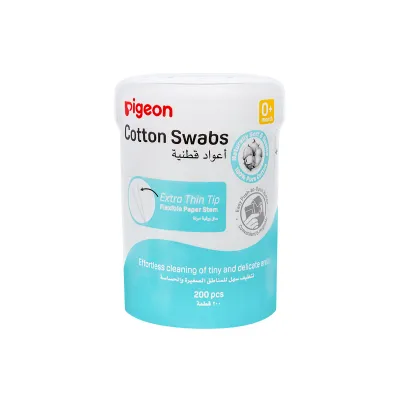
![Pigeon Cotton Swab Thin 200s With Case [NUHS Pharmacy]](https://img.lazcdn.com/g/ff/kf/Sff923a59e58f45db97680055dfc7d600O.jpg_400x400q80.jpg_.webp)
![[Bundle of 5] MUJI Thin Cotton Bud 200 pcs](https://img.lazcdn.com/g/p/75fd42d0de0dbb8fd9ad8cbaf2afddbf.jpg_400x400q80.jpg_.webp)
Prices are valid at publication and may change. Please refer to the product page for the latest price.
Using oversized or rigid cotton buds carries significant physical risks for a newborn or infant. The lining of a baby’s nasal passage is rich in tiny blood vessels that can easily rupture, leading to nosebleeds or localized irritation. Similarly, the tympanic membrane, or eardrum, sits much closer to the entrance of the ear canal in infants than in adults. An accidental slip or sudden movement while using a standard adult bud can cause painful scratches, impaction of earwax, or even structural damage to the middle ear.
Integrating specialized thin cotton buds into a dedicated baby grooming kit helps mitigate these risks. A proper infant grooming kit typically groups together safety-focused tools, such as rounded-tip scissors, soft-bristled brushes, and ultra-thin cotton swabs. Having these items organized in one clean, accessible place ensures that parents do not resort to using inappropriate adult alternatives during a busy changing or bath-time routine. Dedicated baby cotton buds are engineered specifically to navigate these tiny spaces safely, providing the necessary precision without the bulk.
Essential Selection Criteria for Baby Cotton Buds
When browsing local pharmacies, baby specialty stores, or online marketplaces in Singapore, parents must look past basic branding and evaluate the physical specifications of the cotton buds. The first and most critical factor is the actual dimension of the cotton tip. Standard cotton buds usually have a tip diameter of approximately five millimeters, which is far too wide for an infant. Specialized baby cotton buds typically feature an ultra-thin tip diameter, often measuring around three millimeters or less. Caregivers should inspect the packaging or product specifications to verify these measurements before purchasing.

The material used for the core stem, or stick, plays a vital role in safety and control. Stems are generally made from paper, plastic, or wood, each offering different physical properties. High-quality baby cotton buds almost exclusively utilize tightly rolled paper stems. Paper stems provide the ideal balance of structural integrity and flexibility; they are strong enough to allow precise control but will bend or yield under excessive pressure rather than snapping or causing injury. Plastic stems can sometimes be too springy or sharp if bent, while wooden stems are entirely rigid and carry a risk of splintering, making them unsuitable for delicate infant grooming.
Cotton quality is another essential consideration to prevent irritation or contamination. The cotton fibers must be tightly wound and securely bonded to the stem to ensure they do not unravel, fray, or leave loose lint behind during use. Loose fibers left in a baby’s nose or ear can cause tickling, sneezing, or further irritation. Parents should look for buds made from high-quality, long-staple cotton that feels smooth and firm to the touch, indicating that the fibers are securely bound.
Finally, packaging and hygiene standards are crucial for maintaining a clean grooming environment. Because Singapore’s tropical climate exhibits high humidity, open containers can easily trap moisture, encouraging the growth of mold or bacteria. Opt for cotton buds that come in resealable, dust-proof cases, or those that are individually wrapped for maximum hygiene. Some manufacturers highlight specific sterilization processes on their packaging; while these claims should be verified against the product’s official documentation, choosing well-sealed packaging is a practical first step to ensure the buds remain clean until the moment of use. When comparing options, parents can also check the price per pack in S$ on local online marketplaces to find a balance between quality and value.
Comparing Tip Shapes for Different Grooming Tasks
Not all baby cotton buds feature the same tip shape, and selecting the right design depends heavily on the specific grooming task at hand. Many specialized brands offer dual-ended buds with different shapes on each side, allowing parents to address different needs with a single tool. Understanding how these shapes function helps prevent common cleaning mistakes and ensures a more comfortable experience for the baby.
Spoon-shaped or scooped cotton tips are specifically designed for ear cleaning. These tips feature a small, indented curve or ridge that acts like a tiny spatula, allowing caregivers to gently scoop out visible earwax from the outer ear canal. This design is highly effective because it gathers and pulls the wax outward rather than pushing it inward, which is the primary danger of standard rounded tips. When using a scooped tip, the motion should always be outward and superficial, focusing only on what is easily visible.
Tapered or conical tips, which narrow to a fine point, are ideal for clearing dried nasal mucus or cleaning the intricate folds of the outer ear. The pointed end allows for precise targeting of small spots without blocking the entire nasal passage. This shape is particularly useful when a baby has a mild cold or dry nasal passages due to sleeping in an air-conditioned room. The fine tip can gently lift away dried crusts near the entrance of the nostril without needing to insert the bud deeply.
Standard rounded tips still have a place in infant care, though their use inside the ears and nose should be highly restricted. These rounded ends are best reserved for applying topical ointments, cleaning the outer crevices of the earlobe, or wiping around the outer edges of the nostrils. Many manufacturers package these varied shapes together in multi-pack configurations within a single grooming kit, providing parents with a versatile set of tools tailored to different aspects of daily baby hygiene.
How to Evaluate Product Labels and Safety Claims
Navigating the baby care aisle requires a critical eye, as packaging is often filled with marketing terms that may not reflect actual safety standards. Parents should look for clear, age-specific labeling rather than generic “baby-friendly” claims. Reputable manufacturers will explicitly state the recommended age range or developmental stage for their products, such as “suitable for newborns” or “designed for infants 0-12 months.” These designations indicate that the product has been sized and tested with those specific physical dimensions in mind.
Safety certifications and testing claims on the packaging should always be verified rather than taken at face value. Labels may feature terms like “pediatrician tested,” “dermatologically approved,” or “hypoallergenic.” While these terms suggest a higher standard of care, parents should check the manufacturer’s official website or product documentation to understand the criteria and testing methods behind these claims. In Singapore, consumer products must comply with local safety regulations, so purchasing from established, reputable retailers ensures a basic level of quality control and supply chain oversight.
Reviewing the material composition list is another important step in protecting sensitive infant skin. The cotton should ideally be free from optical brighteners, synthetic dyes, and harsh chemical bleaching agents, which can leave residues that irritate a baby’s delicate mucous membranes. Look for labels that specify the use of chlorine-free bleaching or natural processing. Additionally, ensure that any adhesive used to secure the cotton to the stem is non-toxic and water-resistant, so the tip does not detach when wet.
Lastly, always read and follow the manufacturer’s instructions regarding single-use guidelines and proper disposal. Cotton buds are strictly single-use items; attempting to wash, sanitize, or reuse a cotton bud introduces bacteria and compromises the structural integrity of the paper stem. The packaging should provide clear instructions on how to store the product to maintain hygiene and how to dispose of it responsibly. Following these guidelines protects the baby from cross-contamination and ensures the product performs as intended.
Safe Usage Practices and Limits for Parents
Even the highest-quality thin cotton bud can cause injury if used incorrectly, making proper technique the most critical aspect of baby grooming. The absolute rule for cleaning a baby’s ears and nose is to focus exclusively on the visible outer areas. Caregivers must never insert a cotton bud into the inner ear canal or deep into the nasal cavity. The natural mechanisms of the body are designed to push earwax and mucus outward naturally; the role of the parent is simply to clear away what has already emerged.
To ensure safety during grooming, parents must employ proper holding techniques and establish strict depth limits. Hold the cotton bud close to the tip, rather than at the far end of the stem. This grip provides maximum control and limits the depth to which the bud can accidentally be inserted if the baby makes a sudden movement. It is highly recommended to perform grooming in a well-lit room, ideally when the baby is calm, alert, and securely supported. Having a second caregiver gently steady the baby’s head can significantly reduce the risk of sudden slips.
Parents must remain highly sensitive to the baby’s reactions and stop the cleaning process immediately if there are signs of distress, crying, or physical resistance. Forcing a cotton bud into a moving or protesting baby’s nose or ear greatly increases the likelihood of scratching the delicate lining or damaging the eardrum. If a baby is fussy or uncooperative, it is always best to pause, comfort the child, and attempt the grooming task at a later time when they are more relaxed.
For situations involving heavy nasal congestion or deep earwax buildup, cotton buds are not the appropriate solution and should be avoided. Deep blockages require alternative methods, such as using a gentle saline nasal spray paired with a manual snot sucker or nasal aspirator to clear the airways. If earwax appears impacted, dark, or is causing discomfort, parents should consult a qualified pediatrician or medical professional rather than attempting to extract it at home. Recognizing these limits ensures that daily grooming remains a safe, stress-free routine for both parent and child.
Frequently Asked Questions (FAQ)
Are organic or unbleached cotton buds safer for babies?
Organic or unbleached cotton buds are often marketed as a superior choice for infant care, but their safety depends on physical construction rather than color or organic certification alone. Unbleached cotton retains a natural off-white or beige color because it has not undergone chemical whitening processes, which can appeal to parents looking to minimize chemical exposure. However, the primary safety concern for a baby is the physical integrity of the bud. Regardless of whether the cotton is organic, parents must verify that the fibers are tightly wound, lint-free, and securely attached to the stem. A poorly constructed organic bud that sheds fibers or has a weak stem poses a greater risk of irritation or injury than a well-constructed, standard cotton bud. Additionally, ensure that the stick material meets the necessary standards for flexibility and snap-resistance, typically achieved through high-quality rolled paper.
Can I use baby thin cotton buds to clean my baby's belly button?
Yes, thin cotton buds designed for babies can be highly useful for cleaning the umbilical cord area or the belly button, provided they are used correctly and hygienically. During the first few weeks after birth, the umbilical stump requires careful attention to keep it clean and dry. While standard clean cotton buds are generally acceptable, using a thin, high-quality bud allows for precise cleaning around the base of the stump without applying unnecessary pressure. Parents should follow pediatric guidelines, which often recommend using a cotton bud dipped in cooled, boiled water or an approved antiseptic solution, depending on local medical advice. Gently dab around the area to remove any crust or debris, taking care not to pull or tug on the drying cord. If you notice any redness, swelling, foul odor, or discharge around the belly button, stop cleaning immediately and consult a healthcare professional, as these can be signs of infection. Once the cord has fallen off naturally, the thin buds can continue to be used to gently clean the shallow folds of the navel during regular bath-time grooming.

Community discussion
Share your experience or ask a question. Comments are reviewed before publication.