
To secure a Singapore home, the best safety plug cover depends entirely on how you use each outlet. For completely unused outlets, a flush-fitting, tool-removable cap-style insert is ideal. For outlets with appliances permanently plugged in, a lockable box-style enclosure prevents curious hands from pulling cords or touching live pins. For high-traffic outlets that you plug and unplug daily, a spring-loaded sliding plate cover offers automatic protection without the hassle of loose parts.
Singapore homes standardly use Type G sockets, which feature three rectangular pins and operate on a 230V system. While these sockets often have built-in internal shutters, determined toddlers can still attempt to insert foreign objects or pull on active plugs. Securing these points of contact requires matching the right protective accessory to your specific household layout, appliance usage, and your child’s developmental stage.
Understanding Safety Plug Cover Mechanisms
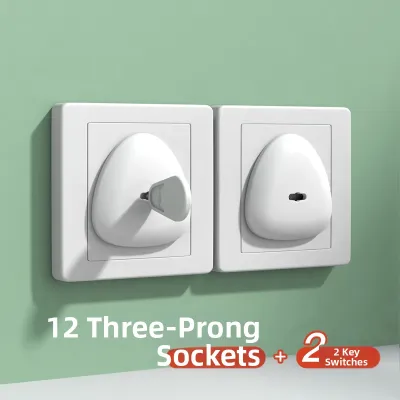
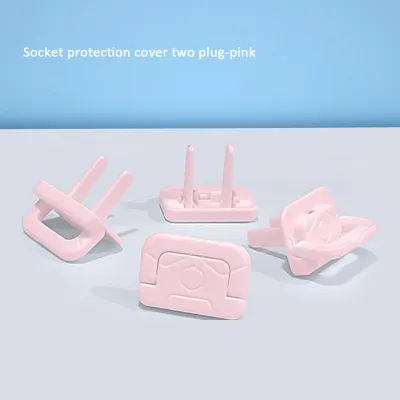
Cap-style inserts are small plastic pieces designed to fit directly into the three-pin openings of an unused socket. While basic friction-fit caps are common, they can sometimes be pried loose by persistent toddlers. To ensure safety, look for advanced cap-style inserts that feature a flush profile and require a specialized key, a coin, or a dual-action squeeze mechanism to remove. This design ensures that only an adult with the proper tool or hand strength can extract the cover.
Products mentioned in this guide
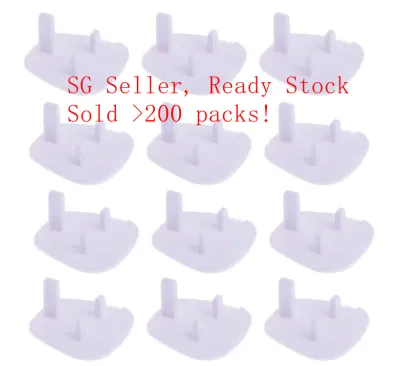
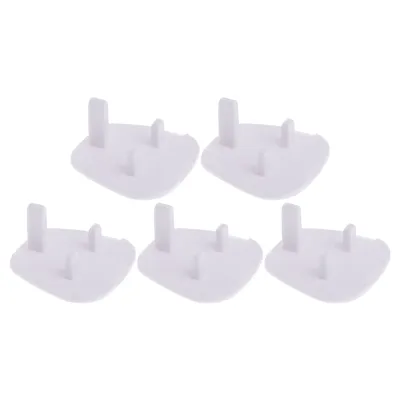
![[SG Locall Seller] Bundle in 5 Baby Safety Cover for UK type Power sockets outlets plugs](https://img.lazcdn.com/g/p/e0dc60cb1ed215db4c89b702d75ae1ee.jpg_400x400q80.jpg_.webp)
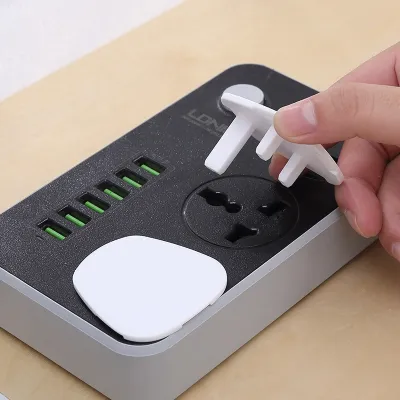
Prices are valid at publication and may change. Please refer to the product page for the latest price.
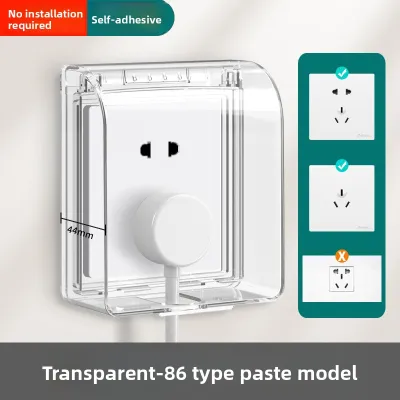
Box-style enclosures are protective plastic domes or boxes that mount over an entire outlet, enclosing both the socket and any plugged-in cables. They feature a latching or locking lid that allows cords to exit through small, secure channels at the bottom. This design is highly effective for appliances that remain plugged in continuously, such as refrigerators, televisions, or air purifiers. By keeping the plug and the socket face completely inaccessible, they eliminate the risk of a child pulling a live plug halfway out and exposing energized brass pins.
Sliding plate covers utilize a spring-loaded mechanism that sits over the existing faceplate. When you need to plug in an appliance, you insert the plug pins into the cover’s slots, slide the plate to align with the socket holes, and push the plug all the way in. When you pull the plug out, the spring automatically slides the plate back into its closed position, instantly blocking access to the live terminals. This is a highly convenient option for outlets used frequently for vacuum cleaners, phone chargers, or kitchen appliances.
When evaluating any safety cover, prioritize durable, non-toxic, flame-retardant plastics such as high-grade polycarbonate or ABS. Avoid cheap, brittle plastics that can crack under pressure or degrade over time in Singapore’s humid climate. Inspect the locking tabs and hinges on box enclosures to ensure they require a level of finger coordination and strength that exceeds a young child’s capabilities. Verify that the mechanism does not rely on simple friction fits, which can loosen as the plastic expands and contracts with ambient temperature changes.
Selecting Covers for Standard Type G Wall Sockets
In typical Singapore living rooms and bedrooms, wall sockets are often positioned low to the ground, right at a crawling baby’s eye level. For these unused outlets, choose cap inserts that sit completely flush with the socket faceplate. Any protruding edges or decorative tabs can serve as leverage points, allowing a toddler to grip and pull the cover out. A completely flat design forces the child to move on to other activities, as there is nothing for small fingers to grasp.

For outlets that you access daily, constantly removing and replacing cap-style inserts can lead to caregiver fatigue, increasing the likelihood that a socket will be left unprotected. In these high-traffic areas, transition to sliding plate mechanisms. When selecting these, verify that the sliding door does not obstruct the earth pin of your standard Type G plugs. The mechanism must operate smoothly without requiring excessive force, which could damage the plug pins or the internal shutter system of the wall socket.
Type G sockets have a distinct rectangular three-pin layout. It is crucial to verify that any safety cover you purchase is specifically designed for British Standard (BS 1363) Type G outlets. Generic covers designed for two-pin Type A or Type C sockets will not fit and can damage your wall outlets if forced. Check that the cover’s pins align perfectly with the socket holes and slide in smoothly without cracking the surrounding plastic housing.
Deciding between adhesive and screw-mounted covers often depends on your living situation. For families renting a home, damage-free adhesive pads are highly practical. They allow you to secure the home without violating tenancy agreements, provided you use high-quality, residue-free adhesives. For homeowners, screw-mounted plates offer a more permanent, tamper-resistant hold. These plates replace or attach directly to the existing faceplate screws, ensuring that even the most determined child cannot pull the protective barrier away from the wall.
Securing Extension Cords and Travel Adaptors
Multi-plug power strips are common in home offices and entertainment centers, but they present a high risk because they sit on the floor within easy reach of children. Standard wall socket covers cannot protect these mobile power sources. Instead, utilize large box-style cable management enclosures. These boxes house the entire power strip, excess cabling, and individual plugs within a single, ventilated compartment secured by child-resistant latches. This keeps the entire electrical hub out of sight and out of reach.
Many households in Singapore use imported appliances that require travel adaptors or voltage converters. These adaptors often protrude significantly from the wall, creating a heavy, unstable connection that is easily knocked loose or pulled out by a child. To secure these, use specialized deep-box covers that accommodate the extra depth of the adaptor. Alternatively, consider replacing the imported appliance’s plug with a standard fused Type G plug, or use cord-shortening strategies to keep the connection point elevated and inaccessible.
Beyond using physical covers, safe placement of extension cords is essential. Always position enclosed power strips behind heavy furniture or mount them high on walls using brackets. Never route cables under rugs or carpets, as this traps heat and can cause the insulation to degrade, creating a fire hazard. Ensure that any box-style enclosure you use has adequate ventilation slots to allow heat generated by the power adapters to dissipate safely.
Many Type G wall sockets and extension cords feature individual power switches. While childproofing, you must balance safety with adult accessibility. Choose box-style covers that allow you to quickly access the master power switch or unplug the main cord in an emergency. The locking mechanism should be complex enough to deter a child but intuitive enough for an adult to open quickly without searching for a misplaced key during a critical moment.
Installation, Maintenance, and Safety Boundaries
Before installing any safety plug cover, perform a thorough safety check. Ensure your hands are completely dry to prevent any risk of electrical shock. Clean the socket faceplate with a dry microfiber cloth to remove dust, grease, or moisture, which can prevent adhesives from bonding properly. If you are installing a screw-mounted cover or replacing a faceplate, switch off the power at the wall socket, and for maximum safety, turn off the corresponding circuit breaker at your home’s main distribution board.
Safety plug covers are subject to wear and tear from daily use and environmental factors. Regularly inspect all covers in your home for signs of degradation. Look for cracked or brittle plastic, weakened adhesive bonds that allow the cover to wiggle, sticking sliding doors that fail to snap back into place, or any discoloration from heat. If you notice any of these indicators, remove the cover immediately and replace it to maintain a secure environment.
When it is time to remove adhesive-mounted covers—either because your child has outgrown them or you are moving out—do so carefully to avoid damaging the wall. Use a hairdryer on a low heat setting to gently warm the adhesive pad, which softens the glue. Slowly pry the cover away using a plastic spudger or an old credit card. Clean any remaining sticky residue with a mild, paint-safe adhesive remover, testing it on an inconspicuous area of the wall first to ensure it does not strip the paint.
It is vital to remember that safety plug covers are physical deterrents, not absolute guarantees of safety. They are designed to buy you valuable seconds to intervene, but they cannot replace active adult supervision. As your child grows, pair these physical barriers with age-appropriate education about the dangers of electricity. Teach them that wall outlets and power cords are not toys, and establish clear boundaries around electrical appliances throughout your home.
Frequently Asked Questions (FAQ)
Are cap-style plug covers a choking hazard?
Poorly designed or easily removable cap-style plug covers can pose a serious choking hazard if a child manages to pull them out of the socket. To mitigate this risk, avoid cheap, flimsy plastic caps that can be pried loose with fingernails. Instead, select high-quality caps that sit completely flush with the faceplate and require a specific tool, a coin, or dual-action coordination to extract. If you find your child is persistent or has strong grip strength, transition to sliding plate covers or box-style enclosures that cannot be removed as individual small parts.
Do I need to turn off the main power to install sliding socket covers?
The level of power isolation required depends on the type of sliding cover you are installing. For adhesive overlay covers that simply stick onto the existing faceplate, you generally only need to switch off the individual wall socket switch. However, if you are installing a replacement faceplate or a screw-mounted cover that requires loosening the structural screws of the electrical box, you must turn off the circuit breaker at your home’s main distribution board. Always consult the manufacturer’s installation manual, use a non-contact voltage tester to verify the outlet is dead before touching any screws, and consult a licensed electrician if you encounter old, damaged, or unfamiliar wiring.
How do I remove adhesive box covers without damaging the wall paint?
Removing heavy-duty adhesive box covers without peeling off wall paint or plaster requires patience and the right technique. Start by using a hairdryer on a low or medium heat setting, directing the warm air at the adhesive edges for a few minutes to soften the bond. Once the adhesive is pliable, gently slide a plastic spudger, a putty knife, or a plastic card behind the bracket and slowly pry it away from the wall. Avoid using sharp metal tools or excessive force, which can gouge the drywall. Any leftover adhesive residue can be treated with a mild, paint-safe adhesive remover or a small amount of eucalyptus oil, which should be tested on a hidden spot first.

Community discussion
Share your experience or ask a question. Comments are reviewed before publication.