
Choosing the best Nutribullet model for making baby food depends on your preparation style, kitchen space, and whether you prefer making fresh daily portions or large batches for freezing. While the specialized Nutribullet Baby is designed specifically for infant portions with dedicated storage accessories, standard personal blenders like the Nutribullet 600-watt or 900-watt models offer greater motor power for processing fibrous ingredients and can transition into family use as your child grows. To find the right fit, you must evaluate motor specifications, cup capacities, and cleaning requirements against your daily weaning routine.
Key Features to Check for Baby Food Preparation
Preparing homemade purees requires a machine that can transform tough, fibrous ingredients into a completely smooth, safe consistency for your baby. When evaluating different models, pay close attention to the motor power and blade configuration. A motor with higher wattage generally handles dense root vegetables, leafy greens, and cooked meats more efficiently, reducing the risk of leaving behind dangerous unblended lumps.
Material safety is another critical factor when preparing food for infants. Always check the manufacturer’s product packaging and user manual to verify that all cups, lids, and blades are made from food-grade, BPA-free plastics. Since baby food is often blended warm or stored directly in these containers, ensuring the materials do not leach harmful chemicals under normal use is essential.
Products mentioned in this guide
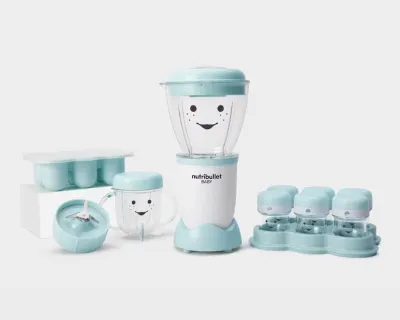
Prices are valid at publication and may change. Please refer to the product page for the latest price.
Finally, examine the physical design of the blender parts for ease of cleaning. Infant food preparation demands strict hygiene, meaning you should avoid models with complex, non-removable parts or deep, narrow crevices. Look for blade assemblies and cups that can be easily disassembled, allowing you to scrub away food residue before it can harbor bacteria.
Comparing Capacities and Batch Sizes
Your meal-prep strategy will largely dictate the blender capacity you need. If you prefer serving fresh, single-portion meals to your baby every day, a compact personal blender with small cups is highly practical. These smaller containers minimize food waste by allowing you to blend exactly what your baby needs for one or two meals, and they take up very little space in compact Singapore kitchens.

Conversely, if you plan to batch-cook and freeze portions for the week, a larger pitcher or a multi-cup system is more efficient. Larger blending cups allow you to steam a big batch of vegetables, blend them all at once, and portion them into silicone freezer trays. This approach saves significant time but requires a blender that can handle larger volumes without overheating.
When working with smaller portions in a standard blender, always check the manufacturer’s minimum fill line. If the ingredients do not cover the blades fully, the food will simply spin around the edges of the cup without blending. Ensuring the blade clearance matches your typical batch size prevents the frustration of food getting stuck or requiring constant manual scraping.
Evaluating Texture and Blending Performance
As your baby progresses through different weaning stages, their texture needs will change from ultra-smooth purees to thicker, textured mashes. To achieve these transitions, you need precise control over the blending process. Observe the blending times closely and make use of the pulse function if your chosen model has one. Pulsing allows you to manually control the chop size, preventing a soft pear or banana from instantly turning into a liquid when you want a chunkier texture.
Some models come with specialized blade attachments, such as milling blades. A milling blade is highly useful for grinding dry grains, oats, or brown rice into fine powders to make homemade infant cereals. Check the product specifications of the model you are considering to see if these dry-use blades are included in the box.
Achieving the perfect consistency often requires adding a liquid base to help the blades catch the food. Always use safe liquids such as breast milk, prepared infant formula, or cooled boiled water. Adding liquid not only protects the motor from straining against dry ingredients but also allows you to adjust the thickness of the puree to match your baby’s current developmental stage.
Safety, Cleaning, and Maintenance Checks
Maintaining strict hygiene is paramount when preparing infant meals, as babies have developing immune systems. Before placing any blender components in the dishwasher, consult the user manual to verify dishwasher safety and temperature limits. Some plastic cups and lids are only safe on the top rack, while certain blade assemblies must be washed strictly by hand to preserve the integrity of the bearings and seals.
Regularly inspect the blades, rubber seals, and silicone gaskets for signs of wear, cracking, or discoloration. Gaskets can easily trap moisture and food particles, creating a breeding ground for mold and bacteria if they are not removed and cleaned thoroughly after every use. If you notice any degradation or persistent odors, replace the seals immediately according to the manufacturer’s instructions.
Be cautious with sterilization methods. While it might be tempting to steam-sterilize or boil plastic blender cups to ensure they are germ-free, high temperatures can warp or degrade the plastic, compromising the seal and fit of the cups. Stick to the cleaning methods recommended by the manufacturer, using warm, soapy water and air-drying all parts completely before reassembly.
How to Decide: Matching Models to Your Routine
To make your final decision, map the features of each model to your daily routine and kitchen setup. If you have limited counter space and prefer making quick, fresh meals on demand, a compact, single-serve personal blender is the most practical choice. These models are easy to store, quick to clean, and perfectly sized for immediate consumption.
If you prefer a “cook once, freeze for the week” approach, prioritize a multi-cup system or a model with a larger pitcher. This setup allows you to prepare bulk meals efficiently and often includes convenient storage lids or date-dial cups to help you track freshness in the freezer.
Before purchasing, verify exactly what accessories are included in the box. Some packages come complete with storage cups, pocket guides, and milling blades, while others only include the basic blending cup and motor base. If you need to buy additional accessories separately, factor those extra costs—which typically range from S$20 to S$50 locally—into your overall budget to ensure you get the best value for your household.
Frequently Asked Questions (FAQ)
Can I use the same blender for baby food and adult meals?
Yes, you can use the same blender for both, provided you follow strict cleaning and sanitization protocols. To prevent cross-contamination, thoroughly wash and sanitize the cups and blades between uses, especially if you have recently blended common allergens like nuts, or pungent ingredients like garlic and chili. For peace of mind, some parents prefer purchasing a dedicated set of blending cups and blades exclusively for their baby’s food while sharing the same motor base.
Do I need a dedicated baby food maker instead of a standard blender?
A dedicated baby food maker often combines steaming and blending in a single appliance, which can be highly convenient. However, a standard personal blender is highly versatile and can easily handle all your weaning needs if you steam the food separately beforehand. Standard blenders also have a longer lifespan in your kitchen, as they can continue to be used for family smoothies, sauces, and soups long after your child has transitioned to solid family meals.

Community discussion
Share your experience or ask a question. Comments are reviewed before publication.