
Selecting the right milk bottle cleaner is not about finding a single, universally superior product, but rather matching the cleaner’s formulation and format to your bottle’s material. Whether you use glass, BPA-free plastic, or silicone, each material interacts differently with cleaning agents, milk fats, and water. A cleaner that keeps glass sparkling might fail to strip the oily film from silicone, while a heavy-duty soaking formula might be unnecessarily harsh for daily plastic bottle maintenance.
To establish an efficient feeding routine, caregivers should evaluate cleaners based on material compatibility, residue prevention, and ease of rinsing. By understanding how different bottle materials react to various surfactant types and physical formats—such as liquids, foams, and powders—you can make an informed decision that protects your feeding equipment and ensures a clean, odor-free feed every time.
How Glass, Plastic, and Silicone React to Cleaners
Glass is the most durable and chemically inert material used in baby bottles. It is highly resistant to physical scratching from brushes and does not absorb odors, colors, or milk fats. However, the primary challenge with glass is its tendency to retain a thin, cloudy soap film if the cleaner is not formulated to rinse away completely. This film can accumulate over multiple washes, eventually affecting bottle clarity and potentially altering the taste of the milk.
Products mentioned in this guide
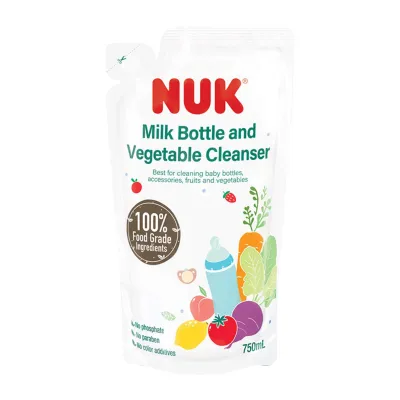
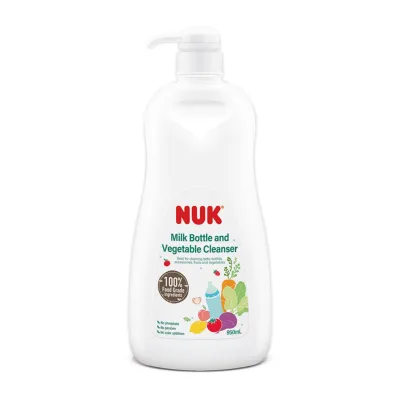
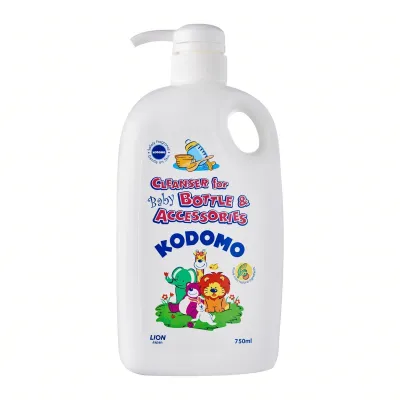
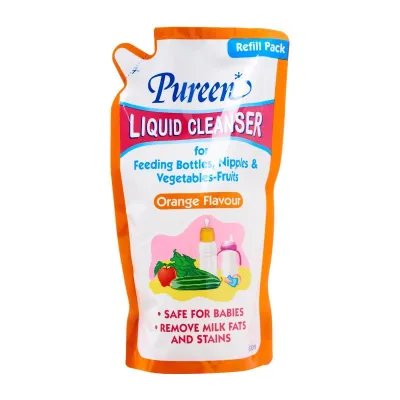
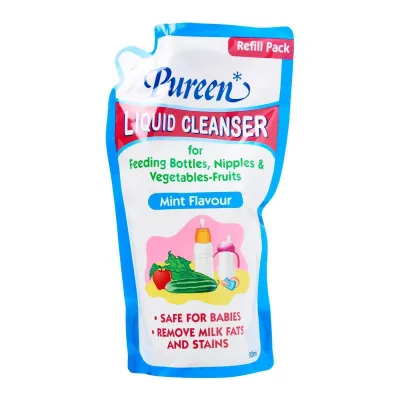
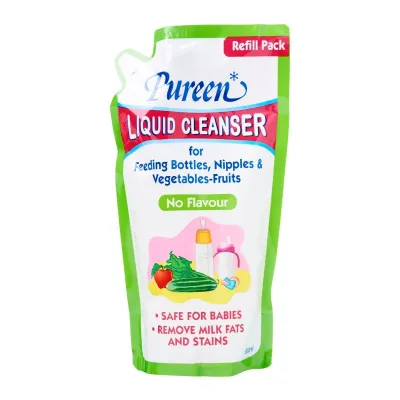
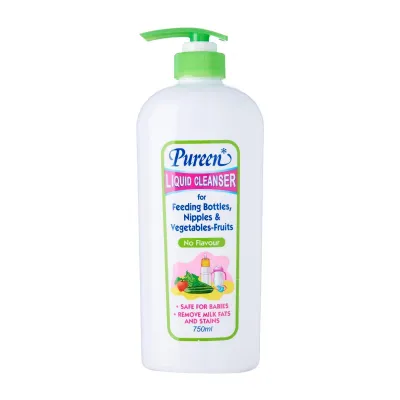
Prices are valid at publication and may change. Please refer to the product page for the latest price.
BPA-free plastic bottles are lightweight and shatterproof, but they are physically much softer than glass. This softness makes plastic highly susceptible to micro-scratches from abrasive cleaning powders or stiff-bristled brushes. These microscopic scratches create tiny crevices where milk proteins, fats, and moisture can hide, making the bottle increasingly difficult to clean. Furthermore, plastic easily absorbs strong synthetic fragrances from standard dish soaps and retains milk fats that cause the material to look cloudy and smell sour over time.
Silicone is popular for its flexible feel and heat resistance, but it possesses unique physical properties that complicate cleaning. At a microscopic level, silicone is highly porous, meaning it easily absorbs external substances. This porosity makes silicone bottles and nipples highly susceptible to trapping milk lipids (fats) and retaining stubborn odors. If a cleaner cannot effectively break down these oils, a greasy residue remains on the surface, which can absorb ambient smells and lead to persistent odors.
Comparing Liquid, Foam, and Powder Bottle Cleaners
Liquid and gel bottle cleaners are the most traditional and widely available formats. These concentrated formulas are highly effective at cutting through milk residue and are easy to dose for varying sink volumes. However, because of their high density, liquid cleaners can sometimes be challenging to rinse completely out of narrow-neck bottles or complex straw and valve systems. Caregivers must rinse thoroughly with warm running water to ensure no concentrated soap residue remains trapped in the bottom or collar.

Foaming cleaners dispense as a pre-aerated lather, offering distinct practical advantages. The light foam immediately coats the interior surfaces of the bottle, spreading easily into tight corners, threads, and pump parts without requiring extensive manual lathering. Because the surfactant is already mixed with air and water, foaming cleaners typically rinse away much faster and with less water than dense liquids. This makes them highly efficient for quick washes and ideal for bottles with complex shapes or narrow openings.
Powder cleaners and effervescent tablets are specialized formats designed primarily for deep cleaning and periodic soaking. These products contain concentrated active ingredients that dissolve in warm water to lift stubborn, dried-on milk solids and eliminate deep-seated odors. While highly effective, they require careful preparation; caregivers must ensure the powder or tablet is completely dissolved before placing bottles in the solution. Undissolved particles can act as physical abrasives, which can scratch plastic or silicone surfaces during scrubbing.
Plant-based and enzyme-infused formulas represent a significant advancement in baby-safe cleaning. Rather than relying on harsh synthetic detergents to strip away grease, these cleaners utilize plant-derived surfactants and active enzymes that specifically target and break down milk proteins and fats. Enzymes act as natural catalysts, cutting through the organic bonds of milk residue so it can be easily wiped and rinsed away. These formulas are typically free from synthetic dyes, parabens, and artificial fragrances, reducing the risk of leaving chemical residues.
How to Match Cleaners to Your Bottle Material
If your feeding setup consists primarily of BPA-free plastic bottles, your main goal is to prevent physical scratching and chemical absorption. You should choose liquid or foam plant-based cleaners that are explicitly labeled as fragrance-free. These gentle formulas clean effectively without requiring aggressive scrubbing, preserving the smooth interior surface of the plastic. Avoiding synthetic fragrances ensures that the plastic does not absorb artificial perfumes, which can cause babies to reject their milk due to unfamiliar scents.
For households utilizing silicone bottles, nipples, or breast pump parts, the priority shifts to lipid breakdown and odor elimination. You should opt for enzyme-based cleaners or dedicated soaking tablets that are formulated to target milk fats. Because silicone holds onto oils so tightly, standard surface-level washing may leave a greasy film. An enzyme-rich cleaner, combined with a periodic warm-water soak, will chemically break down these trapped fats, lifting them out of the silicone’s microscopic pores and neutralizing sour odors without degrading the material.
If you primarily use glass bottles, you have the greatest flexibility in cleaner selection, as glass can tolerate a wide range of formulas without risk of scratching or absorption. Your primary focus should be on selecting a standard liquid or foam cleaner that boasts excellent clean-rinsing properties. Because glass is highly smooth, any soap residue will manifest as a dull, slippery film. Choosing a formula designed to rinse away completely with minimal water will keep your glass bottles crystal clear and free from soapy tastes.
Regardless of the material you use, always verify if your bottle manufacturer specifies any restricted ingredients or cleaning methods. Some manufacturers explicitly warn against using cleaners that contain specific essential oils, high-alkaline solutions, or certain natural solvents, as these substances can accelerate the degradation of plastic collars, silicone valves, or printed measurement markings on the bottle exterior.
Key Features to Check on Cleaner Labels
When shopping for a milk bottle cleaner, reading the ingredient and marketing labels carefully is essential to ensure the product is safe and effective for infant feeding gear. First and foremost, look for “fragrance-free” or “unscented” designations. This is distinct from “scent-free,” which may still contain masking agents to hide chemical smells. A truly fragrance-free cleaner prevents the transfer of artificial scents to the bottle materials, protecting your baby from sensory aversion during feeding.
Next, prioritize products labeled as “dye-free” and “hypoallergenic.” Artificial dyes serve no functional purpose in cleaning and only introduce unnecessary chemicals to food-contact surfaces. Hypoallergenic formulas are designed to minimize the risk of skin irritation for the caregiver washing the bottles, as well as ensuring that any trace residue that might survive the rinse cycle is highly unlikely to cause digestive or systemic sensitivities in your baby.
Verify the product’s rinse-ease claims by looking for terms such as “clean-rinsing,” “zero residue,” or “easy-rinse formula.” These terms indicate that the surfactants used in the cleaner have a low affinity for surfaces once diluted with water, allowing them to wash away completely without leaving a microscopic film. This is a crucial feature for narrow-neck bottles, where physical wiping of the entire interior surface is difficult to achieve.
Finally, confirm that the product is explicitly labeled for use on baby bottles, nipples, breast pump parts, or food-contact surfaces. General household dish soaps are formulated to strip heavy grease from adult cookware and often contain strong degreasers, synthetic preservatives, and optical brighteners. These chemicals are unnecessarily harsh for baby items and are not formulated with the same strict safety margins regarding accidental ingestion or residue limits.
Safe Washing Practices and When to Replace Bottles
Achieving a truly clean bottle requires pairing the right cleaner with safe physical washing practices. Always match your cleaning brush to the bottle material you are washing. For plastic and silicone bottles, use soft silicone brushes or sponge-tipped brushes, which glide smoothly over the surfaces without causing micro-scratches. Reserve stiff nylon-bristled brushes for durable glass bottles, as these bristles can easily gouge softer plastic and silicone over time.
Pay close attention to the water temperature recommended by both the cleaner manufacturer and the bottle manufacturer. Warm water is highly beneficial for dissolving milk fats and activating the enzymes in plant-based cleaners, but excessively hot or boiling water can cause certain plastics to warp, degrade, or release chemical compounds. It can also accelerate the loss of elasticity in silicone nipples and valves, leading to leaks or altered flow rates.
Establish a regular inspection routine and know when to stop using and replace your feeding equipment. For plastic and silicone bottles, you should stop use and replace them if you observe deep physical scratches, persistent cloudiness that does not clear after washing, or stubborn sour odors that survive a dedicated enzyme soak. These signs indicate that the material’s structural integrity has compromised, creating a breeding ground for bacteria that standard cleaning can no longer resolve.
Lastly, always consult the bottle manufacturer’s care instructions if you encounter any conflict between the bottle’s guidelines and the instructions on your cleaner label. The bottle manufacturer understands the exact chemical composition of their materials and their specific tolerances, making their guidelines the ultimate authority on maintaining the safety and longevity of your feeding gear.
Frequently Asked Questions (FAQ)
Can I use regular household dish soap instead of a dedicated milk bottle cleaner?
Regular household dish soaps are formulated to tackle heavy grease on adult cookware and often contain strong synthetic fragrances, artificial dyes, and highly concentrated surfactants. These ingredients can leave a persistent chemical residue on baby bottles, which is difficult to rinse away completely and may alter the taste of the milk. Dedicated milk bottle cleaners are specifically formulated to target milk proteins and fats while rinsing away cleanly without leaving scents or residues. If you must use regular dish soap in an emergency, select an unscented variety, use a very small amount, and rinse the bottle multiple times with warm water.
How do I remove stubborn milk fat buildup and odors from silicone bottles?
To address stubborn milk fat buildup and odors on silicone, start by checking the bottle manufacturer’s instructions regarding boiling or steam sterilization limits. A highly effective method is to use an enzyme-based milk bottle cleaner or a dedicated soaking tablet dissolved in warm water, allowing the silicone parts to soak for the recommended duration to break down the bound lipids. Avoid using harsh abrasive scrubbers, baking soda pastes, or bleach, as these can scratch or chemically degrade the silicone surface, creating microscopic pockets that will trap even more odors and residues in the future.

Community discussion
Share your experience or ask a question. Comments are reviewed before publication.