
Selecting the right kids fork and spoon set depends entirely on matching the utensil’s design to your child’s current motor skills and weaning stage. Instead of relying solely on age guidelines printed on packaging, observing how your child holds objects, coordinates their hands, and interacts with food provides the most reliable guide. Introducing the correct tools at each developmental milestone supports self-feeding confidence, protects sensitive gums, and helps your child transition smoothly from purees to solid family meals. Always verify the recommended age, weight, or developmental stage from the specific product documentation before introducing any new utensil to your child’s routine.
Understanding Your Child's Feeding Development Stages
At around six months of age, most infants begin their weaning journey, typically starting with smooth purees or very soft mashed foods. At this initial stage, a baby’s motor skills are dominated by the palmar grasp, where they use their entire fist to hold an object. Their primary way of exploring new textures and tools is through mouthing, bringing everything directly to their lips and gums to understand its shape, temperature, and texture. Caregivers should focus on sensory exploration during this phase, ensuring that any utensil introduced is safe for constant gumming and exploration under active supervision.
As babies progress toward the middle of their first year of weaning, usually between nine and twelve months, their fine motor skills undergo a significant shift. You will begin to notice the emergence of the pincer grasp, where they use their thumb and index finger to pick up small pieces of food. This development is accompanied by a marked improvement in hand-eye coordination, allowing them to target specific items on their plate with greater accuracy. In this transitional stage, children actively attempt to feed themselves rather than relying solely on a caregiver, though they may still struggle to keep food on a spoon while moving it from the bowl to their mouth.
Products mentioned in this guide
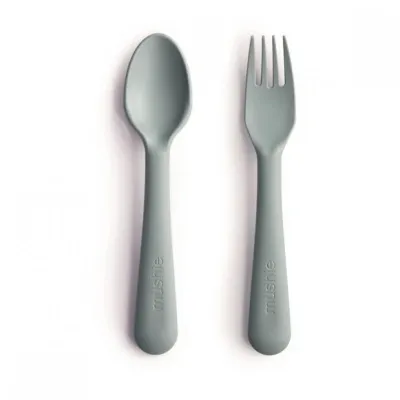
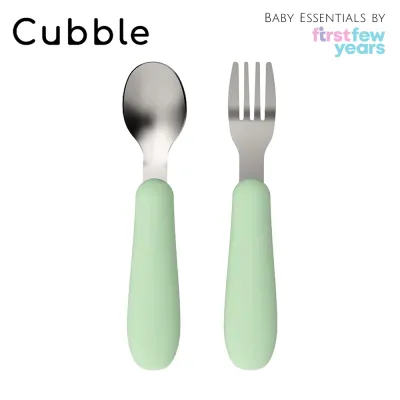
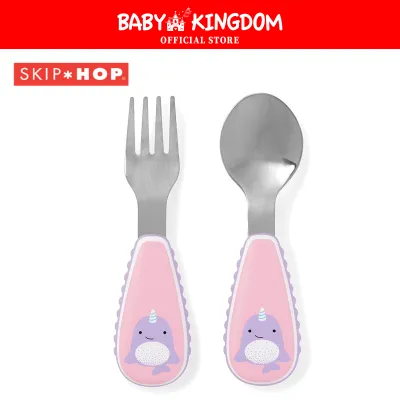
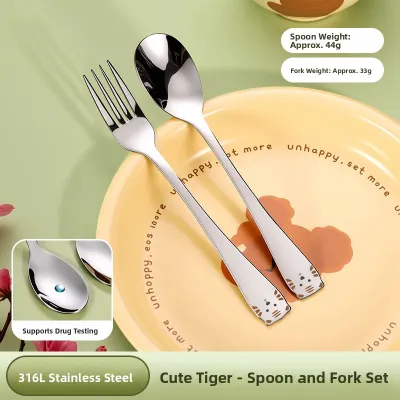
![[Kawaii Kiddy] Edison mama Fork & Spoon - 1.5y+ (Thomas & Friends/ Hello Kitty)](https://img.lazcdn.com/g/p/cdc32971e657f213e2caf26a55d127fd.png_400x400q80.png_.webp)
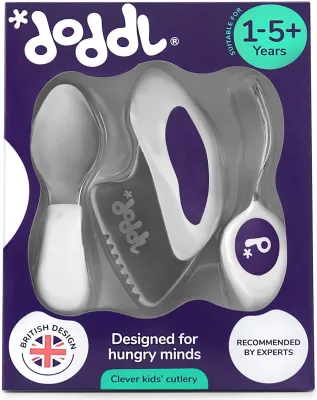
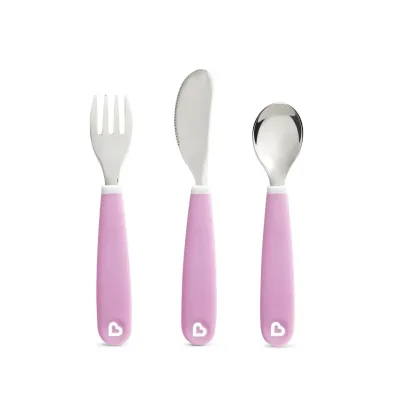
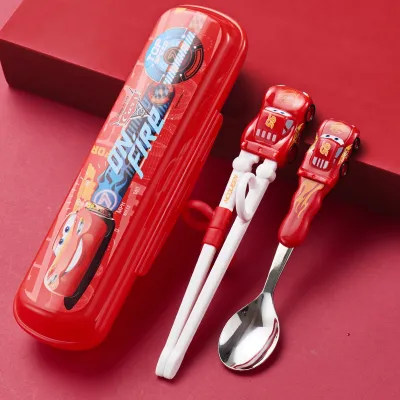
Prices are valid at publication and may change. Please refer to the product page for the latest price.
By the time children reach toddlerhood, typically from twelve to eighteen months and beyond, they display a strong desire for independence at the dining table. Their wrist rotation becomes more refined, allowing them to scoop up food and turn their hand to bring the spoon flat into their mouth without spilling the contents. This is also the stage where they begin to master the concept of piercing soft foods with a fork. Toddlers can navigate different food textures and are capable of using dual utensils, although they still require tools scaled to their smaller hand size and limited leverage.
Key Features to Look for in a Kids Fork and Spoon Set
The handle of a kids fork and spoon is the direct interface between the child’s hand and their food, making its design critical for success. For infants in the early stages of self-feeding, short, bulbous handles are highly effective because they fit naturally into a small, closed fist. These thick handles reduce the amount of grip strength required to keep the utensil upright, preventing it from slipping through tiny fingers. As your child’s hands grow and their grip matures, they can transition to slightly longer, flatter handles that mimic adult cutlery but remain scaled down to match their physical proportions.

The shape and size of the utensil head must match your child’s oral capacity and coordination level. For early spoon-feeding, a shallow spoon bowl is essential because infants do not yet have the lip coordination to clear food from a deep pocket. A shallow, flat bowl allows them to easily scrape off purees using their upper lip, minimizing frustration and mess. When evaluating forks, the design of the tines requires careful inspection; they must be blunt and rounded to prevent accidental pokes to the gums or cheeks, yet possess enough structure to pierce soft foods like steamed carrots or banana slices.
Material safety is paramount when selecting items that spend significant time in your child’s mouth. Parents should carefully verify manufacturer labels to ensure all plastics, silicones, and metals are free from harmful chemicals, looking specifically for BPA-free, phthalate-free, and PVC-free declarations. Checking for food-grade certifications, such as compliance with international food contact standards, is a dynamic safety step that parents must verify directly on the product packaging. Additionally, verify whether the manufacturer specifies that the set is dishwasher-safe, and note whether they recommend top-rack placement only to prevent heat damage.
For children who are struggling with the transition from a fist grip to wrist rotation, ergonomically angled or curved utensils can offer valuable support. These specialized designs feature a bent neck that aligns the spoon bowl or fork head directly with the child’s mouth when they hold the handle horizontally. This design bypasses the need for complex wrist turning, allowing the child to experience successful self-feeding early on. While angled utensils are excellent training tools, they are generally transitional items, and children should gradually transition to straight utensils once they develop the wrist flexibility and strength to rotate their hand naturally.
Matching Utensil Types to Weaning Milestones
During the initial exploration phase, the primary goal is to build positive associations with utensils while protecting sensitive, teething gums. Soft, chunky silicone spoons are ideal for this stage because the flexible material is gentle on tender mouths and cannot cause injury if a baby accidentally jams the spoon too far back. Many of these spoons feature textured collars or shields that act as choke guards, preventing the utensil from being inserted too deeply. For babies starting solid foods via baby-led weaning, pre-loaded forks and spoons designed with open channels or textured grids are highly effective, allowing purees or thick mashes to cling to the head when dipped into a bowl.
As your child enters the active practice phase, they require tools that help them transition from dipping to true scooping and piercing. Utensils with short, wide handles made of firm plastic or dense silicone provide the stability needed to push against food. The spoon bowls should remain relatively shallow but feature slightly raised edges to help keep food contained as it travels from the plate to the mouth. Forks in this phase should feature short, sturdy tines that are rounded for safety but firm enough to hold soft, bite-sized pieces of food. Look for sets that incorporate contrasting colors between the handle and the head, which can help young children visually distinguish the part they need to hold.
Once your child has mastered basic scooping and piercing and is eating a wider variety of family meals, they are ready for the independence phase. This stage calls for standard-length utensils that resemble adult cutlery but are proportioned for a child’s hand. The handles are typically slimmer, encouraging the development of a mature pencil-like grip, while the overall construction is more durable to handle firmer food textures. Introducing stainless steel utensil heads with child-safe, rounded tines and deeper spoon bowls is highly beneficial at this stage, as they slide easily into foods like meats, pasta, and dense vegetables, providing a realistic dining experience.
Safety Checks and Maintenance for Kids' Utensils
Regularly inspecting your child’s fork and spoon sets is a critical habit for maintaining safety and hygiene at the dining table. Over time, constant chewing and gumming can cause silicone or soft plastic materials to develop small tears, bite marks, or rough edges. These damaged areas can become breeding grounds for bacteria and, if left unchecked, may eventually tear completely off, creating a serious choking hazard. Pay close attention to multi-piece utensils, such as those with a metal head inserted into a plastic or silicone handle, and inspect the joint where the two materials meet to ensure there is no loosening, cracking, or separation.
To keep utensils hygienic, always follow the cleaning protocols outlined by the manufacturer. While many modern kids’ utensils are labeled as dishwasher-safe, high heat and harsh detergents can accelerate the degradation of certain materials. If using a dishwasher, place small utensils in a secure basket on the top rack, away from the heating element, to prevent warping or melting. For items that require sterilization, particularly during the early weaning months, verify the maximum temperature limits specified by the manufacturer, as some plastics cannot withstand boiling water or steam sterilizers without releasing chemicals or losing their structural integrity.
Knowing when to discard and replace your child’s utensils is essential for long-term safety. Any utensil that shows signs of material degradation, such as stickiness, discoloration, cracking, or a change in texture, should be thrown away immediately. Deep scratches on plastic surfaces are another clear indicator for replacement, as these crevices cannot be reliably cleaned and can trap food residue and bacteria over time. If feeding difficulties persist, or if you notice unusual swallowing or chewing patterns, stop using the utensils and consult a pediatrician or a pediatric occupational therapist for professional guidance.
Frequently Asked Questions (FAQ)
When should I introduce a fork to my baby?
You can introduce a fork to your baby as soon as they demonstrate a reliable pincer grasp and show an interest in picking up solid, bite-sized foods, which typically occurs between nine and twelve months. Look for signs of readiness, such as your baby trying to spear food with their fingers or showing curiosity when watching you use a fork. Start with very soft, easily pierceable foods like steamed sweet potato cubes or banana slices, and always use a fork with blunt, rounded tines designed specifically for infants to ensure they do not injure their sensitive gums. Always maintain close caregiver supervision during meals to ensure safe handling.
Are silicone or stainless steel spoons better for toddlers?
Neither material is universally superior, as both silicone and stainless steel serve different developmental needs and environments. Silicone spoons are excellent for early weaning and teething toddlers because the soft, flexible material is gentle on sore gums, quiet when dropped, and highly slip-resistant. On the other hand, stainless steel spoons offer superior durability, do not retain food odors or stains, and are highly effective for older toddlers who are learning to scoop denser foods. Evaluating your child’s current chewing habits and coordination, alongside verifying manufacturer age recommendations, will help you decide which material fits their needs best.
How do I teach my toddler to use a fork and spoon correctly?
Teaching your toddler to use utensils is a gradual process that relies heavily on modeling and low-pressure practice. Eat meals together so your child can observe your movements, and offer gentle hand-over-hand guidance to help them feel the motion of scooping or piercing. To set them up for success, serve foods with appropriate consistencies—such as thick yogurts that cling to a spoon, or soft, cubed vegetables that are easy to pierce—and keep practice sessions short and positive to avoid frustration. If your child shows persistent resistance or struggles with basic oral motor coordination, consult a qualified professional for personalized advice.

Community discussion
Share your experience or ask a question. Comments are reviewed before publication.