
Securing your home as your baby transitions into a curious toddler is a major safety milestone for parents in Singapore. Among the various areas of the kitchen, the refrigerator is often one of the most attractive targets for young children. It is filled with colorful items, interesting textures, and the promise of tasty treats. However, keeping toddlers out of the refrigerator presents unique challenges compared to standard kitchen cabinets. Refrigerator doors are significantly heavier, subject to constant temperature fluctuations, and feature diverse handle designs that can render typical cabinet locks completely ineffective.
To find a reliable child lock for a fridge, you must look beyond generic baby-proofing kits. The tropical climate of Singapore introduces high humidity levels, which can cause condensation to form on the cold exterior surfaces of your appliance. This moisture directly threatens the integrity of standard adhesives, causing many basic locks to peel off within days of installation. Furthermore, the physical force required to open a vacuum-sealed refrigerator door means any lock you install must withstand substantial pulling force. This guide helps parents in Singapore identify the right locking mechanisms, understand adhesive requirements for cold surfaces, and establish a safe evaluation process when shopping online, ensuring you select a secure and practical solution for your specific appliance.
Why Standard Cabinet Locks Often Fail on Refrigerators
Standard kitchen cabinets are typically made of wood, laminate, or lightweight composite materials. They operate in dry, ambient room temperatures and feature lightweight doors that swing open with minimal effort. Consequently, standard cabinet locks are designed for these low-stress environments. When parents attempt to apply these same locks to a refrigerator, they quickly encounter several physical and environmental barriers that lead to premature failure.
Products mentioned in this guide
![[SG SELLER][FREE SHIPPING] Brown Plastic Cupboard Locks Drawer Fridge Baby Child Safety Latch Prevent Child from opening](https://img.lazcdn.com/g/p/630939efc2b14587f3d33ee0abac8742.jpg_400x400q80.jpg_.webp)
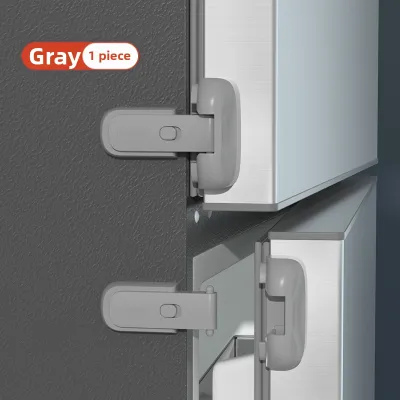
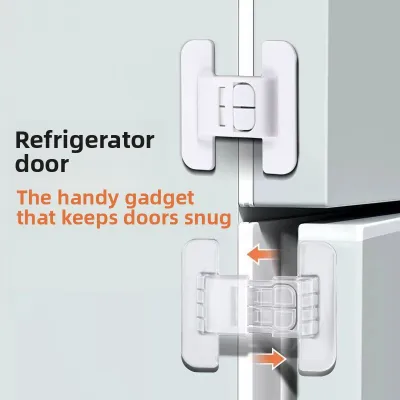
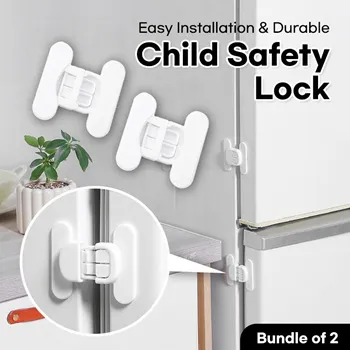
Prices are valid at publication and may change. Please refer to the product page for the latest price.
The primary culprit behind lock failure on appliances is temperature fluctuation and the resulting condensation. In Singapore’s warm and humid climate, opening a refrigerator door allows warm air to rush in, while the cold air inside escapes. When the door is closed, the sudden temperature drop on the outer edges of the appliance causes moisture in the air to condense on the exterior surface. Standard adhesives are not formulated to resist constant moisture; they soften, lose their tackiness, and eventually slide off the metal or plastic surface of the fridge.
Additionally, the sheer weight and swing momentum of a refrigerator door are vastly different from those of a cabinet door. Refrigerator doors are heavily insulated and often packed with heavy bottles, jars, and cartons on the inside shelves. When a toddler grabs the handle and pulls with their entire body weight, they exert a level of leverage that standard plastic latches cannot handle. The sudden impact of this weight against a weak lock can snap plastic components or shear the adhesive clean off the appliance.
Finally, refrigerator handle designs vary wildly. Unlike standard cabinets with uniform knobs or pulls, modern fridges feature recessed handles, vertical bars, horizontal handles, or completely flat, handle-less doors. Standard cabinet locks often rely on a specific alignment or a physical loop around two adjacent handles. If your refrigerator does not have matching, closely spaced handles, a standard cabinet lock simply will not fit or align correctly, leaving the door unsecured.
Essential Features to Evaluate in a Fridge Child Lock
When shopping for a child lock specifically designed for a refrigerator, you must evaluate several critical features to ensure the product is both secure against toddler curiosity and practical for daily adult use. The first consideration is the type of locking mechanism. The most common options include flexible strap locks, rigid push-button latches, and sliding latches. Flexible strap locks are highly versatile because they can bend around corners, making them ideal for securing the side of the fridge to the front door. Rigid push-button latches, on the other hand, are excellent for flat surfaces where the door and the fridge frame are perfectly flush.

Material durability is another essential factor. Because the kitchen is a high-traffic area prone to grease, steam, and frequent cleaning, the lock must be constructed from robust materials. Look for locks made from high-grade ABS plastic or reinforced nylon straps. These materials resist cracking under tension and do not degrade when exposed to common household cleaning agents or kitchen oils. The internal spring mechanisms should also be rust-resistant, as the humid Singapore environment can cause cheap metal springs to corrode and seize over time.
Daily usability is a crucial balance that parents must strike. A lock that is too difficult for an adult to open will quickly become a source of frustration, especially when you are trying to navigate the kitchen with your hands full of groceries or while holding a crying child. The ideal fridge lock should feature a one-handed operation mechanism for adults. This typically involves a dual-action release, such as pressing two buttons simultaneously or sliding a safety catch while pressing a release button. This multi-step process requires a level of manual dexterity and finger strength that toddlers under the age of three do not possess, ensuring the fridge remains secure while remaining accessible to caregivers.
Matching the Lock Mechanism to Your Refrigerator Design
Before purchasing any child lock, you must carefully analyze the physical configuration of your refrigerator. Different door styles require completely different locking strategies to ensure a secure fit without damaging the appliance or compromising its energy efficiency.
For French door and side-by-side refrigerators, the primary challenge is securing two doors that meet in the middle. If your fridge has vertical bar handles that run parallel to each other, a sliding latch lock or a heavy-duty strap lock that loops around both handles can be highly effective. However, if your French door model has recessed handles, you will need an adhesive-mounted lock that bridges the gap between the two doors. This lock must be mounted flat across the center seam, requiring precise alignment so that both doors are held tightly together, preventing a child from squeezing their fingers through a partially opened gap.
Top and bottom freezer models present a different set of challenges. In these configurations, you have a main fresh food compartment and a separate freezer compartment, which may be a swinging door or a pull-out drawer. Securing the main compartment usually requires a corner-mounted strap lock that anchors to the side of the refrigerator body and latches onto the front of the door. If you also need to secure a bottom freezer drawer, you must ensure the lock is rated for the heavy pulling force required to open freezer drawers, which often have strong magnetic seals.
Handle-less or recessed handle designs are increasingly popular in modern Singapore kitchens due to their sleek, minimalist aesthetic. Because there are no physical handles to anchor a lock, you must rely entirely on adhesive-mounted strap locks. When installing these, it is critical to find secure anchor points on the flat exterior panels of the appliance. You must ensure that the strap and the mounting bases do not cross or interfere with the magnetic rubber gasket (the door seal). If a lock puts uneven pressure on the gasket or prevents it from sealing completely, warm air will leak into the fridge, causing frost buildup, food spoilage, and a significant increase in your electricity bill.
Overcoming Adhesive Challenges on Cold Fridge Surfaces
The success or failure of an adhesive-mounted child lock depends almost entirely on how well the adhesive bonds to the refrigerator surface. Because refrigerators are cold and prone to surface moisture, achieving a strong bond requires careful preparation and strict adherence to installation instructions.
The first step is thorough surface preparation. Even if your fridge looks clean, it likely has an invisible layer of kitchen grease, dust, and fingerprint oils. To remove this, clean the mounting area thoroughly with isopropyl alcohol (rubbing alcohol). Avoid using standard glass cleaners, multi-purpose sprays, or dish soap, as these products often leave behind a thin chemical residue that prevents the adhesive from bonding properly. Once cleaned, wipe the area with a dry, lint-free microfiber cloth and allow it to air dry completely.
Temperature and moisture control during installation are critical. In Singapore’s humid climate, condensation can form rapidly on the cold metal exterior of a running refrigerator. If you apply an adhesive tape directly onto a cold, damp surface, the bond will fail almost immediately. To prevent this, wipe away any condensation right before application. If the surface feels very cold to the touch, you can use a hairdryer on a low, warm setting to gently warm the metal surface for a few seconds. This temporary warmth helps the adhesive flow into the microscopic pores of the surface, creating a much stronger mechanical bond.
The final and most crucial step is allowing the adhesive to cure. Most high-quality child safety locks utilize heavy-duty acrylic foam tapes, which require time to reach maximum bonding strength. After pressing the lock firmly onto the prepared surface for at least 30 seconds, you must leave the lock in the “unlocked” or open position for a minimum of 24 hours—and ideally up to 72 hours—before subjecting it to any tension. Do not allow your child to pull on the door, and avoid opening the fridge forcefully during this curing window. Skipping this step is the single most common reason why child locks fail prematurely.
Smart Shopping: Evaluating Child Locks on E-Commerce Platforms
When shopping for child locks on local e-commerce platforms or visiting baby specialty stores in Singapore, parents are often faced with hundreds of generic options. To make an informed and safe purchase, you need a structured framework to evaluate these products online.
Start by verifying the authenticity of the seller and the credibility of the product listings. Look for sellers with high positive ratings and active customer service. When reading product reviews, do not just look at the overall star rating; instead, filter the reviews using keywords like “fridge,” “refrigerator,” “condensation,” or “adhesive.” Pay close attention to feedback from other parents who have installed the lock on similar appliance finishes. If multiple reviews mention that the adhesive peeled off within a week or that the plastic snapped under moderate pressure, it is a clear sign to look elsewhere.
Next, carefully examine the product descriptions and specifications. Look for details regarding weight limits, temperature tolerances, and material safety. High-quality manufacturers will explicitly state if their locks are suitable for appliance use and if they use non-toxic, BPA-free materials. Avoid listings that make vague, absolute safety claims without providing clear instructions or physical specifications.
Finally, understand the return policies and warranty conditions before making a purchase. Refrigerator finishes vary widely, from smooth high-gloss glass to textured stainless steel and fingerprint-resistant matte coatings. Some adhesives do not bond well to specific textured or matte finishes. Choosing a seller that offers a clear return policy or responsive customer support ensures that if a lock is incompatible with your specific fridge finish, you can exchange it or seek an alternative solution without wasting your money.
Ongoing Safety Checks and Lock Maintenance
Installing a child lock is not a set-and-forget solution. As your child grows, their physical strength, weight, and problem-solving abilities will increase, meaning a lock that was secure at twelve months old may become vulnerable by the time they reach two years of age. Establishing a routine for ongoing safety checks is essential to maintain a secure kitchen environment.
Perform regular visual inspections of the lock at least once a week. Look for any signs of adhesive peeling at the edges of the mounting bases. Check flexible straps for signs of fraying, cracking, or discoloration caused by exposure to kitchen grease and UV light. Test the locking mechanism itself to ensure the buttons or latches slide smoothly and click securely into place. In Singapore’s humid environment, airborne grease and dust can accumulate inside the mechanism, causing it to stick or fail to latch completely.
Periodically test the holding strength of the lock. When your child is not watching, give the refrigerator door a firm tug to simulate the force a toddler might apply when trying to pull the door open. If the lock flexes excessively, slips, or shows signs of pulling away from the adhesive, it is time to replace the adhesive tape or upgrade to a more robust locking system. Remember to stop using a specific lock immediately if your child figures out how to bypass the mechanism or if the structural integrity of the plastic is compromised.
When the time comes to remove the lock permanently, doing so safely will protect your appliance’s finish. Avoid using sharp metal tools or screwdrivers, which can scratch stainless steel or chip glass doors. Instead, use a hairdryer on a low, warm setting to gently heat the adhesive base, softening the glue. Once warmed, slide a piece of dental floss or a plastic dough scraper behind the base to saw through the softened adhesive. Any remaining sticky residue can be safely cleaned off using a mild adhesive remover or eucalyptus oil, followed by a quick wipe with soapy water.
Frequently Asked Questions (FAQ)
Can I use magnetic locks on a stainless steel refrigerator?
Standard magnetic cabinet locks are designed for wooden cabinets and drawers, operating via an internal latch and an external magnetic key. They do not attach directly to the exterior of a refrigerator. While some refrigerators have magnetic exteriors, this magnetism is not used to hold child locks in place. For a refrigerator, you must rely on adhesive-mounted locks or strap locks rather than internal magnetic cabinet systems, which cannot be mounted inside an appliance without drilling or damaging the airtight door seals.
Will the adhesive damage my fridge's finish when removed?
Most high-quality child safety locks use semi-permanent acrylic adhesives designed to be removed without leaving permanent damage. However, the risk of damage depends heavily on your refrigerator’s finish. Smooth stainless steel, glass, and high-gloss plastic doors are highly resilient and rarely suffer damage during removal. Textured finishes, painted metals, or specialized matte coatings can occasionally peel or discolor if the adhesive is removed too aggressively. To mitigate this risk, always test a small, inconspicuous area of the fridge finish before full installation, and use gentle heat from a hairdryer to soften the adhesive completely before attempting to peel it off.

Community discussion
Share your experience or ask a question. Comments are reviewed before publication.