
Finding the best cabinet child lock in Singapore requires matching the lock’s mechanism to your home’s cabinetry, your child’s physical development, and Singapore’s humid climate. Rather than relying on a single “best” brand name, parents should evaluate brand categories—such as specialized international baby safety brands versus general hardware manufacturers—and select locks based on installation type, material safety, and mechanical reliability. In Singapore’s high-humidity environment, adhesive performance is a critical factor, making the choice between screw-mounted and high-grade adhesive locks a primary decision for homeowners and tenants alike.
How to Choose the Right Cabinet Child Lock
To secure your home effectively, begin by assessing the physical design of your cabinets. Kitchen and bathroom cabinets in Singapore typically feature various configurations, including double doors with adjacent knobs, single doors with pull handles, or modern handle-less drawers with push-to-open mechanisms. A lock that works perfectly on a double-door cabinet with D-shaped handles may be completely incompatible with flat-panel, handle-less drawers. For handle-less designs, internal magnetic locks or internal spring latches are often the only viable options, whereas external strap locks or sliding locks are highly effective for cabinets with physical handles or knobs.
The material of your cabinet doors also dictates the type of lock you can install. Solid wood, wood veneer, laminate, glass, and metal react differently to adhesives and screws. For instance, drilling screws into high-quality solid wood or delicate glass-fronted cabinets is often undesirable or impossible. Conversely, heavy laminate doors require strong adhesives that can withstand daily pulling forces without peeling away the laminate finish.
Products mentioned in this guide
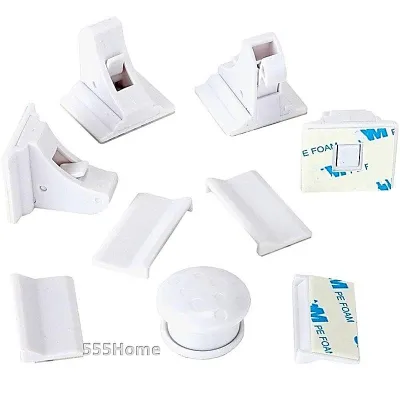
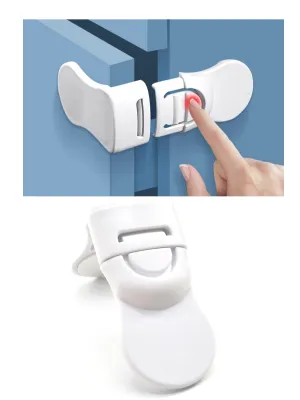
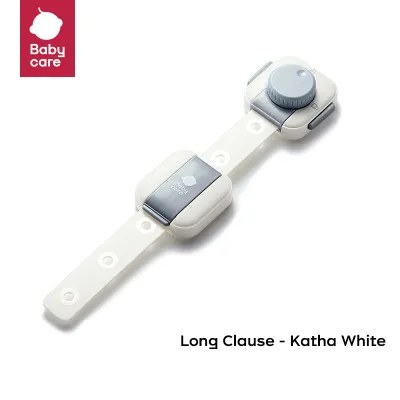
![[SG Local Stock] Baby Safety Lock Childrens Anti-pinch Safety Lock Catch Anti-collision Premium Safety Locks Self-adhesive Baby Safety Buckle For Cabinet Drawer Fridge Door Wardrobe Children Day Gifts](https://img.lazcdn.com/g/p/638abdf5a97199a85681991ebc624026.jpg_400x400q80.jpg_.webp)
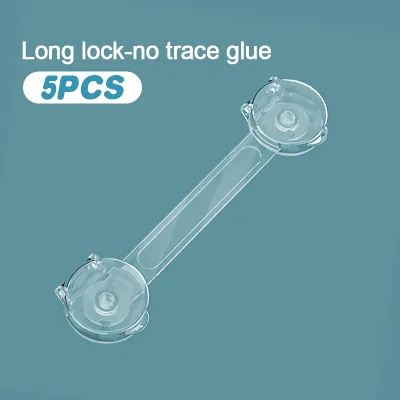
Prices are valid at publication and may change. Please refer to the product page for the latest price.
Next, consider your child’s age, physical strength, and cognitive development. A simple sliding lock might deter a ten-month-old infant who is just beginning to pull themselves up, but a curious two-year-old may quickly observe how adults slide the mechanism and replicate the action. As children grow, their problem-solving abilities and grip strength increase, necessitating locks with dual-action release mechanisms—such as pressing two buttons simultaneously while pulling—to prevent them from bypassing the safety barrier.
Finally, your housing situation plays a decisive role in choosing between permanent and temporary installations. Tenants living in rental properties in Singapore must navigate strict tenancy agreements that prohibit drilling or making permanent alterations to built-in fixtures. For these households, high-quality adhesive-mounted locks are indispensable, as they can be removed without leaving permanent holes. Homeowners, on the other hand, have the flexibility to choose screw-mounted locks, which offer the highest level of mechanical security and longevity, especially for heavy drawers containing sharp utensils or heavy cookware.
Key Safety and Durability Features to Verify
When shopping for cabinet child locks, look beyond basic functionality and carefully inspect product labels for safety certifications. Because young children frequently touch, pull, and sometimes chew on accessible parts of external locks, verifying that the materials are non-toxic is essential. Look for manufacturer specifications indicating that the plastics are free from bisphenol A (BPA), phthalates, and heavy metals. Reliable brands will clearly state compliance with international safety standards, such as European (EN) or American (ASTM) toy and child safety regulations, on their packaging.

Adhesive quality is another critical factor, particularly in Singapore’s warm and humid climate. High humidity can weaken low-grade adhesives, causing locks to fail prematurely under minimal force. Check the manufacturer’s packaging for details on the adhesive tape used; many reputable brands partner with established adhesive manufacturers (such as utilizing genuine 3M double-sided tape) and specify the weight capacity or pull-force resistance. Ensure the adhesive is rated for the specific surface material of your cabinets to prevent unexpected detachment or damage to the underlying paint or veneer upon removal.
The mechanical design of the lock must also be evaluated for potential hazards. Inspect the lock for pinch points—small gaps where a child’s finger could become trapped when the cabinet door is partially opened or closed. The mechanism should operate smoothly for adults, requiring a deliberate, controlled action, while remaining completely rigid against a child’s sudden, forceful tugs. Avoid locks with sharp edges, brittle plastic components, or small detachable parts that could pose a choking hazard if they break off.
Lastly, always review the manufacturer’s warnings and guidelines regarding wear and tear. Over time, repeated daily use will inevitably degrade both adhesives and plastic components. Caregivers should identify clear stopping conditions: if a lock shows signs of warping, visible hairline cracks, or a reduction in spring tension, it must be replaced immediately. Regularly checking these components ensures that a worn-out lock does not give a false sense of security while leaving hazardous items accessible.
Evaluating Common Lock Mechanisms for Kitchen and Storage Cabinets
Understanding the distinct mechanical categories of cabinet locks allows you to select the most practical option for each storage area in your home.
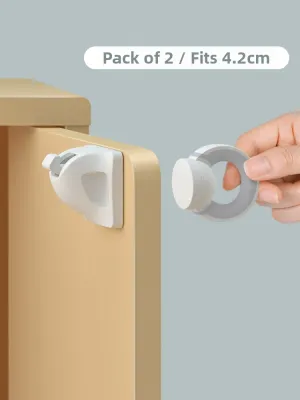
Magnetic locks are highly favored for their completely concealed installation. These systems consist of a magnetic latch mounted inside the cabinet door and a corresponding catch on the frame. The door remains locked from the outside with no visible hardware, preserving the clean aesthetic of your kitchen. To open the cabinet, you must place a specialized magnetic key against the exterior of the door opposite the internal latch. While highly secure and invisible to children, they require you to keep the magnetic key in a designated, high-altitude location to avoid losing it, which could lock you out of your own cabinets.
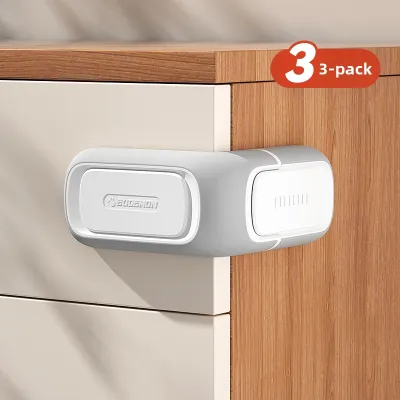
Spring-loaded latches are another internal option, consisting of a plastic hook mounted inside the cabinet that catches on a strike plate when closed. When you open the door slightly, you must reach your finger through the narrow gap to press down on the flexible lever, releasing the latch. These are highly durable and do not require a key, making them convenient for high-traffic kitchen cabinets. However, they do create a small gap when pulled, which can tempt children to slide their fingers inside, presenting a minor pinch hazard if not supervised.
Sliding locks, often referred to as U-shaped or latch locks, are external devices designed specifically for double-door cabinets with adjacent knobs or D-shaped handles. The lock slides through the handles and secures with a ratcheting mechanism, preventing the doors from opening. These locks are incredibly easy to install and remove without any tools, adhesives, or screws, making them highly portable and ideal for travel or temporary use. The drawback is their high visibility, which can attract a child’s attention and encourage them to play with the lock.
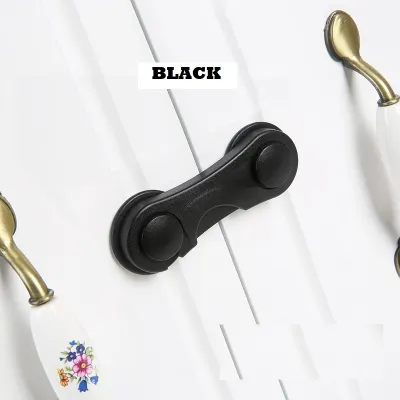
Strap locks utilize a flexible plastic or fabric strap anchored by adhesive pads on either end. One end features a release button that allows adults to unlatch the strap. Because of their flexible nature, strap locks are incredibly versatile; they can wrap around corners, secure curved surfaces, and work on appliances like refrigerators, microwaves, and trash cans, as well as standard cabinets. However, the exposed strap and adhesive pads are highly visible and may detract from your home’s interior design, and the flexible strap can stretch slightly over time under heavy use.
Navigating Brand Categories and Purchasing Channels
When sourcing cabinet child locks in Singapore, parents generally choose between specialized international baby safety brands and general household hardware brands. Specialized baby safety brands focus exclusively on childproofing products, investing in research, development, and rigorous safety testing. These brands typically offer comprehensive instructions, high-quality materials, and reliable customer support. General hardware brands, while often more budget-friendly, may produce multi-purpose utility locks that lack child-specific safety testing or non-toxic material certifications.
To ensure you are purchasing authentic, high-quality products, buy directly from official brand stores, established local maternity retailers, or reputable e-commerce platforms that verify seller credentials. The market is flooded with unbranded, low-cost imitations that look identical to premium locks but use inferior plastics and weak adhesives. These counterfeit or generic products often lack clear manufacturer specifications, safety certifications, or proper installation instructions, posing a significant risk of sudden failure when a child pulls on the cabinet.
Purchasing through authorized local channels also provides the advantage of local customer support, clear return policies, and warranties. If you experience adhesive failure due to Singapore’s humid climate, or if a mechanical component arrives defective, dealing with an established local distributor or retailer makes obtaining a replacement or refund straightforward. Before purchasing, check the retailer’s policy on defective items and verify if they offer guidance on surface compatibility and installation troubleshooting.
Installation and Maintenance Checks for Caregivers
Proper installation is just as critical as selecting the right lock. For adhesive-mounted locks, thorough surface preparation is paramount. Begin by cleaning the cabinet surface with isopropyl alcohol to remove grease, dust, and oil residues; avoid using household glass cleaners or soapy water, which can leave a film that prevents proper bonding. Once the surface is completely dry, apply the adhesive pad firmly, pressing down evenly for at least thirty seconds. Crucially, allow the adhesive to cure without any load or pulling force for the manufacturer-recommended time—typically 24 hours—to ensure the bond reaches its maximum strength.
Caregivers must also establish a routine for maintaining and inspecting installed locks. At least once a month, perform a quick visual and physical check of every lock in your home. Look for signs of adhesive peeling at the edges, plastic discoloration, brittleness, or stiffness in the spring mechanisms. In Singapore’s tropical climate, plastic can degrade faster when exposed to heat near kitchen stoves or direct sunlight from windows.
If you use magnetic locks, safe storage of the magnetic keys is a vital safety practice. Always store the keys on a high magnetic surface, such as the side of your refrigerator or a dedicated wall mount, well out of reach and sight of your children. It is highly recommended to keep a spare key in a secure, separate location to prevent accidental lockouts if the primary key is misplaced.
Finally, understand when a lock has reached the end of its functional life and requires immediate replacement. If a child successfully bypasses a lock, if the adhesive begins to lift, or if you notice any physical cracks or structural weakness, do not attempt to repair it with household glue or tape. Replace the entire unit immediately to maintain an uninterrupted safety barrier in your home.
Frequently Asked Questions (FAQ)
Can I use adhesive cabinet locks on all types of wood or glass?
Adhesive cabinet locks are highly versatile but are not suitable for every surface. They adhere best to smooth, non-porous surfaces such as sealed laminates, metal, glass, and varnished or painted solid wood. However, they should not be used on unfinished, highly textured, or oiled wood, as the adhesive cannot form a secure bond. Delicate surfaces, such as antique veneers or poorly bonded paint, carry a high risk of peeling or chipping when the adhesive is eventually removed. Always consult the manufacturer’s surface compatibility list before installation. If you must secure a delicate or textured cabinet, consider using a screw-mounted lock on the interior frame or applying a specialized protective barrier film beneath the adhesive to safeguard the finish.
At what age should I stop using cabinet child locks?
There is no universal age at which cabinet child locks should be removed, as child development varies significantly. Generally, many parents find that locks can be gradually phased out between the ages of two and three, as children develop better impulse control, understand basic safety instructions, and can identify household hazards. However, physical barriers should never be removed prematurely. The transition from physical locks to safety education must be handled carefully, teaching your child which areas are off-limits. Regardless of your child’s age or cognitive development, cabinets containing highly hazardous items—such as toxic cleaning chemicals, medications, sharp knives, or heavy glassware—should remain locked indefinitely to prevent accidental exposure or injury.

Community discussion
Share your experience or ask a question. Comments are reviewed before publication.