
Selecting the right laundry products for your newborn is a critical step in maintaining their skin health and comfort. Many parents in Singapore turn to Japanese baby laundry softeners, drawn by their reputation for meticulous formulation, gentle ingredients, and advanced fabric care. Because an infant’s skin barrier is significantly thinner and more permeable than an adult’s, any chemical residue left on clothing can easily trigger redness, dryness, or contact dermatitis. Navigating the imported options available in local specialty stores and online marketplaces requires a clear understanding of ingredient labels, concentration levels, and proper laundry practices tailored to Singapore’s warm, humid climate.
While fabric softeners can make garments feel incredibly plush, they are not always a mandatory addition to every laundry load. Understanding how these products interact with different fabrics and how to evaluate their necessity will help you establish a safe, effective washing routine that keeps your baby’s clothes soft without compromising their skin health.
Understanding Fabric Softener Formulations for Babies
To choose the safest product for your household, it helps to understand how baby-specific softeners differ from standard adult formulations. Adult fabric softeners are primarily engineered to deliver intense, long-lasting fragrances and a heavy, plush feel. To achieve this, they often utilize strong cationic surfactants, such as quaternary ammonium compounds, which coat fabric fibers extensively. These compounds can leave a dense chemical residue that is highly likely to irritate a baby’s delicate skin.
Products mentioned in this guide
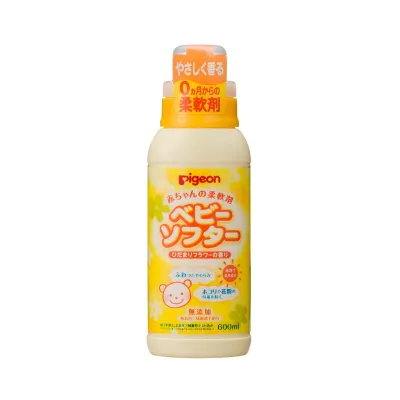
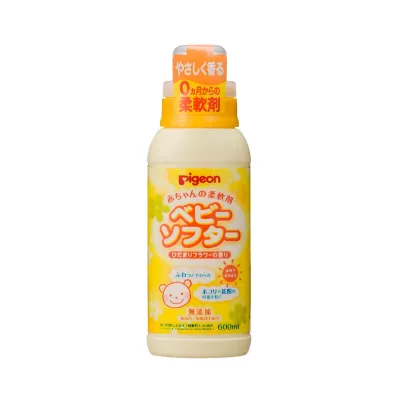
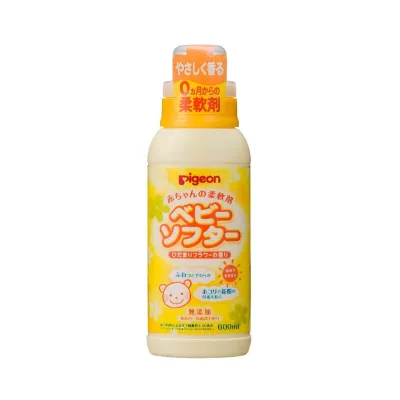
![[Made in Japan] Pigeon Laundry Softener w/Fragrance Bundle Collection (Promo)](https://img.lazcdn.com/g/p/0426bf6d6d6e910872ec2939c8240393.jpg_400x400q80.jpg_.webp)
Prices are valid at publication and may change. Please refer to the product page for the latest price.
In contrast, baby-specific softeners prioritize biocompatibility and clean rinsing. They typically employ milder, plant-derived cationic surfactants or non-ionic agents designed to soften fabrics while leaving minimal, non-irritating residue on the fibers. Furthermore, while adult softeners can leave alkaline residues that disrupt the skin’s natural, slightly acidic pH barrier (typically around 5.5), baby formulations are carefully balanced to keep fabrics neutral or slightly acidic, minimizing the risk of chemical irritation.
From a mechanical standpoint, fabric softeners serve a practical purpose on natural fibers. Cotton and bamboo are the most common materials used for baby clothing in Singapore due to their excellent breathability. However, repeated washing in local tap water can cause these natural fibers to become stiff, rough, and scratchy over time. Softeners work by depositing a microscopic, lubricating layer over the fibers, which reduces physical friction against the baby’s skin and eliminates static cling that can otherwise trap dust and environmental allergens.
Despite these benefits, parents should evaluate whether a fabric softener is truly necessary for every wash. A high-quality, residue-free baby detergent is often entirely sufficient on its own, especially during the first six months of a newborn’s life. If your baby’s clothes feel soft enough after washing with detergent alone, skipping the softener is the most reliable way to minimize skin exposure to additive chemicals. Softeners generally become more useful as your baby grows, becomes more active, and begins wearing sturdier play clothes that require extra conditioning to prevent chafing.
Key Ingredients and Labels to Check Before Buying
When shopping for Japanese baby softeners, reading the ingredient list is the most effective way to verify safety. The first category of ingredients to avoid is synthetic fragrances. Even products marketed with “baby-fresh” scents can contain complex mixtures of synthetic chemicals that serve as primary triggers for cosmetic contact allergies. Opting for completely fragrance-free formulas is always the safest choice for newborns and infants with eczema-prone skin.

Optical brighteners, also known as fluorescent whitening agents, are another common additive to watch out for. These chemicals do not actually clean fabrics; instead, they absorb ultraviolet light and emit blue light to make yellowed clothes appear whiter and brighter. Because optical brighteners are formulated to bond permanently to fabric fibers, they remain in constant contact with your baby’s skin and can cause persistent irritation. Ensure any product you shortlist is explicitly free from these whitening agents.
Harsh preservatives, such as parabens, methylisothiazolinone, and formaldehyde-releasing agents, should also be excluded from your selection. When reviewing Japanese packaging, look for specific dermatological testing claims. Terms such as “dermatologically tested” or “hypoallergenic” indicate that the manufacturer has conducted patch testing on human subjects to verify a low incidence of skin irritation. However, because these tests do not guarantee absolute safety for every individual, they should be viewed as a baseline standard rather than a universal guarantee.
To identify gentler formulations, look for indicators of plant-derived surfactants on the Japanese label. Phrases such as “plant-derived” (植物由来) or “natural surfactants” (天然界面活性剤) indicate that the softening agents are sourced from biodegradable plant lipids, such as coconut, palm, or rapeseed oil. While these plant-based alternatives are generally much gentler on sensitive skin than petroleum-derived chemicals, they can still cause reactions in highly sensitive individuals, making a thorough ingredient check essential.
How to Build Your Shortlist of Japanese Softeners
As you begin comparing different Japanese softeners available in Singapore, pay close attention to product concentration levels. Many Japanese laundry brands formulate their products as highly concentrated liquids. These ultra-concentrated formulas require significantly smaller doses per load compared to standard, diluted softeners. While a smaller bottle of concentrated softener may carry a higher upfront price, it often delivers a lower cost per wash, making it a highly economical choice.
Scent profiles require careful consideration based on your baby’s age and skin condition. For newborns, infants under six months, and any child with a history of dry skin or eczema, completely unscented formulas are strongly recommended. If you prefer a mild scent for older babies, look for products that use natural essential oils in extremely low concentrations, or those labeled as “mildly scented” (微香性). Avoid any products that promise long-lasting fragrance performance, as these rely on microencapsulation technologies that keep fragrance chemicals trapped in the fabric fibers for weeks.
Sourcing authentic products is another critical step when buying imported Japanese goods in Singapore. While these softeners are widely available in specialty Japanese supermarkets, department stores, and online marketplaces, parents must remain vigilant against counterfeit or expired stock. Always purchase from reputable, authorized distributors or official brand storefronts on ecommerce platforms.
Verify that the product features an English ingredient translation sticker, which is often a legal requirement for imported household chemicals in Singapore. Additionally, check the packaging for manufacturing or batch codes. While Japanese household products rarely display an explicit expiration date, unopened liquid softeners generally have a shelf life of three years from the date of manufacture. Once opened, they should ideally be used within six to twelve months to prevent the formula from separating or spoiling.
Washing and Rinsing Practices for Sensitive Skin
Even the gentlest fabric softener can cause skin issues if it is used incorrectly. To prevent chemical buildup on your baby’s clothing, you must adjust the dosage carefully. Singapore’s municipal tap water is generally classified as soft to moderately hard, meaning you do not need to use excessive amounts of softener to achieve a plush feel. Always start with the minimum recommended dose indicated on the product packaging for your specific load size.
Overusing fabric softener does not improve fabric quality; instead, it creates a waxy, hydrophobic buildup on the fibers. This buildup drastically reduces the fabric’s natural absorbency, preventing it from wicking away your baby’s sweat. In Singapore’s warm climate, trapped sweat against the skin can quickly lead to heat rash, friction burns, and bacterial irritation. Always use the measuring cap provided to ensure precise dosing.
To guarantee that all soap and softener residues are thoroughly flushed from the fabric, always program your washing machine to run an extra rinse cycle. This practice is particularly crucial for items that remain in prolonged, direct contact with your baby’s skin, such as swaddles, bedding, and undershirts. Note that fabric softeners should be avoided entirely when washing cloth diapers, as the softening agents will coat the absorbent fibers, causing the diapers to repel liquid and leading to leaks and severe diaper rash.
Finally, establish a habit of monitoring your baby’s skin whenever you introduce a new laundry product. Signs of contact irritation include localized redness, dry or rough patches, small red bumps, or persistent scratching, particularly around areas where clothing fits tightly, such as the collar, cuffs, and waistband. If you observe any of these symptoms, stop using the fabric softener immediately. Wash the affected garments several times in plain water or with a verified hypoallergenic detergent to strip away any lingering residues before allowing your baby to wear them again. If the skin irritation persists or worsens, consult a pediatrician or dermatologist for professional guidance.
Frequently Asked Questions (FAQ)
Can I use regular Japanese fabric softener for my baby's clothes?
It is highly recommended to avoid using regular adult Japanese fabric softeners on infant clothing. Adult formulations are designed to deliver intense, long-lasting fragrances and maximum plushness, which requires a much higher concentration of strong cationic surfactants, synthetic perfumes, and colorants. These additives are common triggers for infant skin irritation and allergic reactions. For older toddlers over the age of two who have no history of sensitive skin, eczema, or allergies, a mild, unscented, or hypoallergenic adult Japanese softener may be gradually introduced. However, parents should still monitor the child’s skin closely during the transition and revert to baby-specific formulas if any redness or dryness occurs.
Do Japanese baby softeners work well in Singapore's humid climate?
Yes, Japanese baby softeners can perform exceptionally well in Singapore, provided they are chosen and used correctly. Because Singapore’s high humidity can prolong drying times, fabric softeners must be used sparingly. Excessive softener usage coats fibers in a water-resistant layer that reduces fabric breathability and traps moisture, which can lead to musty odors and heat rash. To prevent this, look for Japanese baby softeners specifically formulated for indoor drying (部屋干し) or those featuring natural, plant-derived anti-odor properties. These specialized formulations help prevent the growth of musty, odor-causing bacteria without relying on heavy synthetic perfumes. Additionally, always ensure that baby clothes are dried in a well-ventilated area or under direct sunlight to maximize freshness and hygiene.

Community discussion
Share your experience or ask a question. Comments are reviewed before publication.