
Starting solid foods is a major milestone in your baby’s first year, marking a transition from exclusive milk feeding to a world of diverse textures and flavors.
Choosing the right weaning gear involves matching your baby’s physical development with the design features of bibs, plates, bowls, and utensils.
Combi offers a range of weaning products designed to support this journey, but selecting the right items requires understanding your baby’s current motor skills, neck strength, and self-feeding readiness.
Products mentioned in this guide
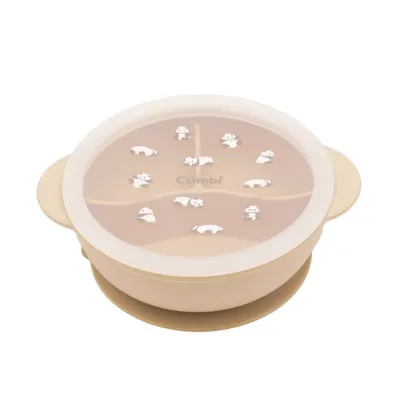
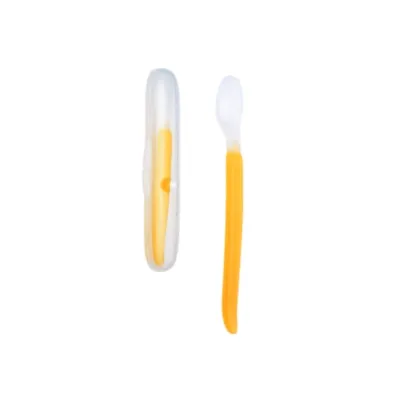
Prices are valid at publication and may change. Please refer to the product page for the latest price.
By focusing on stage-appropriate designs, material safety, and practical mealtime needs, you can build a reliable feeding setup that encourages independence while keeping the inevitable mess manageable.
Identifying Your Baby's Weaning Stage and Gear Needs
Around six months, babies begin their solid food journey. At this stage, they are developing basic head control and trunk stability, which are essential for safe swallowing.
Their motor skills are limited to reaching and mouthing objects. Feeding at this point is primarily about introducing tastes and smooth textures rather than consuming large volumes.
The gear needed for this stage should be lightweight, non-intrusive, and gentle on sensitive gums. Soft-tipped spoons and highly flexible, lightweight bibs are ideal because they do not distract or overwhelm a baby who is still learning how to sit upright.
As babies progress to around eight or nine months, they develop the palmar grasp to scoop up food and eventually the pincer grasp using the thumb and index finger. This is when baby-led weaning becomes highly active, as infants want to pick up soft-cooked vegetables and small bites themselves.
During this stage, the mess increases significantly. You will need sturdier tableware that stays in place and bibs with wide, open pockets to catch dropped food.
Tableware with non-slip bases helps prevent the entire meal from sliding off the highchair tray as your baby attempts to grab food.
By the time your toddler reaches twelve months and beyond, they are refining their fine motor skills and attempting to use utensils independently. They are learning the complex coordination required to scoop food onto a spoon and guide it to their mouth.
This stage demands specialized utensils with ergonomic, short handles that fit comfortably in small palms, alongside bowls with curved inner walls that assist in scooping.
Bibs must remain highly functional but comfortable enough to allow full arm movement, ensuring your toddler does not feel restricted while practicing their self-feeding skills.
Choosing the Right Combi Bib for Mess Management and Comfort
When selecting a Combi bib, the material plays a crucial role in both comfort and cleanup efficiency. Silicone bibs with built-in catch pockets are highly effective at capturing liquids and solid crumbs before they land on your baby’s lap or the floor.

However, because silicone is naturally heavier and stiffer than fabric, it may not be suitable for very young infants who are still building neck strength.
For the early weeks of weaning, softer fabric or PEVA (polyethylene vinyl acetate) bibs are often more appropriate. These lightweight options sit gently on the chest and provide a comfortable barrier against drool and runny purees without adding unnecessary weight.
A proper fit around the neck is vital for both safety and mess prevention. Look for Combi bibs that feature adjustable neck closures, such as multi-position snap buttons or soft hook-and-loop fasteners.
The bib should fit snugly enough to prevent food from slipping underneath the collar, yet loosely enough that you can easily slide two fingers between the bib and your baby’s neck.
Never use a bib that appears to restrict your baby’s airway or causes redness around the skin. Always supervise your baby closely during meals, and remove the bib immediately once feeding time is over.
For infants just starting solids, the physical weight of a silicone pocket bib can sometimes cause them to slouch or lean forward, which compromises their safe swallowing posture.
If you notice your baby struggling to maintain an upright head position while wearing a structured bib, temporarily switch back to a lightweight fabric or plastic sleeve bib.
As your baby’s core strength and neck stability improve, you can gradually reintroduce the structured silicone pocket bib to handle the larger, more complex messes of self-feeding.
Picking Combi Tableware and Utensils to Support Self-Feeding
One of the biggest challenges of baby-led weaning is the natural urge for infants to lift, throw, or slide their plates and bowls. To minimize these disruptions, evaluate Combi tableware options that feature integrated suction bases or non-slip rubber rings on the bottom.
A strong suction base secures the plate to the highchair tray, allowing your baby to focus on picking up food rather than chasing a moving target.
When choosing suction tableware, verify that the suction mechanism is compatible with your specific highchair tray material, as textured surfaces can prevent a secure seal.
Standard adult utensils are too long and thin for a baby’s developing grip. Combi designs utensils with short, thick, and textured handles that are easier for small hands to grasp using a palmar grip.
The depth of the spoon bowl is also critical; a spoon that is too deep makes it difficult for a baby to clear the food with their upper lip, while a spoon that is too shallow allows food to spill off easily.
Look for spoons with a slight angle or curve, which can help guide the food toward the mouth more naturally as your baby learns the hand-to-mouth coordination.
The physical shape of the tableware can either assist or hinder your baby’s self-feeding progress. Bowls with steep, curved inner walls provide a natural barrier that helps your baby scoop food onto their spoon.
Without this curved edge, food is often pushed over the side of the bowl.
Similarly, divided plates are highly useful for separating different food groups, which helps babies identify distinct textures and flavors. This separation also prevents wet foods from making dry foods soggy, making the meal more appealing to a developing palate.
Verifying Safety Labels and Care Instructions Before Use
Before introducing any new feeding gear to your baby, it is essential to verify the safety and composition of the materials. Carefully inspect the product packaging for clear labels indicating that the items are made from food-grade materials and are entirely free from Bisphenol A (BPA), phthalates, and other potentially harmful chemicals.
Combi products generally highlight these safety standards on their packaging, but you should always double-check the labels to ensure compliance with local safety regulations.
Feeding gear requires frequent cleaning and sanitization, which subjects the materials to high temperatures. You must verify the specific temperature limits for each item before placing them in a microwave, dishwasher, or steam sterilizer.
Some plastics can degrade, warp, or release chemicals if they exceed their rated temperature thresholds. Check the manufacturer’s instructions to see if the items are top-rack dishwasher safe or if they require gentle hand washing.
For silicone bibs and utensils, ensure they can withstand the heat of your preferred sterilization method without losing their structural integrity.
Every weaning product comes with manufacturer-specified age recommendations and safety warnings. These guidelines are established based on developmental milestones and potential choking hazards.
Always read these warnings thoroughly before the first use. If a product shows any signs of wear, cracking, or peeling, discontinue use immediately to prevent small pieces from detaching and posing a choking risk.
Building Your Combi Weaning Shopping Shortlist
It is easy to feel overwhelmed by the sheer variety of weaning accessories available on the market. To keep your kitchen organized and manage your budget, start with a minimal selection of essential items.
For the first few weeks, a couple of soft, lightweight bibs and a set of introductory feeding spoons are usually sufficient.
As your baby transitions to finger foods and self-feeding, you can gradually introduce suction bowls, divided plates, and ergonomic toddler utensils. This staged approach prevents you from purchasing items that your baby may outgrow before ever using.
When planning your purchases, set a realistic budget in S$ and focus on versatile, multi-functional pieces.
For instance, some Combi tableware sets are designed to transition from early purees to independent toddler meals by utilizing removable suction bases or interchangeable lids. Investing in high-quality, adaptable items can save you money in the long run by reducing the need to buy entirely new sets as your child grows.
To ensure the safety and quality of your baby’s feeding gear, always purchase Combi products from official brand stores, authorized distributors, or reputable online marketplaces. Counterfeit baby products may not adhere to strict material safety standards and could contain harmful chemicals.
Before finalizing your purchase, verify the seller’s credentials and check their return and exchange policies. This ensures that if an item arrives damaged or does not fit your highchair tray, you can easily secure a replacement or refund.
Frequently Asked Questions (FAQ)
Can I use Combi silicone bibs for newborns or very young infants?
No, structured silicone bibs are generally not recommended for newborns or very young infants who lack sufficient neck strength and head control. The weight of a silicone bib, especially when the pocket is filled with food or liquid, can pull forward on a young baby’s neck, potentially compromising their posture and airway safety. Always check the minimum age and weight recommendations printed on the Combi packaging before use. For early weaning stages, stick to lightweight, flexible fabric or PEVA bibs.
How do I remove stubborn food stains from Combi fabric or silicone bibs?
To minimize staining from highly pigmented foods like carrots, pumpkins, or tomato-based sauces, rinse and wipe the bib immediately after use. For silicone bibs, washing with warm, soapy water right away is usually highly effective. For fabric bibs, check the care label for approved cleaning agents and washing machine temperature limits. In Singapore’s warm and humid climate, ensuring that fabric bibs dry completely in a well-ventilated area after washing is essential to prevent mold and mildew growth.
Are Combi weaning products compatible with standard highchair trays?
Most Combi tableware is designed to fit standard highchair trays, but dimensions can vary. Before purchasing large suction plates or divided trays, measure the usable flat surface area of your highchair tray to ensure a proper fit. Additionally, keep in mind that suction bases require a completely smooth, clean, and non-porous surface to create a secure seal. If your highchair tray has a textured, matte, or wooden finish, the suction base may not adhere effectively, and you may need to use the tableware on a standard smooth dining table instead.

Community discussion
Share your experience or ask a question. Comments are reviewed before publication.