
Selecting the right baby spoons and forks for weaning in Singapore involves matching your child’s developmental milestones with safe, ergonomic, and easily sanitized utensils. As your baby transitions from breast milk or formula to solid foods, the physical design of their cutlery plays a critical role in building self-feeding confidence and protecting sensitive gums. By focusing on material safety, age-appropriate shapes, and practical cleaning requirements, you can establish a stress-free feeding routine that supports your child’s motor skill development. Navigating this transition requires patience, and having the appropriate tools on hand can make a significant difference in how quickly your little one adapts to new textures.
Matching Utensils to Your Baby's Weaning Stage
Early weaning (around 6 months): At this stage, babies are just learning to swallow non-liquid foods. Their oral motor skills are adapted for sucking, meaning a spoon must be incredibly shallow to allow them to clear the food with their upper lip. Parent-led feeding is standard here, so look for long-handled spoons that give you a comfortable grip while reaching into deep puree jars or small bowls. The spoon bowl should be soft and flexible, typically made of silicone, to prevent any discomfort on tender, teething gums. Using a spoon that is too hard or deep can startle a baby, potentially causing them to reject the food.
Mid weaning (7 to 9 months): As babies develop a stronger palmar grasp, they will begin reaching for the spoon themselves. This transitional phase is ideal for introducing short, chunky handles that fit easily into a baby’s closed fist. Angled necks or pre-spoon designs with textured surfaces help babies guide food to their mouths successfully, even before they have mastered the wrist rotation required for traditional scooping. Textured foods like thicker purees, mashed vegetables, and soft grains are common now, making slightly wider spoon bowls highly practical. Encouraging self-feeding at this stage helps build hand-eye coordination and fosters independence.
Products mentioned in this guide
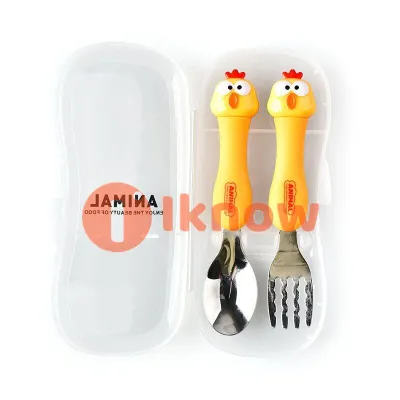
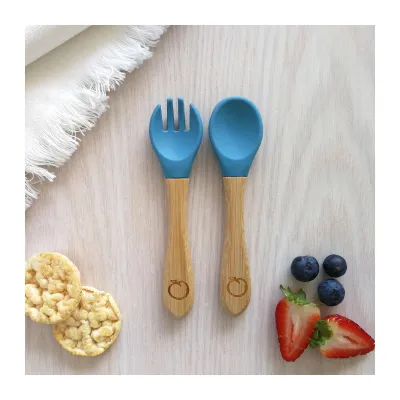
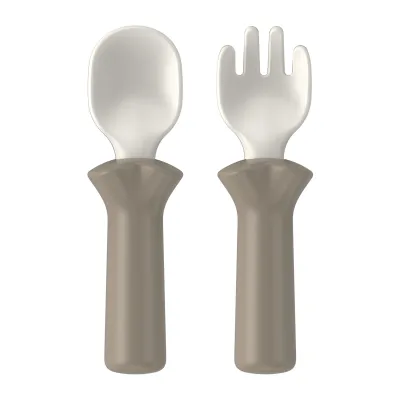
Prices are valid at publication and may change. Please refer to the product page for the latest price.
Late weaning (10 months and beyond): Around this age, many infants develop the pincer grasp and show a keen interest in mimicking adult eating habits. This is the optimal time to introduce a baby-safe fork alongside a deeper spoon. The fork should be designed specifically to help them spear soft solids, such as steamed carrot slices or pieces of banana, while the deeper spoon bowl helps them scoop up thicker foods like oatmeal or yogurt without spilling. This stage is highly interactive, and providing the right tools allows your baby to practice different motor patterns for scooping and piercing.
Always cross-reference the manufacturer’s stated age and developmental guidelines printed on the packaging before introducing any new utensil. Every child develops at their own pace, and a product’s recommended age range serves as a vital baseline for safety and functional design. If you notice your baby struggling or showing signs of frustration, it may be beneficial to temporarily step back to an earlier utensil style and consult a pediatrician or pediatric feeding specialist for personalized guidance. Never force a child to use a specific utensil if they are not developmentally ready.
Design Features That Support Safe Self-Feeding
Handle ergonomics: When babies first attempt to feed themselves, they lack the fine motor control to hold slim, adult-style cutlery. Chunky, bulbous handles allow them to use their whole hand to grip the utensil securely. Look for non-slip textures, such as raised ridges or rubberized silicone patterns, which prevent the utensil from slipping out of soapy or food-covered hands. Contoured shapes that naturally guide the hand into a comfortable position can significantly reduce frustration during meal times. A secure grip gives the baby the control they need to direct the utensil toward their mouth with greater accuracy.

Spoon bowl geometry: The shape of the spoon bowl directly affects how easily a baby can clear food. A bowl that is too deep will trap purees, leading to frustration or over-feeding, whereas a shallow, flat bowl allows the baby’s upper lip to sweep the food off cleanly. Additionally, offset or curved necks can compensate for a baby’s limited wrist mobility, making it much easier for them to align the spoon bowl with their mouth without tilting their head awkwardly. The width of the bowl should also match the size of your baby’s mouth to prevent overfilling.
Fork tine safety: Unlike adult forks, baby forks must prioritize safety over sharp piercing capability. Inspect the tines to ensure they are blunt, rounded, and thick enough to prevent any accidental punctures to the baby’s tongue, lips, or gums. The tines should be firm enough to pierce soft-cooked vegetables or soft fruits, but flexible or rounded enough that they cannot cause injury if the baby waves the fork around or accidentally presses it against their face. Avoid metal forks with sharp, pointed tines during the early stages of self-feeding.
Choke guards: Many self-feeding utensils feature built-in choke guards, which are wide collars or shields located between the handle and the functional end of the spoon or fork. These guards act as a physical barrier to prevent the baby from inserting the utensil too far into their mouth, reducing the risk of gagging or choking. While choke guards offer an extra layer of reassurance, they are not a substitute for active adult supervision; caregivers must remain present and attentive throughout every meal. A choke guard is a helpful training aid, but safe feeding practices always rely on direct parental oversight.
Comparing Materials: What to Check on the Label
Food-grade silicone: Silicone is a highly popular material for early weaning due to its soft, rubbery texture, which is gentle on sensitive, teething gums. It provides excellent sensory feedback and is highly resistant to breaking or cracking. When examining silicone utensils, check the product label to see if they feature an internal rigid core, often made of nylon or stainless steel, which prevents the spoon from bending too much when scooping denser foods. Additionally, verify the manufacturer’s stated heat limits, as some silicone items may not be compatible with high-temperature sterilization methods. Silicone is also less likely to retain heat, making it safer for warm foods.
Stainless steel: As babies transition to late weaning and toddlerhood, stainless steel utensils offer unmatched durability and a realistic dining experience. Stainless steel does not retain food odors or stains and is exceptionally easy to sanitize. However, parents must carefully inspect the edges of the spoon bowl and fork tines to ensure they are smooth, rolled, and free from sharp burrs. It is also important to assess the weight of the utensil; it should feel substantial enough to provide feedback but light enough that it does not fatigue a small child’s hand. Stainless steel is ideal for older babies who have mastered basic self-feeding.
BPA-free plastics: Plastic utensils are lightweight, affordable, and widely available in a vast array of colorful designs. When choosing plastic, always verify that the packaging explicitly states the material is free from Bisphenol A (BPA), phthalates, and other potentially harmful chemical additives. Because plastic is softer than metal, it is prone to developing deep scratches over time from teeth or abrasive cleaning sponges. These scratches can harbor bacteria, so it is crucial to adhere strictly to the manufacturer’s recommended replacement schedules and discard any plastic utensils that show signs of wear. Plastic is highly portable, making it a common choice for dining out.
Natural materials: Utensils made from natural materials like bamboo or wood offer an eco-friendly, aesthetic alternative to synthetic options. If you choose wood or bamboo, check the label to ensure the manufacturer has used a food-safe, non-toxic sealant to protect the wood from moisture. These materials generally require hand-washing and must be dried thoroughly to prevent mold growth. Regular inspection is necessary to check for splintering, cracking, or degradation of the sealant, and any damaged utensils must be discarded immediately to prevent injury. Natural materials require a bit more maintenance but avoid synthetic chemicals entirely.
Your Pre-Purchase Checklist for Local and Online Shopping
Before purchasing baby utensils from local retail stores or online marketplaces in Singapore, it is essential to run through a practical verification checklist to ensure safety and compatibility. First, verify that the product’s stated age, weight, and developmental recommendations align with your baby’s current profile. Avoid purchasing items based solely on aesthetic appeal or generic marketing terms; instead, look for specific age brackets (such as 6m+ or 12m+) clearly marked on the packaging. Ensuring a proper match prevents developmental frustration and safety hazards.
Second, check for recognized safety standard marks or compliance labels explicitly indicated by the manufacturer. While shopping online, zoom in on packaging photos or read the product description carefully to confirm compliance with international safety standards, such as EN 14372 or FDA food-contact requirements. If a listing lacks clear information about material composition or safety testing, it is safest to choose an alternative product with transparent labeling. Reliable manufacturers will always display their safety certifications clearly.
Third, review the care and cleaning instructions to ensure the utensils fit seamlessly into your family’s daily routine. If you rely heavily on a dishwasher or a specific type of sterilizer, confirm that the materials can withstand those environments without warping, degrading, or releasing chemicals. Some materials, particularly certain plastics and natural woods, are strictly hand-wash only or cannot tolerate UV or steam sterilization. Choosing utensils that match your existing cleaning setup saves time and prevents accidental damage.
Finally, when shopping on ecommerce platforms, assess the seller’s return policies and read verified buyer feedback. Look for reviews that specifically mention the actual size of the utensils, their durability after multiple washes, and the accuracy of the material descriptions. Real-world feedback from other parents in Singapore can provide invaluable insights into whether a spoon is too large for a six-month-old’s mouth or if a fork’s tines are truly blunt and safe for self-feeding. Checking these reviews helps you avoid low-quality counterfeits or poorly designed products.
Frequently Asked Questions (FAQ)
When should I introduce a fork instead of just a spoon?
You can typically introduce a baby-safe fork when your child has developed a functional pincer grasp, which usually occurs between 10 and 12 months of age. Look for signs of readiness, such as your baby successfully picking up small, soft solids like cooked peas or soft fruit chunks with their thumb and index finger. If your baby shows a strong interest in spearing food with their fingers or attempts to mimic your use of a fork, they may be ready to try a blunt, baby-designed fork. Always ensure active adult supervision during this transition, and follow the specific age recommendations provided by the utensil manufacturer. Introducing a fork too early can lead to frustration if the child lacks the coordination to use it.
How do I know if a baby utensil needs to be replaced?
Regularly inspect your baby’s utensils for visible signs of wear and tear to maintain hygiene and safety. For silicone utensils, look closely for deep bite marks, tears, peeling, or structural weakening that could allow pieces to break off and pose a choking hazard. For plastic utensils, check for deep scratches, warping, excessive cloudiness, or rough edges where bacteria can accumulate. If you use wooden or bamboo utensils, inspect them for splinters, cracks, or a sticky, degraded sealant. Any utensil showing these signs of deterioration should be discarded immediately. Replacing worn utensils promptly is essential for preventing bacterial contamination and physical injury.
Can I put all baby spoons and forks in the sterilizer?
No, you cannot assume that all baby utensils are safe for every type of sterilizer. It is critical to read the manufacturer’s specific heat tolerance and sterilization instructions before exposing utensils to high temperatures or UV light. While many food-grade silicone and stainless steel utensils can withstand boiling water, steam sterilizers, or UV sterilizers, certain plastics and natural wood or bamboo will warp, crack, or degrade under these conditions. Always verify the explicit sterilization compatibility labels on the product packaging to prevent damaging the utensils or compromising their safety. When in doubt, hand-washing with mild baby-safe dish soap and warm water is the safest default method.

Community discussion
Share your experience or ask a question. Comments are reviewed before publication.