
When babies transition from crawling to pulling themselves up, every sharp corner in your home becomes a potential hazard. Choosing the right baby safety corner guards requires looking beyond a one-size-fits-all solution. The ideal protector depends entirely on the specific furniture material, the shape of the edge, and how the adhesive interacts with different surfaces. By matching the physical properties of the guard to the unique characteristics of your glass tables, wooden cabinets, and metal frames, you can create a secure environment without damaging your household items.
To make an effective choice, caregivers must evaluate how different materials absorb impact, how securely adhesives bond to various textures, and how the shape of the guard fits the geometry of the furniture. A guard that works perfectly on a rounded wooden coffee table may peel off instantly from a sleek glass desk or fail to cushion a blow against a rigid metal bed frame. Understanding these material dynamics allows you to select and install guards that stay firmly in place while providing reliable cushioning for your growing child.
Key Selection Criteria for Baby Safety Corners
Before purchasing any corner protectors, it is essential to understand the primary materials available on the market. High-density foam, silicone, and polyvinyl chloride (PVC) are the three most common options, each offering distinct physical properties. High-density foam is highly prized for its exceptional impact absorption. Because it contains tiny air pockets, it compresses easily under sudden force, cushioning severe bumps. However, foam is susceptible to biting and tearing by curious toddlers, which can turn small pieces into potential choking hazards.
Products mentioned in this guide
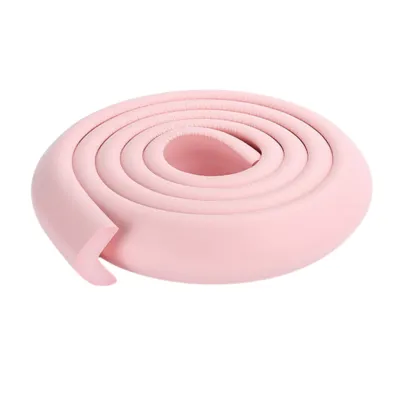
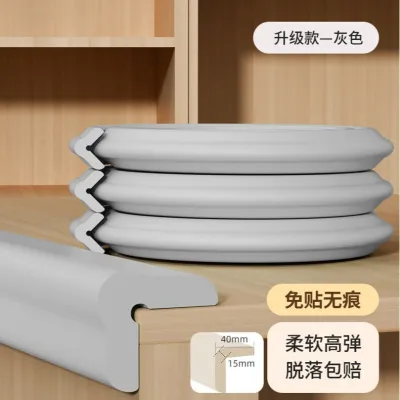
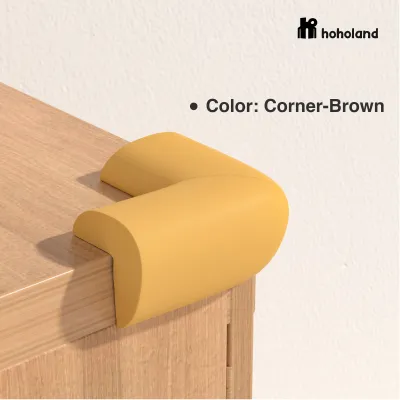
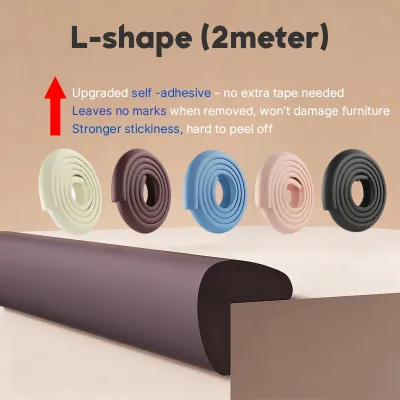
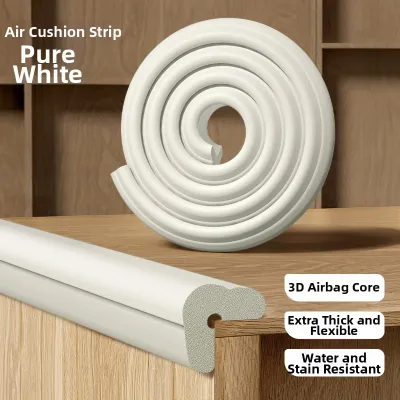
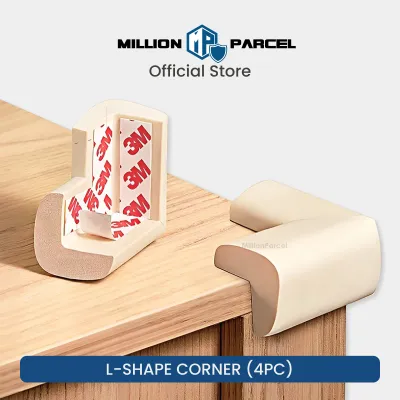
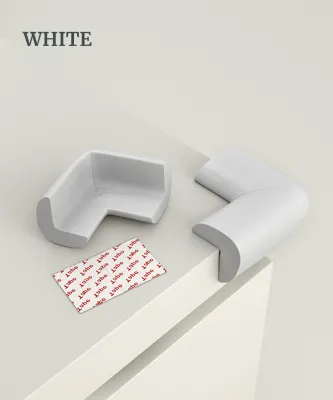
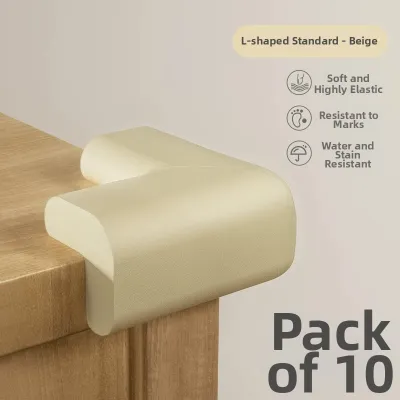
Prices are valid at publication and may change. Please refer to the product page for the latest price.
Silicone offers a highly durable and resilient alternative. It is firm enough to prevent a child from biting off chunks, making it an excellent choice for teething babies. While silicone does not compress as deeply as thick foam, its elasticity provides sufficient protection for moderate impacts. PVC guards are typically firmer and are often molded into clear, low-profile shapes. They offer excellent durability and blend seamlessly with modern decor, but their rigid nature means they provide less cushioning during high-velocity impacts compared to soft foam.
Adhesive selection is equally critical to the longevity and safety of the corner guard. Most products utilize either acrylic-based tape or gel-based adhesives. Acrylic adhesives form a strong, permanent bond over time and are highly resistant to shearing forces, making them difficult for toddlers to pull off. However, they can leave behind a stubborn residue or even lift the finish off delicate wood veneers during removal. Gel adhesives are thicker, more flexible, and often easier to peel away cleanly, but they may struggle to maintain a strong grip on highly textured or dusty surfaces.
The geometry of the corner guard must match the shape of the furniture to ensure complete coverage. Ball-shaped guards are designed to wrap around three-dimensional corners, providing a rounded cushion from all angles. They are ideal for the sharp corners of dining tables and desks. L-shaped guards are designed for long, straight edges and simple 90-degree corners, offering a continuous line of protection along the entire perimeter of a piece of furniture. U-shaped guards wrap around both the top, bottom, and edge of thin surfaces, such as glass tabletops, preventing impacts from multiple directions.
Matching Guards to Glass Tables and Smooth Surfaces
Glass tables and other non-porous, smooth surfaces present unique challenges for baby proofing. Because glass is highly reflective and visually prominent, many parents prefer discreet safety solutions that do not disrupt the aesthetic of their living space. For these surfaces, transparent or clear silicone and PVC guards are the preferred choice. These clear materials allow the natural design of the table to show through, making the safety measures less visually intrusive while still providing a protective barrier over sharp glass corners.

When dealing with glass, the choice of adhesive is paramount. Non-porous surfaces like glass allow adhesives to cure very efficiently, creating an incredibly strong bond. However, this high level of adhesion can make removal difficult, risking damage to the glass or leaving behind unsightly, baked-on residue. Caregivers should look for specialized clear acrylic or gel adhesives that are formulated specifically for glass surfaces. These adhesives are designed to hold fast against lateral tugs from a child but can be sheared off cleanly with the right removal techniques without scratching or putting undue stress on the glass pane.
The thickness of the guard must be carefully balanced against the profile of the glass table. Thin glass tabletops require guards that wrap securely around the edge without slipping. A U-shaped guard is often the most effective design for thin glass, as it grips both the upper and lower faces of the pane, distributing any impact forces across a larger surface area. The material should be thick enough to prevent a child’s head from bottoming out against the hard glass edge during a fall, yet flexible enough to conform tightly to the glass without creating gaps where dust or small fingers can pry the guard loose.
Matching Guards to Wooden Cabinets and Textured Edges
Wooden furniture, ranging from solid oak dining tables to veneered fiberboard cabinets, features porous and often textured surfaces that require a different approach to baby proofing. Unlike smooth glass, wood grain, varnishes, and oils can interfere with standard adhesives, preventing them from forming a complete bond. In high-humidity environments, such as the tropical climate of Singapore, moisture in the air can cause wood to expand and contract slightly, which can cause standard adhesives to peel prematurely.
To combat these challenges, caregivers should select high-tack adhesives that are specifically rated for wood finishes. These adhesives are designed to flow slightly into the microscopic pores of the wood grain, creating a mechanical lock that resists peeling. When selecting guards for wooden cabinets, matching the color of the protector to the wood tone is a practical way to maintain a cohesive look. Many manufacturers offer foam and silicone guards in various shades of brown, black, white, and grey, allowing you to choose an option that blends in with your cabinetry rather than standing out.
The choice between L-shaped edge guards and ball-shaped corner guards on wooden furniture depends on the specific profile of the cabinet or table. If the wooden piece has a simple, sharp 90-degree corner, a ball-shaped guard provides concentrated protection at the point of greatest impact. However, many wooden cabinets feature decorative molding, bevelled edges, or long, sharp runs along the entire top lip. In these cases, installing continuous L-shaped edge guards along the entire length of the exposed wood is necessary to prevent injuries along the straight edges, supplemented by dedicated corner pieces where the edges meet.
Matching Guards to Metal Edges and Sharp Corners
Metal furniture, such as steel bed frames, industrial-style shelving, and metal-legged coffee tables, presents some of the most hazardous sharp corners in a home. Because metal is completely rigid and has virtually no natural give, impacts against metal edges can result in more severe injuries than impacts against wood or plastic. Consequently, baby proofing metal surfaces requires materials with maximum impact absorption and density to ensure the guard does not compress completely under force.
High-density foam is the most effective material for metal edges. When a child collides with a metal corner, the high-density foam acts as a decelerator, absorbing the kinetic energy of the impact before it can reach the hard metal underneath. If a guard is too thin or low-density, the force of a fall can easily compress the material entirely, causing the child’s head or body to make direct contact with the metal surface. Caregivers should verify that the foam selected is thick enough to provide a substantial cushion, typically at least half an inch of high-density material.
Applying guards to metal also requires careful installation techniques. Metal corners are often welded or stamped, resulting in complex, irregular shapes or sharp seams. Single-piece guards may struggle to adhere to these irregular shapes, leading to gaps where the adhesive is exposed or where the guard can easily lift. To secure these areas, a multi-piece application technique or a highly flexible, wrap-around foam strip may be required. Before applying the guard, caregivers must inspect the metal surface for any sharp burrs, rust, or protruding screws, ensuring these are addressed or fully covered by the protective material to prevent secondary injuries.
Installation, Removal, and Ongoing Safety Checks
The effectiveness of any baby safety corner guard depends heavily on proper installation. Before applying any adhesive, the target surface must be thoroughly cleaned to remove dust, grease, fingerprints, and polish residue. Wipe the area with a mixture of mild soap and water, or use rubbing alcohol if the furniture finish permits. Allow the surface to dry completely, as any trapped moisture will compromise the adhesive bond. Once dry, apply the adhesive to the guard, press it firmly onto the corner, and hold it in place for at least thirty seconds to activate the pressure-sensitive bond. For optimal results, allow the adhesive to cure for 24 hours before allowing children near the furniture.
Removing corner guards when they are no longer needed requires patience to avoid damaging the underlying furniture finish. To safely release the adhesive bond, apply gentle heat using a hair dryer set to a low or medium temperature. Direct the warm air at the guard for a few minutes to soften the adhesive gel or tape. Once warmed, slowly and gently peel the guard away from the corner, pulling parallel to the surface rather than straight up. Any remaining adhesive residue can be treated with a mild solvent, such as vegetable oil or a specialized adhesive remover, after first testing it on an inconspicuous area of the furniture.
Ongoing maintenance is crucial to ensure the guards continue to provide a safe environment. Children are naturally curious and may pull, chew, or pick at the corner protectors. Caregivers should establish a weekly routine to visually inspect all installed guards. Check for signs of peeling, cracking, or tearing, especially on foam guards that may have been bitten. If a guard becomes loose or damaged, it must be replaced immediately, as loose pieces can quickly become choking hazards. Regularly verify that the adhesive remains tacky and that the guard cannot be easily pulled off by a toddler.
Frequently Asked Questions (FAQ)
Are silicone or foam corner guards better for toddlers?
Silicone and foam corner guards each serve different developmental stages and household needs. High-density foam is generally better for younger toddlers who are just learning to walk and are prone to frequent, heavy falls, as foam offers superior impact absorption and cushioning. However, if your toddler is in an active teething phase and tends to chew on household objects, silicone is the safer and more durable choice. Silicone resists biting and tearing, preventing the creation of small, ingestible pieces that pose a choking hazard, and it is much easier to wipe clean and sanitize regularly.
How do I safely remove adhesive residue from furniture?
To safely remove adhesive residue without damaging your furniture’s finish, start with the gentlest methods before moving to stronger solvents. Rubbing a small amount of vegetable oil, olive oil, or warm soapy water onto the residue can help break down the adhesive bonds over a few minutes, allowing you to wipe it away with a soft microfiber cloth. For stubborn residue on non-porous surfaces like glass or metal, rubbing alcohol can be highly effective. Always perform a spot-test with any oil or solvent on a hidden, inconspicuous area of the furniture first to ensure it does not discolor or strip the varnish, paint, or wood finish.

Community discussion
Share your experience or ask a question. Comments are reviewed before publication.