
Quick Answer: Key Criteria for Choosing a Newborn Nail Trimmer
To choose the most suitable infant nail trimmer in Singapore, parents must prioritize safety mechanisms, ergonomic control, and suitability for a newborn’s delicate, paper-thin nails. The ideal tool minimizes the risk of accidental skin contact while matching the caregiver’s confidence level.
Manual tools like safety scissors offer high tactile feedback and precision, whereas electric nail files use rotating cushioned pads to gently buff away sharp edges without risking cuts to the surrounding skin. When shopping, look for features such as integrated LED lights, non-slip grips, and age-specific attachments. Ultimately, the best trimmer is one that allows you to maintain a steady grip and complete the task calmly, whether your baby is awake or asleep.
Why Standard Clippers Are Unsafe for Newborns
Newborn nails are surprisingly sharp, yet they are incredibly soft, thin, and flexible. Unlike adult nails, which are firm and distinct from the underlying nail bed, a newborn’s nail is closely fused to the delicate skin of the fingertip. This anatomical closeness makes using standard adult clippers highly risky. The wide, flat blades of adult clippers are designed for thicker, wider nails and lack the precise curvature needed to navigate a tiny infant finger, which can easily lead to painful nicks.
Products mentioned in this guide
![[SG SELLER] Electric Baby Nail Trimmer with LED Light 6 in 1 Baby Nail File Kit No Claws Hurt for Newborn Toddler](https://img.lazcdn.com/g/p/02552c6b2758eefb2cb6fa7e9c4e898d.jpg_400x400q80.jpg_.webp)
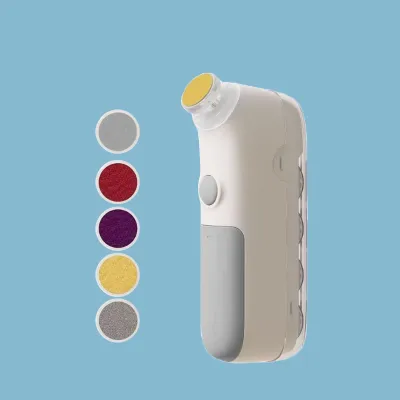
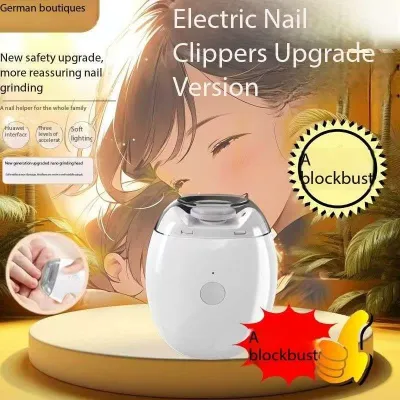
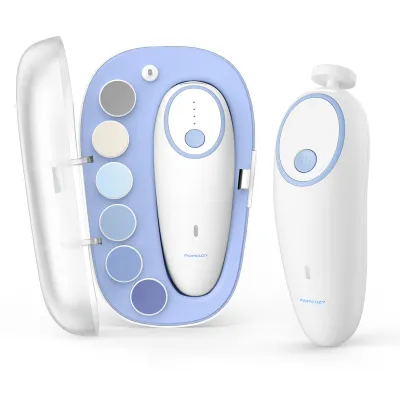
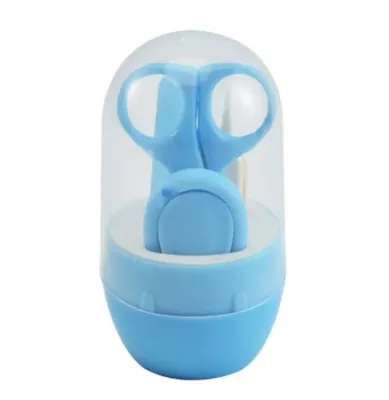
Prices are valid at publication and may change. Please refer to the product page for the latest price.

Furthermore, a newborn’s fingers are exceptionally small, and their natural reflex is to clench their fists. Trying to pry open a tiny hand while maneuvering a bulky, sharp tool in low light or during a sudden movement is a recipe for accidents. Standard clippers also block your line of sight, meaning you are often clipping blindly, relying on guesswork rather than clear visibility.
Specialized infant nail care tools are engineered specifically to address these developmental challenges. They feature modified geometries, such as ultra-short blades, protective guards, or rounded safety tips, which help isolate the nail from the surrounding skin. Using tools designed for the first few months of life ensures you can manage rapid nail growth safely without causing distress or injury to your baby.
Comparing Manual Scissors, Clippers, and Electric Files
Selecting the right infant nail trimmer requires understanding the distinct advantages and limitations of the three primary categories: manual safety scissors, specialized baby clippers, and electric nail files. Each option offers a different balance of tactile control, speed, and safety, allowing parents to choose a tool that aligns with their personal comfort level and their baby’s temperament.
Manual Baby Nail Scissors
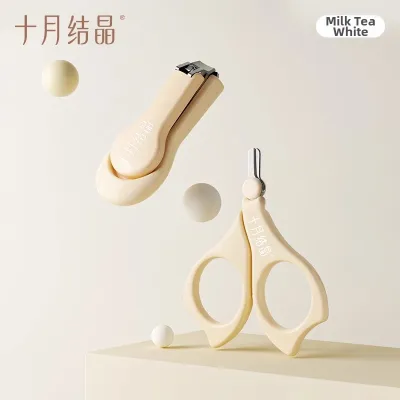
Manual baby nail scissors are highly favored by healthcare professionals and experienced parents for their exceptional precision. These scissors typically feature short, thin, curved blades that mimic the natural contour of a newborn’s tiny fingertips. The tips of the blades are rounded into blunt bulbs, significantly reducing the risk of accidentally poking or piercing the baby’s delicate skin during a sudden flinch.
Using scissors provides immediate tactile feedback, allowing you to feel exactly how much of the nail is being cut. This level of control is particularly useful for trimming the very fine, paper-thin nails of newborns, which can sometimes fold or tear when subjected to the crushing action of standard clippers.
However, manual scissors do come with a learning curve. They require a steady hand, excellent lighting, and a calm baby. If your infant is highly active or prone to sudden starts, maneuvering scissors can still feel intimidating. They are best suited for quiet moments, such as when your baby is feeding or deeply asleep, allowing you to make slow, deliberate cuts with maximum visibility.
Manual Baby Nail Clippers
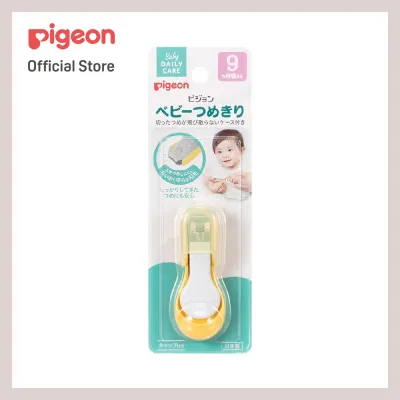
Manual baby nail clippers are a scaled-down version of the classic lever-style clippers used by adults. To make them safe for infants, manufacturers design them with miniature clipping jaws that match the small radius of a baby’s fingernail. Many models also incorporate helpful safety enhancements, such as built-in magnifying glasses that fold over the blades to improve visibility, or protective plastic guards that limit how much of the nail can enter the cutting zone.
Despite these safety features, manual clippers still carry an inherent risk of pinching. Because the clipping action relies on two blades meeting under pressure, any skin that accidentally slips between the jaws will be cut. If the nail is not properly isolated from the nail bed, or if the baby jerks their hand at the exact moment of closure, it is easy to cut too deep.
For this reason, many parents prefer to hold off on using lever-style clippers during the first few weeks of life, when the nails are at their softest and most fused to the skin. Manual clippers become much more practical and safer to use as the baby grows, typically around three to six months of age, when the nails begin to thicken slightly and separate more clearly from the underlying skin.
Electric Nail Files and Trimmers
Electric nail files, often referred to as baby nail trimmers or electric buffers, have become immensely popular among new parents due to their gentle, stress-free operation. Instead of cutting the nail with sharp blades, these battery-operated devices use a rapidly rotating, cushioned filing pad to gently wear down the nail edge. The primary advantage of this design is safety: if the rotating pad accidentally touches the baby’s surrounding skin, it simply stops or slips without causing cuts or pain.
These devices are highly versatile and usually come with a set of interchangeable filing pads, each color-coded for different age ranges and nail hardness levels. For newborns, the pads feature an ultra-fine grit that is incredibly gentle, while pads for older infants and toddlers have progressively coarser textures. Many electric trimmers also feature built-in LED lights to illuminate the fingertip in dark rooms, along with multiple speed settings and whisper-quiet motors designed not to startle a sleeping infant.
The trade-offs of electric files involve time and sensory factors. Filing down ten tiny nails takes longer than clipping them, and some babies may be sensitive to the mild vibration or the low humming sound of the motor. Additionally, you must regularly replace the worn-out filing pads to maintain their effectiveness. For anxious parents who dread the thought of using sharp blades, however, the peace of mind offered by an electric file often outweighs these minor inconveniences.
Essential Safety and Design Features to Verify
When browsing online marketplaces or local baby boutiques in Singapore, it is easy to be overwhelmed by the sheer variety of infant nail trimmers. To ensure you select a high-quality, reliable tool, you should carefully verify specific safety and design features on the product packaging or manufacturer listings before making a purchase.
First, inspect the physical safety barriers of the tool. If you are choosing manual scissors or clippers, verify that the tips are completely rounded and blunt. Look for models that feature protective blade guards or physical stoppers that prevent the blades from closing too far or capturing too much nail at once. For electric files, check that the device has an automatic pressure-stop mechanism, which immediately halts the motor if too much force is applied against the skin.
Second, evaluate the ergonomic design of the handle. Trimming a newborn’s nails requires extreme precision, which is impossible if the tool is slipping out of your hand. Look for wide, contoured handles with non-slip rubberized grips or finger loops that provide maximum stability. Some manual clippers feature angled handles that allow you to hold the tool at a natural angle, keeping your hand out of your direct line of sight so you can clearly see what you are cutting.
Third, prioritize visibility aids. Because newborn nails are incredibly small, having a clear view of the cutting area is essential. If you are buying manual clippers, look for designs with an integrated magnifying glass that can be adjusted to focus on the fingertip. For electric trimmers, ensure the device features a bright, built-in LED light positioned at the tip, which allows you to trim safely in a dimly lit nursery while your baby is asleep.
Finally, always review the manufacturer’s age recommendations, weight or size ranges, and material safety certifications on the label. Ensure the plastics used are free from harmful chemicals like BPA, phthalates, and heavy metals, especially since babies frequently put their hands in their mouths. Verify that the product is certified under recognized safety standards, and always cross-reference the recommended age range to ensure the tool’s size and grit level are appropriate for a newborn.
Step-by-Step Trimming Routine and Safety Boundaries
Establishing a calm, structured routine is just as important as choosing the right tool. To minimize stress for both you and your baby, follow a step-by-step approach that prioritizes safety and clear boundaries.
Begin by choosing the optimal timing. The best time to trim a newborn’s nails is when they are relaxed or inactive. Many parents find it easiest to trim nails immediately after a bath, as the warm water softens the nails, making them much easier to cut or file. Alternatively, trimming while the baby is in a deep sleep—typically about twenty minutes after they fall asleep—allows you to work without struggling against sudden movements.
When you are ready to trim, use proper holding techniques to secure the baby’s hand. Hold the baby’s hand firmly but gently, and isolate one finger at a time. Use your thumb to gently push the skin of the fingertip back and away from the nail edge. This action creates a clear gap between the nail and the sensitive skin underneath, significantly reducing the risk of accidental nicks. Cut or file straight across the nail, then gently round the corners to prevent sharp edges that could scratch the baby’s face.
Set strict safety boundaries and know when to pause the task. Never attempt to trim your baby’s nails in poor lighting, when you are feeling overly tired, or if your baby is fussing and thrashing. If the baby becomes highly active or distressed, stop immediately and try again later. It is far better to trim only one or two nails per session than to rush and risk an injury.
Lastly, monitor the health of your baby’s fingertips. If you notice any redness, swelling, warmth, or pus around the nail bed, these may be signs of a localized skin infection or an ingrown nail. In such cases, do not attempt to treat or cut the nail further yourself. Stop using all trimming tools and consult a pediatrician or qualified healthcare professional for proper medical guidance.
Frequently Asked Questions (FAQ)
How often should I trim a newborn's nails?
A newborn’s fingernails grow incredibly fast, often requiring attention once or even twice a week. Because their nails are so thin and sharp, they can easily scratch their delicate facial skin if left untrimmed. You should observe the length of the nails relative to the fingertip daily; if you can see the nail extending past the edge of the finger, or if you feel sharp edges, it is time for a quick trim or file.
In contrast, a newborn’s toenails grow much more slowly. Toenails generally only require trimming once or twice a month. When managing toenails, always cut straight across rather than rounding the edges deeply, as this helps prevent the nail from growing into the surrounding skin as it develops.
What should I do if I accidentally nick my baby's skin?
Accidental nicks can happen to even the most careful parents. If you nick your baby’s skin, stay calm and act quickly. First, rinse the area with cool water and apply gentle, firm pressure to the cut using a clean, damp cloth or sterile gauze pad. The bleeding should stop within a few minutes.
Do not apply adhesive bandages to a newborn’s fingers or toes. Babies frequently put their hands in their mouths, making bandages a severe choking hazard. Instead, keep the area clean and dry. If the bleeding does not stop after several minutes of continuous pressure, or if you notice signs of infection—such as increasing redness, swelling, or discharge—in the following days, consult a healthcare professional immediately.

Community discussion
Share your experience or ask a question. Comments are reviewed before publication.