
Selecting a baby sling carrier in Singapore requires a careful balance of comfort, climate suitability, and physical safety. With the tropical heat and the active, transit-heavy lifestyle of local parents, finding a carrier that supports your baby’s physical development while protecting your own posture is essential. True ergonomic design is not merely a marketing label; it is a set of structural features that actively support your baby’s growing hips and spine.
To make an informed choice, you must look beyond attractive designs and focus on how a carrier physically positions your baby. By understanding the mechanics of proper support and verifying key safety standards, you can confidently select a carrier that keeps your baby safe and comfortable. This guide outlines the essential ergonomic principles, design features, and verification steps to help you choose the right carrier for your family.
What True Ergonomic Support Means for You and Your Baby
At birth, a baby’s hip joints are made of soft cartilage rather than hard bone. If the legs are forced into a straight, dangling position, the constant downward pull can cause the thigh bone to slip out of its socket, increasing the risk of hip dysplasia. An ergonomic carrier prevents this by supporting the baby’s natural anatomy.
Products mentioned in this guide
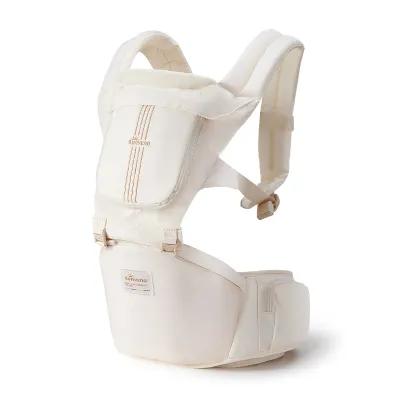
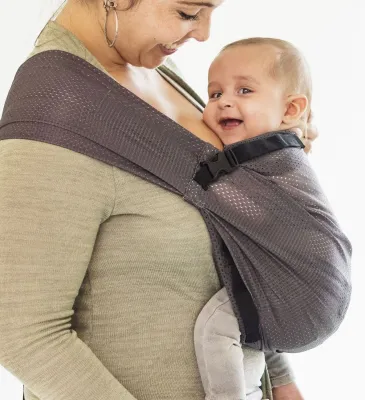
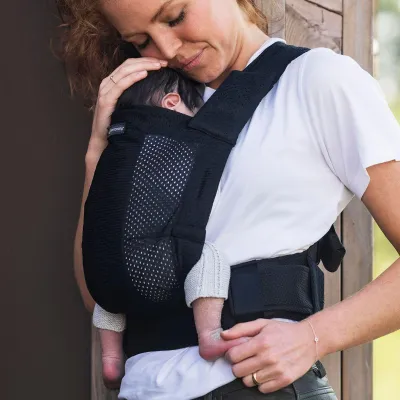
![[SG READY STCOK]Baby Carrier 0 to 36 Months Infant Baby Sling Toddler Side-Sling Carrier Up to 20kg Ice silk baby scarf](https://img.lazcdn.com/g/p/0832fea66591b0720d1ac5912f00f99f.jpg_400x400q80.jpg_.webp)
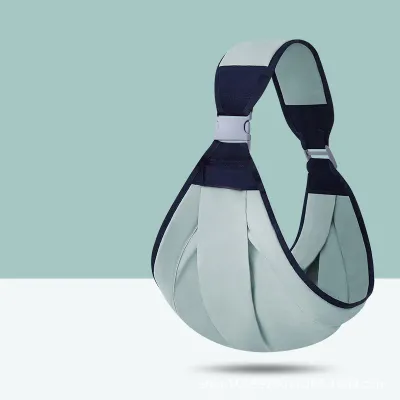
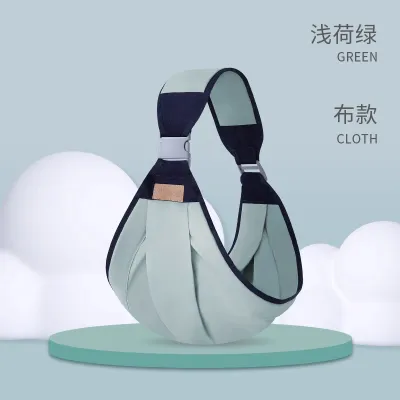
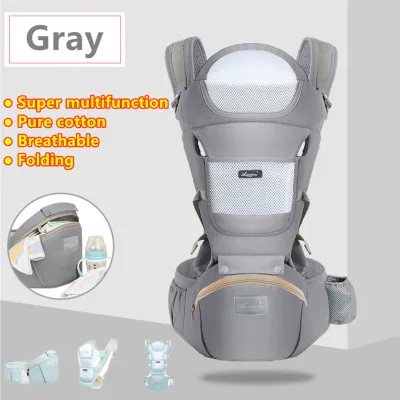
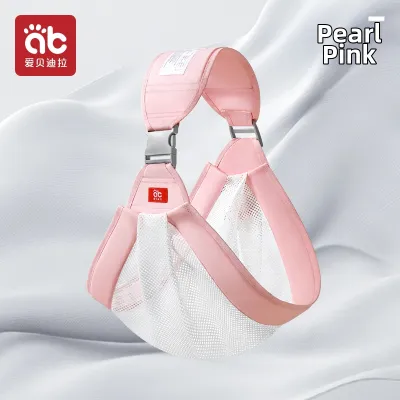
Prices are valid at publication and may change. Please refer to the product page for the latest price.
The M-position, also known as the froggy position, is the gold standard for healthy hip development. In this position, the baby’s hips are bent, the knees are spread wide, and the knees sit slightly higher than the buttocks. This creates an “M” shape when viewed from the front, ensuring the thigh bone sits securely in the hip socket. The carrier’s seat must extend fully from knee to knee to support the weight of the legs, preventing them from dangling.
The J-curve refers to the natural, rounded shape of an infant’s spine. Unlike an adult’s S-shaped spine, a baby’s spine naturally curves outward in a gentle “C” or “J” shape. An ergonomic carrier must support this natural curvature without forcing the baby’s back to straighten flat against the parent’s chest, which can place undue pressure on developing vertebrae. The fabric should hug the baby snugly but allow the spine to curve naturally.
Parent comfort is equally critical to the babywearing experience. Carrying a growing baby puts significant strain on your shoulders, neck, and lower back. High-quality carriers distribute this weight evenly across your body rather than concentrating it in one area.
Wide, padded shoulder straps prevent the fabric from cutting into your skin during extended wear. A structured, supportive waistband transfers a large portion of the baby’s weight to your hips, reducing the load on your shoulders. Cross-back strap options allow the weight to be distributed diagonally across your upper back, which is highly beneficial for parents with narrower frames.
Marketing terms like “ergonomic” are frequently self-declared by manufacturers. Parents must look beyond these claims and physically inspect the carrier’s structure to ensure it meets recognized orthopedic standards. A truly ergonomic carrier will always prioritize the M-position for the baby and balanced weight distribution for the parent.
Essential Design Features to Inspect Before Buying
When comparing different baby sling carrier brands in Singapore, parents should use a concrete checklist of physical design elements.

For the Baby
- Seat Width Adjustability: A carrier must have an adjustable seat base to grow with your child. If the seat is too narrow, the baby's legs will dangle straight down; if it is too wide, it will force the baby's knees to bend awkwardly inside the panel. Look for designs with adjustable buttons, snaps, or velcro tabs that allow you to customize the seat width as your baby grows.
- Neck and Head Support: Newborns lack the neck strength to support their own heads. The carrier should feature a padded, adjustable headrest or collar that can be secured to support the baby's head while sleeping or during early infancy. This support should be adjustable so it does not block the baby's airway.
- Breathable, Non-Toxic Fabrics: Singapore's warm and humid climate makes fabric selection a primary safety and comfort concern. Heavy, synthetic materials can cause both parent and baby to overheat quickly. Look for carriers made from 3D breathable mesh, lightweight linen, or 100% organic cotton. These materials promote airflow and reduce the risk of heat rash.
For the Parent
- Padded Shoulder Straps: Thick, high-density foam padding in the shoulder straps prevents shoulder fatigue during long walks through local parks or shopping malls. The padding should be resilient and not compress completely under the baby's weight.
- Lumbar Support Pads: A dedicated lumbar support pad on the waistband helps maintain the natural curve of your lower spine, preventing slouching and lower back pain. This is especially important as your baby gets heavier.
- Ease of Adjustment: You should be able to adjust all buckles, straps, and rings easily while wearing the carrier. Look for front-adjusting buckles or smooth-gliding rings that allow you to tighten or loosen the carrier single-handedly, ensuring a secure fit without assistance.
Versatility
- Multiple Carrying Positions: A versatile carrier should offer multiple carrying positions, including front-inward, front-outward, hip, and back carries. Each position must maintain the baby's ergonomic alignment.
- Weight and Age Limits: Each carrying position has specific developmental requirements. For example, front-outward carrying should only be attempted once the baby has strong head and neck control, and back carrying is typically reserved for older infants who can sit independently. Always verify the manufacturer's weight limits for each specific position to ensure safety.
How to Verify Brand Claims and Safety Certifications
With numerous brands available on online marketplaces and in local baby boutiques, parents must independently validate ergonomic and safety claims.
Hip-Healthy Acknowledgment
Look for products that have been officially acknowledged as “hip-healthy” by the International Hip Dysplasia Institute (IHDI). This designation indicates that the carrier has been evaluated by orthopedic experts and found to support proper hip alignment when used correctly. Parents can verify these claims by checking the official IHDI website directory rather than relying solely on product packaging.
Fabric Safety Certifications
Babies frequently chew on the straps and upper panels of a carrier. To ensure the materials are free from harmful chemicals, heavy metals, and toxic dyes, look for independent textile certifications such as the OEKO-TEX Standard 100. This certification guarantees that every component of the fabric, including threads, buttons, and linings, has been tested and declared safe for direct contact with infant skin.
Manufacturer Guidelines and Warnings
Always review the manufacturer’s official user manual rather than relying solely on promotional marketing copy. Check the minimum weight requirement, as some carriers require a separate infant insert for newborns under a certain weight. Ensure the warning labels are clear and that the product complies with international safety standards, such as the European standard EN 13209 or the American standard ASTM F2236. These standards ensure the carrier has undergone rigorous structural and durability testing.
Matching Carrier Types to Your Baby's Developmental Stage
Selecting the right style of carrier depends heavily on your baby’s age, weight, and physical milestones.
Stretchy Wraps
- Best For: Newborns and the first few months of life.
- Ergonomic Benefits: Stretchy wraps provide a snug, womb-like environment that naturally supports the J-curve of a newborn's spine. The soft fabric conforms perfectly to the baby's small body, making it easy to achieve a secure M-position without placing pressure on their developing joints.
- Limitations: As the baby grows and gains weight, the elastic fabric will begin to sag under the baby's weight. This reduces the support for the baby's spine and increases the strain on your shoulders and back. Most parents find they need to transition to a more structured carrier once the baby reaches approximately 7 to 9 kilograms.
Ring Slings
- Best For: Quick trips, short periods of wear, and toddlers who frequently want to be picked up and put down.
- Ergonomic Benefits: Ring slings allow for a highly adjustable, custom fit. They are excellent for hip carries, which is a natural position for older infants who want to look around while remaining securely attached to the parent.
- Limitations: Ring slings distribute the baby's weight asymmetrically across only one of your shoulders. This can lead to muscle strain during extended use. Additionally, achieving a safe, deep seat requires practice to ensure the fabric is properly tensioned through the rings and the baby's knees remain higher than their bottom.
Structured Soft Carriers (SSCs)
- Best For: Older infants, toddlers, and long-duration carrying.
- Ergonomic Benefits: SSCs feature structured waistbands and padded shoulder straps that distribute weight exceptionally well. They are designed to support heavier weights, often up to 20 kilograms, making them a long-term investment for active families.
- Limitations: Some SSCs can be bulky and warm to wear in Singapore's climate. Parents must ensure the seat width can be adjusted to maintain knee-to-knee support as the child's legs grow, preventing the legs from dangling straight down. Look for models with mesh panels to improve airflow.
Frequently Asked Questions (FAQ)
Can a baby sling carrier cause hip dysplasia if used incorrectly?
Yes, improper use of a baby carrier can contribute to hip subluxation or dysplasia, especially in infants who are already predisposed to the condition. When a carrier forces the baby’s legs to hang straight down with the knees fully extended, the thigh bone is pulled out of the hip socket. This constant downward pressure can damage the soft cartilage of the joint. To minimize this risk, always ensure your baby is seated in the M-position, with the fabric supporting the thighs from knee to knee. If you have concerns about your baby’s hip development, consult a pediatrician before using a carrier.
At what age or weight should I transition from a wrap to a structured carrier?
The transition from a stretchy wrap to a structured carrier is typically determined by the baby’s weight and physical milestones rather than a strict age limit. Most stretchy wraps begin to sag and lose their supportive tension when the baby reaches around 7 to 9 kilograms. Additionally, once your baby develops strong neck control and can sit independently, they will benefit from the firmer support and wider view offered by a structured soft carrier. If you notice the wrap fabric stretching out of shape or causing you back pain, it is time to transition.
How do I clean and maintain a baby sling carrier without damaging its structure?
To preserve the safety and structural integrity of your baby carrier, always refer to the manufacturer’s care label. Many structured carriers are machine washable, but they should be washed on a gentle cycle using cold water and a mild, dye-free detergent. Avoid using bleach, fabric softeners, or harsh chemicals, as these can degrade the fabric fibers and weaken the buckles. Always fasten all buckles and secure any velcro straps before washing, or place the carrier inside a mesh laundry bag. Air dry the carrier in a shaded area; avoid using a tumble dryer or exposing the carrier to direct, intense sunlight, which can weaken elastic components and fade the fabric.

Community discussion
Share your experience or ask a question. Comments are reviewed before publication.