
Finding the right baby changing table in Singapore requires balancing safety, convenience, and floor space. With typical Housing & Development Board (HDB) flats and modern condominiums featuring compact bedroom layouts, parents must look beyond generic brand popularity. A trusted changing table is not simply the most advertised model; it is one that fits securely within your specific floor plan, complies with verified safety standards, and adapts to your family’s changing needs over time. By focusing on structural integrity, multi-functional designs, and precise physical dimensions, you can establish a safe, highly efficient diaper-changing station without overcrowding your home.
Essential Features for Space-Saving Nursery Furniture
When floor space is at a premium, evaluating the physical footprint of nursery furniture against its storage capacity is a critical first step. A bulky changing table can quickly make a small bedroom feel cramped, restricting the flow of movement and making daily caregiving tasks more stressful. Parents should look for units that maximize vertical space, offering multiple tiers of shelving or deep drawers directly beneath the changing surface. This vertical integration ensures that diapers, wipes, clothing, and sanitizing supplies remain within arm’s reach during a change, eliminating the dangerous need to step away from an active baby to retrieve supplies.
Multi-functional designs offer excellent long-term value and space efficiency for compact homes. Instead of purchasing a single-use piece of furniture that becomes obsolete once your child outgrows diapers, consider units that convert into standard dressers, toy storage shelves, or study desks. Many trusted manufacturers design changing tables with removable top frames or modular toppers. Once the diaper-changing phase concludes, the topper can be safely detached, leaving behind a classic piece of furniture that blends seamlessly into a growing child’s room or a shared family space.
Products mentioned in this guide

![【SG Happy Baby】 [diaper changing table]Baby Diapers Changing Table Foldable Newborn Multifunctional 0-3 Years Old Care Diaper Nursing Table LAPN 3445208002](https://img.lazcdn.com/g/p/cb8e257cb4999e10de1572619c195db0.jpg_webp_400x400q80.jpg_.webp)
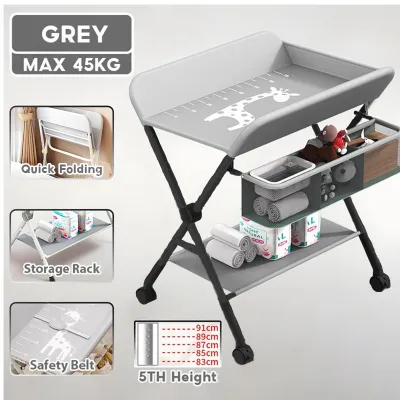
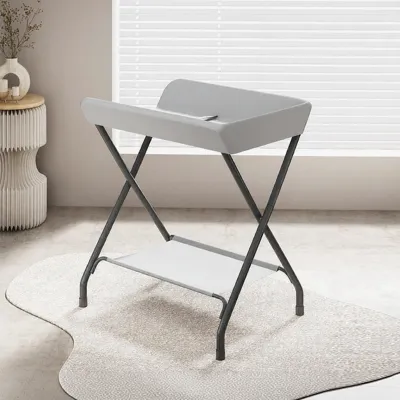
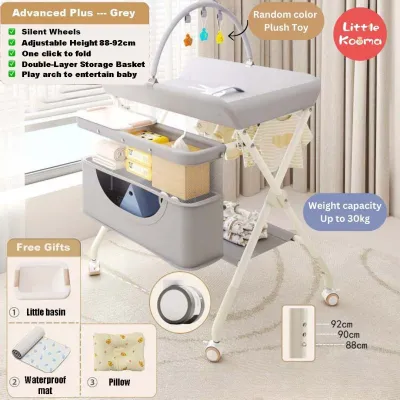
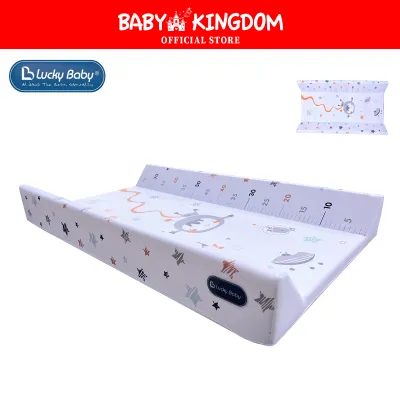
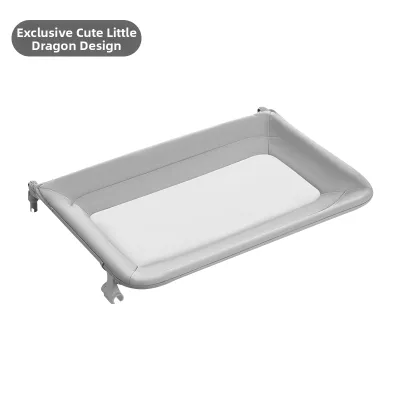

Prices are valid at publication and may change. Please refer to the product page for the latest price.
The overall weight and mobility of the furniture also play a significant role in flexible room layouts. In tight living quarters, the ability to easily reposition furniture can make cleaning, organizing, and room reconfiguration much simpler. Lightweight frames constructed from durable materials, or units equipped with high-quality caster wheels, allow caregivers to move the changing station as needed. However, mobility must never compromise stability; any wheeled unit must feature robust, independent locking mechanisms to ensure the table remains completely stationary during use.
How to Verify Brand Reliability and Safety
In the absence of universal brand rankings, parents must establish a reliable framework to verify the safety and structural integrity of any changing table before purchase. The most dependable indicator of quality is compliance with recognized international safety standards, such as the European standard EN 12221 or the American ASTM F2388. These standards govern critical safety factors, including structural stability, side barrier heights to prevent falls, and the absence of toxic finishes or sharp edges. Always check the product labels, user manuals, or the manufacturer’s official documentation to verify these certifications rather than relying solely on retail product descriptions.

A brand’s commitment to customer support is another vital component of reliability, particularly when purchasing furniture online. Before committing to a brand, review their warranty terms, return policies, and customer service responsiveness within Singapore. A reputable brand typically offers a clear warranty covering manufacturing defects and structural failures. Furthermore, check if the brand or local distributor provides accessible customer service channels to assist with replacement parts, assembly queries, or potential product recalls.
Analyzing verified purchaser reviews provides practical insight into how a changing table performs under daily, real-world conditions. Look for feedback that specifically addresses long-term structural integrity, hardware durability, and stability over months of continuous use. Pay close attention to comments regarding the smoothness of drawer glides, the sturdiness of joints, and whether the unit wobbles when a baby becomes more active. Consistent complaints about loose fittings, peeling laminates, or unstable frames are clear indicators that a model may not meet your safety and durability expectations.
Comparing Space-Efficient Changing Table Styles
Selecting the right style of changing table depends heavily on your home’s layout, your storage needs, and how you plan to manage daily routines. Different designs offer distinct advantages, ranging from permanent, high-storage solutions to ultra-compact, temporary setups that can be tucked away when not in use.
Dresser and Changing Table Combos
Dresser and changing table combinations are highly favored for their dual-purpose utility, combining essential clothing storage with a secure changing platform. This style is exceptionally space-efficient because it eliminates the need for two separate pieces of furniture in a small bedroom. From an ergonomic perspective, these combos are typically designed at a comfortable waist height for most caregivers, reducing back strain during frequent diaper changes. However, parents must ensure the top surface is wide and deep enough to accommodate a standard contoured changing pad securely.
Safety is paramount when using a heavy piece of furniture like a dresser for diaper changes. Caregivers must verify the quality of the drawer glides, ensuring they feature safety stops to prevent drawers from being pulled out completely. Because a child’s weight shifts during a change, and open drawers alter the unit’s center of gravity, the mandatory use of anti-tip wall anchors is non-negotiable. These anchors secure the dresser firmly to the wall, preventing catastrophic tipping accidents.
The long-term usability of a dresser combo is one of its greatest strengths. Once your child is toilet trained, the changing pad and any temporary safety rails can be removed, transitioning the unit into a standard bedroom dresser. This aesthetic versatility ensures the furniture remains useful for years, representing a sustainable investment for families living in compact homes where every piece of furniture must justify its footprint.
Foldable and Wall-Mounted Options
For extremely tight spaces, shared bedrooms, or minimalist layouts, foldable and wall-mounted changing tables offer ultra-compact alternatives. Wall-mounted units fold flat against the wall when not in use, completely freeing up valuable floor space. However, these units require professional and highly secure installation. In Singapore, where HDB flat walls are typically made of solid concrete or precast panels, installing a wall-mounted unit requires appropriate masonry wall plugs and heavy-duty screws. It is critical to locate solid structural points and avoid mounting these units onto weak drywall partitions unless proper internal reinforcement is present.
When evaluating foldable or wall-mounted models, carefully check the manufacturer’s stated weight limits, hinge durability, and locking mechanisms. The folding joints must lock securely into place when open to prevent accidental collapse during a change. High-quality hinges should operate smoothly without creating pinch points for fingers.
While these options excel at saving space, they come with significant storage limitations. Most wall-mounted and foldable models offer minimal shelving, often only holding a few diapers and a slim pack of wipes. Caregivers must plan separate organizational solutions, such as wall-mounted baskets or nearby rolling carts, to keep essential diapering supplies within safe arm’s reach.
Portable and Rolling Changing Stations
Portable and rolling changing stations, often designed as multi-tiered utility carts, offer a flexible alternative to fixed furniture. These mobile units allow caregivers to move the entire diaper-changing setup from the bedroom to the living room or bathroom, adapting to daily family activities. When evaluating a rolling station, inspect the wheel locking mechanisms thoroughly. The wheels must lock securely on various floor types, including smooth ceramic tiles, vinyl, and low-pile rugs, to prevent the cart from shifting while you are changing your baby.
The physical footprint of a mobile cart must be measured carefully to ensure it can maneuver easily through standard doorways and fit into tight corners. A cart that is too wide or awkward to steer defeats the purpose of mobility. Additionally, check the overall stability of the frame; a high center of gravity can make a lightweight rolling cart prone to tipping if it is pushed or pulled unevenly.
Verify the weight capacity of each shelf and the overall structure. Because these carts often feature open shelving, there is a risk of items shifting or falling during movement. Ensure that shelves have raised edges or protective barriers to keep lotions, wipes, and spare clothes securely in place while the cart is in motion.
Your Pre-Purchase Checklist for Small Spaces
Before purchasing a changing table online or from a local showroom, taking precise measurements of your allocated space is essential. Do not rely on visual estimation; use a measuring tape to map out the exact footprint on your floor. Ensure you account for door clearances, walking paths, and the full opening radius of any drawers or cabinet doors. There should be comfortable standing room for the caregiver to maneuver safely without being squeezed against a wall or other furniture.
Next, verify the exact dimensions of the changing pad required for the table. If the table does not come with a pad, ensure you can easily purchase a compatible, contoured pad that fits snugly within the safety rails. The pad must feature adequate securing straps that attach directly to the frame of the table, preventing the pad from sliding during use.
Finally, confirm the logistics of delivery and assembly. Many high-rise apartments and condominiums in Singapore have specific delivery constraints, such as lift access limitations or additional fees for carrying heavy items up stairs. Check if the retailer offers professional assembly services, as correct assembly is vital for structural safety. Review the return policy carefully, ensuring you can return or exchange the item if it arrives damaged, has missing hardware, or does not fit your space as expected.
Frequently Asked Questions (FAQ)
Can I use a regular dresser as a baby changing table?
Yes, you can repurpose a regular dresser as a changing table, provided it meets strict safety criteria. The dresser must be at an ergonomic height for the caregiver and have a flat, stable top surface wide enough to accommodate a contoured changing pad. It is essential to use a changing pad with non-slip backing and secure safety straps that anchor directly to the back of the dresser. Additionally, you must install an anti-tip kit to secure the dresser firmly to the wall, preventing it from tipping over when drawers are pulled open or when weight is applied to the top.
At what age or weight should I stop using a changing table?
You should stop using an elevated changing table when your baby reaches the manufacturer’s specified weight or height limit, which is typically detailed in the product manual. Additionally, behavioral milestones are critical indicators; once your baby can roll over, sit up, or actively resist lying flat, the risk of falls increases significantly. At this stage, even if the baby is under the weight limit, it is highly recommended to transition to a floor-level changing pad or a secure, low surface to eliminate any fall hazards.

Community discussion
Share your experience or ask a question. Comments are reviewed before publication.