
Selecting the right nailcutter set for a newborn requires prioritizing safety, precision, and ease of use over standard adult tools. Because newborn nails are exceptionally thin and grow rapidly, caregivers need specialized equipment to prevent accidental nicks and skin irritation. In Singapore’s warm and humid climate, babies often rub their faces when they feel warm or tired, making smooth, scratch-free nails a daily necessity. By selecting a dedicated set that combines safety guards, ergonomic grips, and gentle filing options, you can confidently maintain your baby’s hygiene without the fear of pinching their delicate skin.
Why Newborns Need Specialized Nail Care Tools
Newborn babies are born with fully formed nails that are often surprisingly long and sharp. However, their physical structure is vastly different from adult nails. A newborn’s nails are incredibly thin, soft, and pliable, resembling layers of delicate skin rather than the hard keratin shields of adults. Because these nails are so flexible, they bend easily, which can cause them to tear or split naturally, leaving jagged edges.
Furthermore, the nail bed—the sensitive skin directly beneath the nail plate—is highly vascularized and sits extremely close to the surface. In a newborn, the nail plate is often still partially fused to this delicate skin, making it exceptionally difficult to see where the nail ends and the finger begins. This close proximity means that any minor slip with an improper tool can easily result in a painful cut or bleeding.
Products mentioned in this guide
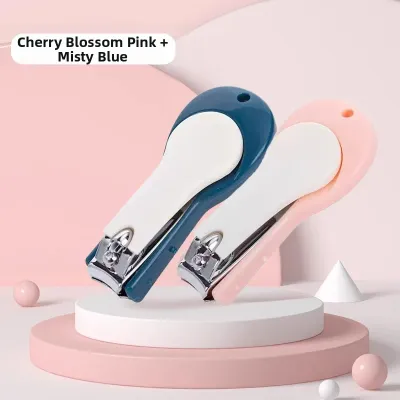
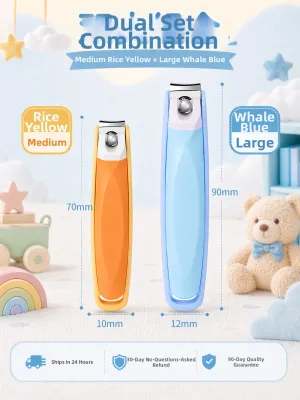
Prices are valid at publication and may change. Please refer to the product page for the latest price.
Using standard adult nail care tools on a newborn is highly risky. Adult clippers are designed for thick, rigid nails and feature wide, curved blades that can easily trap and cut a baby’s entire fingertip. They also lack the precision and visibility required to navigate tiny fingers that are constantly in motion. Similarly, using adult scissors is dangerous due to their sharp, pointed tips, which can easily puncture delicate skin if the baby makes a sudden, involuntary movement.
Some caregivers attempt to bite their baby’s nails as a quick fix, but pediatricians strongly advise against this practice. Biting can transfer harmful oral bacteria from the adult’s mouth into microscopic tears in the baby’s skin, leading to painful infections such as paronychia, which may require medical intervention. Dedicated baby nailcutter sets are designed specifically to address these anatomical challenges safely.
Essential Safety Features to Check Before Buying
When shopping for a baby nailcutter set, safety must be your primary consideration. The market offers a wide variety of designs, but not all are created equal. One of the most critical features to look for is a rounded blade tip on any scissors included in the set. This design ensures that even if your baby jerks their hand unexpectedly, the blunt ends will not puncture or scratch their skin.

Additionally, many high-quality clippers feature built-in safety guards or overlapping blades that prevent the tool from cutting too close to the nail bed, significantly reducing the risk of accidental pinches. These physical barriers help isolate the nail plate from the sensitive skin underneath.
Visibility is another crucial factor when working with such tiny targets. Some advanced baby nail clippers come equipped with integrated magnifying glasses that fold over the blades, allowing you to see the nail at two or three times its actual size. Others feature small, energy-efficient LED lights positioned near the cutting edge. These lights illuminate the finger clearly, making it much easier to trim nails in a dimly lit nursery while your baby is sleeping.
Ergonomics play a vital role in maintaining control during the trimming process. Look for tools with oversized, non-slip handles and finger loops. These are designed to fit comfortably in adult hands, providing a secure grip and preventing the tool from slipping. Textured rubber grips or contoured plastic handles offer superior control, which is especially important if you are feeling nervous or if your hands are slightly sweaty.
Finally, consider the materials and hygiene features of the set. All metal components should be made of high-quality, rust-resistant stainless steel. This material is not only durable but also easy to sanitize with isopropyl alcohol wipes after each use. The plastic parts of the tools and the storage case should be made from non-toxic, BPA-free materials. A sturdy, compact storage case is essential for keeping the tools clean, organized, and protected from dust, moisture, and household contaminants.
Comparing Types of Baby Nail Trimmers and Files
To find the right nailcutter set, it is helpful to understand the distinct advantages and limitations of each tool type. Caregivers often find that a combination of tools works best as the baby grows.
Baby nail scissors are highly favored by many parents for their exceptional precision. The long, thin blades allow you to see exactly where you are cutting, and the manual control lets you make micro-adjustments with every snip. They are particularly effective for trimming the paper-thin, floppy nails of newborns. However, using scissors requires a steady hand and a cooperative or sleeping baby. If you have shaky hands or feel highly anxious, the precise nature of scissors might feel intimidating.
Baby nail clippers offer a familiar mechanism that most adults are already comfortable using. They are designed with a small cutting head tailored to the size of infant fingers. Many models include a safety bezel or guard to prevent over-cutting. The main advantage of clippers is speed; you can quickly trim a nail with a single click. However, the blind spot created by the clipper head means you must be extremely careful to pull the finger pad back before clipping to avoid pinching the skin. Clippers can also leave slightly sharp, square corners that require subsequent filing.
Electric nail files, or motorized nail trimmers, have become increasingly popular due to their safety profile. These devices use rotating, cushioned pads with varying levels of grit to gently file down the nail. Because the motor is designed to stop automatically if the pad presses too hard against the skin, the risk of cuts or bleeding is virtually non-existent. They are excellent for anxious parents and can be used while the baby is awake or asleep. On the downside, electric trimmers require batteries, can be slightly bulky, and the filing process takes significantly longer than clipping. Some babies may also be startled by the subtle vibration or humming sound of the motor.
Manual emery boards are the simplest, most traditional tool for newborn nail care. They are incredibly safe, as there are no blades or motors involved. You have complete control over the pressure and speed, making them ideal for smoothing out rough edges or filing down very soft newborn nails during the first few weeks. However, manual filing is a slow, repetitive process that requires patience. As your baby grows and their nails become thicker and tougher, manual emery boards become less effective as a primary trimming tool and are best used as a finishing touch after clipping.
How to Build Your Newborn Nail Care Shortlist
Building a shortlist of potential nailcutter sets involves evaluating your own comfort level alongside your baby’s unique needs. Start by assessing your personal confidence and physical capabilities. If you have excellent eyesight and steady hands, a set centered around high-quality baby scissors may be your best option. Conversely, if you feel highly anxious about using blades near your baby’s skin, or if you have limited dexterity, prioritizing an electric nail trimmer will give you peace of mind and ensure a stress-free experience.
Next, consider your baby’s temperament and daily routine. If your baby is a light sleeper who wakes up at the slightest sound, a silent manual set or an ultra-quiet electric trimmer is essential. If your baby is highly active and squirmy when awake, you will need a tool that can get the job done quickly, such as a specialized baby clipper, or a highly forgiving tool like an electric file that won’t hurt them if they suddenly move.
Evaluating the contents of a multi-tool set is often more practical than buying individual items. A comprehensive set that includes baby scissors, clippers, manual files, and perhaps a pair of plastic tweezers for cleaning nose or ear debris offers excellent long-term value. This versatility allows you to experiment with different tools to find what works best for you and your baby at different stages of their development.
Always check the manufacturer’s age and weight recommendations on the product packaging. Many electric trimmers, for example, come with color-coded filing pads designed for specific age ranges (such as 0-3 months, 3-6 months, and 6-12 months). Using a pad with a grit level that is too harsh for a newborn can cause skin irritation, while a pad that is too soft will be ineffective on an older baby’s thicker nails. Ensure the set you choose is explicitly rated for newborns to guarantee the gentlest care possible.
Step-by-Step Guide to Trimming Newborn Nails Safely
Trimming your newborn’s nails does not have to be a stressful chore. By following a structured, calm approach, you can complete the task safely and efficiently.
First, choose the optimal timing. Trying to trim the nails of an active, hungry, or fussy baby is a recipe for accidental nicks. Instead, wait until your baby is in a state of deep sleep, during a quiet feeding session, or immediately after a bath when their nails are softest and most pliable.
Set up your environment with excellent lighting. Sit in a well-lit room or near a window to ensure you can clearly see the boundary between the nail and the skin. Hold your baby securely in your lap, or place them on a flat, stable surface like a changing table. Hold the baby’s hand firmly but gently. Use your thumb to gently press the finger pad away from the nail edge; this action creates a safe gap and ensures the skin is out of the path of the blades or file.
When using scissors or clippers, follow the natural curve of the fingernail to prevent leaving sharp, pointed corners that could scratch their face. For toenails, however, always cut straight across. Cutting toenails in a curved shape can encourage the edges to grow into the surrounding skin, leading to painful ingrown toenails. Keep your cuts small and precise, taking off only a tiny amount of nail at a time.
After trimming, perform a quick post-trim check. Run your own finger gently over the edges of your baby’s nails to feel for any remaining sharp corners or rough spots. Use a fine manual emery board to gently smooth out any imperfections. Finally, wipe your baby’s hands with a clean, damp cloth to remove any fine nail dust or debris, preventing them from rubbing it into their eyes.
Frequently Asked Questions (FAQ)
When should I start trimming my newborn's nails?
Newborn nails can be surprisingly long at birth, but they are often still attached to the skin of the nail bed during the first few weeks of life. It is generally recommended to avoid using clippers or scissors immediately after birth. Instead, during the first two to three weeks, you can use soft cotton scratch mittens or socks over their hands to protect their face from accidental scratches. If the nails are exceptionally long or jagged, you can gently file them down using a soft manual emery board. Once the nails begin to grow past the skin line and harden slightly, usually around three to four weeks of age, you can safely transition to using specialized baby scissors or clippers.
Are electric nail files safe for newborns?
Yes, electric nail files are highly safe and effective for newborns when used correctly. These devices are specifically designed with gentle, rotating cushioned pads that stop spinning immediately if they come into contact with the skin, preventing any cuts or abrasions. However, you must verify that you are using the correct age-appropriate filing pad. Manufacturers typically color-code these pads based on age, with the softest grit reserved for newborns. Using an older baby’s pad on a newborn can cause skin irritation due to the coarser texture. Always monitor your baby’s comfort level, as some infants may be sensitive to the subtle vibration or sound of the motor.
What should I do if I accidentally nick my baby's skin?
Accidentally nicking a baby’s skin is a common occurrence that happens to almost every caregiver at some point. If you notice a small cut or bleeding, the most important step is to remain calm. Apply gentle, continuous pressure to the area using a clean, damp cloth or a sterile gauze pad until the bleeding stops. Do not apply adhesive bandages to your baby’s fingers or toes. Because newborns frequently put their hands in their mouths, a bandage can easily become wet, detach, and pose a serious choking hazard. If the bleeding does not stop after several minutes of direct pressure, or if you notice signs of infection such as persistent redness, swelling, warmth, or pus in the days following the incident, consult a qualified healthcare professional immediately.

Community discussion
Share your experience or ask a question. Comments are reviewed before publication.