
When looking for the best ear cleaner with light for babies in Singapore, parents must prioritize physical safety mechanisms and material quality over high-tech novelties. Because infant ear canals are incredibly delicate and naturally self-cleaning, the primary role of an illuminated ear tool is not deep extraction, but rather safe visual inspection and gentle cleaning of the outer ear folds (the pinna). A safe lighted ear cleaner should feature a soft, medical-grade silicone tip, a built-in physical safety guard to prevent deep insertion, and a gentle, heat-free LED light.
In Singapore’s warm and humid climate, babies often sweat around the neck and behind the ears, leading to a buildup of dust, lint, and natural oils in the outer ear area. While it is tempting to reach for a cotton swab or a generic ear pick to clear this out, doing so can push wax deeper into the canal, leading to impaction or even eardrum damage. By understanding what features make an illuminated tool safe, parents can confidently manage their baby’s grooming routine without risking injury.
Understanding the Role of Lighted Ear Cleaners in Infant Grooming
To safely care for your baby’s ears, it is essential to understand the unique anatomy of an infant’s ear canal. A baby’s ear canal is much shorter, narrower, and straighter than an adult’s, meaning the highly sensitive tympanic membrane (eardrum) sits just a short distance from the entrance. The skin lining this canal is incredibly thin and prone to scratches, which can easily become infected in humid environments.
Products mentioned in this guide
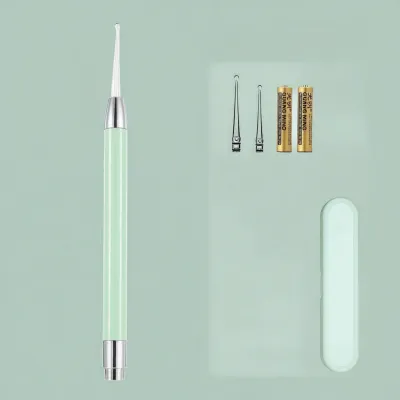
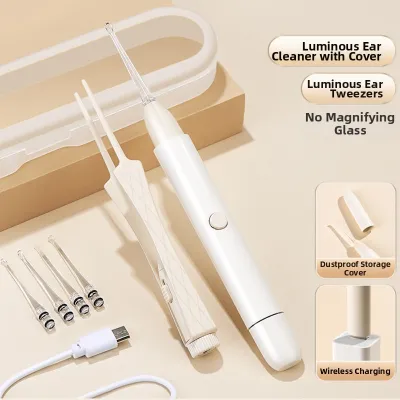
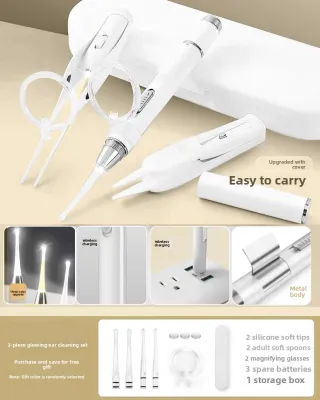
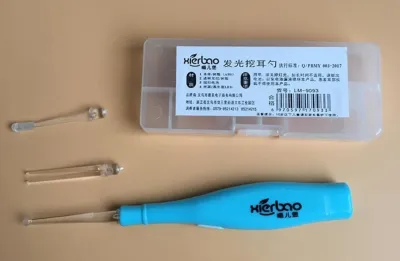
Prices are valid at publication and may change. Please refer to the product page for the latest price.
There is a critical distinction between cleaning the visible outer ear (the pinna and the area behind the ear) and attempting to clean the inner ear canal. Earwax, or cerumen, is not dirt; it is a natural, protective substance produced by glands in the outer third of the ear canal. It serves to trap dust, prevent water from causing infections, and provide antibacterial properties. Under normal circumstances, earwax slowly migrates outward on its own, aided by the natural jaw movements of sucking and crying.
Because of this natural self-cleaning process, pediatric guidelines universally advise against inserting any object—including cotton swabs, metal loops, or plastic tips—into a baby’s ear canal. Doing so risks packing the wax tightly against the eardrum, which can cause pain, temporary hearing loss, or physical trauma.
Built-in lights on baby grooming tools are designed to assist parents with visual inspection rather than deep wax extraction. The illumination allows you to clearly see if there is an accumulation of dry wax at the very entrance of the canal or within the folds of the outer ear. This visibility helps you make an informed decision on whether to leave the ear alone, gently wipe the outer area, or consult a healthcare professional for deeper blockages.
Essential Safety Features for Baby Ear Cleaners with Lights
When shopping for an ear cleaner with light, the most critical feature to look for is a physical safety guard or stopper. This is typically a wide collar, flange, or shield positioned near the base of the tip that physically prevents the tool from entering the ear canal beyond a safe, shallow depth. Even if your baby makes a sudden, unexpected movement, a well-designed safety guard will hit the outer ear structure and block the tip from penetrating deeper into the canal.

Light quality is another non-negotiable safety factor. The built-in LED must provide clear, focused illumination without being blindingly bright, as excessive glare can impair your depth perception while handling the tool. Furthermore, the light source must emit zero heat; cheap LEDs can warm up rapidly, risking thermal irritation or burns to the baby’s highly sensitive skin. Ensure the lens housing is completely shatterproof and integrated seamlessly into the tool’s body so that no small parts can detach.
Material safety standards are paramount for any product that touches infant skin. The cleaning tips must be made of BPA-free, phthalate-free, and hypoallergenic medical-grade silicone. The silicone should be exceptionally soft and flexible, bending easily under minimal pressure to ensure it cannot scratch or puncture the delicate tissue of the ear. Avoid rigid plastic or metal tips, which are far too harsh for an infant’s ears.
Finally, consider the ergonomic design of the handle. A secure, non-slip grip is essential for parents, especially when managing a squirming baby. Look for handles with textured surfaces or rubberized coatings that allow you to maintain a steady hold. The tool should feel balanced in your hand, giving you precise control over every micro-movement during the grooming process.
Comparing Types of Illuminated Ear Care Tools
Parents in Singapore will encounter several types of illuminated ear care tools on e-commerce platforms and in specialty baby boutiques. Understanding the differences between these designs will help you choose the safest and most practical option for your family’s needs.
Lighted spoon-style cleaners, often referred to as illuminated ear spatulas, feature a tiny, scoop-shaped tip made of soft silicone. These are designed to gently sweep away loose, dry wax that has already migrated to the outer ear folds or the very entrance of the canal. They are highly effective for surface-level cleaning but must never be used to dig or scoop deep inside the canal.
Lighted tweezers or forceps are another common design, featuring built-in LEDs that illuminate the tips of the tweezers. These are intended for the precise removal of large, loose flakes of dry wax or foreign debris that are clearly visible at the opening of the ear. While useful, they require an incredibly steady hand and a completely cooperative, still baby; any sudden movement while using tweezers carries a high risk of pinching or scratching the ear canal.
In recent years, camera-connected smart ear cleaners (digital otoscopes) have grown in popularity. These devices stream a close-up video feed of the ear canal directly to a smartphone or tablet screen. While they offer high visibility, they present significant risks for infant use. Screen latency—the slight delay between the physical movement of the tool and the image appearing on your screen—can cause you to over-correct and push the probe too deep. Additionally, the lack of three-dimensional depth perception on a flat screen makes it very difficult to judge distances accurately, increasing the risk of accidental eardrum contact.
Evaluating Product Claims, Labels, and Certifications
Because many baby grooming products are imported and sold online, parents must be diligent when evaluating manufacturer claims. Do not rely solely on product titles or marketing descriptions that use buzzwords like “professional,” “doctor-approved,” or “100% safe.” Instead, look for concrete indicators of quality and safety.
Start by checking the product packaging or the manufacturer’s official website for relevant safety certifications. While basic grooming tools are generally not classified as regulated medical devices in Singapore, high-quality manufacturers will often seek voluntary certifications to prove their materials are non-toxic and safe for infant contact. Look for clear labels indicating compliance with international safety standards, such as CE marking or RoHS compliance for electronic components.
Be highly skeptical of misleading marketing terms that imply a tool can safely clean the inner ear or guarantee complete wax removal. Any product that encourages parents to insert a probe deep into a baby’s ear canal should be avoided. Safe products will explicitly state that they are intended only for outer ear cleaning and visual inspection.
Always verify the manufacturer’s specified age, weight, and developmental restrictions. Many lighted ear tools are designed for older children or adults and have tips that are far too large for an infant’s tiny ear canal. If a product does not clearly state that it is safe for infants or newborns, do not use it on a baby.
Before purchasing, research the product’s history for any safety recalls. You can also read verified user feedback on local parenting forums and retail sites, paying close attention to comments regarding build quality. Look out for complaints about silicone tips detaching easily, plastic edges being sharp, or the LED light flickering and failing after a few uses, as these are major safety red flags.
Safe Usage Protocols and When to Seek Professional Help
If you decide to use a lighted ear cleaner to inspect or clean your baby’s outer ears, establishing a strict, step-by-step safety protocol is essential to prevent accidents.
First, prepare your environment and the tool. Choose a quiet, well-lit room free from distractions or pets that could bump into you. It is highly recommended to have two caregivers present: one to gently but securely hold the baby’s head still, and the other to operate the tool. Before bringing the tool near your baby, check the battery strength to ensure the LED light is bright and steady, as a dimming light will cause you to strain your eyes and lose precision. Sanitize the silicone tip thoroughly with an isopropyl alcohol wipe and allow it to air dry completely.
When using the tool, maintain strict operational boundaries. Limit your movements exclusively to the visible outer ear (the pinna) and the very entrance of the ear canal. Gently pull the outer ear lobe down and back to straighten the outer portion of the canal slightly, allowing the light to illuminate the area. Use incredibly light, sweeping motions to clear away visible, loose wax. Never apply forward pressure or push the tool into the canal.
Establish immediate stop conditions. If your baby becomes fussy, starts crying, or makes sudden head movements, turn off the tool and stop immediately. Never attempt to clean a struggling baby’s ears, as the risk of injury is extremely high. If you feel any physical resistance while using the tool, or if you notice any sudden redness or irritation, cease use right away.
Knowing when to bypass home grooming entirely and seek professional medical help is crucial for your baby’s health. If you suspect your baby has a deep earwax impaction—indicated by signs like rubbing or pulling at their ears, unexplained crying, or a lack of responsiveness to quiet sounds—do not attempt to clear it yourself. Visit a local polyclinic or a pediatrician. You must also seek immediate medical attention if you observe any discharge, fluid, blood, or a foul odor coming from the ear, as these are common signs of an ear infection or a damaged eardrum.
Frequently Asked Questions (FAQ)
Can I use a regular lighted ear cleaner designed for adults on my baby?
No, you should never use an adult-sized lighted ear cleaner on a baby. Adult tools feature probe tips that are far too large and rigid for an infant’s narrow, delicate ear canal, which greatly increases the risk of scratching the skin or puncturing the eardrum. Furthermore, adult tools typically lack the essential physical safety guards or flanges designed to prevent deep insertion, and their LED lights may be too intense for a baby’s sensitive eyes and skin.
How often should I clean my baby's ears with a lighted tool?
Earwax is a natural protective barrier that self-cleans and migrates outward on its own, meaning routine deep cleaning is unnecessary and discouraged. You should only use a lighted tool to inspect your baby’s ears or gently clean the outer ear folds when you see visible, loose wax accumulating on the pinna, which typically occurs during weekly bath routines. Over-cleaning can strip away protective oils, dry out the ear canal, and lead to irritation or infections.
What should I do if the silicone tip breaks off inside my baby's ear?
If a silicone tip or any part of the tool detaches and becomes lodged inside your baby’s ear, remain calm and keep your baby as still as possible to prevent them from rubbing the ear. Do not attempt to retrieve the broken piece yourself using tweezers, cotton swabs, or other household tools, as you are highly likely to push the object deeper into the canal and cause severe damage. Instead, take your baby immediately to the nearest clinic, pediatric emergency department, or general practitioner to have the object safely removed by a medical professional using specialized instruments.

Community discussion
Share your experience or ask a question. Comments are reviewed before publication.