
A baby step stool is more than just a convenient way for your toddler to reach a standard adult toilet. It serves a vital physiological and developmental purpose during the potty training journey, helping your child transition from diapers to independent toilet use with confidence.
When children sit on an adult-sized toilet without proper foot support, their legs dangle, which can cause tension in the pelvic floor muscles. This physical strain makes bowel movements difficult and can lead to anxiety, discomfort, or resistance during toilet training.
Using a dedicated baby step stool allows your child to sit with their feet planted flat, raising their knees slightly above their hips. This position mimics a natural squatting posture, which relaxes the puborectalis muscle and facilitates easier, more comfortable elimination. If your child experiences chronic constipation or persistent physical discomfort during toilet training, consult a qualified healthcare professional or pediatrician for personalized guidance.
Products mentioned in this guide
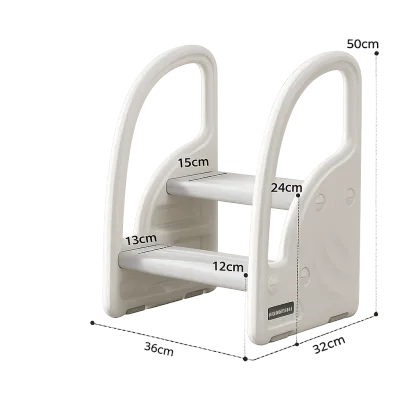
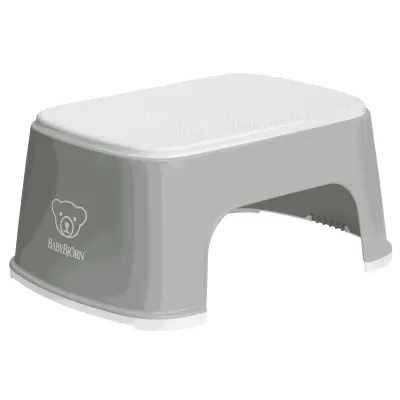
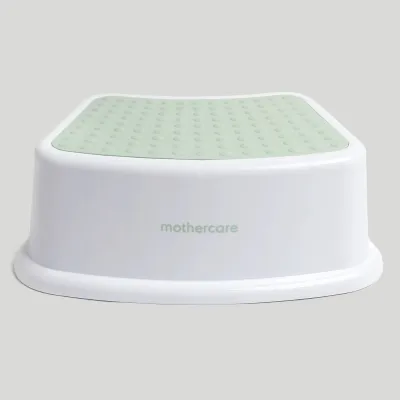
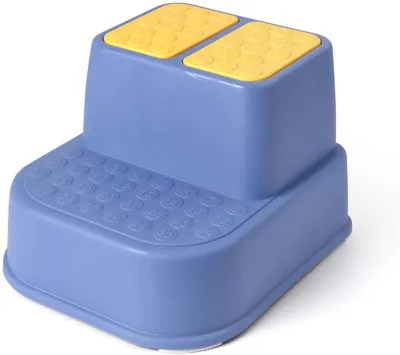
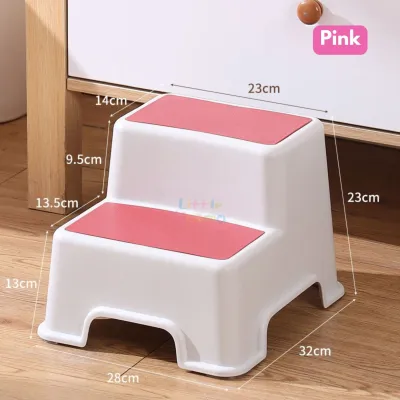
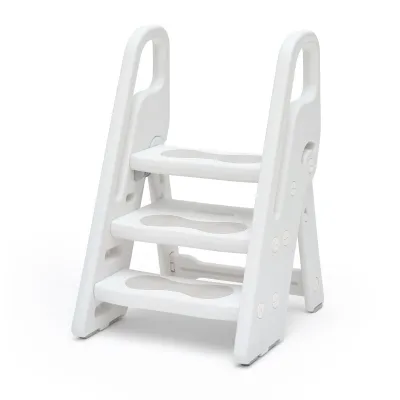
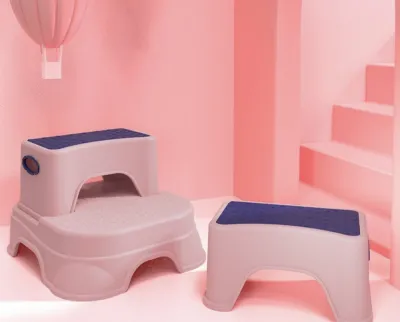
Prices are valid at publication and may change. Please refer to the product page for the latest price.
Beyond physical comfort, a stable step stool fosters a sense of security and autonomy. Toddlers are far more likely to embrace the training process when they feel physically secure and capable of climbing up and down without constant adult intervention, though close caregiver supervision remains essential throughout this developmental stage.
Essential Features of a Safe Baby Step Stool
Selecting the right baby step stool requires looking past bright colors and playful designs to evaluate structural safety. Because bathrooms are inherently slick and filled with hard surfaces, the equipment you choose must offer unyielding stability.
Not all step stools are engineered with the specific physical needs of a developing toddler in mind. A stool that works perfectly for reaching a kitchen counter may be entirely unsuitable or unsafe for the unique demands of toilet training.
To make an informed and safe choice, you should evaluate any potential purchase against four primary safety and functional pillars. These critical criteria include the height and ergonomic fit, slip resistance on all surfaces, base stability under shifting weight, and the presence of supportive handholds or rails.
Height and Ergonomic Fit
An effective baby step stool must match both the height of your home’s toilet bowl and the leg length of your growing toddler. Before purchasing, measure the distance from your bathroom floor to the top rim of the toilet bowl to establish a baseline.
For optimal ergonomics, your child’s feet should rest completely flat on the stool’s platform when they are seated on the toilet. This flat-footed contact is what allows them to push down comfortably and relax their pelvic muscles during elimination.
If a step stool is too short, your child’s feet will dangle or barely touch the surface, defeating the ergonomic purpose and causing physical strain. Conversely, a stool that is too tall can force their knees too high, making it difficult to balance, or it may create a dangerously steep climb that increases the risk of falls.
Avoid relying on generic age recommendations or vague “toddler size” labels printed on packaging. Instead, consult the manufacturer’s exact product specifications for height measurements and compare them directly against your bathroom layout and your child’s current inseam.
Non-Slip Surfaces and Base Grips
Bathroom floors are frequently exposed to water splashes, steam, and condensation, making slip resistance a non-negotiable safety feature. A baby step stool must feature robust, high-traction elements on both its upper and lower surfaces to prevent accidents.
The top platform where your child stands should have a textured, rubberized, or deeply patterned tread. This surface texture ensures that even if your toddler is wearing socks, smooth-soled slippers, or has damp feet after a bath, they can maintain a secure footing.
Equally important is the design of the stool’s base. The bottom edges or feet must be equipped with heavy-duty, non-slip rubber grips that grab the floor surface firmly, preventing the stool from sliding backward when your child steps onto it.
When shopping, physically inspect the underside of the stool or carefully review high-resolution product photos. Verify that the rubber grips are securely integrated into the frame rather than cheaply glued on, and ensure they cover a significant portion of the base’s footprint to maximize friction on smooth ceramic tiles.
Base Stability and Weight Capacity
Toddlers naturally shift their weight unevenly and wiggle when climbing or adjusting their position on a toilet seat. To counteract this movement, a high-quality baby step stool must feature a wide, flared base that is broader than the top stepping platform.
A wide base lowers the overall center of gravity of the stool, making it highly resistant to tipping even if your child steps directly onto the outer edge. Narrow, straight-legged stools are prone to flipping sideways under uneven weight distribution and should be avoided in a bathroom setting.
Always locate and verify the manufacturer’s stated weight capacity, which is typically printed on the product packaging or molded directly into the underside of plastic stools. Ensure the weight limit accommodates your child’s current weight with a generous margin for growth, especially if the stool will be used for several years.
Avoid lightweight, flimsy, or hollow plastic designs that shift or flex under a child’s weight. A sturdy, rigid construction ensures the stool remains firmly anchored and does not warp or bend, providing your child with a reassuringly solid platform.
Handles and Support Structures
For younger toddlers or those still developing their gross motor skills and balance, built-in handles or side rails offer invaluable physical support. These structures give your child a secure place to hold onto as they turn around and position themselves on the toilet.
When evaluating stools with integrated handles, ensure that all handholds are smooth, rounded, and sized appropriately for small hands to grip firmly. Inspect the joints and attachment points to confirm there are no sharp edges, exposed screws, or narrow gaps that could pinch delicate skin.
While high side rails and handles provide maximum security during the early stages of potty training, they also increase the overall footprint of the stool. Some older toddlers who have already mastered their balance may find these structures restrictive and prefer a simple, open-platform design that allows for quick, unobstructed access.
Consider your child’s current coordination levels and confidence before deciding. If you choose a model with handles, verify that the entire assembly is rigid and does not wobble when your child applies their full body weight to the rails.
Choosing Materials for Humid Bathroom Environments
Singapore’s tropical climate brings high humidity levels year-round, which is particularly concentrated in family bathrooms. When selecting a baby step stool, the material must be highly resistant to moisture, splashes, and frequent cleaning.

High-quality, BPA-free plastics are the most common and practical choice for humid bathroom environments. Plastic stools are entirely impervious to water damage, lightweight enough for a toddler to maneuver, and incredibly easy to sanitize with standard household cleaners.
Additionally, plastic models are often molded as a single, seamless piece or with minimal joints. This seamless design leaves very few crevices where moisture, soap scum, or bacteria can accumulate, making long-term hygiene maintenance straightforward.
Wooden step stools are often favored by parents for their premium aesthetic, classic look, and solid weight. However, if you choose wood, you must verify that the material has been treated with a water-resistant, non-toxic sealant or marine-grade finish.
Untreated or poorly sealed wood can absorb ambient moisture in a humid bathroom, leading to warping, joint separation, splintering, or the growth of mold and mildew. These issues not only ruin the stool’s appearance but can also compromise its structural integrity and pose health risks to your child.
Always read the manufacturer’s care labels and product descriptions to confirm the material’s suitability for wet environments. Avoid any stools made from porous, untreated materials, and prioritize designs that can be quickly wiped dry after baths or toilet use.
Standard Household Stools vs. Potty-Specific Designs
Many parents wonder whether they can simply repurpose a standard utility stool from the kitchen or if they need to purchase a specialized potty-training design. While both options provide elevation, their structural differences significantly impact safety and ease of use in the bathroom.
A standard household stool is typically designed for adults or older children who already possess fully developed balance and coordination. In contrast, potty-specific step stools are engineered from the ground up to accommodate the unique anatomical and developmental needs of toddlers.
To help you weigh these two options, the table below outlines the primary structural differences and design features of each style:
| Feature | Standard Household Stool | Potty-Specific Step Stool |
|---|---|---|
| Height Adjustability | Rarely adjustable; usually a single, fixed step designed for adult reach. | Often features dual steps, adjustable heights, or nesting designs to grow with the child. |
| Base Width | Typically narrow and compact to save storage space, increasing tipping risk. | Broad, flared, or contoured to wrap around the base of the toilet for maximum stability. |
| Handle Availability | Seldom includes handles; users are expected to balance independently. | Frequently features integrated side handles, handholds, or tall safety rails. |
| Ideal User Profile | Older toddlers (3+ years) with strong motor skills using lower, standard-height toilets. | Younger toddlers, children needing extra balance support, or households with tall adult toilets. |
A standard household stool may be perfectly adequate if your child is older, highly coordinated, and using a relatively low toilet bowl. These basic stools are also highly versatile, allowing them to be easily moved around the house for handwashing at the sink or reaching bookshelves.
However, if you are training a younger toddler or have a taller adult toilet, a specialized potty-specific step stool is strongly recommended. The contoured designs of specialized stools allow them to sit flush against the toilet base, minimizing the gap your child must cross and providing a much safer, more stable transition.
A Practical Pre-Purchase Safety and Fit Checklist
Before finalizing your purchase online or heading to a physical store, taking a few minutes to verify specific measurements and product details can prevent safety issues and the hassle of returns. Use this practical pre-purchase checklist to evaluate any baby step stool you are considering:
- Measure your toilet and bathroom space: Write down the exact height of your toilet bowl from the floor, as well as the available floor space around the base of the toilet, to ensure the stool's footprint fits comfortably without blocking the bathroom door.
- Verify the manufacturer's weight limit: Check the official product packaging or the manufacturer's website to ensure the stool is rated to support your child's weight, keeping in mind their projected growth over the next year.
- Examine the non-slip features: Look for visible, high-quality rubberized pads on the feet of the stool and a textured pattern on the stepping surface; avoid models that rely on hard, slick plastic feet.
- Inspect for smooth edges and safety hazards: Ensure there are no sharp plastic seams, rough wooden splinters, or potential pinch points around hinges, folding mechanisms, or handle attachments.
- Confirm the retailer's return policy: Because bathroom layouts and toilet shapes vary widely, choose a retailer that offers a flexible return or exchange policy in case the stool's height or contour does not align perfectly with your home toilet.
- Review manufacturer care instructions: Ensure the cleaning requirements fit your lifestyle and that the materials used are certified as non-toxic and safe for direct skin contact.
Frequently Asked Questions (FAQ)
At what age should I introduce a step stool for potty training?
There is no single chronological age that dictates when to introduce a baby step stool, as children develop at different rates. Instead, look for signs of physical readiness, such as the ability to walk steadily, climb stairs with minimal assistance, and balance on one foot momentarily. Most families introduce a step stool alongside potty training milestones, typically between 18 months and 3 years of age. During the initial stages, always maintain active adult supervision to guide your child’s movements and ensure they climb up and down safely.
Can I use a regular household step stool for toilet training?
You can use a regular household step stool only if it strictly meets all the safety criteria outlined in this guide, including a wide, non-tip base, secure non-slip grips on the bottom, and a textured top surface. However, you should never use folding step stools, lightweight plastic utility chairs, or unstable makeshift steps for toilet training. Folding mechanisms present severe finger-pinch hazards, while lightweight, non-bathroom-specific designs can easily slide, tip over, or collapse under a toddler’s shifting weight.
How do I clean and maintain a plastic step stool in the bathroom?
To maintain hygiene and prevent the buildup of bacteria, wipe down the baby step stool regularly using a mild soap and warm water solution or a child-safe bathroom disinfectant. After cleaning, dry the stool thoroughly with a clean cloth to prevent water spots and maintain the traction of the non-slip surfaces. Periodically inspect the rubber grips on the bottom feet for signs of wear, peeling, or dirt buildup, as dusty or worn rubber feet can lose their grip on smooth bathroom tiles. If the non-slip pads become detached or lose their traction entirely, replace the stool immediately to ensure your child’s safety.

Community discussion
Share your experience or ask a question. Comments are reviewed before publication.