
Selecting a portable children play mat for outdoor adventures in Singapore requires balancing convenience, durability, and comfort. Whether you are planning a family day at East Coast Park, a picnic at the Singapore Botanic Gardens, or a weekend getaway, the right mat serves as a clean, safe sanctuary for your little one. With the local climate bringing high humidity, sudden tropical showers, and intense afternoon sun, standard indoor mats simply will not suffice. Finding the perfect balance means looking closely at material science, folding mechanics, and weight distribution to ensure your outdoor gear enhances your family outings rather than adding to your carrying burden.
To make an informed decision, parents must evaluate how a mat performs across various terrains, from sandy beaches to damp grass and concrete plazas. A truly portable mat should not only protect your child from rough surfaces but also integrate seamlessly into your existing travel routine. By focusing on key structural features, material compositions, and maintenance requirements, you can select a high-quality mat that keeps your child comfortable while standing up to the rigours of outdoor use.
Evaluating Key Features for Outdoor and Travel Use
When assessing a portable children play mat, weight and folded dimensions are your primary considerations. Parents in Singapore frequently navigate public transport, narrow stroller aisles, and crowded escalators. A mat that is too heavy or bulky will quickly be left at home. Ideally, an outdoor mat should weigh under 1.5 kilograms and fold down into a compact shape that fits easily into a standard stroller basket, hooks onto a diaper bag, or slides into a backpack. Before purchasing, measure your stroller’s storage compartment and compare it to the mat’s folded specifications to ensure a hassle-free fit.
Products mentioned in this guide
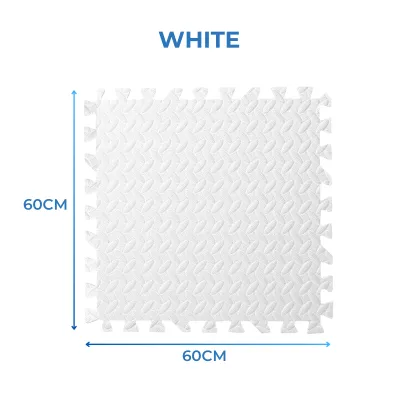
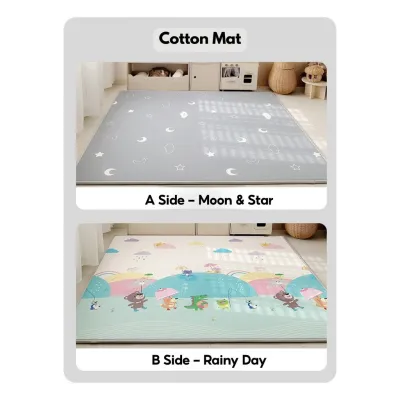
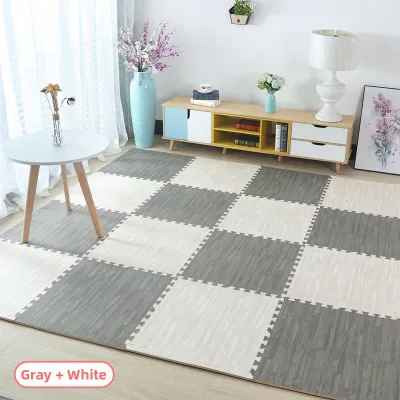
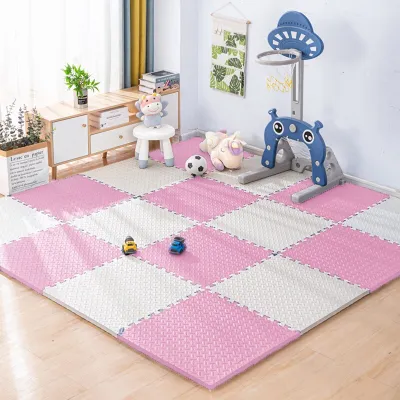
![[Buy 10 Free 2] 2.5cm Thick Interlocking Foam Floor Tiles 30x30cm EVA Foam Play Mats for Babies and Toddles Puzzle PlayMat](https://img.lazcdn.com/g/p/94a77a980b04e18d614dcbe5b227e5c1.jpg_400x400q80.jpg_.webp)
Prices are valid at publication and may change. Please refer to the product page for the latest price.
Setup and takedown speed can make or break an outdoor outing, especially when you are managing an active child single-handedly. Accordion-style folding mats are highly efficient, as they can be unfolded and laid flat in seconds using one hand. In contrast, roll-up mats often require two hands to unroll and secure with straps, which can be challenging if you are simultaneously holding an infant. Look for designs that naturally lay flat without curling at the edges, as curled corners create tripping hazards for toddlers finding their footing on uneven ground.
Base layer grip is another critical safety feature that is often overlooked. Outdoor surfaces like wet grass, dry sand, and polished park pavements offer very different levels of traction. A mat with a smooth, slick bottom can easily slide when a child runs onto it, leading to slips and falls. Look for mats featuring a textured base layer, such as rubberised dots, cross-hatch patterns, or high-friction thermoplastic backings. This ensures the mat stays firmly anchored to the ground, providing a stable foundation for crawling, rolling, and active play.
Matching Mat Materials to Your Outdoor Scenarios
Singapore’s tropical climate demands materials that can handle both moisture and heat. The top layer of your play mat must be highly water-resistant and wipeable. Spilled milk, dropped fruit purees, and muddy footprints are inevitable during outdoor picnics. Materials like thermoplastic polyurethane (TPU) or specially treated polyester allow you to wipe away liquid spills and dirt with a simple damp cloth or baby wipe, preventing stains and unpleasant odours from setting into the fabric during your journey home.

Underneath that wipeable surface, the mat must provide adequate insulation and cushioning. Hard ground, hidden tree roots, and gravel can cause discomfort to a child’s knees and joints. While thick indoor foam mats offer excellent cushioning, they are too bulky for travel. For outdoor portability, look for mats utilizing high-density XPE (cross-linked polyethylene) foam or compressed polyester fiberfill. A thickness of 5mm to 10mm generally strikes the ideal balance, offering sufficient shock absorption on hard park lawns while remaining thin enough to fold tightly.
Breathability and heat resistance are vital for comfort in year-round warm weather. Synthetic materials can trap body heat, causing infants to sweat excessively and develop heat rashes. If you plan to use the mat in direct sunlight or unshaded areas, consider a mat with a breathable cotton-blend or canvas top layer that has been treated with a water-resistant backing. Additionally, verify if the material has UV-resistant properties; prolonged exposure to intense sunlight can degrade low-quality plastics, causing them to become brittle, peel, or release chemical odours.
Verifying Portability and Storage Before You Buy
Before finalizing your purchase, closely inspect the carrying accessories that come with the play mat. High-quality mats often feature integrated carrying handles, adjustable shoulder straps, or dedicated travel bags. Examine the stitching where the straps attach to the mat; double-stitched seams and reinforced fabric patches are indicators of durability. If you frequently travel by foot or public transport, an adjustable shoulder strap allows you to carry the mat hands-free, leaving your arms free to manage your child or push a stroller.
Securing mechanisms are equally important for maintaining a compact fold during transit. Look for robust hook-and-loop fasteners, heavy-duty snap buttons, or adjustable buckle straps that keep the mat tightly compressed. Avoid mats that rely solely on flimsy elastic bands, as these tend to stretch out and lose their elasticity over time, causing the mat to unravel unexpectedly inside your car trunk or bag. A secure closure ensures the clean inner play surface remains protected from dirt and dust while stored.
Finally, review the manufacturer’s care label to understand the long-term maintenance requirements. Outdoor play mats are exposed to grass stains, sand, and outdoor allergens. While spot-cleaning is convenient for quick cleanups, a fully machine-washable mat offers a much higher standard of hygiene. If a mat is machine-washable, check the temperature limits and drying instructions. Many water-resistant backings cannot tolerate high heat, meaning they must be line-dried in the shade to prevent the waterproof membrane from melting or delaminating.
Managing Safety and Supervision for On-the-Go Play
While a portable children play mat provides a designated clean space, it does not replace the need for active adult supervision. Outdoor environments are unpredictable and contain hazards that do not exist in a controlled indoor playroom. Always position your mat away from immediate dangers such as open water bodies, steep slopes, bicycle paths, and direct thoroughfares. Ensure that at least one caregiver keeps eyes on the child at all times, as a curious toddler can quickly wander off the boundaries of the mat.
Before laying the mat down, perform a quick sweep of the ground. Remove any sharp twigs, jagged stones, broken glass, or hidden insect nests (such as red ants) that could puncture the mat or harm your child. Once the mat is laid out, inspect it for potential physical hazards. Check for loose stitching along the borders, fraying straps, or small detachable parts like plastic zipper pulls and adjustment buckles. These components can easily become detached during active play and pose a serious choking hazard to infants and toddlers.
Over time, exposure to outdoor elements will cause any play mat to wear out. Establish a routine of inspecting your mat before and after every outing. Look for signs of material degradation, such as a peeling waterproof backing, crumbling inner foam, or persistent dark spots that indicate mold or mildew growth. Because Singapore’s high humidity accelerates mold development on damp fabrics, any mat that has been stored wet and shows signs of mold should be thoroughly sanitized according to manufacturer guidelines or retired immediately to protect your child’s respiratory health.
Frequently Asked Questions (FAQ)
Can I use an indoor foam play mat for outdoor picnics?
While it is physically possible to bring an indoor foam mat outdoors, it is generally not recommended for regular use. Indoor mats, particularly interlocking EVA foam tiles, lack the UV stabilizers required to withstand direct sunlight, which can cause them to warp, fade, or degrade quickly. Furthermore, indoor mats rarely feature a waterproof bottom layer, meaning moisture from damp grass can seep through the seams and soak your child’s clothing. They are also highly bulky to transport, as they do not fold into a compact, travel-friendly form.
If you must use an indoor mat outdoors temporarily, ensure you place a waterproof tarp underneath it to block rising moisture. Limit its exposure to direct sunlight, and clean it thoroughly immediately after use. For regular family outings, investing in a dedicated outdoor portable children play mat with a water-resistant base and integrated carrying straps is a much more durable, hygienic, and convenient solution.
How do I clean a portable play mat after a day at the park?
Proper post-outing maintenance is essential to prolonging the lifespan of your portable play mat and preventing the growth of bacteria and mold. As soon as your outing is over, shake the mat vigorously to remove loose sand, dry grass, and debris. Wipe away any wet spills or food residue immediately with a damp cloth. Once you return home, unfold the mat completely to inspect it for stubborn stains or damp patches.
For routine cleaning, wipe the entire surface with a mild, baby-safe detergent and warm water, then rinse with a clean, damp cloth. If the manufacturer’s label states the mat is machine-washable, wash it on a gentle cycle with cold water and a mild detergent. Always hang the mat to air-dry completely in a well-ventilated, shaded area before folding it for storage. Storing a play mat while it is even slightly damp in Singapore’s humid climate will inevitably lead to mildew growth and unpleasant odours.

Community discussion
Share your experience or ask a question. Comments are reviewed before publication.