
In Singapore, ensuring your child’s safety on the road is both a critical parental responsibility and a strict legal mandate. Under the Road Traffic Act, any passenger below the height of 1.35 metres must be secured using an approved child restraint system appropriate for their height and weight when travelling in a motor vehicle. This law applies regardless of the child’s age, making physical height the ultimate legal determinant for compliance on Singaporean roads.
While age guidelines are highly useful for understanding general growth phases, they do not dictate legal compliance. A child who is ten years old but stands at 1.32 metres must still legally use a suitable restraint, whereas a taller eight-year-old who has passed the 1.35-metre mark may legally transition to using the vehicle’s standard adult seatbelt. Failing to adhere to these regulations not only compromises your child’s safety in a collision but also exposes the driver to legal penalties, including composition fines and demerit points.
To navigate these requirements successfully, parents must understand how to select, install, and use the correct restraint system for every stage of their child’s development. This guide outlines the legal framework, details the selection process for different growth stages, and provides actionable steps to ensure your setup remains fully compliant and safe.
Products mentioned in this guide
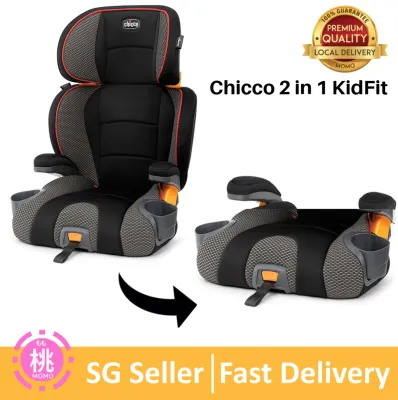
![[Jarrons & Co] EvenFlo Sutton Car Seat (1 Year Warranty)](https://img.lazcdn.com/g/p/3dafa69fe4d821132935aa8ff9dda921.png_400x400q80.png_.webp)
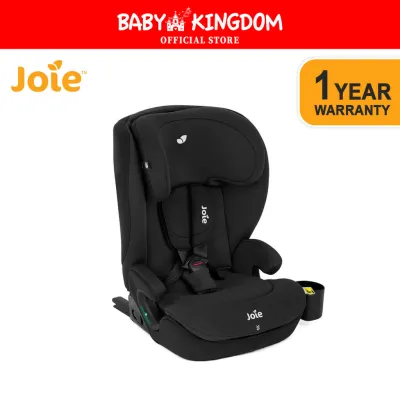
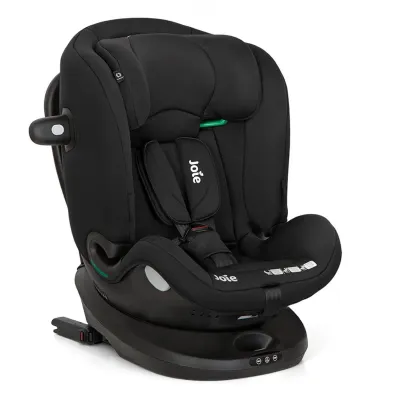
![Easyhome.sg [Child SAFETY] Baby Booster Car Seat Chair – Toddler Safety Travel Carrier for Children](https://img.lazcdn.com/g/p/9a1e79f7193f323d784f040bd84fc2a9.png_400x400q80.png_.webp)
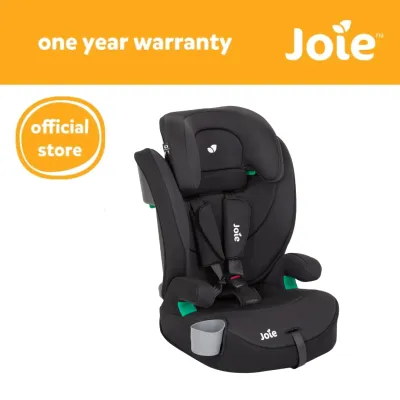
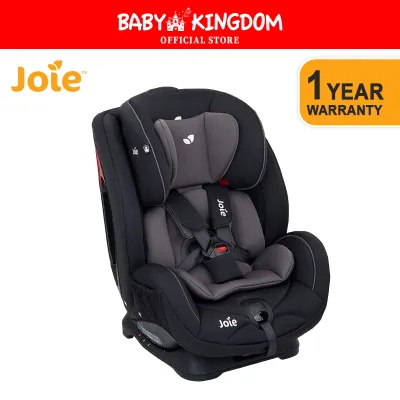
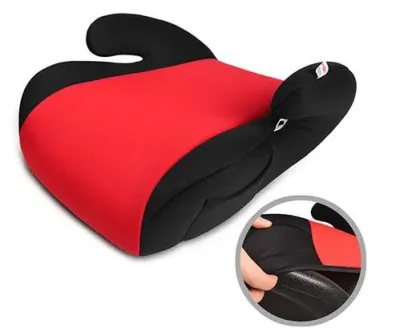
Prices are valid at publication and may change. Please refer to the product page for the latest price.
Singapore's Legal Requirements: The 1.35-Metre Rule Explained
The 1.35-metre rule is the cornerstone of Singapore’s child passenger safety legislation. The Land Transport Authority (LTA) and the Traffic Police enforce this specific height threshold because standard vehicle seatbelts are engineered to protect adult bodies, typically those at least 1.35 to 1.5 metres tall. When a child who is shorter than 1.35 metres uses an adult seatbelt without a booster or safety seat, the belt cannot sit across their skeletal frame correctly.
In a sudden deceleration or collision, an ill-fitting seatbelt can cause severe internal injuries. Instead of resting securely on the strong bones of the pelvis and the collarbone, the lap belt often rides up onto the soft abdomen, while the shoulder strap rests dangerously close to the neck or face. An approved child restraint system raises the child or reroutes the belt so that the crash forces are safely distributed across the strongest parts of the child’s body.
Drivers in Singapore bear the legal responsibility of ensuring that all passengers under the specified height are properly secured before moving. If you are stopped by the Traffic Police and found to be carrying a child under 1.35 metres without an approved restraint, you will face legal penalties. These penalties generally include financial fines and demerit points issued to the driver’s license.
Because traffic laws and penalty structures are subject to periodic updates, parents should consult the latest Singapore Traffic Police guidelines or the official Singapore Police Force website to verify the exact current fine amounts and demerit point allocations. Keeping yourself informed through official channels ensures you avoid unexpected penalties while maintaining a safe environment for your family.
Selecting a Compliant Child Restraint System (CRS) by Growth Stage
Choosing a compliant child restraint system requires matching the equipment to your child’s current physical development. It is crucial to verify that any seat you purchase carries an approved safety standard label. Singapore authorities recognise several international safety standards, such as the European standard (UN ECE R44/04 or R129/i-Size) and the American standard (FMVSS 213). Parents must look for these certification marks on the product packaging or the seat itself before purchasing.

Rear-Facing and Forward-Facing Car Seats
For infants and young toddlers, extended rear-facing travel offers the highest level of protection for the head, neck, and spine. In a frontal collision, which is the most common type of high-impact crash, a rear-facing seat cradles the child’s entire back and head, distributing the force of the impact evenly across the shell of the seat rather than concentrating it on the child’s fragile neck ligaments.
When deciding when to transition your child from a rear-facing seat to a forward-facing seat, you must rely on physical markers rather than age assumptions. Every car seat has specific height and weight limits set by the manufacturer, which are clearly printed on the product’s labels and detailed in the instruction manual. Keep your child rear-facing until they reach the maximum height or weight limit allowed by the seat’s manufacturer for that configuration.
- Rear-Facing Safety Markers: The child's head should remain at least 2.5 centimetres (1 inch) below the top edge of the car seat shell, and their weight must not exceed the manufacturer's specified limit.
- Forward-Facing Transition: Only transition to a forward-facing harness seat when the child has fully outgrown the rear-facing limits. Ensure the harness straps are positioned at or slightly above the child's shoulders when forward-facing.
- Manufacturer Instructions: Always check the applied product's label and the treated item's manufacturer instructions. If instructions conflict or the model is unidentified, stop and consult the manufacturer or a certified professional.
Booster Seats for Taller Children
Once a child outgrows their forward-facing harness seat, they must transition to a booster seat to bridge the gap until they reach the legal height threshold of 1.35 metres. Booster seats do not have built-in harnesses; instead, they function by raising the child so that the vehicle’s standard three-point lap and shoulder belt fits them properly.
There are two main types of booster seats available on the market: high-back boosters and backless boosters. High-back boosters are highly recommended for younger or shorter children because they provide crucial side-impact protection and feature built-in belt guides that keep the shoulder belt positioned correctly across the collarbone. Backless boosters are compact and highly portable, making them a popular choice for older children who still require a lift to meet the legal height requirement.
To determine if your child is ready to graduate from a booster seat to using only the vehicle’s seatbelt, you should perform a quick fit check once they reach 1.35 metres:
- Lap Belt Position: The lap belt must sit low and snug across the child's upper thighs or hips, never across their soft belly.
- Shoulder Belt Position: The shoulder belt must rest flat across the middle of the chest and collarbone, without rubbing against the neck or slipping off the shoulder.
- Knee Bend: The child's knees must bend comfortably over the edge of the vehicle seat cushion while their back is completely flat against the vehicle seatback.
- Feet Placement: The child's feet must rest flat on the floor of the vehicle throughout the entire journey without slouching.
Ensuring Correct Installation and Everyday Usage
A high-quality car seat can only protect your child if it is installed correctly. Studies consistently show that a significant percentage of child safety seats are installed incorrectly, which can compromise both safety and legal compliance. In Singapore, vehicles are commonly equipped with ISOFIX anchor points, but older car models or specific seat designs may require installation using the vehicle’s three-point seatbelt.
ISOFIX systems feature rigid metal connectors on the car seat that click directly into anchor points welded into the vehicle’s chassis. This system is designed to minimise installation errors. If you are installing a seat using the vehicle’s seatbelt, you must ensure the belt is routed precisely through the correct path specified by the car seat manufacturer and locked tightly to prevent any excessive movement.
To guarantee compatibility, you must consult both the car seat instruction manual and your vehicle owner’s manual. Some vehicles have specific rules regarding which seating positions are compatible with ISOFIX or standard seatbelt installations. If the instructions between your vehicle manual and your car seat manual conflict, or if you are unsure about the safety of your setup, stop immediately and consult the manufacturer or seek an installation check from a certified child passenger safety technician.
Once the seat is installed, perform these critical checks before every single trip:
- The Inch Test: Grasp the car seat at the belt path and pull firmly from side to side and front to back. The seat should not move more than 2.5 centimetres (1 inch) in any direction.
- The Pinch Test: Buckle your child in and tighten the harness. Try to pinch the harness webbing at the child's collarbone. If you can pinch any excess fabric between your fingers, the harness is too loose and must be tightened further.
- Chest Clip Placement: If your specific car seat model features a chest clip, ensure it is positioned at the level of the child's armpits to keep the shoulder straps properly aligned.
- Twist-Free Straps: Verify that the harness straps lie flat against your child's body without any twists, which can concentrate impact forces onto a narrow area during a crash.
Avoiding Common Safety and Compliance Mistakes
One of the most frequent mistakes parents make is moving their child to the next stage of car seat too early. It is common to assume that because a child has reached a certain age or seems slightly cramped, they are ready for a booster or a standard seatbelt. However, keeping your child in each seat stage until they reach the absolute maximum height or weight limit specified by the manufacturer provides the highest level of protection.
Another critical risk involves the use of second-hand car seats. While buying pre-owned gear is common, a second-hand car seat with an unknown history is a major safety hazard. Plastic degrades over time, especially under Singapore’s intense tropical heat and humidity when cars are parked in open-air lots. Furthermore, a car seat that has been involved in a moderate-to-severe crash may have invisible structural micro-fractures that compromise its ability to protect a child in a future accident.
- Verify Crash History: Never use a second-hand car seat unless you are absolutely certain of its complete history and know it has never been involved in any vehicle collision.
- Check Expiration Dates: Car seats have expiration dates printed on their shells or detailed in the manual. Check this date regularly, and retire any seat that has passed its expiration date.
- Avoid Bulky Clothing: Even in Singapore's warm climate, children may wear thick jackets or sweaters in heavily air-conditioned shopping malls or during rainy periods. Always remove bulky layers before buckling your child into their seat, as thick clothing compresses during a crash, leaving dangerous slack in the harness.
Navigating Taxis, Private Hire Cars, and Special Scenarios
For families living in or visiting Singapore, understanding how car seat laws apply to public transport and ride-hailing services is essential. The law distinguishes clearly between standard street-hail taxis and Private Hire Cars (PHCs) booked via mobile applications.
Under Singapore law, standard public taxis are legally exempt from the child restraint requirement. This exemption exists because taxis are classified as public utility vehicles that are hailed on demand, making it loguitively difficult for passengers to carry heavy car seats or for taxi drivers to store multiple seat sizes in their boots. While legally exempt, travelling in a taxi without a restraint still carries inherent safety risks, and parents are strongly encouraged to use portable safety solutions whenever possible.
In contrast, Private Hire Cars (such as Grab, Gojek, Tada, and Ryde) are not exempt from the law. Because PHCs are pre-booked, the law assumes that passengers have the opportunity to plan ahead. If you book a private hire vehicle, you are legally required to provide a compliant child restraint system for any child under 1.35 metres. PHC drivers are legally within their rights to refuse to board your family if you do not have a compliant seat, as they can be prosecuted for carrying unrestrained minors.
To manage travel in PHCs smoothly, parents have several practical, compliant options:
- Ride-Hailing Family Services: Many ride-hailing apps in Singapore offer specialized family tiers that allow you to book a vehicle equipped with a pre-installed child car seat or booster seat for a small additional fee.
- Portable Travel Vests: Lightweight, certified wearable safety vests can be packed into a backpack and used to route the vehicle's seatbelt safely across a young child's body.
- Foldable Booster Seats: Highly compact, foldable booster seats are easy to carry and can be quickly installed in any private hire car to meet the 1.35-metre legal requirement.
- Verify Regulations: Always check the latest Land Transport Authority (LTA) or transport authority regulations before booking, as vehicle classifications and transport rules may be updated over time.
Frequently Asked Questions (FAQ)
Can a child sit in the front passenger seat?
Yes, a child can legally sit in the front passenger seat in Singapore, provided they are properly secured in an approved child restraint system appropriate for their height and weight. However, placing a child in the front seat comes with significant safety caveats.
If you must install a rear-facing car seat in the front passenger seat, you must deactivate the front passenger airbag first. If the airbag deploys during a collision, it will strike the back of the rear-facing seat with immense force, which can cause severe or fatal injuries to the infant. Always check your vehicle owner’s manual to locate the airbag switch and confirm the correct deactivation procedure. For maximum safety, safety experts strongly recommend placing children in the rear seats of the vehicle whenever possible.
Do I need a car seat in a taxi or private hire vehicle?
You do not legally need a car seat in a standard street-hail taxi, as they are exempt under Singapore traffic laws. However, you do legally require a compliant child restraint system when travelling in any Private Hire Car (PHC) booked through an app.
Because PHC drivers face penalties for transporting unrestrained passengers under 1.35 metres, they will likely refuse your ride if you do not bring a compliant seat or book a vehicle equipped with one. To ensure a smooth and safe journey, always carry a portable, certified travel restraint or select a dedicated family-friendly ride option when booking a PHC.
What happens if I am caught without a proper child restraint?
If you are caught driving a vehicle with a passenger under 1.35 metres who is not secured in an approved child restraint, you are committing a traffic offense under Singapore law. The driver of the vehicle is legally liable and can face immediate composition fines and demerit points on their driving record.
For the most accurate, up-to-date information regarding traffic penalties, fine structures, and demerit points, you should consult the official Singapore Police Force or Singapore Traffic Police websites. Regularly verifying these details ensures you remain compliant with the latest local enforcement standards while keeping your young passengers safe on every journey.

Community discussion
Share your experience or ask a question. Comments are reviewed before publication.