
When choosing a bathing product for your baby in Singapore, safety and regulatory compliance are naturally your top priorities. If you are wondering whether Cetaphil Gentle Wash is safe for your infant and whether it holds a Health Sciences Authority (HSA) certification, the short answer is that while the brand is widely recognized, cosmetic products in Singapore do not receive an official “HSA certification” or pre-market approval. Instead, they must be registered under the HSA cosmetic product notification system before they can be legally sold. Determining whether a specific bottle of Cetaphil Gentle Wash is safe for your baby depends on identifying the exact formulation in your hands, checking the age recommendations on the label, and understanding your baby’s unique skin profile.
To make an informed decision, parents must distinguish between the brand’s general family cleansers and its dedicated baby-specific formulations. While adult or family-oriented gentle cleansers are designed to be mild, they may not meet the highly specialized physiological needs of newborn skin. By understanding how to verify a product’s regulatory status in Singapore and how to interpret ingredient labels, you can confidently select a wash that supports your baby’s developing skin barrier.
Distinguishing Between Cetaphil Formulas for Baby Care
The brand offers several formulations, making it essential to choose the one specifically designed for infants. The standard gentle skin cleanser found in many households is formulated for adult and older child skin types, whereas the dedicated baby line is tailored to the unique needs of infants.
Products mentioned in this guide
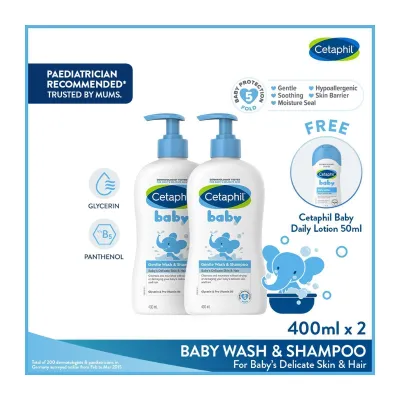
![Cetaphil Baby Wash & Shampoo with Organic Calendula and Sunflower Seed Oil 400ML [Gentle & Hypoallergenic] Bath Gel](https://img.lazcdn.com/g/p/e6e531bcf89c8264e607e7de5f8bb93e.jpg_400x400q80.jpg_.webp)
![Cetaphil Baby Gentle Wash and Shampoo with Shea Butter 400ml [Baebear.sg]](https://img.lazcdn.com/g/p/e62ccd5981daecb5d0b701ca75d58cb7.png_400x400q80.png_.webp)
Prices are valid at publication and may change. Please refer to the product page for the latest price.
Infant skin is significantly different from adult skin. It is up to 30 percent thinner, loses moisture much faster, and has a developing skin barrier that is highly susceptible to absorbing external substances. Because of these physiological differences, products designed for the general family may contain ingredients or preservation systems that are too robust for a newborn.
A dedicated baby wash is formulated to respect the natural pH of an infant’s skin, which is typically slightly acidic to help protect against harmful microbes. These baby-specific formulas are also designed to be tear-free, ensuring that accidental contact with the eyes does not cause painful irritation or distress during bath time.
When shopping, always look for packaging that explicitly states the product is part of the baby range. This ensures the formulation has been designed with the delicate nature of infant skin in mind, minimizing the risk of stripping away essential natural lipids.
How to Check HSA Regulatory Status in Singapore
In Singapore, the Health Sciences Authority (HSA) regulates cosmetic products, including baby washes and shampoos, under the Health Products (Cosmetic Products – ASEAN Cosmetic Directive) Regulations. It is important to understand that the HSA does not issue “certifications” or “approvals” for cosmetic products before they hit the shelves.

Instead, Singapore operates on a cosmetic product notification system. Before any cosmetic product can be legally sold in the local market, the company responsible for placing the product on the market must submit a notification to the HSA. This notification serves as a declaration that the product complies with all safety requirements and does not contain prohibited substances.
To verify if the specific baby wash you have purchased is legally notified in Singapore, you can use the official HSA online database. Start by visiting the Health Sciences Authority website and navigating to the cosmetic product search portal.
In the search field, enter the brand name or the specific product name as printed on the packaging. The database will display the registered cosmetic notification number, the name of the local importer or manufacturer, and the country of manufacture.
A valid HSA notification indicates that the product has met the baseline regulatory requirements for legal sale in Singapore. This system allows the HSA to maintain traceability, meaning that if any safety issues or batch contamination arise, the authority can quickly coordinate with the importer to issue public alerts and product recalls. However, a notification does not mean the HSA has physically tested the product in a laboratory, nor does it guarantee that the product will not cause an individual allergic reaction.
Evaluating Bath Time Safety: What to Check on the Label
Even with regulatory compliance, parents must perform their own label checks to ensure a product is suitable for their baby’s specific skin condition. The first step is to look for explicit age recommendations on the packaging, such as “suitable from birth” or “safe for newborns.”
Next, examine the ingredient list carefully. For infant skincare, a shorter ingredient list is generally preferable as it reduces the number of potential sensitizers. Avoid products that contain added synthetic fragrances, parabens, phthalates, or harsh sulfates like sodium lauryl sulfate, which can dry out delicate skin.
Many baby products carry claims such as “dermatologist tested” or “pediatrician recommended.” While these labels indicate that the manufacturer has conducted voluntary testing or sought professional feedback, they are not standardized regulatory terms. They should be viewed as helpful indicators of mildness rather than absolute guarantees of safety.
If your baby has a family history of eczema, asthma, or highly sensitive skin, cross-reference the ingredient list with any known allergens. In Singapore’s warm and humid climate, sweat and heat can exacerbate skin sensitivities, making a clean, non-irritating ingredient profile even more critical for daily bathing.
Safe Bathing Practices and When to Stop Using the Product
Using a safe product is only one part of maintaining healthy infant skin; the way you bathe your baby also plays a crucial role. In Singapore’s tropical climate, daily baths are common to wash away sweat and prevent heat rash, but excessive bathing can strip the skin of its natural oils.
Keep bath times short, ideally between five and ten minutes, using lukewarm water that feels comfortable to your inner wrist. Use only a small, pea-sized amount of the baby wash, focusing on areas prone to sweat and dirt, such as the neck, underarms, and diaper area.
Monitor your baby’s skin closely during and after the bath for any signs of irritation. Early indicators of a reaction include localized redness, dry or rough patches, small raised bumps, or signs of itchiness and discomfort.
If you observe any of these symptoms, discontinue use of the product immediately. Rinse your baby’s skin thoroughly with clean, lukewarm water to remove any remaining residue, and pat the skin dry gently with a soft towel without rubbing.
If the skin irritation does not improve within a few days, if the rash spreads, or if you notice signs of infection such as oozing or extreme tenderness, seek professional advice from a pediatrician or a pediatric dermatologist. Do not attempt to treat persistent rashes with home remedies or over-the-counter adult creams without professional guidance.
Frequently Asked Questions (FAQ)
Can I use the standard Cetaphil Gentle Skin Cleanser on a newborn?
You should avoid using the standard adult formulation on a newborn unless the packaging explicitly states it is suitable for infants from birth. Newborn skin is highly delicate and has different barrier properties compared to adult skin. It is always safest to choose products from the dedicated baby range that are specifically formulated, pH-balanced, and tested for infant use. If your newborn has compromised skin or severe dryness, consult your pediatrician before introducing any new cleansing products.
Does an HSA notification mean the product is 100% allergy-free?
No, an HSA notification does not guarantee that a product is completely allergy-free. The notification system ensures that the product complies with safety regulations and does not contain banned ingredients, but it cannot account for individual skin sensitivities. If your baby has highly sensitive skin or a family history of allergies, perform a patch test by applying a tiny amount of the product to a small patch of skin on the baby’s arm or leg for a few days to monitor for any adverse reactions before full use.

Community discussion
Share your experience or ask a question. Comments are reviewed before publication.