
Under Singapore’s Road Traffic Act, any passenger under 1.35 metres in height must be secured with an approved child restraint, booster seat, or adjustable seatbelt when traveling in a motor vehicle. This legal requirement is strictly enforced to protect young passengers from severe injuries during sudden stops or collisions. While many parents mistakenly focus on age as the primary indicator for transitioning their children between different car seats, the law prioritizes physical height. This height-based threshold ensures that the vehicle’s standard three-point adult seatbelt can be positioned safely across the child’s skeletal frame rather than their vulnerable soft tissues.
A booster seat for kids acts as an essential bridge between a dedicated harnessed car seat and the standard adult seatbelt. By raising the child to the correct height, the booster seat prevents the seatbelt from riding up onto the neck or abdomen, where it could cause catastrophic internal injuries in an accident. Understanding how these regulations apply to your daily commute, private hire bookings, and weekend taxi rides is critical for keeping your family safe and remaining compliant with local traffic laws.
The Core Legal Mandate: Height vs. Age
The foundational legal threshold for child passenger safety in Singapore is defined by height rather than age. The Road Traffic Act mandates that any individual below 1.35 metres in height must use an appropriate child restraint, booster seat, or adjustable seatbelt while riding in a motor vehicle. The Land Transport Authority (LTA) and Traffic Police enforce this rule because standard vehicle seatbelts are designed to protect adults who are at least 1.5 metres tall. When a child who is too short sits directly on a vehicle seat without a booster, the seatbelt cannot function as intended.
Products mentioned in this guide
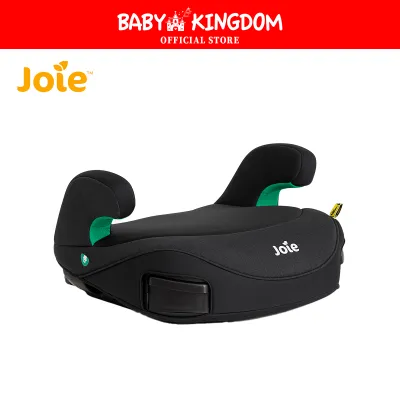
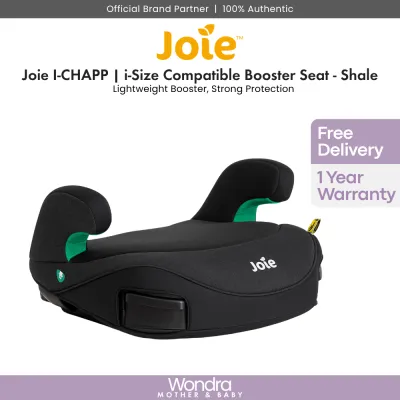
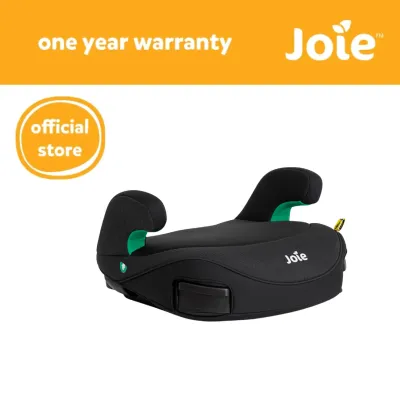
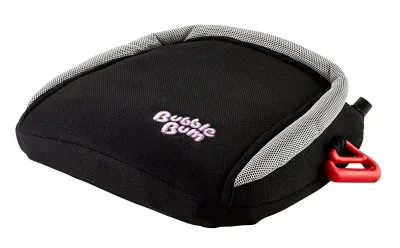
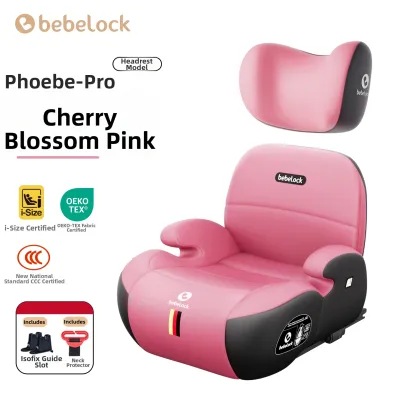
Prices are valid at publication and may change. Please refer to the product page for the latest price.
A booster seat fits into the broader legal category of approved child restraints, serving as a specialized seat designed for older children who have outgrown their forward-facing harnessed seats but are still too short for the adult seatbelt. Without a booster, a standard lap belt naturally rides up over a child’s soft abdominal area. During a collision, the force of the impact is concentrated on the stomach, which can lead to severe internal organ damage or spinal trauma—a medical condition often referred to as ‘seatbelt syndrome’. Similarly, the shoulder belt will often rest across the child’s neck or face rather than the collarbone, posing a severe choking and laceration risk.
By elevating the child, the booster seat repositions the lap belt low across the strong pelvic bones and hips, while routing the diagonal shoulder belt squarely across the center of the chest and collarbone. This simple adjustment ensures that crash forces are safely distributed across the strongest parts of the child’s skeletal structure. Consequently, parents should resist the urge to transition a child to an adult seatbelt prematurely, even if the child has reached a certain age milestone, until they have fully met the legal height requirement.
When to Switch to a Booster Seat: Physical Milestones
Transitioning your child through the various stages of car seats requires careful observation of their physical development rather than relying solely on age recommendations. Before moving your child from a forward-facing harnessed car seat to a booster seat, you must verify that they have fully outgrown their current seat. Check the manufacturer’s documentation for the specific weight and height limits of your harnessed seat. A child has typically outgrown their forward-facing harness when their shoulders rise above the top harness slots, their ears reach the top of the seat shell, or they exceed the maximum weight limit specified by the manufacturer.

When you determine it is time to transition, you will need to choose between a high-back booster and a backless booster seat. High-back booster seats are highly recommended for younger or smaller children because they provide built-in side-impact protection, head support, and integrated belt guides that keep the shoulder strap correctly positioned. Backless booster seats are more compact and lightweight, making them highly portable, but they offer no lateral head or torso support. If you choose a backless model, your vehicle must have a supportive headrest behind the child’s head to prevent whiplash in a rear-end collision.
Graduating from a booster seat to a standard adult seatbelt is a major milestone that should only occur when your child reaches the legal height of 1.35 metres and can pass the five-step seatbelt fit test. To perform this test, have your child sit directly on the vehicle’s seat without the booster and check the following physical markers:
- Back flat: The child's back and bottom must rest completely flat against the vehicle's seatback.
- Knees bent: The child's knees must bend comfortably over the front edge of the vehicle's seat cushion without slouching.
- Lap belt position: The lap belt must sit low and snug across the upper thighs and hips, not on the soft abdomen.
- Shoulder belt position: The shoulder belt must cross the middle of the chest and collarbone, resting away from the neck and face.
- Behavioral readiness: The child must be mature enough to remain seated in this correct position for the entire duration of the journey without slouching, leaning, or playing with the belt.
If your child fails any of these steps, they are not yet ready to ride without a booster seat, even if they have technically reached the legal height limit. If you are ever unsure about the fit or installation of your child’s restraint, consult a certified child passenger safety technician or a qualified professional for guidance.
Transport Exemptions: Taxis, Buses, and Ride-Hailing Cars
Navigating public transport and ride-hailing services in Singapore requires a clear understanding of how the child restraint law applies to different vehicle types. Under the Road Traffic Act, public buses and traditional street-hailed or queue-hailed taxis are legally exempt from the child restraint mandate. This exemption exists for practical reasons, as taxis are public service vehicles that cater to a wide range of passengers on demand. While it is legally permissible for a child under 1.35 metres to ride in a taxi without a booster seat, safety experts strongly advise against this practice. If you must travel in a taxi without a booster, always secure your child in the rear seats and never place them in the front passenger seat.
In contrast, Private Hire Cars (PHCs) booked through mobile applications—such as Grab, Gojek, Ryde, or TADA—are not exempt from the child restraint law. Because these trips are pre-booked, the law treats them similarly to private personal vehicles. If you book a standard private hire car, you are legally required to secure any child under 1.35 metres in an appropriate child restraint or booster seat. Private hire drivers have the legal right to refuse to board your family if you do not have a suitable restraint, as they face legal penalties for carrying unrestrained child passengers.
To ensure seamless travel while complying with the law, parents have several practical options when using ride-hailing services in Singapore:
- Book specialized family tiers: Many ride-hailing platforms offer dedicated family-friendly vehicle options (such as 'GrabFamily') that come pre-equipped with a booster seat or child restraint for a small additional fee. Ensure you select the correct tier matching your child's age and height when booking.
- Carry a portable booster seat: For older children who meet the weight and height requirements, compact, ultra-portable booster seats are an excellent solution. These lightweight devices can easily fit into a backpack or under-stroller storage, allowing you to quickly install them in any standard private hire vehicle.
- Use a wearable safety vest: Approved travel safety vests designed for child passengers provide a highly packable alternative to traditional booster seats, routing the vehicle's seatbelt safely across the child's body.
How to Verify Approved Safety Standards
Ensuring your child’s booster seat is legally compliant in Singapore requires verifying that it meets recognized international safety standards. The Land Transport Authority (LTA) does not approve individual brands or models; instead, it recognizes specific global safety certifications. When purchasing a booster seat, you must physically inspect the product for certification labels rather than relying solely on online descriptions or marketing claims.
The most common safety standards accepted under Singapore regulations include:
- UN ECE R44/04 or UN ECE R129 (i-Size): These European standards are widely recognized. Look for an orange label affixed to the seat shell, which displays the approval number, the standard version, and the compatible weight or height range.
- FMVSS 213: The United States Federal Motor Vehicle Safety Standard.
- AS/NZS 1754: The Australian and New Zealand standard.
- JIS D0401: The Japanese Industrial Standard.
Always check the manufacturer’s instructions and vehicle manual to confirm that the booster seat is compatible with your specific car’s seatbelt system and seating configuration. Furthermore, parents should exercise extreme caution regarding the condition and history of the booster seat:
- Avoid second-hand seats: Never use a second-hand booster seat if you do not know its complete history. A seat that has been involved in a moderate-to-severe collision may have suffered microscopic structural damage that is invisible to the naked eye, rendering it unsafe for future use.
- Check expiration dates: Booster seats have expiration dates, typically molded into the plastic shell or printed on the user manual. Over time, exposure to high temperatures and humidity—common environmental factors in Singapore—can degrade the plastic materials, making them brittle and prone to failure during an impact.
- Monitor product recalls: Periodically check manufacturer websites and official consumer safety portals for product recalls to ensure your booster seat remains safe and compliant.
Legal Penalties for Non-Compliance
Failing to secure a child under 1.35 metres in an appropriate restraint is a serious traffic offense in Singapore, carrying strict penalties enforced by the Traffic Police. If you are stopped by enforcement officers and found to be in violation of the Road Traffic Act, the driver of the vehicle can face immediate legal consequences. These penalties typically include a composition fine and the deduction of demerit points from the driver’s license.
To check the exact, current fine amounts and demerit point schedules, you should refer directly to the official Singapore Police Force (SPF) or Land Transport Authority (LTA) online portals, as these regulatory figures are subject to periodic updates. It is important to note that passengers who fail to wear a seatbelt or ensure their children are properly secured can also face individual fines.
While avoiding financial penalties and demerit points is a practical concern for drivers, the primary motivation for compliance must always be the physical safety of your child. No fine compares to the peace of mind that comes from knowing your child is securely and correctly restrained on every single journey.
Frequently Asked Questions (FAQ)
Can my child sit in the front passenger seat with a booster seat?
Under Singapore law, a child under 1.35 metres is technically permitted to sit in the front passenger seat provided they are secured in an approved child restraint or booster seat appropriate for their height and weight. However, safety experts and vehicle manufacturers strongly advise against placing children in the front seat. Front passenger airbags deploy with explosive force during a collision, which can cause severe head, neck, or chest injuries to a child, even if they are in a booster seat. If you absolutely must place a child in the front seat, you must slide the vehicle’s passenger seat as far back as possible to maximize the distance from the airbag deployment zone, and ensure the passenger airbag is deactivated if your vehicle allows.
Are backless booster seats legal in Singapore?
Yes, backless booster seats are legally compliant in Singapore, provided they carry an approved international safety certification label (such as UN ECE R44/04 or UN ECE R129) and are used strictly in accordance with the manufacturer’s weight and height specifications. While legal, backless boosters offer significantly less protection than high-back models because they lack side-impact shells and headrests. If you opt for a backless booster, you must verify that your vehicle’s seat has an integrated headrest that reaches at least to the top of your child’s ears to prevent severe neck injury during a rear-end collision. For younger or smaller children, a high-back booster remains the safer choice.

Community discussion
Share your experience or ask a question. Comments are reviewed before publication.