
Finding the right swim nappies for your baby in Singapore’s year-round tropical heat is essential for worry-free pool days. The best option depends heavily on your child’s physical build and the specific rules of the swimming facility you visit. Huggies Little Swimmers generally offer the best fit for babies with chunkier thighs due to their highly flexible leg cuffs and convenient tear-away sides. Pampers Splashers provide a snugger, more secure fit for babies with narrower waists or leaner builds, thanks to their 360-degree stretchy waistband that mimics real swimwear. Store brands, such as those found in major local supermarkets and pharmacies, deliver a highly budget-friendly alternative for occasional swimmers or quick dip sessions. Because no single disposable swim nappy fits every baby perfectly, matching the cut to your child’s body shape and verifying local pool requirements is the key to preventing embarrassing pool closures.
How Swim Nappies Work: Managing Leak Expectations
To choose the right product, it is vital to understand that swim nappies are engineered for one primary purpose: containing solid waste. Unlike standard daytime nappies, they do not absorb liquids. If they were designed to absorb urine, they would immediately swell up with pool water, dragging your baby down and rendering the nappy useless. Consequently, any urine your baby passes before or during their swim will flow directly through the material and into the water. Parents transitioning to swim nappies must adjust their expectations, as these products will not keep your baby dry on the car ride or walk to the pool.
In Singapore, maintaining pool hygiene is a high priority for public facilities and private residential developments alike. Because of the risk of contamination, many ActiveSG public pools, waterparks, and condominium management committees enforce strict rules regarding infant swim attire. Many facilities mandate a “double nappy system” for infants and toddlers who are not fully toilet-trained. This system requires a disposable swim nappy to be worn as an inner layer, covered by a snug-fitting, reusable neoprene swim cover as the outer layer. This combination provides a secondary seal that ensures any solid accidents are completely contained, protecting other pool users and preventing costly pool draining and sanitisation procedures.
Products mentioned in this guide
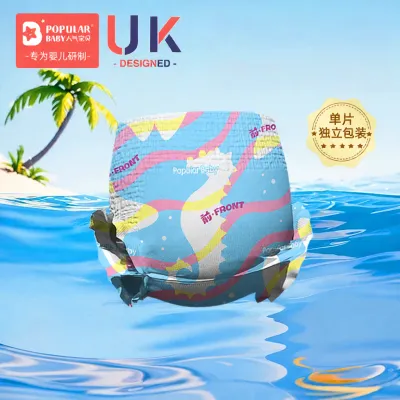
![[SG Seller] Disposable Baby Swimming Diapers Trunk / 5 Packets / Infant Swim Diaper Pants / Cloth Waterproof](https://img.lazcdn.com/g/p/f2015285678421d34766d9a4b41caaab.jpg_400x400q80.jpg_.webp)
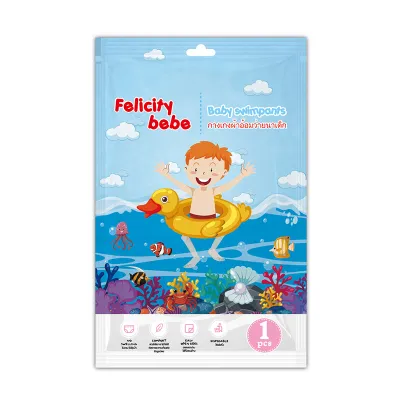
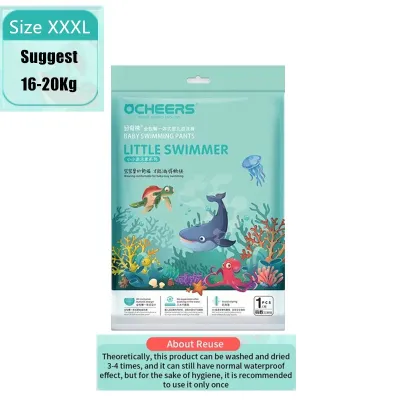
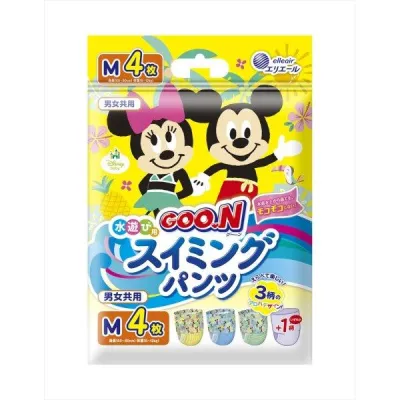
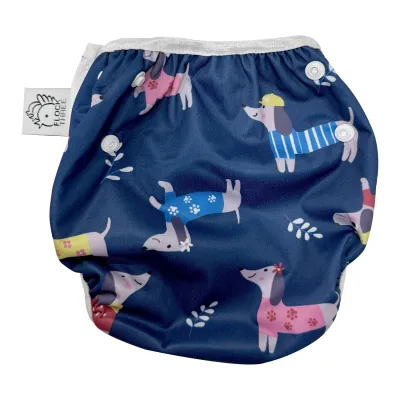
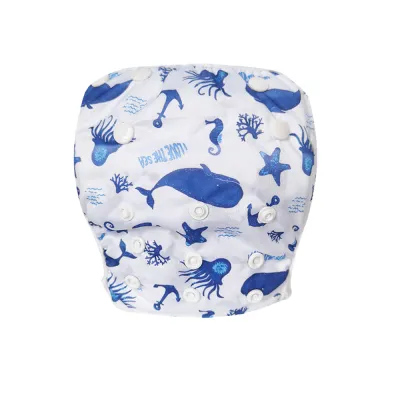
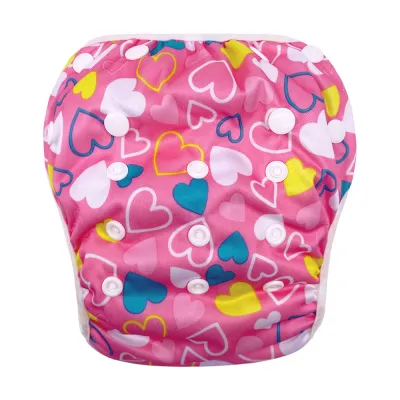
Prices are valid at publication and may change. Please refer to the product page for the latest price.
What to Look for: Fit, Containment, and Value
Containment and Leak Protection
The efficiency of any swim nappy rests on its physical barriers. Look closely at the elasticated leg cuffs and the waistband. These components must create a secure, continuous seal against your baby’s skin without leaving deep red marks. The leg cuffs should feature dual-barrier guards—inner and outer ruffles—that channel solid waste inward. Because water flows freely through the nappy, the physical fit at the leg openings is your only defense against a solid leak. If there is even a small gap when your baby bends their legs or kicks in the water, containment will fail. For babies who are still on a fully liquid diet, containing runny stools requires an exceptionally tight, reliable seal that only high-quality elastics can provide.

Fit and Comfort in Water
When submerged, different materials behave in distinct ways. High-quality swim nappies are made of lightweight, non-woven materials that do not swell or sag when saturated with water. A sagging nappy not only restricts your baby’s movement but also pulls the waistband down, compromising the seal. Another critical comfort factor is skin friction. In Singapore’s hot and humid climate, wet elastics rubbing against sensitive skin during active splashing can quickly cause chafing. Additionally, consider how the nappy is removed. When dealing with a soiled nappy, pull-down styles can smear waste down your baby’s legs. Tear-away sides or adjustable tabs allow you to open the nappy flat, making clean-ups significantly cleaner and faster.
Value for Money and Accessibility
To evaluate value, calculate the cost per piece rather than looking only at the pack price. If your family swims weekly at a local condo pool or takes regular weekend trips to Sentosa, the cost of disposable swim nappies can accumulate rapidly. Premium brands are widely accessible across Singapore in major supermarkets, baby specialty stores, and online marketplaces, but they carry a higher price per unit. Store-brand alternatives offer an attractive, lower-cost option. For families who swim frequently, balancing premium brands for long outings with budget-friendly store brands for short, backyard pool play can optimize both performance and household spending.
Brand Breakdown: Huggies vs Pampers vs Store Brands
Huggies Little Swimmers
Huggies Little Swimmers are highly regarded for their robust physical design, particularly their adjustable, refastenable side tabs. Unlike standard pull-up pants, these tabs allow parents to customize the waist fit and open the nappy like a traditional diaper, which is incredibly helpful when changing a wet, squirming baby. The leg elastics are exceptionally stretchy and generous, making them the preferred choice for babies with rounder, chunkier thighs. The material holds its shape well under water, resisting the heavy sagging that can plague cheaper alternatives. The leak guards along the legs provide a highly reliable physical barrier, making this brand a staple for long pool sessions where active movement is guaranteed.
Pampers Splashers
Pampers Splashers utilize a 360-degree elastic waistband design that mimics real swim trunks or bikini bottoms. This pull-on style slides on easily, which is ideal for older, active toddlers who dislike lying down for diaper changes. The waistband provides an exceptionally snug, gap-free fit around the lower back and stomach, making it highly effective for babies with narrower waists or leaner builds. Because the waistband distributes tension evenly all the way around, it minimizes sagging even when the nappy is fully wet. Pampers Splashers feature dual leak-guard barriers around the legs that fit closely to prevent gaps, though the lack of openable side tabs means you must tear the side seams manually to remove them without pulling them down.
Supermarket and Pharmacy Store Brands
Store-brand swim nappies, commonly found in local Singapore retail chains such as FairPrice, Guardian, and Watsons, or via online marketplaces, serve as a practical alternative to the major brands. These products typically focus on basic containment, using simpler elastic configurations and thinner materials. While they are highly cost-effective, they may lack the advanced multi-layered leak guards found in premium options. The elastic around the legs and waist can sometimes be less resilient, meaning they may stretch out and sag faster during extended swimming sessions. For parents whose babies only spend fifteen to twenty minutes in a shallow wading pool, store brands offer completely adequate protection at a fraction of the cost, though parents should inspect the elastic tension on each batch to ensure a secure fit.
The Final Verdict: Which One Should You Choose?
To make your final decision, evaluate your baby’s body shape, your swimming frequency, and your budget against these clear guidelines:
- Choose Huggies Little Swimmers if: Your baby has a rounder build with thicker thighs, you want the convenience of refastenable side tabs for easy adjustments, and you prefer a nappy that can be opened flat during messy diaper changes.
- Choose Pampers Splashers if: Your baby is lean or has a narrow waist, you prefer a seamless, pull-up swimwear fit that stays snugly in place during high-energy water play, and you do not mind tearing the sides for removal.
- Choose Store Brands if: You are looking to minimize costs for occasional pool visits, your baby only swims for short periods, or you need a reliable, low-cost backup stash to keep in your beach bag.
- Verify first if: Your swimming club, public ActiveSG pool, or condominium pool rules require an outer neoprene swim cover. If a double-nappy system is mandatory, the outer cover will provide the primary compression and leak containment, meaning you can often pair it with a lower-cost store-brand disposable underneath without compromising safety.
Essential Tips for Using Swim Nappies in Singapore Pools
- Put the nappy on at the last minute: Because swim nappies do not absorb urine, putting one on your baby before a long car or stroller ride will inevitably result in wet clothes and car seats. Always dress your baby in their regular nappy for the journey, and switch to the swim nappy right before entering the pool area.
- Perform regular hygiene checks: Check your baby's nappy for solid waste every thirty minutes. If an accident occurs, exit the pool immediately and head to a designated changing room. Never change a nappy poolside or on lounge chairs, as this poses a significant public health risk.
- Rinse and moisturize afterward: Singapore's outdoor pools are heavily chlorinated to combat the tropical heat, and condo pools may also contain salt-chlorination systems. After swimming, rinse your baby thoroughly under fresh water, paying close attention to the thigh creases where the nappy elastics sat, to wash away residual pool chemicals and prevent skin irritation.
Frequently Asked Questions (FAQ)
Can I use a regular disposable nappy for swimming?
No, you should never use a regular disposable nappy in the pool. Regular nappies are packed with superabsorbent polymers designed to lock in as much liquid as possible. The moment they touch pool water, they will swell to maximum capacity, becoming extremely heavy and pulling down on your baby’s waist. This extra weight restricts movement and poses a serious safety hazard. Furthermore, the water-soaked gel core can easily burst, scattering sticky polymer beads throughout the pool, which requires extensive filtration and pool closures to clean.
Do swim nappies hold pee?
No, swim nappies are specifically designed to let liquids pass through them. Their primary function is to trap solid waste while letting pool water circulate freely. If they held urine, they would also absorb pool water and swell up immediately. Because of this design, you should expect your baby to wet through the nappy whenever they are out of the water. If you are waiting poolside or traveling, use a regular diaper and change into the swim nappy only when you are ready to swim.

Community discussion
Share your experience or ask a question. Comments are reviewed before publication.