
Selecting the ideal soft toy storage for a nursery involves balancing safety, physical accessibility, and the layout of your room. Because plush toys accumulate quickly, the right storage solution must not only keep clutter at bay but also adapt to your child’s developmental stages. In Singapore’s humid climate, selecting breathable materials like natural cotton, canvas, or open mesh is particularly important to prevent moisture retention and mold growth on cherished stuffed animals. By evaluating your available floor space, wall structure, and the volume of your collection, you can establish an organized, safe environment that encourages independent play.
Safety remains the absolute priority in any nursery setup. Any storage unit you introduce must be stable, free of sharp edges, and constructed from non-toxic materials. Accessibility is equally vital; keeping toys at a child-friendly height allows infants and toddlers to engage in independent exploration and learn basic clean-up habits. This guide compares the most popular soft toy storage options, highlights critical safety standards to verify, and provides a practical framework for organizing your nursery.
Key Safety and Design Features for Nursery Storage
When choosing storage furniture or containers for a nursery, looking beyond aesthetics is essential. Children naturally interact with their environment by pulling, climbing, and putting objects in their mouths, which makes rigorous safety checks necessary before introducing any new item into their room.
Products mentioned in this guide
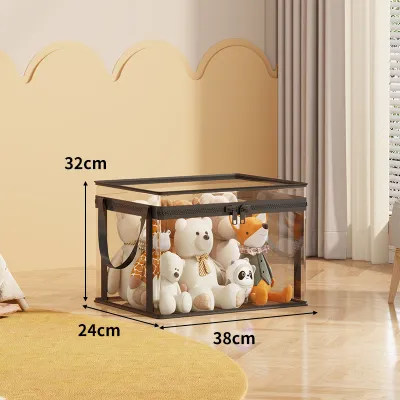
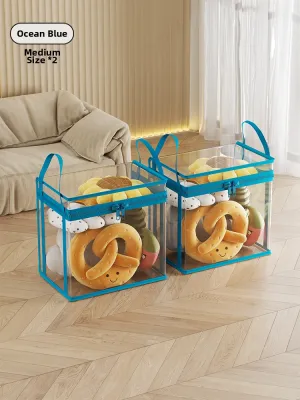
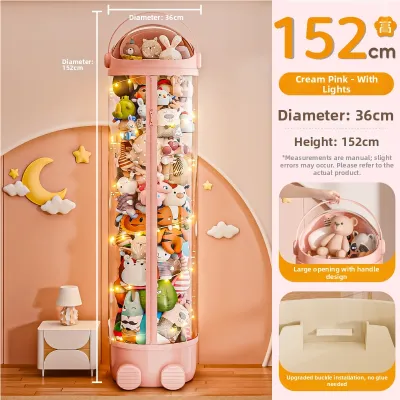
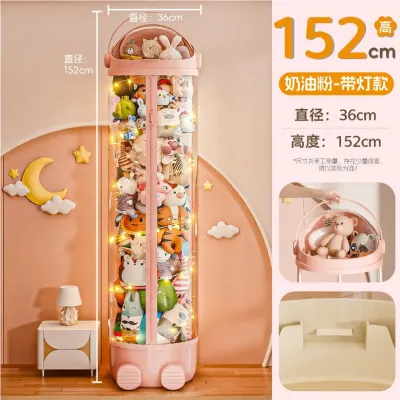
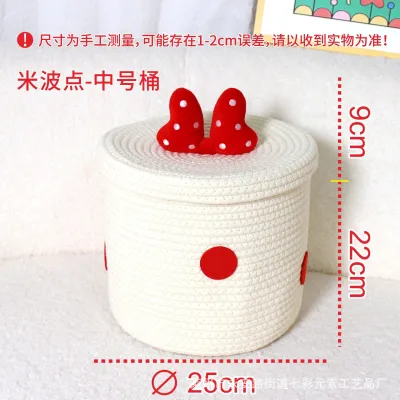
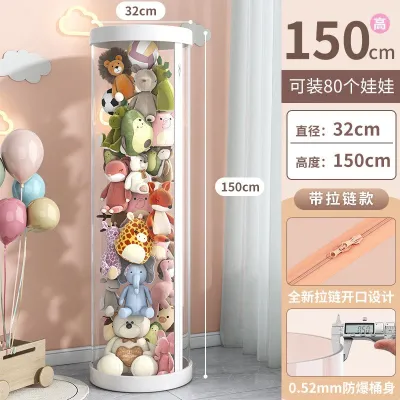
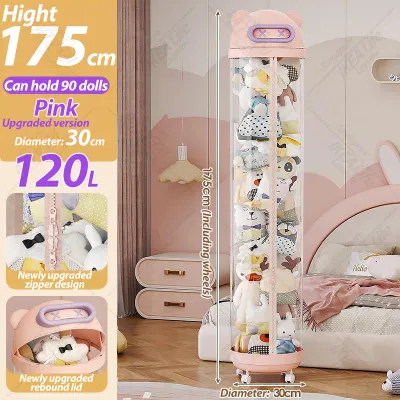
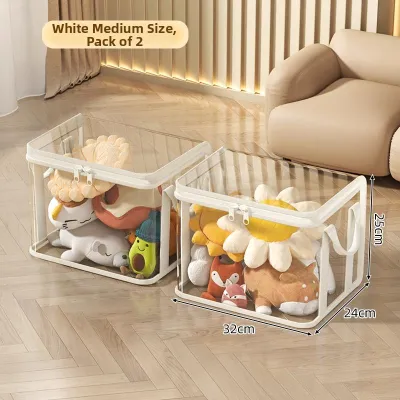
Prices are valid at publication and may change. Please refer to the product page for the latest price.
Safety Hazards to Avoid
Many traditional storage designs present hidden dangers for infants and toddlers. Heavy, free-falling lids on toy chests are a primary cause of pinch injuries and finger entrapment. To mitigate this risk, avoid heavy wooden lids unless they are equipped with certified safety tension hinges that hold the lid open at any angle. Additionally, inspect all storage units for small detachable parts, such as plastic caps, decorative buttons, or loose screws, which pose immediate choking hazards. Sharp wooden splinters, exposed metal brackets, and rough wicker edges can easily scratch delicate skin. Finally, fully enclosed, airtight containers should be avoided for large-scale toy storage; if a curious toddler climbs inside, non-breathable spaces present a severe suffocation risk.
Stability and Tipping Risks
As toddlers learn to stand and walk, they frequently use furniture for support or attempt to climb shelves to reach toys placed out of hand’s reach. Tall, narrow, or top-heavy storage units can easily tip over under a child’s weight, leading to serious impact injuries. To prevent tipping, any storage unit taller than lower-profile floor bins must be securely anchored to the wall. When purchasing furniture, verify if the manufacturer includes an anti-tip wall anchor kit. In Singapore, nursery walls are often solid concrete or masonry, which requires specific wall plugs and a masonry drill bit for secure installation, whereas drywall partitions require heavy-duty toggle bolts.
Accessibility and Independence
Designing your storage layout around your child’s height supports their cognitive and motor development. Low-profile, open-top storage bins and low shelves make it easy for toddlers to see, select, and return their toys independently, transforming clean-up into a positive learning routine. Conversely, parent-controlled storage—such as high wall shelves, closed closets, or ceiling-hung nets—is excellent for managing toy rotation, displaying fragile heirloom plushies, or keeping oversized toys out of the way until supervised play sessions.
Material and Finish Considerations
Because infants frequently chew on or lean against nursery items, the materials used in your storage solutions must be safe and non-toxic. For wooden furniture, verify that the finishes, paints, or sealants are lead-free and low in Volatile Organic Compounds (VOCs); look for manufacturer certifications such as GREENGUARD Gold. For fabric-based storage, prioritize durable, natural fibers like cotton rope, canvas, or linen. These materials are lightweight, reducing the risk of injury if a basket is pulled down from a low shelf, and they can often be washed to maintain a hygienic environment.
Top Soft Toy Storage Types for Nurseries Compared
To help you find the best fit for your home, we have analyzed the most common category types of soft toy storage. Each option offers unique benefits depending on your nursery’s size, your budget, and how your child interacts with their toys.

Canvas, Cotton, and Woven Storage Baskets
Flexible, fabric-based baskets are among the most popular choices for modern nurseries due to their soft construction and versatility.
- Pros: These baskets are completely soft, meaning there are no sharp edges or hard corners to cause injury if a toddler bumps into them. They are lightweight, making it simple to drag them from room to room during play. Many high-quality cotton rope or canvas baskets feature removable, machine-washable fabric liners, which simplifies cleaning up dust, droppings, or spills.
- Cons: Unstructured or woven baskets can lose their shape over time, especially if they are frequently overfilled or if a child sits on them. They are generally not stackable, which means they require dedicated floor space or low shelf compartments, and they do not provide segmented organization for smaller plushies.
- Best For: Quick, everyday clean-ups, easy toddler access, and storing medium-sized, frequently used soft toys on the floor or within low cubbies.
Toy Hammocks and Corner Nets
Utilizing vertical wall space is an excellent way to keep floor areas clear, and corner hammocks are designed specifically for this purpose.
- Pros: Toy hammocks lift clutter entirely off the floor, making them ideal for small rooms. They display a large collection of plush toys clearly, allowing your child to see their favorite characters without rummaging through a deep bin. They are highly cost-effective and utilize otherwise wasted corner space.
- Cons: Installing a hammock requires drilling hooks securely into the wall. They have strict weight limits that must not be exceeded, and they are entirely unsuitable for heavy wooden or plastic toys. Most importantly, if installed too low, they pose a climbing or entanglement hazard; they must be positioned high enough to remain completely out of reach of infants and climbing toddlers.
- Best For: Small nurseries with limited floor space and large collections of lightweight, bulky stuffed animals that do not need to be accessed daily by the child.
Open Shelving and Cube Organizers
Structured wooden or composite shelving units combined with removable fabric bins offer a modular, highly organized approach to nursery storage.
- Pros: This system provides excellent structure and allows you to mix different types of toys, such as books, wooden blocks, and plushies, in one central location. It is highly scalable; as your child grows, you can remove the fabric bins to store textbooks, school supplies, or decorative items, ensuring the furniture remains useful for years.
- Cons: Cube organizers have a larger physical footprint and take up valuable floor space. They are heavy and present a significant tipping hazard if not anchored to the wall. The structured corners, if not rounded, can also pose a minor bump hazard for toddlers learning to walk.
- Best For: Large toy collections, shared sibling bedrooms, and families seeking a long-term furniture investment that adapts to changing childhood needs.
Storage Benches and Ottomans
Dual-purpose furniture provides a functional seating area for parents while hiding toy clutter completely out of sight.
- Pros: These units maximize space efficiency by combining a comfortable seat for storytime with a spacious internal storage compartment. They keep the nursery looking exceptionally neat and tidy by concealing colorful, mismatched toys behind closed panels.
- Cons: The heavy lids on storage benches can pose severe pinch and crush hazards to small fingers. To ensure safety, they must be fitted with slow-closing safety hinges or tension supports that prevent the lid from slamming shut. Because the toys are hidden out of sight, children may also interact with them less frequently.
- Best For: Creating a cozy reading corner, maximizing seating in a compact nursery, and storing seasonal or less frequently used soft toys.
Matching Storage to Your Nursery Layout and Toy Volume
Finding the right storage configuration requires a realistic assessment of your nursery’s physical dimensions and the size of your plush toy collection.
Space Assessment
Before purchasing any storage solution, measure your nursery’s floor dimensions and identify underutilized areas. In compact apartments, floor space is premium, making vertical storage solutions highly beneficial. Look for opportunities to use the back of the nursery door with soft, hanging pocket organizers, or install high wall shelves for decorative display. If you have open floor space, a low, wide-based cube organizer can define a dedicated play zone while keeping the center of the room open for tummy time and crawling.
Estimating Toy Volume
Plush toys tend to multiply rapidly, especially around baby showers, birthdays, and holiday seasons. When choosing storage, select a system that accommodates your current collection with at least thirty percent extra capacity for future additions. If your current storage is overflowing, it may be time to sort through the collection. Keep sentimental or heirloom toys in a protective storage box, donate gently used items that your child has outgrown, and discard any toys that are damaged, torn, or have loose plastic parts that could be swallowed.
Zoning the Nursery
To maintain an organized and calming nursery environment, divide the room into distinct functional zones:
- The Active Play Zone: Keep a small, open cotton basket at floor level filled with three to five of your child's favorite, age-appropriate plush toys. This keeps options manageable and clean-up fast.
- The Display Zone: Use floating wall shelves or high corner hammocks to showcase sentimental, oversized, or fragile plushies. Keep these strictly out of the child's reach to prevent unsupervised pulling or climbing.
- The Rotation Zone: Store excess plush toys in a closet or under-crib storage drawer. Every few weeks, swap the toys in the active play zone with those in the rotation zone to renew your child's interest and prevent sensory overload.
Installation, Safety Checks, and Maintenance
Proper setup and regular upkeep are essential to ensure your nursery storage remains safe and functional over time.
Anchoring Protocols
When installing heavy shelves, book racks, or cube organizers, always follow the manufacturer’s assembly and mounting instructions. Use a stud finder to locate wooden wall studs if mounting on drywall, or use high-quality masonry wall plugs if drilling into concrete walls. Avoid relying on adhesive strips or tension rods for heavy furniture, as temperature and humidity changes can weaken adhesives over time, leading to sudden failures.
Routine Safety Inspections
Perform a quick safety sweep of the nursery every month. Check fabric baskets for loose threads, fraying seams, or broken handles that a child could wrap around their fingers or neck. Test wall-mounted shelves and corner hammocks to ensure the mounting brackets and hooks remain tight and secure. Examine the soft toys themselves; look for loose plastic eyes, split seams exposing polyester stuffing, or failing squeakers, and immediately remove any damaged toys from the play area.
Cleaning and Rotation
Soft toys and fabric storage bins easily collect dust, pet dander, and allergens. To keep the nursery hygienic, wash fabric baskets and machine-washable plush toys on a gentle cycle using a baby-safe, fragrance-free detergent. For non-washable items, regular vacuuming with a brush attachment or spot-cleaning with a damp cloth is recommended. Ensure all items are completely dry before returning them to the storage bins to prevent mold and mildew growth.
Frequently Asked Questions (FAQ)
How do I stop my toddler from pulling down toy storage shelves?
To prevent a toddler from pulling down shelves, wall anchoring is non-negotiable. Secure the unit to the wall using heavy-duty anti-tip brackets. Additionally, organize the shelves strategically by placing the heaviest items, such as books or wooden toys, in the bottom compartments to lower the unit’s center of gravity. Keep the upper shelves light, or leave them empty, so there is less incentive for your child to climb or reach upward.
Are traditional toy boxes with heavy lids safe for nurseries?
Traditional toy boxes with heavy, unassisted lids are not recommended for nurseries due to the high risk of head, neck, and finger injuries if the lid slams shut. If you choose to use a lidded toy box, verify that it is equipped with safety lid-support hinges that hold the lid open in any position and require manual force to close. Alternatively, consider replacing the lid entirely or switching to open-front cube organizers and soft fabric baskets.
How can I store oversized plush toys without taking up floor space?
Oversized plush toys can be stored efficiently by taking advantage of vertical space. Consider hanging a large, sturdy corner hammock high up on the wall, well out of your child’s reach. You can also utilize zippered fabric storage bags designed to fit under the crib, or choose a soft, zippered bean bag cover that can be stuffed with oversized plushies to double as a comfortable floor cushion for storytime.

Community discussion
Share your experience or ask a question. Comments are reviewed before publication.