
Quick Answer: Is There a Single Best Diaper for Milk-Fed Babies?
No single diaper brand is universally the absolute best for every milk-fed baby. Because every infant has a unique body shape, skin sensitivity, and urination pattern, a diaper that works perfectly for one baby might cause leaks or irritation for another. Finding the right milk diaper requires matching specific design features to your baby’s physical needs rather than relying on generic brand rankings.
To make an informed decision, you should prioritize high-capacity absorbent cores if your baby is a heavy wetter, flexible waistbands if your baby is highly active, and ultra-breathable materials if your baby has sensitive skin. Evaluating these structural features will help you find a diaper that keeps your baby dry and comfortable throughout the day and night.
Why Milk-Fed Babies Have Unique Diaper Needs
Milk-fed babies, whether breastfed or formula-fed, have a diet consisting entirely of liquids. This high fluid intake results in frequent, high-volume urination that can quickly saturate a standard diaper. Unlike older infants who consume solid foods and produce firmer stools, milk-fed babies produce loose, watery, and sometimes acidic stools that spread rapidly across the diaper’s surface.
Products mentioned in this guide

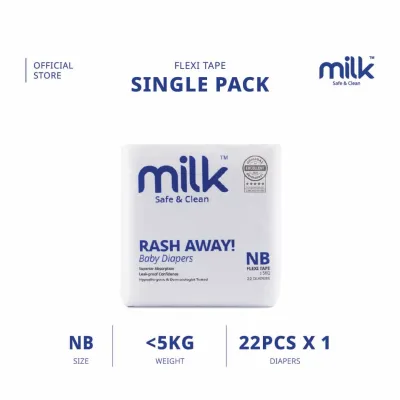
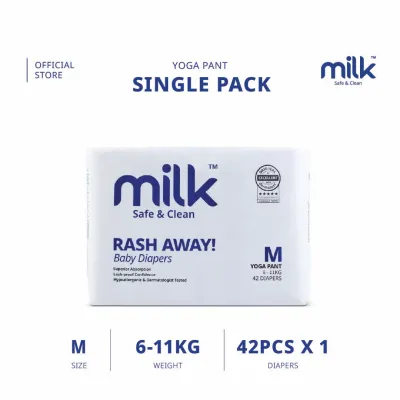
![[BUNDLE] MILK Baby Diaper Flexi Tape S192 M168 L144 XL120 (4 packs)](https://img.lazcdn.com/g/p/b1f2f9121810f012e0cf231c5c64ed94.jpg_400x400q80.jpg_.webp)
![[BUNDLE] MILK Baby Diaper Yoga Pants M168 L144 XL120 XXL96 (4 packs)](https://img.lazcdn.com/g/p/cd9576eed7bd93fa9fdf0cd8c4150d6a.jpg_400x400q80.jpg_.webp)
Prices are valid at publication and may change. Please refer to the product page for the latest price.

This combination of liquid urine and loose stool puts immense pressure on a diaper’s containment capabilities. When these two elements mix, they create an alkaline environment that breaks down the skin’s natural protective barrier. Prolonged exposure to this wetness and the active digestive enzymes in milk stools is a primary cause of severe diaper rash.
Additionally, the rapid influx of liquid can cause a diaper to sag heavily between the legs. This sagging pulls the waistband down, creating gaps at the back and thighs where leaks and blowouts can easily occur. To manage these challenges, a diaper must not only absorb liquid quickly but also isolate it from the skin and maintain its structural shape under weight.
Comparing Key Performance Metrics for Heavy Wetters
Absorbency and Leak Protection
Super Absorbent Polymer (SAP) is the core technology behind modern disposable diapers. SAP consists of tiny beads that can absorb many times their weight in liquid, turning the fluid into a stable gel. In high-quality diapers, this polymer is distributed strategically throughout the core to target key wetness zones.
Some diapers use advanced channel technology, which utilizes embossed pathways to distribute liquid evenly along the entire length of the diaper. This design prevents liquid from pooling in a single spot, reducing the heavy, localized gel clumping that leads to sagging. When evaluating diapers, look for packaging terms such as “high-capacity core,” “overnight dryness,” or “multi-layer protection.”
You can assess absorbency performance at home by observing the diaper after a long stretch of wear. A high-performing diaper will feel relatively dry to the touch on the inside surface, and the liquid will be distributed flatly across the core. In contrast, a lower-performing diaper will feel damp, sag heavily between the baby’s legs, and clump into hard gel pockets, which increases the likelihood of side leaks.
Fit, Flexibility, and Comfort
Even the most absorbent diaper core will fail if the diaper does not fit your baby’s body securely. A proper fit acts as a physical barrier, keeping liquid and loose stools contained until the core can absorb them. Stretchy waistbands are essential, particularly at the back, to prevent “blowouts” when your baby is lying down or sitting.
Look for diapers with wide, flexible waistbands that stretch easily but return to their original shape without losing elasticity. Leg cuffs, also known as inner and outer gussets, provide the critical seal around your baby’s thighs. These cuffs should be made of soft, elastic materials that gently hug the skin without digging in.
A correct fit should leave no deep red marks or indentations on your baby’s thighs or waist after a few hours of wear. As a milk-fed baby’s diaper fills with liquid, the added weight tests the structural integrity of the elastics. High-quality diapers are engineered to maintain their shape and hold close to the body even when fully saturated, preventing the gaps that cause leaks during active movement or sleep.
Rash Prevention and Breathability
Preventing diaper rash requires keeping your baby’s skin dry and minimizing contact with irritants. The top sheet—the layer that directly touches your baby’s skin—must pull moisture away instantly. Look for diapers with 3D-textured or embossed top sheets, which create tiny pockets that lift loose stool away from the skin and speed up liquid absorption.
The back sheet, or outer cover of the diaper, must be highly breathable to prevent heat and humidity from building up inside. Breathable back sheets feature microscopic pores that allow hot air and water vapor to escape while keeping liquid safely contained. This air circulation is especially important in warm, humid climates like Singapore, where trapped heat can rapidly cause heat rash and worsen diaper irritation.
When selecting a diaper, check the packaging for labels indicating that the product is dermatologically tested, hypoallergenic, and free from added fragrances, chlorine, or parabens. Always check the diaper packaging and manufacturer guidelines for specific material lists. If your baby experiences persistent skin irritation, stop use immediately and consult a healthcare professional or pediatrician.
Decision Framework: How to Choose the Right Diaper
To find the ideal diaper for your milk-fed baby, you should match the diaper’s specific features to your baby’s daily patterns and physical characteristics. Use the following conditional framework to guide your selection:
- Choose high-capacity or overnight diapers if: Your baby consumes large volumes of milk before sleeping, regularly sleeps for long, uninterrupted stretches, or frequently wakes up with wet clothes due to diaper saturation. These diapers feature a higher concentration of SAP and multi-layer cores designed to lock away multiple rounds of heavy urination over eight to twelve hours.
- Choose ultra-thin or highly breathable diapers if: Your baby has highly sensitive skin, is prone to redness or diaper rash, or if you live in a hot, humid environment. These diapers prioritize airflow and rapid surface drying over extreme capacity, making them ideal for daytime use when you can change the diaper frequently, such as every two hours.
- Choose diapers with flexible, contoured fits if: Your baby is highly active, has chunky thighs, or frequently experiences waist and back blowouts even when the diaper itself is not fully saturated. Look for designs with wide, double-elastic leg gussets and high, stretchy back waistbands that adapt to your baby's movements.
- Verify materials and ingredients first if: Your baby has a history of skin allergies, eczema, or extreme sensitivity. Always review the manufacturer's material list on the packaging to ensure the diaper is free from synthetic fragrances, lotions, latex, and elemental chlorine bleaching, which can trigger allergic contact dermatitis.
Practical Tips for Managing Frequent Wet Diapers
Maximizing diaper performance and protecting your baby’s skin requires consistent, proper diapering habits alongside choosing the right brand. Implementing a few simple adjustments to your daily routine can significantly reduce leaks and irritation.
While most modern diapers feature a wetness indicator strip that changes color when wet, do not rely on it as your sole guide for diaper changes. For milk-fed babies, it is safer to change diapers at regular time intervals, as the indicator may turn blue with a tiny amount of urine while the diaper still has ample capacity, or it may not accurately reflect the presence of loose milk stools.
Always perform a “ruffle check” immediately after fastening a fresh diaper. Run your finger around the elastic leg cuffs to ensure the outer ruffles are pulled completely outward rather than tucked inside, which is a common cause of immediate leg leaks.
Applying a thick layer of a zinc oxide-based or petrolatum-based barrier cream during changes creates a protective physical barrier on your baby’s skin. This barrier prevents acidic urine and loose stools from making direct contact with the skin, significantly reducing the risk of irritation.
If you notice that your baby’s diaper is consistently leaking or sagging heavily before it reaches its maximum capacity, consider sizing up. Diaper weight ranges on packaging are general guidelines, and active babies or heavy wetters often need to transition to a larger size sooner to benefit from the increased absorbent surface area and taller waistbands.
Frequently Asked Questions (FAQ)
How often should I change a milk-fed baby's diaper?
You should change your milk-fed baby’s diaper every 2 to 3 hours during the day, and immediately after any bowel movement. Even if a diaper has high absorbency, leaving a wet diaper on for too long exposes the skin to moisture and the chemical reactions that occur when urine and loose stool mix, which can quickly cause painful diaper rash.
Should I size up if my baby's diaper leaks but isn't fully soaked?
Leaks that occur when the diaper is not fully saturated are usually caused by a fit or application issue rather than a lack of absorbency. Check that the leg cuffs are flared outward and the waistband is snug. If the fit is correct but leaks persist, or if the diaper leaves deep red marks on your baby’s thighs, sizing up can provide a better physical seal and more coverage.

Community discussion
Share your experience or ask a question. Comments are reviewed before publication.