
Quick Answer: The Best Brush for Each Bottle Material
Selecting the right bottle cleaner brush is not merely a matter of convenience; it is a fundamental step in maintaining your infant’s feeding hygiene. Because baby bottles are manufactured from distinct materials—each with its own physical properties, hardness levels, and surface textures—using a single, generic brush can lead to incomplete cleaning or permanent material damage. To prevent the accumulation of milk residues and harmful bacteria, your choice of cleaning tool must be directly matched to the specific material of your baby bottles.
To guide your selection, consider this straightforward decision framework based on your primary bottle type:
- Silicone Brushes: Highly recommended if your feeding setup consists primarily of plastic (such as PP, PES, or PPSU) or silicone bottles. Silicone bristles are non-abrasive, meaning they will not create micro-scratches on soft surfaces, and they dry exceptionally fast, which is critical for preventing mold growth in humid climates like Singapore.
- Sponge Brushes: The ideal choice if you need high absorbency to wipe away stubborn, oily milk film from delicate silicone surfaces or heavily soiled glass. They create rich soapy lather and sweep clean without scratching, though they require more frequent replacement.
- Nylon Bristle Brushes: Best suited for glass bottles. Glass is highly scratch-resistant and can withstand the heavy-duty scrubbing power of stiff nylon bristles, which are excellent for dislodging dried milk fats and stubborn residue from deep corners and screw threads.
- Hybrid Brushes: For households utilizing a mixed inventory of bottle materials, hybrid brushes—such as those featuring a soft sponge tip combined with a silicone or nylon body—offer a versatile compromise, allowing you to clean different surfaces effectively with a single tool.
Comparing Bottle Brush Materials: Silicone, Sponge, and Nylon
To make an informed choice, it is essential to understand the functional trade-offs of the three primary brush head materials. Each material interacts differently with milk proteins, water, and bottle surfaces, affecting both cleaning efficiency and long-term hygiene.
Products mentioned in this guide
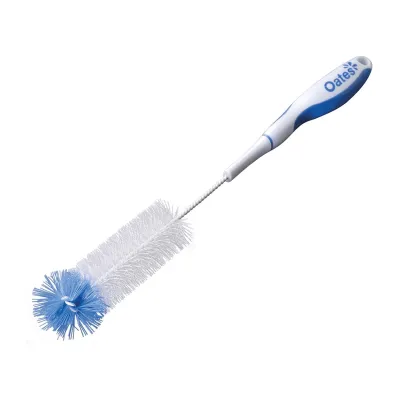
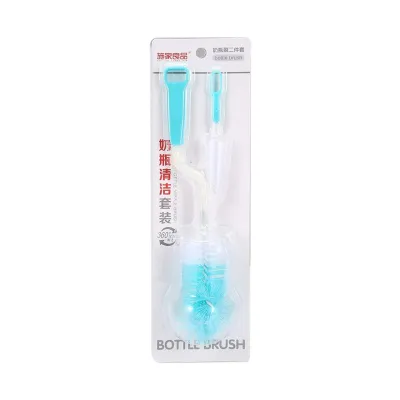
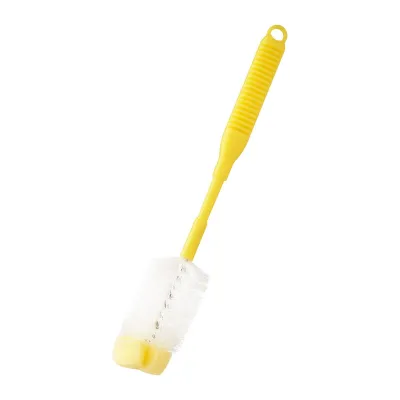
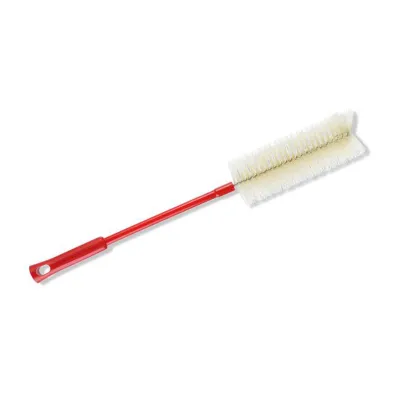
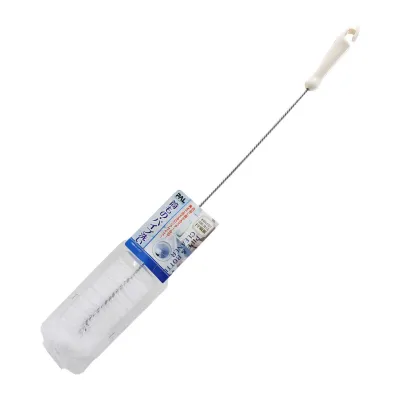
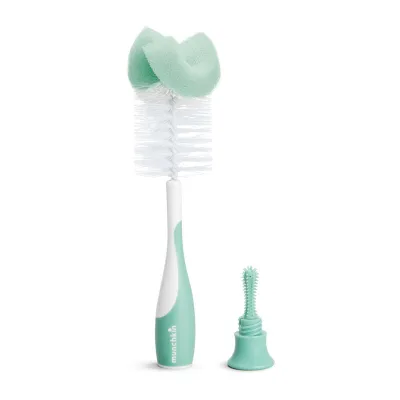
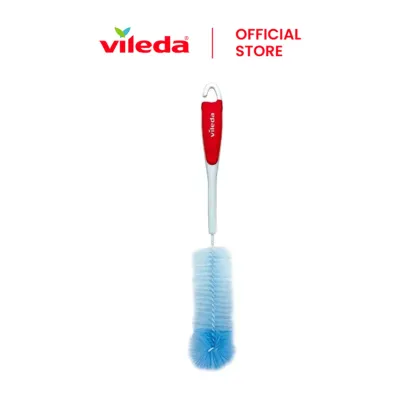
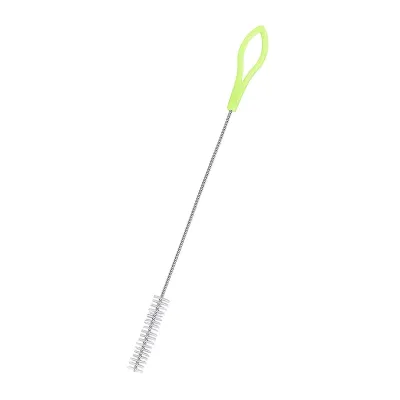
Prices are valid at publication and may change. Please refer to the product page for the latest price.

Silicone Bristles Silicone has gained significant popularity due to its outstanding hygienic properties. Made from food-grade silicone, these brushes feature flexible, rubbery nodules that do not absorb water, allowing them to dry almost instantly after use. This rapid drying speed is a major advantage in high-humidity environments, as it prevents the colonization of mold, mildew, and bacteria. Furthermore, silicone is incredibly durable, resisting tearing and fraying far longer than sponge or nylon, and it is completely non-scratch. However, silicone has lower mechanical scrubbing power. Because the bristles are smooth and non-porous, they tend to glide over or push oily milk residues around rather than absorbing them, requiring the use of warm water and an effective baby bottle cleanser to break down milk fats.
Sponge Heads Sponge brushes excel at surface contact and liquid absorption. Their porous structure holds a large volume of soapy water, creating a rich lather that easily lifts away greasy breast milk or formula film. Because sponges are soft and pliable, they conform perfectly to any bottle shape and pose zero risk of scratching soft plastics. However, sponges remain damp for extended periods, creating a breeding ground for bacteria, especially in humid environments. Additionally, sponge material degrades quickly, tearing easily when pulled through narrow bottle necks, which can expose the underlying plastic or metal core of the brush handle.
Nylon Bristles Nylon bristles offer excellent stiffness and mechanical scrubbing power, making quick work of dried-on milk, thick formula deposits, and residue trapped in collar threads. They are highly durable and maintain their shape well. However, nylon is highly abrasive on softer materials. When used on plastic or silicone, stiff bristles cause micro-scratches that cloud the bottle and harbor bacteria. Nylon brushes can also spray soapy water when pulled quickly out of narrow bottle openings.
To help you compare these materials at a glance, the table below evaluates them across key qualitative dimensions based on general material properties:
| Brush Material | Scrubbing Power | Scratch Risk | Drying Speed | Expected Lifespan | Best Suited For |
|---|---|---|---|---|---|
| Silicone | Moderate | None | Very Fast | Long | Plastic & Silicone Bottles |
| Sponge | High (for film) | None | Slow | Short | Delicate Silicone & Glass |
| Nylon | Very High | High (on plastic) | Moderate | Long | Glass Bottles Only |
Choosing the Right Brush for Glass Baby Bottles
Glass baby bottles, typically crafted from borosilicate glass, are favored for their durability, chemical inertness, and scratch resistance. They do not develop the micro-grooves that plague plastic bottles. However, glass is heavy, becomes slippery when wet, and can chip or crack if subjected to hard internal impacts. Furthermore, dried milk inside glass forms a tough, baked-on residue that requires robust scrubbing to dissolve.
When cleaning glass, prioritize brushes with robust mechanical scrubbing power, such as nylon bristle or firm sponge brushes. Nylon bristles aggressively sweep away dried milk fats and mineral deposits without any risk of scratching the glass surface.
A critical safety feature to look for is a protective tip at the end of the brush handle. Many nylon brushes feature a twisted metal wire core. If left exposed, this metal wire or a hard plastic tip can repeatedly strike and chip the bottom of the glass bottle during vigorous scrubbing, leading to micro-fractures or sudden breakage. Ensure the tip is fully encased in a soft silicone cap or a dense sponge block to cushion impacts.
Additionally, verify the brush head diameter relative to your bottle’s neck size. Standard-neck bottles require a narrow, flexible brush that passes through the opening easily, while wide-neck bottles accommodate larger heads that rotate freely to clean curved shoulders where residue accumulates.
Choosing the Right Brush for Plastic Baby Bottles
Plastic baby bottles are lightweight and shatterproof, commonly made from Polypropylene (PP), Polyethersulfone (PES), or Polyphenylsulfone (PPSU). Although durable, these plastics are physically softer than glass, making them highly vulnerable to micro-scratches from stiff nylon bristles or exposed metal stems.
These microscopic grooves act as safe havens for milk proteins, fats, and bacteria. Once lodged, bacteria are difficult to dislodge through standard washing, and sterilization may not fully penetrate the trapped organic matter. Over time, a scratched plastic bottle will take on a cloudy, yellowed, or hazy appearance, signaling material degradation and bacterial colonization.
To protect plastic bottles, strictly avoid stiff nylon bristles. Instead, opt for soft silicone brushes or high-density, non-abrasive sponge brushes. Silicone brushes glide smoothly, removing fresh milk residue without abrasive force. If you use a sponge brush, ensure it is kept clean, as trapped grit can also scratch plastic.
Caregivers should routinely inspect plastic bottles. Hold the dry bottle up to a strong light source; if you observe a network of fine lines, persistent cloudiness, or a rough interior texture, the plastic has degraded. In these conditions, the bottle should be retired and replaced to maintain feeding safety.
Choosing the Right Brush for Silicone Baby Bottles
Silicone baby bottles are popular for their soft feel, flexibility, and heat resistance, but food-grade silicone has unique physical properties. Silicone has a high surface friction, giving it a ‘grippy’ texture that causes milk fats and proteins to cling tightly to the interior walls, forming a stubborn, greasy film. Additionally, silicone carries a static charge that can attract dust and lint.
To clean silicone bottles effectively without damage, use a brush that can lift this tacky film. High-density sponge brushes are highly effective, as the sponge creates excellent surface friction to wipe away the film while absorbing oils. Alternatively, use specialized soft silicone brushes with textured, multi-directional cleaning nodes, paired with warm water and a suitable baby-safe dish soap.
Because silicone bottles are highly flexible and often feature unique, squeezable shapes, rigid, straight-handled brushes are difficult to maneuver. A rigid brush can press unevenly, risking tears in the flexible walls while failing to clean curved areas. Choose a brush with a flexible handle, an angled neck, or a rounded head that conforms to the bottle’s internal contours.
Before cleaning, always consult the manufacturer’s care instructions for your silicone bottle brand. Some brands feature proprietary coatings that can be stripped away if scrubbed with abrasive tools or subjected to incompatible sterilizing methods.
Essential Features Beyond the Bristles
While the brush head material is critical for surface compatibility, several secondary design features significantly impact daily usability, reach, and overall hygiene.
Handle Design Cleaning baby bottles is a repetitive daily chore, making handle ergonomics highly important. Look for handles with non-slip, rubberized grips that provide a secure hold when wet. A highly valuable feature is a 360-degree rotating handle. This design allows you to hold the outer sleeve and spin the shaft, rotating the brush head rapidly inside the bottle with minimal wrist movement. This mechanical rotation ensures thorough, even cleaning of the bottle walls while reducing physical strain.
Reach and Flexibility The physical shape of the brush stem determines how well it navigates complex bottle designs. Many modern bottles feature anti-colic venting systems, internal straws, or distinctively curved shoulders. A straight, rigid brush handle often cannot reach the tight corners directly beneath the bottle collar. Brushes with angled necks or semi-flexible stems allow you to apply targeted pressure to these hard-to-reach areas, ensuring no milk residue is left behind.
Nipple Cleaner Inclusion Feeding nipples, straws, and valves are delicate and prone to tearing if cleaned with a large bottle brush. Forcing a thick brush head through the narrow opening of a nipple can stretch the silicone or tear the anti-colic valve, altering the milk flow rate and posing a choking hazard. Look for brushes that include a dedicated, smaller nipple cleaner. This tool is often designed to mimic the exact internal contour of a nipple and is frequently stored inside the main brush handle, preventing cross-contamination.
Storage and Drying In high-humidity climates, how you store your bottle brush between uses is a major factor in maintaining hygiene. A brush left lying flat on a damp sink counter remains wet, promoting mold and bacterial growth. Look for brushes with built-in suction cup bases or stable flat stands that allow the brush to stand upright, letting water drain downward. Hanging loops at the end of the handle are also excellent, enabling you to hang the brush on a hook away from wet surfaces.
Frequently Asked Questions (FAQ)
How often should I replace my baby bottle brush?
Rather than following a strict calendar timeline, replace your baby bottle brush based on visible and tactile signs of wear. For sponge brushes, replace them immediately if you notice tearing, crumbling, discoloration, or a lingering sour odor, which indicate bacterial accumulation. For nylon and silicone brushes, look for frayed or bent bristles, a loss of stiffness, or exposure of the inner wire core. As a general practice, sponge brushes typically require replacement every 4 to 6 weeks, while high-quality silicone and nylon brushes can last between 2 to 4 months. Additionally, if your infant has been ill, replace all cleaning brushes immediately to prevent re-exposure.
Can I put my bottle cleaner brush in the dishwasher?
Before placing any bottle brush in the dishwasher, check the manufacturer’s care label. Generally, food-grade silicone brushes and certain high-quality nylon brushes are top-rack dishwasher safe, as they withstand high sanitizing temperatures. However, sponge brushes should never be put in the dishwasher. The intense heat, prolonged moisture, and harsh detergents will rapidly degrade, melt, or tear the sponge material. Furthermore, food particles from other dishes can easily become trapped inside the porous structure of the sponge during the wash cycle, creating a significant hygiene hazard.
Is it safe to use the same brush for glass and plastic bottles?
Using the same brush for both glass and plastic bottles carries a hidden risk of physical damage. When scrubbing glass, the brush can trap hard mineral deposits from tap water or microscopic glass particles. If you then use that same brush on a soft plastic bottle, those trapped abrasive particles can act like sandpaper, causing micro-scratches on the plastic surface. To maintain optimal hygiene and extend the lifespan of your bottles, it is highly recommended to use dedicated brushes for different materials. If you must use a single brush, wash your soft plastic bottles first, followed by your glass bottles, and thoroughly rinse the brush in between.

Community discussion
Share your experience or ask a question. Comments are reviewed before publication.