
When evaluating high-end baby gear, the name babybjorn inevitably stands out as a household standard. If you are trying to decide whether to invest S$300 to S$450 in a premium carrier, the primary question is whether the brand’s ergonomic design justifies its premium price tag.
The short answer is conditional: while BabyBjörn offers exceptional build quality, incredibly intuitive front-buckling systems, and robust structured support for the wearer, its ergonomic benefits for the baby are comparable to—and in some aspects, matched or exceeded by—other premium brands that often cost less. The premium price is primarily justified by its unmatched ease of use, long-term structural durability, and high resale value in Singapore’s active secondhand market, rather than exclusive ergonomic superiority.
What Defines an "Ergonomic" Premium Baby Carrier?
To evaluate any premium carrier, parents must first understand what makes a carrier truly ergonomic for both baby and parent. For the infant, the primary structural requirement is the preservation of the natural “M-position” (also known as the spread-squat position). In this position, the baby’s hips are bent, the knees are aligned slightly higher than the bottom, and the thighs are fully supported from knee to knee. This alignment reduces mechanical stress on the underdeveloped hip joints, allowing the head of the femur to sit securely within the socket, which is crucial for preventing hip dysplasia.
Products mentioned in this guide
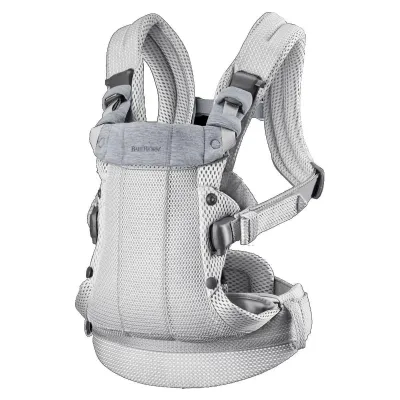
![[10 Yr Local Warranty] BabyBjorn Harmony 3D Mesh Baby Carrier - 8 Color](https://img.lazcdn.com/g/p/1bcba9e253762640fea6e3307149001b.jpg_400x400q80.jpg_.webp)
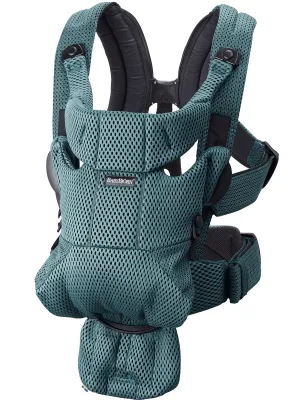
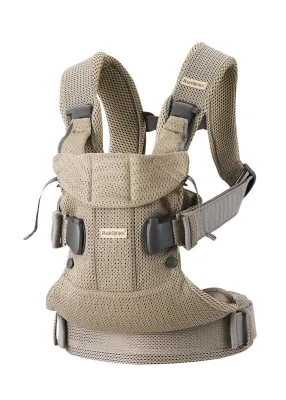
Prices are valid at publication and may change. Please refer to the product page for the latest price.
In addition to hip positioning, an ergonomic carrier must offer adjustable, structured support for the baby’s neck and head, especially during the first few months when infant neck muscles are weak. For the parent, ergonomics translates to even weight distribution. A high-quality carrier achieves this by transferring a significant portion of the baby’s weight from the wearer’s shoulders down to the hips via a wide, padded waistband, coupled with contoured, thickly padded shoulder straps.
Because safety claims can be difficult to verify independently, parents should look for external validation. When shopping for any premium carrier, it is highly recommended to verify official acknowledgments, such as recognition from the International Hip Dysplasia Institute (IHDI) as a “hip-healthy” product, directly on the manufacturer’s official specifications sheet.
BabyBjörn’s Ergonomic Profile: Strengths and Trade-offs
BabyBjörn carriers, particularly modern premium models like the Harmony and the One series, are engineered with a distinct design philosophy centered on structured simplicity. Their standout feature is the unique front-buckling mechanism. Unlike many soft-structured carriers that require the parent to reach behind their back to secure a clip between the shoulder blades, BabyBjörn places all fastening points within clear sight on the front of the carrier. This makes putting on and taking off the carrier exceptionally straightforward, even when navigating busy public transport or tight spaces alone.

The structured waistband and integrated lumbar support in these premium lines provide excellent, rigid support that appeals to parents who suffer from lower back strain. Furthermore, these models offer versatile carrying positions, allowing for parent-facing, outward-facing, and back-carrying configurations as the child grows.
However, this highly structured approach comes with notable trade-offs. To accommodate a growing child, several BabyBjörn models rely on manual seat-width adjustments, such as internal zippers or sliding buckles. If the parent does not actively monitor and adjust these sliders, the seat width may become too narrow, failing to support the baby’s thighs from knee to knee and causing the legs to dangle.
Additionally, the rigid, structured panels that give these carriers their signature neat silhouette make them bulkier to fold and pack into a diaper bag. This structured design can also feel less conforming to parents with highly petite or exceptionally broad frames compared to softer, wrap-style or highly adjustable fabric competitors. Caregivers must always consult the specific model’s manual to verify weight, height, and age limits before attempting any new carrying position.
Head-to-Head: BabyBjörn vs. Competing Premium Carriers
Infant Hip Support and Seat Adaptability
When comparing infant hip support, the mechanism of seat adaptability is a major differentiator. BabyBjörn’s slider and zipper systems allow for precise, continuous adjustments, but they require the parent to actively measure and set the width. In contrast, many competing premium soft-structured carriers utilize pre-shaped, deeply cupped seats or intuitive velcro-and-button adjustment systems. These designs often create a naturally wider, more ergonomic seat pocket out-of-the-box, which can make it easier to achieve the ideal M-position without constant manual fine-tuning.
For older or larger infants, some competing brands offer wider default seat bases that provide superior thigh support as the toddler stage approaches. While BabyBjörn’s premium models do adjust to accommodate toddlers, some parents find that the maximum seat width on competing carriers offers more generous coverage for longer legs. To ensure optimal hip support, parents should compare the manufacturer’s specified weight ranges and physical seat width dimensions against their baby’s current growth percentile.
Parent Comfort and Weight Distribution
The subjective comfort of a carrier is heavily influenced by how it distributes weight across the wearer’s body. BabyBjörn carriers typically utilize an H-back strap configuration, where the shoulder straps run parallel and are joined by a horizontal chest strap. This system, combined with a highly structured lumbar support pad, is designed to keep the wearer’s spine aligned and prevent slouching.
On the other hand, several competing premium carriers offer cross-back (X-back) strap configurations as an alternative. Cross-back straps cross over the wearer’s back, distributing the baby’s weight diagonally across the shoulder blades and upper back. Many parents, particularly those with narrower shoulders or shorter torsos, find that cross-back straps provide a snugger, more customized fit that prevents the straps from slipping. Because body shapes vary wildly, what feels incredibly supportive for one parent may cause pressure points for another; trying carriers in-store with weighted baby dolls is the most reliable way to assess personal comfort.
Breathability and Climate Adaptability
In Singapore’s tropical climate, where high humidity and temperatures are year-round realities, breathability is not just a comfort factor—it is a safety consideration to prevent infant overheating. BabyBjörn has addressed this environmental challenge by incorporating advanced fabrics, such as their proprietary 3D mesh and 3D jersey, which are highly porous and designed to maximize airflow around both the baby and the parent.
Competing premium brands counter this with their own cooling technologies, including targeted ventilation panels, moisture-wicking fabrics, and lightweight natural linen blends. While both approaches perform well, parents should carefully examine the fabric composition and care labels of each model. Some heavy-duty structured mesh carriers can still feel warm during outdoor walks along East Coast Park or through local botanical gardens, making lightweight, single-layer mesh or linen options from competitors highly appealing for families who spend significant time outdoors.
Is the Higher Price Tag Justified? Value Beyond Ergonomics
At a premium price point, often exceeding S$350, the decision to purchase a BabyBjörn carrier involves looking beyond pure ergonomic specifications. A significant portion of this cost is tied to factors that do not directly affect immediate carrying comfort but heavily impact long-term ownership value.
First, BabyBjörn has a long-standing global reputation built on rigorous, in-house safety testing and high-quality materials that resist wear, fading, and pilling even after dozens of wash cycles. This material longevity ensures that the carrier remains structurally sound for multiple children, making it a highly durable investment for growing families.
Second, the brand enjoys exceptionally high demand and strong brand recognition in Singapore’s secondhand market. A well-maintained BabyBjörn carrier often commands a premium resale price on local peer-to-peer marketplaces, allowing parents to recoup a substantial portion of their initial outlay once their child outgrows it.
In contrast, while some mid-premium competitors offer comparable or even slightly superior ergonomic customizability at a lower retail price, they may not retain their resale value as effectively or possess the same level of widespread brand trust. When calculating the true cost of ownership, parents should weigh the upfront retail price against their planned usage duration, family planning goals, and the potential to recover costs through resale.
Decision Framework: Which Carrier Should You Choose?
To help finalize your decision, consider the following practical scenarios based on your lifestyle, physical preferences, and budget:
Choose BabyBjörn if:
- You prioritize ultimate convenience and want a foolproof, front-buckling design that you can easily put on and adjust without assistance.
- You prefer a highly structured, modern, and minimalist aesthetic that looks neat and holds its shape.
- You want excellent built-in lumbar support and prefer parallel (H-back) shoulder straps.
- You plan to resell the carrier later and want to maximize your financial recovery on local secondhand platforms.
Choose competing premium carriers if:
- You want a carrier with a naturally wider, deeper seat pocket that requires less manual adjustment as your baby grows.
- You prefer softer, more molding fabrics that conform closely to both your body and your baby's shape.
- You have narrow or sloping shoulders and find that cross-back (X-back) straps provide a more secure, slip-free fit.
- You are working with a more conservative budget but still want high-quality ergonomic support.
Verify first if:
- You have pre-existing back, shoulder, or pelvic floor concerns; in such cases, consult a healthcare professional or physical therapist, and test the carriers in-store before purchasing.
- Your baby has specific hip, joint, or developmental considerations; always consult your pediatrician or a pediatric orthopedist to ensure the chosen carrier model is fully safe and supportive for your child's unique needs.
Frequently Asked Questions (FAQ)
Can I use a premium baby carrier for a newborn without an infant insert?
Many modern premium carriers, including specific BabyBjörn models like the Harmony and Baby Carrier One, are engineered to support newborns from birth without requiring a separate infant insert. However, suitability is highly dependent on the baby’s weight and length rather than age alone. Parents must strictly verify the manufacturer’s minimum weight and height requirements on the product label before the first use. Additionally, always ensure that the baby’s face remains fully visible, their chin is off their chest, and their airway is completely unobstructed at all times.
Is it safe to carry my baby facing outward in a premium carrier?
Outward-facing carry is safe only when the baby has developed full, independent head and neck control, which typically occurs around five to six months of age. Parents should limit the duration of outward-facing carrying sessions to short intervals of 15 to 20 minutes to prevent overstimulation and minimize physical strain on the baby’s developing spine. Always refer to your specific carrier’s user manual to check the exact age, weight, and height boundaries recommended for outward-facing use.
How do I properly clean and maintain a premium mesh baby carrier?
Most premium mesh carriers are machine washable, but you must consult the care label for specific washing instructions, temperature limits, and detergent restrictions. To protect the technical mesh and structural plastic buckles, place the carrier in a mesh laundry bag, use a mild, bleach-free detergent, and select a gentle cycle. Avoid fabric softeners as they can clog the breathable pores of the mesh. Always air dry the carrier in a shaded, well-ventilated area; never use a tumble dryer, as high heat can degrade the elastic fibers and warp the plastic fasteners.

Community discussion
Share your experience or ask a question. Comments are reviewed before publication.