
As soon as your little one starts crawling and exploring, baby-proofing your home becomes an immediate priority. Electrical outlets are naturally fascinating to curious infants and toddlers who love to poke small fingers or toys into open slots. To secure these hazards, choosing the right socket cover is one of the most effective steps you can take. The ideal choice depends on how often you use each outlet, your child’s age, and the specific design of your wall sockets. By understanding the differences between plug-in caps, sliding plates, and box covers, you can create a secure environment that balances robust child safety with daily convenience for the rest of the household.
The 3 Main Types of Baby-Proofing Socket Covers
To select the best safety solution, you must first understand the three primary categories of socket covers available on the market. Each type uses a distinct mechanism to block access to live electrical contacts, offering different trade-offs in terms of installation effort, security, and daily usability.
Plug-in Caps (Inserts) Plug-in caps are simple plastic prongs designed to insert directly into the open holes of an individual socket. They are highly popular because they are incredibly low-profile, virtually disappearing into the wall plate once installed. Because they require no tools and can be pushed into place in seconds, they represent the quickest and most economical way to block open outlets. However, their primary limitation is that they must be manually removed every time you need to use the outlet. Over time, as curious toddlers develop better fine motor skills and finger strength, they may learn how to pry these caps out, potentially turning them into a loose choking hazard.
Products mentioned in this guide
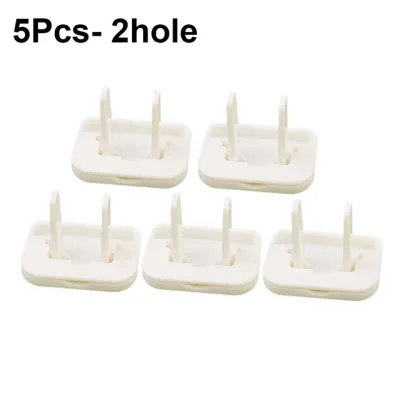
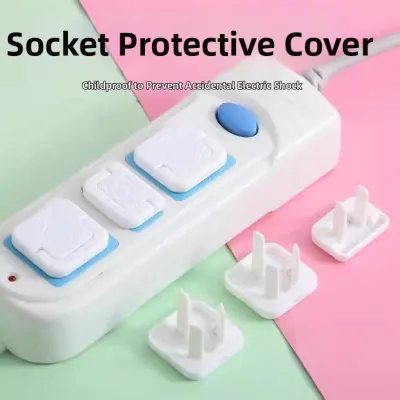
![[Local Seller!] Baby Safety Electrical UK 3pin Power Outlets Socket Cover Plug Caps Japan Brand KM1037 - 5pcs](https://img.lazcdn.com/g/p/ea9601dbec0eaea46fd1122e080ef0b2.jpg_400x400q80.jpg_.webp)

Prices are valid at publication and may change. Please refer to the product page for the latest price.
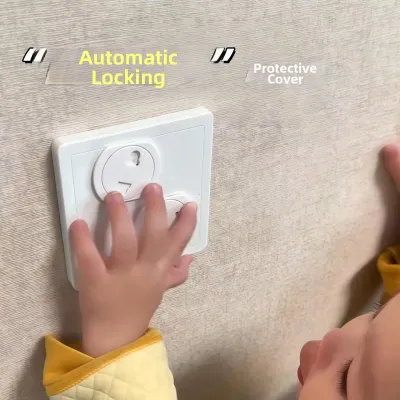
Sliding Socket Plates (Replacement Covers) Sliding socket plates offer a more permanent and highly secure alternative by replacing your existing wall faceplate entirely. These covers feature built-in, spring-loaded shutters that automatically slide shut to cover the socket holes the moment an appliance plug is pulled out. To use the outlet, you must insert the plug’s prongs and slide the shutter open simultaneously, a dual-action motion that is highly difficult for young children to replicate. While sliding plates offer an exceptional level of passive protection, they do require a moderate amount of installation effort, typically involving a screwdriver and temporarily turning off the power supply for safety.
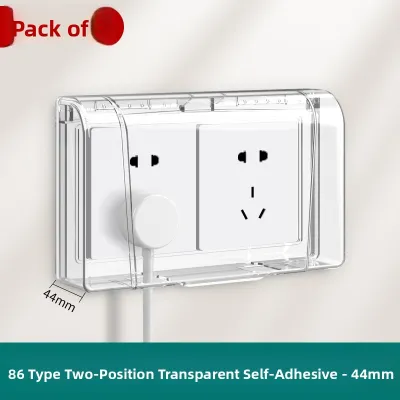
Box Covers (Cord Shorteners/Enclosures) Box covers, also known as outlet enclosures or cord shorteners, are large plastic boxes that mount over the entire socket faceplate, enclosing both the outlets and any plugged-in appliance cords. These are specifically designed to solve a major vulnerability: children pulling on active power cords or unplugging essential appliances like refrigerators, Wi-Fi routers, or air purifiers. By locking the plugs inside a protective dome, box covers prevent toddlers from accessing the live prongs of a partially unplugged cord. The main trade-off is their bulky, protruding appearance, which can interfere with furniture placement.
| Cover Type | Mechanism | Installation Effort | Security Level | Best Use Case |
|---|---|---|---|---|
| Plug-in Caps | Inserts into socket holes | Very Low (Plug and play) | Low to Medium | Seldom-used, exposed sockets |
| Sliding Plates | Replaces wall faceplate | Medium (Requires screwdriver) | High | Frequently used, accessible sockets |
| Box Covers | Encloses socket and plug | Low (Adhesive or screw mount) | High (for cords) | Sockets with permanently plugged-in appliances |
How to Choose the Right Socket Cover for Your Home
Selecting the right safety barrier is not a one-size-fits-all decision. To build a practical baby-proofing strategy, you must evaluate how your family uses electricity daily, where your outlets are located, and how your child interacts with their environment.

Assess Socket Usage Frequency The frequency with which you access an outlet should dictate the type of cover you install. If you have an outlet that you use daily for vacuuming, charging devices, or plugging in a hair dryer, using a manual plug-in cap can quickly become highly frustrating. The constant cycle of removing, storing, and replacing the cap increases the likelihood that a caregiver will eventually forget to put it back, leaving the live socket exposed. For these high-traffic areas, sliding socket plates are highly recommended because they automatically re-secure themselves without any extra steps. Reserve simple plug-in caps for outlets that remain completely unused or are dedicated to seasonal appliances.
Evaluate Furniture Placement and Accessibility Not every outlet in your home poses the same level of risk. Sockets that are completely blocked by heavy, immovable furniture—such as a massive built-in wardrobe, a heavy sideboard, or a large television console—are generally inaccessible to a child and may not require heavy-duty covers. However, you must carefully evaluate outlets located behind lightweight or easily movable furniture, such as toy chests, bedside tables, or armchairs. Children can easily pull these items away from the wall or crawl behind them, creating a hidden, unsupervised hazard area. For these semi-accessible spots, robust sliding plates or sturdy box covers are much safer than basic plug-in caps.
Consider the Child’s Developmental Stage A child’s age, physical strength, and problem-solving abilities should heavily influence your choice of safety gear. For a crawling infant who is just beginning to explore, a basic plug-in cap is usually sufficient to block curiosity. However, as children transition into the toddler stage, they develop advanced fine motor skills, pincer grasps, and a keen sense of imitation. If a toddler watches a parent remove a plug-in cap, they may attempt to mimic the action and successfully pull it out. Once your child reaches this stage of active exploration and coordination, upgrading to self-closing sliding plates or locked box covers is essential to maintain a secure environment.
Verify Local Socket Compatibility Before purchasing any protective covers, you must verify that they are fully compatible with the specific electrical standards in your home. In Singapore, residential properties standardly use Type G wall sockets, which feature three rectangular prongs and are built to the British Standard (BS 1363). Many cheap, mass-produced baby-proofing products sold online are designed for Type A or Type B (US) or Type C (European) sockets. Attempting to force a foreign-standard plug-in cap into a Type G socket can result in a loose, unstable fit that a child can easily remove, or it may damage the socket’s internal safety shutters. Always check the product specifications to ensure explicit compatibility with Type G British standard outlets.
Critical Safety and Design Features to Evaluate
Not all baby-proofing products are manufactured to the same standards. When shopping for a socket cover, look closely at the design, material quality, and safety certifications to ensure the product protects your child without introducing new hazards.
Choking Hazard Prevention The single biggest safety concern associated with traditional plug-in caps is the risk of choking. If a toddler manages to pry a small, poorly designed plastic insert out of the wall, their natural instinct may be to put it in their mouth. To mitigate this risk, avoid buying cheap, generic caps that feature small finger-pull tabs or rings that are easy for tiny fingers to grip. Instead, look for oversized caps that sit completely flush against the wall plate, leaving no edge or gap for a child to grasp. Some high-quality designs require a specialized removal key or a specific, coordinated adult two-finger pinch to pull out, ensuring they remain firmly in place.
Material Durability and Shatter Resistance The durability of the plastic used in safety covers is critical for long-term safety. Cheap, brittle plastics can degrade rapidly under UV exposure or crack when subjected to physical impact, such as being accidentally kicked, hit by a vacuum cleaner, or chewed on by a teething toddler. When a socket cover shatters, it can expose live electrical contacts or create sharp plastic shards and small choking hazards. Prioritize covers made from high-quality, impact-resistant materials such as acrylonitrile butadiene styrene (ABS) or polycarbonate. Check the manufacturer’s product labels to verify that the plastic is non-toxic, flame-retardant, and certified durable.
Adult Usability and Ergonomics A baby-proofing device is only effective if it is used consistently. If a safety cover is so difficult or frustrating for an adult to operate that it interferes with daily household tasks, caregivers are highly likely to remove it permanently or leave it partially disengaged. When evaluating sliding plates, ensure the spring mechanism slides smoothly and does not stick or jam when you try to insert a plug. For box covers, look for models that feature a secure, child-proof latch that is still intuitive and manageable for an adult to open with one hand when necessary.
Heat Dissipation for Box Covers While box covers are excellent for keeping active appliance cords out of reach, enclosing electrical plugs can sometimes lead to thermal issues. When high-wattage appliances—such as microwave ovens, space heaters, or iron stations—are plugged in, the connection point can naturally generate a small amount of heat. If this heat is trapped inside a sealed plastic box cover, it can build up and potentially damage the plug, warp the cover, or even create a fire hazard. Always ensure that any box cover you purchase features built-in ventilation slots or grilles to allow continuous airflow and heat dissipation around active plugs.
Installation, Maintenance, and When to Stop Using Them
Proper installation and regular maintenance are vital to ensure your baby-proofing setup remains completely safe and functional over time.
Pre-Installation Checks Before you install any protective cover, you must perform a thorough visual inspection of the target wall socket. Ensure that the plastic faceplate is completely intact, free of cracks, and securely mounted to the wall. Look closely for any signs of electrical damage, such as discoloration, scorch marks around the pinholes, or a faint burning smell. If you notice any of these warning signs, do not install a cover over the outlet. A damaged socket requires immediate professional attention rather than a cosmetic safety cover, as covering a faulty outlet can mask a serious fire hazard.
Routine Inspection and Maintenance Baby-proofing is not a set-and-forget task; it requires ongoing vigilance as your child grows. Establish a routine check every few weeks to inspect the physical condition of all socket covers in your home. Check plug-in caps for any signs of wear, bite marks, cracks, or a loosening fit within the socket. Test sliding plates to confirm that the spring-loaded shutters still snap shut instantly and completely when a plug is removed. If you find any damaged, warped, or loose covers, replace them immediately with new units to maintain an unbroken safety barrier.
Safety Boundaries and Professional Help It is crucial to recognize the limits of physical safety accessories. If a wall socket ever feels unusually hot to the touch, emits sparks when a plug is inserted, makes a buzzing or clicking sound, or if a plastic cover shows signs of melting, warping, or scorching, you must act immediately. Stop using the affected outlet right away, unplug any connected appliances, and do not attempt to install or remove any baby-proofing covers. These symptoms indicate a potentially dangerous internal wiring issue or a failing socket. You must consult a licensed, qualified electrician to inspect and repair the outlet safely.
Transitioning Out of Baby-Proofing As your child matures, their relationship with the home environment changes. Physical barriers like socket covers are designed to protect infants and toddlers who lack cognitive awareness of danger. However, as children grow older, physical covers should gradually be replaced by active education and supervision. Begin teaching your child about the dangers of electricity, explaining why they must never touch plugs, cords, or sockets with wet hands or insert objects into them. Once your child consistently demonstrates an understanding of these safety rules and shows no interest in playing with outlets, you can begin removing the physical covers, starting with less accessible areas.
Frequently Asked Questions (FAQ)
Are traditional plug-in socket caps actually a choking hazard?
Yes, poorly designed or exceptionally small plug-in socket caps can pose a serious choking hazard if an older toddler manages to pull them out of the wall. Because toddlers often explore objects by putting them in their mouths, a loose plastic cap is highly dangerous. To prevent this risk, always choose oversized plug-in caps that sit completely flush against the faceplate, leaving no exposed edges for small fingers to grip. Additionally, look for caps that require a specialized removal tool or a highly coordinated adult-strength grip to extract, and always supervise young children in areas with active outlets.
Do I need to baby-proof sockets hidden behind heavy furniture?
While sockets that are permanently blocked by heavy, immovable furniture—such as a large built-in wardrobe or a heavy solid-wood bookshelf—present an extremely low immediate risk, using a basic plug-in cap as a redundant safety measure is still highly recommended. Furniture can sometimes be shifted during deep cleaning, home renovations, or unexpected events. Furthermore, as children grow, they may drop small toys behind furniture and attempt to squeeze into tight gaps to retrieve them. Installing a simple plug-in cap provides peace of mind in case the outlet is ever temporarily exposed.
Can socket covers damage the internal wiring of my wall sockets?
Properly designed and correctly fitted external socket covers, such as plug-in caps and box covers, do not interact with or damage the internal wiring behind your walls. However, physical damage can occur if you attempt to force ill-fitting, foreign-standard covers into your outlets, or if you apply excessive force when installing replacement sliding plates. Over-tightening the mounting screws on a replacement faceplate can also crack the socket’s external plastic housing. Always follow the manufacturer’s installation instructions carefully, use compatible Type G covers for Singapore homes, and avoid using excessive force.

Community discussion
Share your experience or ask a question. Comments are reviewed before publication.