
A baby nest must meet rigorous physical design, material, and chemical safety standards before you bring it into your home. Because these products are designed for infants, verifying independent testing certifications, structural firmness, and strict usage boundaries is essential to protect your baby from suffocation, entrapment, and fall hazards. While these portable loungers offer a convenient spot for supervised awake time, they are not designed or approved for unsupervised sleep. Understanding how to evaluate their construction and verify safety labels is the most important step in keeping your infant safe.
In Singapore’s warm and humid climate, choosing baby gear requires extra attention to material breathability and thermal comfort. A poorly designed baby nest can trap heat and restrict airflow, increasing the risk of overheating. By learning what safety standards to look for and how to inspect a product’s physical features, you can make an informed decision that prioritizes your baby’s well-being during their earliest months.
Why Safety Standards Matter for Infant Sleep and Rest
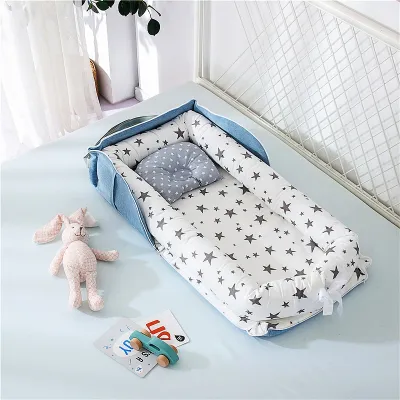
Pediatric health authorities worldwide maintain a clear consensus on safe infant sleep: babies should always sleep on a firm, flat, and level surface free of any soft bedding, pillows, or raised bumpers. Padded baby nests, by their very design, contrast with these core principles. Because they feature raised, cushioned sides and a soft central mattress, they introduce specific structural elements that require strict safety standards and careful parental oversight.
Products mentioned in this guide
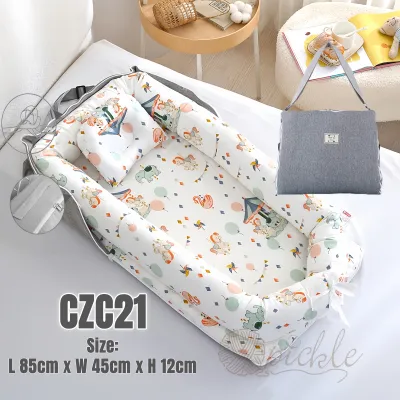
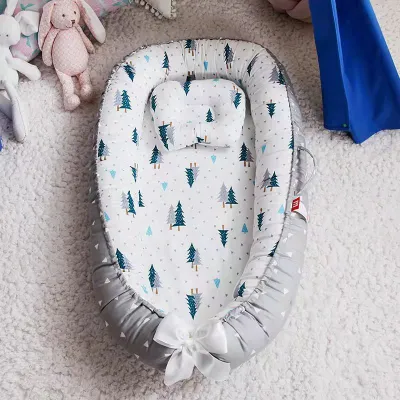
![[SG SELLER] BABY BED FOLDABLE PORTABLE LOUNGER NEST BED COT Baby Separated Bed Baby Cot Newborn Sleeper Sleep By Your Side](https://img.lazcdn.com/g/p/c41c8927ef30d1f6f6a1d479daeb9c05.jpg_400x400q80.jpg_.webp)
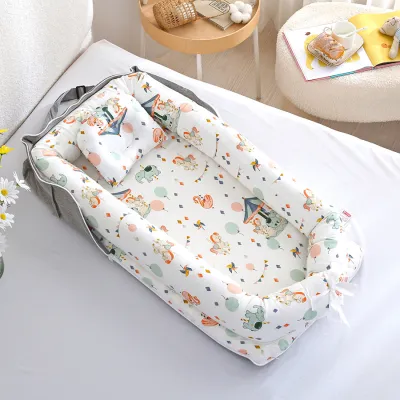
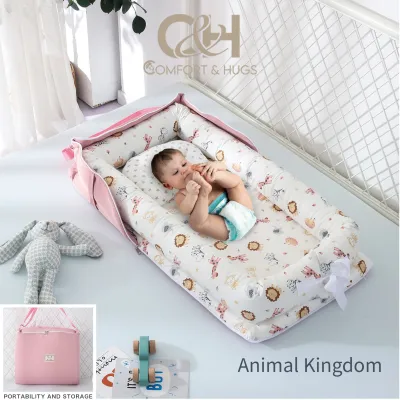

Prices are valid at publication and may change. Please refer to the product page for the latest price.
When an infant is placed in a padded lounger, the primary hazard is positional asphyxiation or suffocation. Young infants lack the neck strength to lift or turn their heads if they roll over or if their airway becomes obstructed. If a baby’s face presses against the soft, padded bumper of a nest, or if their chin is forced down toward their chest due to a soft, sagging mattress, their breathing can be compromised quickly and silently. Safety standards exist to ensure that the materials and dimensions of these products minimize these structural risks.
Entrapment is another significant hazard associated with non-standardized baby nests. If the gap between the central mattress pad and the surrounding bumper is too wide or poorly constructed, a baby can slip into the crevice. This can trap their head or body, leading to a dangerous restriction of movement and airflow. Standardized testing evaluates these physical dimensions to ensure that no such gaps or hazardous spaces can develop during normal use.
Overheating is a particularly critical concern in tropical climates like Singapore. Padded nests that wrap tightly around an infant’s body can trap body heat, especially if they are made from synthetic, non-breathable fabrics. Overheating is a recognized risk factor for sleep-related infant deaths. Rigorous safety standards require manufacturers to use materials that promote airflow and heat dissipation, helping to maintain a safe microclimate around the resting baby.
To mitigate these risks, safety standards establish a strict boundary between supervised awake time and unsupervised sleep. A certified baby nest is designed solely as a temporary, supervised lounging aid. It is never a safe alternative to a cot, bassinet, or playpen for overnight sleep or when a caregiver is not actively watching. Understanding this distinction is the foundation of safe product ownership.
Physical Design Features That Indicate a Safer Baby Nest
Before relying on safety certificates or paperwork, you should physically inspect a baby nest to evaluate its structural safety. The first and most critical feature to check is the firmness of the mattress and base. An infant’s resting surface must be firm enough that it does not conform to the shape of the baby’s head or body. You can perform a simple check by pressing your hand firmly into the center of the nest; if your hand leaves a deep impression or if the surface feels plush and pillow-like, the mattress is too soft for a young infant.

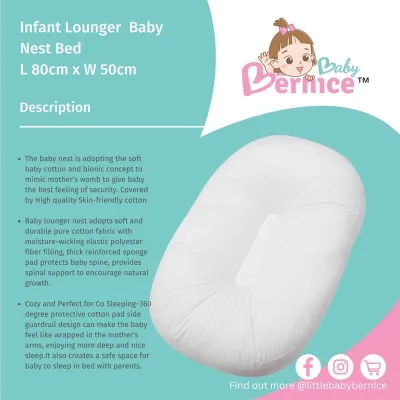
Next, evaluate the height, firmness, and breathability of the side bumpers. The bumpers should be low-profile and firm to the touch, rather than excessively puffy or soft. This firmness prevents the baby’s face from sinking into the material if they turn their head. To assess breathability, examine the fabric cover and the internal filling. High-quality nests utilize advanced 3D mesh fabrics or highly permeable cotton that allows air to pass through easily, reducing both suffocation and overheating risks.
Material safety extends beyond breathability to include chemical exposure and physical choking hazards. The fabrics and fillings used in the nest must be non-toxic and free from harmful flame retardants, heavy metals, and formaldehyde. Look for indicators of textile safety, which show that the fabric has been tested for harmful substances. Additionally, inspect the nest for any loose parts, decorative ribbons, long drawstrings, or detachable components.
Drawstrings and adjustment cords at the bottom of a baby nest pose a severe strangulation hazard. If a nest features a drawstring to adjust its size as the baby grows, the cord must be fully enclosed within a secure safety cover or pocket. There should be no exposed loops or dangling strings that could wrap around an infant’s neck, fingers, or toes. A safer design choice is a nest with a closed bottom or one that utilizes secure, flat buckles that are kept well out of the baby’s reach.
How to Verify Safety Certifications and Compliance Labels
When shopping for a baby nest, you should look for physical product labels and documentation that prove the item has undergone independent safety testing. Reputable manufacturers sew permanent tracking and warning labels directly into the seams of the nest. These labels should clearly state the manufacturer’s contact details, the batch or model number, the date of production, and explicit age and weight limits. Avoid products that only feature temporary paper tags or lack clear identification details.
Because baby nests are a relatively modern product category, they do not always have a single, dedicated safety standard in every country. Instead, high-quality brands test their products against established international standards for related infant nursery items. You should look for documentation showing compliance with standards such as the European standard EN 16890 (which specifies safety requirements and test methods for cot mattresses) or the British standard BS 4578 (which tests the breathability of infant pillows and sleep surfaces).
To ensure these claims are genuine, do not rely solely on marketing descriptions on retail websites. Reputable brands will readily provide copies of their independent laboratory test reports upon request. These reports should come from recognized testing bodies such as SGS, Intertek, or TÜV SÜD. Verify that the model number on the test report matches the model number on the product’s physical label, ensuring that the specific version you are buying was the one that underwent testing.
In Singapore, consumer goods are subject to safety requirements overseen by Enterprise Singapore under the Consumer Protection (Consumer Goods Safety Requirements) Regulations. While baby nests may not require a specific local registration mark like some electrical appliances do, they must still comply with general safety guidelines. Before purchasing, check official product documentation, verify retailer disclosures, and search local and international consumer safety databases to ensure the specific model has not been subject to safety alerts, bans, or voluntary manufacturer recalls.
Safe Usage Boundaries and Supervision Requirements
Even the most rigorously tested baby nest can become hazardous if used incorrectly. The absolute rule of baby nest safety is that the product requires direct, continuous adult supervision at all times. This means a caregiver must be in the same room, have a clear and unobstructed line of sight to the baby, and be fully awake. A baby nest should never be used while the parents are sleeping, distracted by chores in another room, or otherwise unable to respond instantly.
Placement of the baby nest is another critical safety factor. The nest must always be placed on a firm, flat, and stable floor surface. Never place a baby nest on elevated furniture, such as kitchen counters, dining tables, sofas, armchairs, or changing tables. An infant’s sudden movements can cause the nest to slide or tilt, leading to a dangerous fall. Furthermore, placing a nest on a soft sofa can cause the nest itself to tip sideways, trapping the baby against the sofa cushions.
Using a baby nest inside an adult bed—often referred to as co-sleeping—is highly discouraged by safety experts. Placing a nest on an adult mattress introduces numerous hazards, including the risk of adult bedding, heavy blankets, or pillows falling over the nest and suffocating the infant. There is also a risk that an adult could roll over onto the nest during sleep, or that the nest could become wedged between the bed and the wall, creating an entrapment hazard.
Keep the interior of the baby nest completely clear of any additional items. Do not place loose blankets, pillows, quilts, soft toys, or sleep positioners inside the nest with your baby. If your baby needs warmth, dress them in a lightweight, wearable sleep sack or a simple cotton onesie. In Singapore’s warm climate, ensure the room is well-ventilated with a gentle fan or air conditioning, but avoid placing the baby nest directly in the path of a harsh, cold draft.
Developmental Milestones and Signs It Is Time to Stop
Baby nests have a very limited functional lifespan, and parents must be prepared to transition their baby away from the product as they grow. Always check the manufacturer’s documentation for the maximum weight and length limits of the nest. Regularly weigh and measure your baby to ensure they remain within these safe parameters. If your baby’s head or feet touch the padded bumpers when they are stretched out, they have outgrown the nest and it is no longer safe to use.
In addition to physical measurements, you must monitor your baby’s developmental milestones. You must stop using the baby nest immediately once your baby shows any signs of rolling over, turning onto their side, pushing up on their hands and knees, or attempting to sit. Once an infant gains this level of mobility, they can easily roll their face directly into the padded side bumpers or accidentally roll themselves out of the nest entirely, leading to a high risk of suffocation or injury.
Regularly inspect the baby nest for physical wear and tear that could compromise its safety. Over time and through repeated washing, the internal foam or fiber filling can break down, clump, or lose its original firmness. Check the seams for loose threads, inspect the zippers to ensure they are secure and covered, and verify that the mattress pad remains completely flat and firm. If you notice any sagging, clumping, or structural degradation, discontinue use immediately.
Finally, stay informed about manufacturer safety updates and product recalls. Register your purchase with the manufacturer if that option is available, as this ensures you will be contacted directly in the event of a safety recall. If you hear of a recall affecting your specific model, stop using the product immediately and follow the manufacturer’s instructions for a refund, repair, or replacement. Never attempt to modify or repair a damaged baby nest yourself.
Frequently Asked Questions (FAQ)
Can a baby nest be used for overnight unsupervised sleep?
No, a baby nest should never be used for overnight or unsupervised sleep. Pediatric safe sleep guidelines state that infants must sleep on a flat, firm, separate surface free of any padded sides, pillows, or loose bedding. Because baby nests have raised, padded bumpers, they pose a significant risk of suffocation and positional asphyxiation if a baby rolls or if their head presses against the side. For unsupervised sleep, always place your baby in a certified cot, bassinet, or playpen.
Are second-hand baby nests safe to use?
Generally, second-hand baby nests are not recommended. Over time and through repeated use and washing, the internal padding and mattress base can lose their essential firmness and structural integrity, creating a softer surface that poses a higher suffocation risk. Additionally, second-hand items may lack original safety warning labels, instruction manuals, or tracking details, making it difficult to verify if the product has been recalled or if it meets current safety standards.
How do I clean a baby nest without compromising its safety features?
To clean a baby nest safely, you must strictly follow the manufacturer’s care label and washing instructions. Many high-quality nests feature removable, machine-washable outer covers. However, the inner mattress pad and padded bumpers often require gentle hand washing or air drying to prevent the filling from clumping, shifting, or losing its firmness. Never use harsh chemical detergents or fabric softeners, and ensure every component is completely dry before reassembling the nest to prevent mold and mildew growth.

Community discussion
Share your experience or ask a question. Comments are reviewed before publication.