
Choosing a pad to protect baby head is a decision that depends heavily on your child’s current developmental stage, mobility patterns, and how they fall. Crawlers who are learning to sit up and tend to fall straight backward benefit most from backpack-style pads, which cushion the back of the head. Walkers, who move faster and can fall in any direction (forward, sideways, or backward), require the all-around coverage of a protective cap or helmet style—or, more effectively, comprehensive environmental baby-proofing.
While these wearable safety accessories can offer peace of mind during temporary developmental transitions, they are not universal solutions. Understanding the structural differences, physical limitations, and safety boundaries of each style will help you determine which option—if any—is appropriate for your baby’s daily play sessions.
Comparing the Main Styles of Baby Head Pads
Wearable head protection for babies generally falls into two distinct categories, each designed to address different types of impact. Understanding how these designs function structurally is the first step in deciding which style matches your baby’s current movement patterns.
Products mentioned in this guide

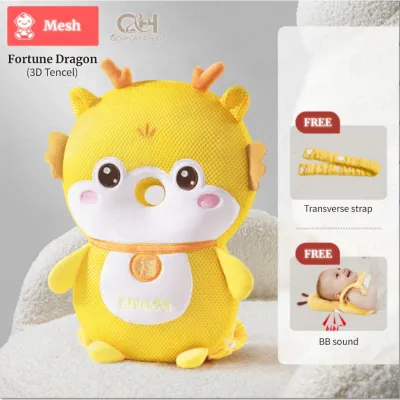
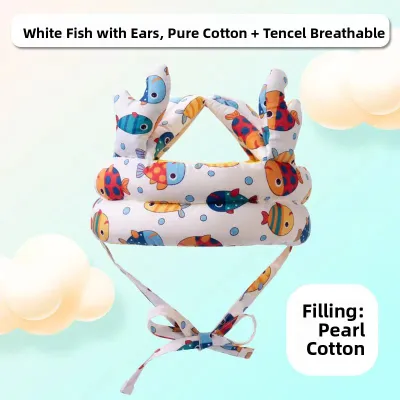
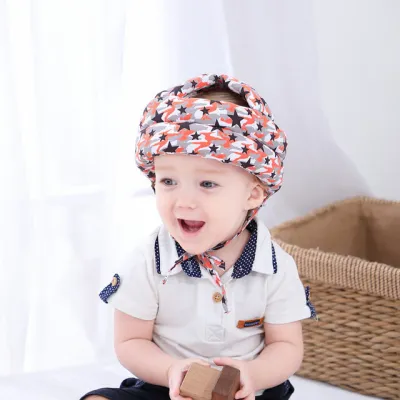
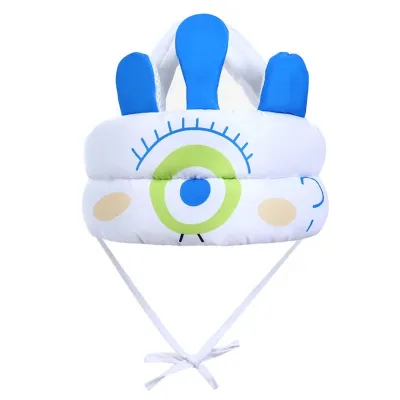
Prices are valid at publication and may change. Please refer to the product page for the latest price.
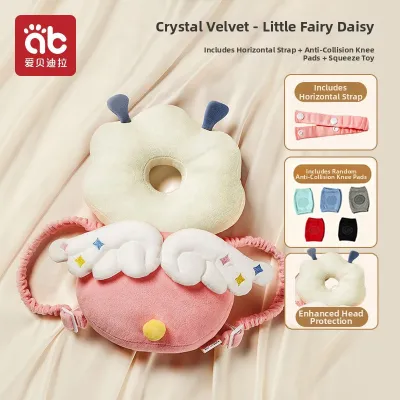
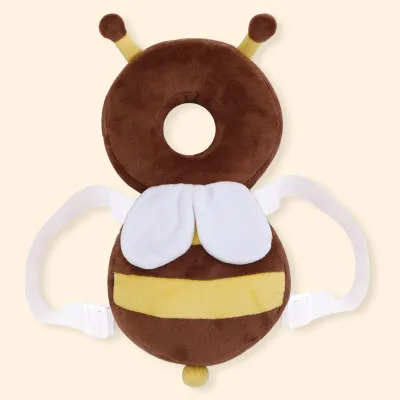
Backpack-style pads consist of a plush, cushiony ring or solid pad that rests against the back of the baby’s head and upper shoulders. This cushion is secured to the baby’s body using adjustable elastic shoulder straps, much like a standard backpack. Because the sides and front of the head remain completely uncovered, this style is highly targeted. It is designed solely to absorb the impact of backward falls onto flat surfaces, leaving the baby’s face, ears, and crown completely open to the air.
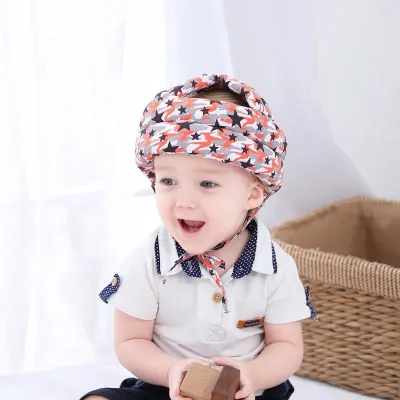
Cap or helmet-style pads, by contrast, provide 360-degree coverage around the circumference of the head. These are typically constructed from lightweight, shock-absorbing foam covered in soft fabric. They wrap around the forehead, temples, sides, and back of the head, securing under the chin with a soft strap or at the back with hook-and-loop fasteners. This design aims to protect the head from multi-directional impacts, such as bumping into furniture corners or falling sideways.
Environmental alternatives should always be considered alongside or instead of wearable gear. Thick play mats, interlocking EVA foam floor tiles, and soft fabric playpens pad the play space rather than the child. While wearable pads move with your baby, environmental padding does not restrict their physical movement, trap body heat, or interfere with their natural balance development.
Choosing the Right Pad for Crawling vs. Walking
As babies transition from crawling to sitting, and eventually to standing and walking, their center of gravity and fall patterns change dramatically. Matching the protective gear to these developmental phases is crucial for both safety and comfort.

During the crawling and early sitting stage, babies frequently lose their balance and fall directly backward. This is often referred to as a “timber” fall, where the baby’s core muscles fail to support them, and they tip straight onto their back. Because their hands are not yet trained to break a backward fall, the back of the head is highly vulnerable. A backpack-style pad is specifically designed for this phase, cushioning the exact impact zone while keeping the baby’s head free from the weight and heat of a full cap.
Once a baby enters the walking and toddling stage, their movement becomes much faster and more unpredictable. Walkers do not just fall backward; they trip forward over toys, slip sideways on smooth tiled or vinyl flooring, and bump into low tables. A backpack-style pad offers zero protection for these forward and lateral tumbles. If wearable protection is used during this stage, a cap-style protector is the more logical choice because it covers the forehead and temples. However, many toddlers resist wearing caps, as the headgear can block their peripheral vision and limit their spatial awareness.
Before introducing any wearable pad, use a simple observation checklist to monitor how your baby reacts to the gear. Watch closely to see if the pad restricts their natural head rotation, causes them to tilt their neck unnaturally, or alters their center of gravity. If the added weight of a backpack pad causes your baby to fall backward more frequently than they do without it, the product is counterproductive. Furthermore, babies must learn the natural reflex to tuck their chins and extend their arms when falling; over-relying on thick padding can delay the development of these essential motor skills.
Fit, Comfort, and Wearability Checks
If you decide to use a head protection pad, ensuring a proper fit and maintaining comfort is essential to prevent physical strain and skin irritation.
Always check the manufacturer’s labels and product documentation for specific age recommendations, head circumference ranges, and weight limits before purchasing. A pad that is too large will slip out of place, potentially covering the baby’s face or creating a tripping hazard. Conversely, a pad that is too small will pinch the skin, restrict blood flow, or cause localized discomfort that makes the baby fussy.
In warm and humid tropical climates, heat retention is a significant concern for active infants. A thick, non-breathable foam cap or a heavy plush backpack can quickly trap body heat, leading to sweating, discomfort, and painful heat rash. When evaluating materials, prioritize lightweight, highly ventilated options. Look for products made with 3D breathable mesh fabrics, open-weave cotton covers, and perforated foam cores that allow maximum airflow during active play.
Pay close attention to the weight of the product and how it affects your baby’s posture. An infant’s neck muscles are still developing and are not designed to support heavy accessories. If a cap or backpack is too heavy, you may notice your baby tilting their head forward, struggling to lift their chin, or showing signs of physical fatigue quickly. Ensure that elastic shoulder straps on backpack styles are adjusted to be snug but not tight enough to pinch the underarms or restrict breathing.
Safety Boundaries and Supervision Rules
No wearable safety accessory can replace a safe environment and active adult care. Establishing strict usage boundaries is vital to prevent accidents and avoid a false sense of security.
First and foremost, wearable head pads are never a substitute for active adult supervision or comprehensive home baby-proofing. Even with a pad or cap on, a baby can still sustain injuries from sharp furniture corners, hard vertical edges, or falling objects. You must still secure low tables with corner guards, block off stairs with safety gates, and keep a close eye on your baby as they explore.
There are several conditions under which a head pad must be removed immediately. If your baby shows any signs of distress, cries, or actively tries to pull the pad off, do not force them to wear it. Remove the pad immediately if you notice signs of overheating, such as red cheeks, damp hair, or a hot chest. Additionally, some babies quickly realize that the pad cushions their falls and will begin to intentionally throw themselves backward onto the floor as a game. If your baby exhibits this behavior, discontinue use of the pad immediately so they do not develop dangerous habits that could lead to severe injury when the pad is not worn.
Finally, know when to step back and consult a professional. Occasional bumps and tumbles are a normal, healthy part of learning to navigate the physical world. However, if your baby falls excessively, seems to have persistent balance issues, struggles to support their own head weight, or is not reaching motor milestones within typical timeframes, consult a pediatrician. Do not rely on protective gear to manage or mask underlying developmental or coordination concerns.
Frequently Asked Questions (FAQ)
How long should a baby wear a head protection pad each day?
Limit the use of a head protection pad to short, supervised active play sessions when your baby is actively practicing new skills on hard surfaces. Continuous, all-day wear should be avoided, as babies need time to move freely without extra weight to develop their neck muscles, core strength, and natural balance reflexes. Always refer to the specific manufacturer’s instructions for any recommended daily time limits.
Are baby head protection caps or backpacks safe for sleeping?
No, baby head protection caps, helmets, and backpack pads are absolutely unsafe for sleep. Never allow your baby to wear these products while napping, sleeping, or when left unattended. The straps, plush cushions, and bands present severe risks of suffocation, strangulation, and overheating. The sleep environment must always remain completely clear of loose items, pillows, and wearable toys.

Community discussion
Share your experience or ask a question. Comments are reviewed before publication.