
To ensure your baby crib is safe in Singapore, you must verify that it complies with recognized international safety standards such as European (EN 716), American (ASTM F1169), or Australian/New Zealand (AS/NZS 2172) benchmarks. Because Singapore’s regulatory framework classifies nursery furniture as general consumer goods rather than controlled items, cribs do not carry a local “Safety Mark.” Instead, parents must actively inspect the manufacturer’s documentation, verify physical dimensions like slat spacing, and ensure the crib is assembled to withstand the local humid climate.
By taking a proactive approach to safety verification, you can protect your infant from common nursery hazards such as entrapment, falls, and structural failures. Understanding how local regulations interact with global standards is the first step in making an informed and secure purchase for your nursery.
Navigating Singapore's Product Safety Regulations for Nursery Furniture
In Singapore, the Consumer Product Safety Office (CPSO), which is safeguarded under Enterprise Singapore, is the key authority overseeing the safety of consumer goods. While the CPSO enforces strict regulations across various product categories, it is important to understand how nursery furniture is classified. Unlike household electrical appliances or gas hobs, which are classified as “Controlled Goods” and must display the distinctive blue Safety Mark, baby cribs fall under the category of “General Consumer Goods.”
Products mentioned in this guide
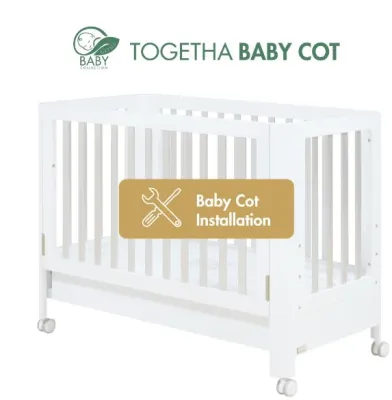
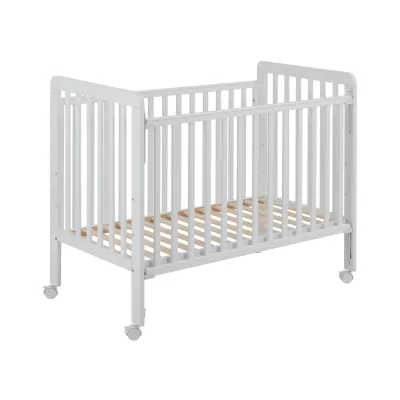
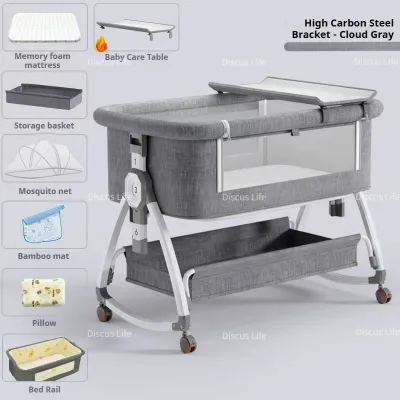
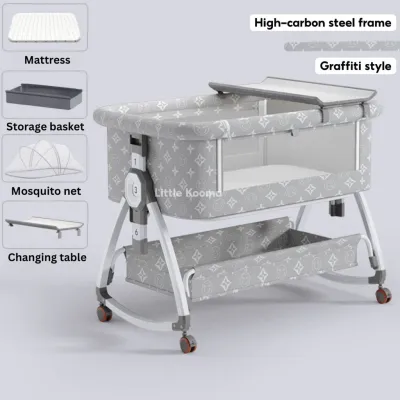
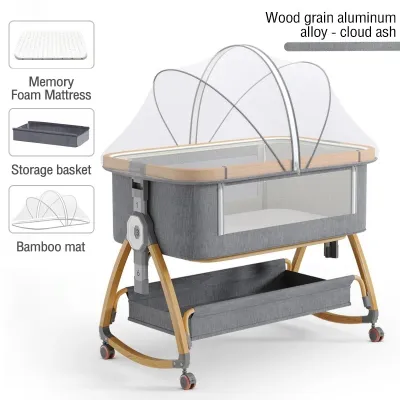
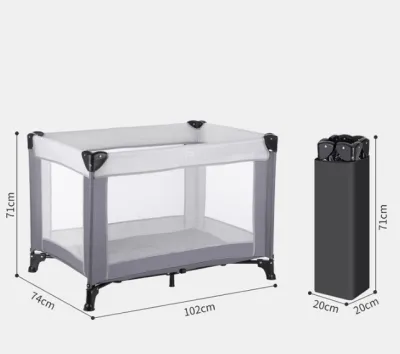
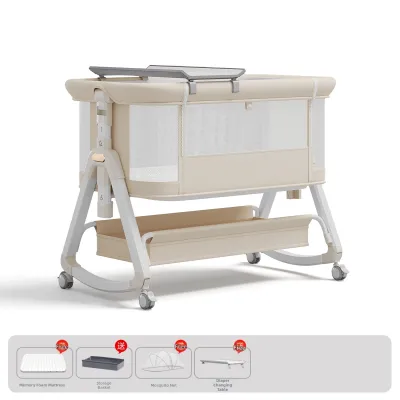
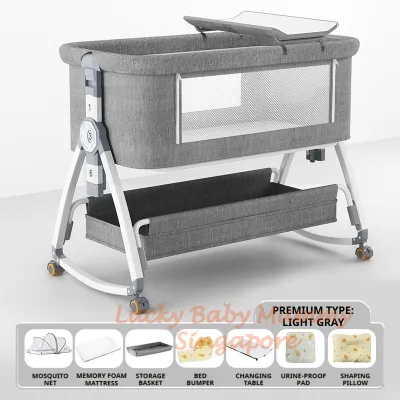
Prices are valid at publication and may change. Please refer to the product page for the latest price.
General consumer goods are regulated under the Consumer Protection (Consumer Goods Safety Requirements) Regulations (CGSR). Under this framework, there is no mandatory pre-market registration or local safety sticker required for baby cribs. Instead, the regulations stipulate that all general consumer goods sold in Singapore must conform to safety standards set by key international standardization bodies. The CPSO monitors the market, conducts spot checks, and has the authority to issue stop-sale orders or recall notices for any nursery furniture found to be unsafe or non-compliant.
To navigate these regulations effectively, parents can access official government portals managed by Enterprise Singapore and the CPSO. These platforms regularly publish safety brochures, consumer advisories, and product recall lists. Checking these resources before purchasing allows you to stay informed about recently flagged hazards, design flaws, or specific brands that have faced regulatory action in the local market.
Which International Safety Certifications Indicate a Secure Baby Crib
Because Singapore’s regulatory framework references global benchmarks, looking for specific international safety certifications is the most reliable way to verify a crib’s structural integrity. The European standard EN 716 (specifically EN 716-1 and EN 716-2) is widely regarded as one of the most stringent frameworks for children’s cots and folding cots. This standard evaluates everything from the strength of the frame to the distance between individual components, ensuring the design minimizes the risk of accidental injury.

Another highly respected benchmark is the American standard ASTM F1169, established by the American Society for Testing and Materials. This standard mandates rigorous testing protocols for full-size baby cribs, focusing heavily on mattress support performance, side-rail strength, and the durability of all fastening hardware. Similarly, the Australian and New Zealand standard AS/NZS 2172 sets exceptionally high bars for structural stability and safety clearances, reflecting a comprehensive approach to preventing infant accidents.
These international certifications evaluate critical design elements that are impossible to assess with a simple visual check. Testing protocols include mechanical stress tests to ensure the mattress support does not collapse under pressure, impact tests on the slats, and chemical analysis of the paints, varnishes, and plastics used. Certified cribs must use non-toxic, lead-free finishes to ensure that a teething baby who chews on the crib rails is not exposed to harmful chemical substances.
However, parents must remain cautious and verify these labels rather than relying solely on brand reputation or marketing claims. Some low-quality products sold online may carry unauthorized or self-declared compliance marks. Always ask the retailer or manufacturer for the official test report or certificate of compliance, which should clearly match the specific model number of the crib you intend to purchase.
Physical Safety Checks You Can Perform Before Purchasing
Even when a crib claims compliance with international standards, performing your own physical inspection is a vital safeguard. Begin by measuring the spacing between the crib slats. The gap between any two slats must be between 50 mm and 60 mm. If the slats are too far apart, a baby’s body can slip through, leading to dangerous head entrapment; if they are too close together, limbs can easily become wedged.
Next, evaluate the mattress fit within the crib frame. A safe crib mattress must fit snugly against all four sides of the crib. To test this, insert your fingers into the gap between the mattress and the crib frame. If you can easily fit more than two fingers (approximately 3 cm) into this space, the mattress is too small for the crib. This gap poses a severe risk of suffocation or entrapment if the baby rolls into the crevice.
Examine the crib for any protruding hardware or sharp edges. Corner posts should be virtually flush with the end panels, rising no more than 1.5 mm above the top rail. Any post higher than this can catch on a baby’s clothing, sleep sack, or pacifier ribbon, presenting a serious strangulation hazard. Additionally, ensure there are no decorative cutouts in the headboard or footboard where a baby’s head or limbs could become caught.
If you are considering a crib with a drop-side mechanism, exercise extreme caution. Due to numerous safety failures and entrapment hazards, drop-side cribs have been heavily restricted or banned in several international jurisdictions. If you choose a model with a drop-side, ensure the locking mechanism is robust, made of high-quality metal rather than plastic, and cannot be easily disengaged by a child. Opting for a fixed-side crib is generally the more secure choice to eliminate these mechanical risks entirely.
Finally, assess the overall structural stability of the assembled unit. Give the crib a firm shake; it should feel solid and rigid. Any wobbling, squeaking, or loose joints indicate poor construction or worn hardware. In Singapore’s highly humid climate, wooden components can swell or contract over time, which can loosen screws and weaken joints. Regularly checking and tightening all hardware is essential to maintaining structural integrity.
Verifying Manufacturer Claims and Checking for Safety Recalls
Legitimate baby cribs feature permanent warning labels and identification tags affixed directly to the frame, typically on the inside of the headboard or under the mattress support. These labels should clearly state the manufacturer’s name, model number, date of manufacture, and the specific safety standards the product meets. If a crib lacks these permanent markings, or if they appear altered or easily removable, treat this as a major warning sign.
Before finalizing your purchase, cross-reference the crib’s model number and manufacturing date with international and local recall databases. Because many nursery products sold in Singapore are imported, checking the US Consumer Product Safety Commission (CPSC) database, the Australian Product Safety Recalls portal, and the OECD GlobalRecalls portal is highly effective. A quick search can reveal if the specific model has been recalled due to structural failures, toxic materials, or design hazards.
When shopping on online marketplaces or from unauthorized third-party resellers, be particularly vigilant. These platforms often host unbranded or generic cribs that bypass standard import checks. Red flags include listings that lack clear brand identification, products that do not come with a comprehensive instruction manual in English, or sellers who cannot provide verifiable safety documentation. Purchasing from established, reputable retailers ensures you receive authentic products backed by genuine manufacturer warranties and safety compliance.
Setting Up a Safe Sleep Environment Within the Crib
Buying a certified crib is only the first step; maintaining a safe sleep environment inside the crib is equally critical. Always use the exact mattress size and type specified by the crib manufacturer. The mattress must be firm and flat; soft mattresses, memory foam toppers, or waterbeds are unsafe for infants as they can conform to a baby’s face and obstruct breathing.
Keep the interior of the crib completely bare. Established safe sleep guidelines emphasize that pillows, thick blankets, quilts, sheepskins, stuffed toys, and bumper pads should never be placed in a baby’s sleeping area. While bumper pads are often marketed as a way to protect babies from bumping their heads, they pose significant suffocation and entrapment risks and can also be used as a step by older babies to climb out of the crib.
As your baby grows, you must adjust the crib settings to match their developmental milestones. Most cribs offer adjustable mattress heights. The highest setting is designed for newborns who cannot yet sit up, making it easier for parents to lift them. However, as soon as your baby shows signs of rolling over or sitting up, you must lower the mattress base to the lowest setting to prevent falls. Once your child begins to pull themselves up to a standing position, or when they reach a height of approximately 89 cm, they should be transitioned out of the crib and into a toddler bed to eliminate the risk of climbing over the rails.
Frequently Asked Questions (FAQ)
Are second-hand or vintage baby cribs safe to use in Singapore?
Using second-hand or vintage baby cribs is generally not recommended due to several hidden safety risks. Older cribs were often manufactured before modern safety standards were established, meaning they may feature hazardous drop-side designs, unsafe decorative cutouts, or wider slat spacing that exceeds the safe 60 mm limit. Furthermore, older wooden furniture may have been painted with lead-based finishes, which pose severe toxic hazards to teething infants. Over time, wooden joints can warp in Singapore’s humid climate, and plastic hardware can become brittle and prone to cracking. If you must use a second-hand crib, ensure you have the original instruction manual, verify that all original hardware is present and undamaged, and confirm that the model has never been subject to a safety recall.
Do portable or travel cribs need to meet the same safety standards as full-size cribs?
Portable or travel cribs must meet safety standards specifically designed for their unique folding structures, such as EN 716-1 or ASTM F406, rather than the standards applied to standard wooden cribs. These specialized frameworks evaluate folding mechanisms to ensure they lock securely and cannot collapse accidentally while a child is inside. They also test mesh sides for breathability and strength to prevent suffocation and tearing. Because travel cribs rely on flexible fabric sides and lightweight frames, they require different safety precautions. You must never add an aftermarket mattress, extra padding, or folded blankets to a travel crib, as the flexible sides can allow a baby to become wedged between the mattress and the fabric, creating a severe suffocation hazard.

Community discussion
Share your experience or ask a question. Comments are reviewed before publication.