
A 360-degree rotating baby car seat features a specialized swivel mechanism that allows the seat shell to turn smoothly on its base. This design lets you rotate the seat toward the open car door, making it significantly easier to secure your child without twisting your body. Once your child is buckled in, the seat rotates back and locks securely into either a rear-facing or forward-facing position for travel.
How the 360-Degree Rotation Mechanism Works
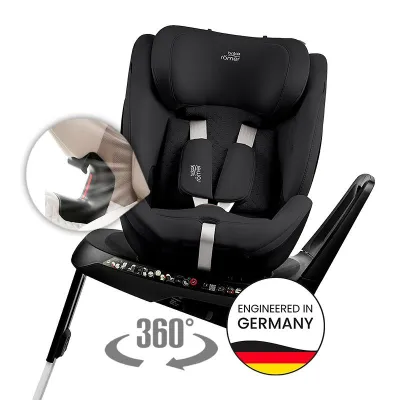
The core of a rotating car seat is the structural separation between the base and the seat shell. The base remains semi-permanently installed in your vehicle, typically secured via ISOFIX anchor points or the vehicle’s seatbelt system. The seat shell sits on top of this base, connected by a heavy-duty rotating joint that allows a full or partial circle of movement.
To ensure safety during travel, the rotation mechanism relies on robust locking pins that engage when the seat is turned into an approved riding position. Most models feature visual indicators—such as color-coded tabs that turn from red to green—or distinct audible clicks to confirm the seat is locked. These safety features prevent the seat from spinning freely while the vehicle is in motion.
Products mentioned in this guide




Prices are valid at publication and may change. Please refer to the product page for the latest price.
Because designs vary across brands, you must consult your specific manufacturer’s manual to understand the exact release and locking sequence. Some seats require pressing a single button on the side, while others use a pull-lever located at the front of the base. Familiarizing yourself with these controls ensures smooth operation and prevents damage to the mechanism.
Practical Benefits for Daily Loading and Unloading
The primary advantage of a swivel car seat is the ability to turn the seat 90 degrees to face the open vehicle door. This side-facing position is incredibly helpful when navigating tight parking spaces or compact car cabins, where maneuvering room is limited. Instead of squeezing into the car to buckle your child, you can stand comfortably outside the vehicle.

This ergonomic positioning greatly reduces physical strain on your back, shoulders, and neck. Caregivers often struggle with lifting a growing baby or toddler at an awkward angle, which can lead to repetitive strain injuries over time. A rotating seat allows for a straight, front-facing lift that keeps the child’s weight close to your body.
Additionally, having the seat face you directly improves your visibility and physical access to the harness system. You can easily adjust the chest clip, secure the buckle, and tighten the crotch straps without guessing or reaching blindly. This direct line of sight helps ensure the harness is snug and correctly positioned every single time.
Limitations, Trade-offs, and Safety Boundaries
While highly convenient, rotating car seats come with specific trade-offs, most notably their added weight and bulk. The integrated swivel mechanism and heavy-duty base make these seats significantly heavier than standard fixed models. This extra weight makes them less ideal if you frequently need to transfer the seat between different vehicles.
You must also strictly adhere to the manufacturer’s labeled height, weight, and age limits for transitioning between rear-facing and forward-facing modes. The rotation feature makes it tempting to turn a child forward-facing too early for convenience. However, safety standards and medical guidelines emphasize keeping children rear-facing for as long as possible within the seat’s limits.
Finally, the safety of a rotating seat depends entirely on it being fully locked into a travel position before the vehicle moves. Never drive with the seat in a side-facing position, as it is not designed to protect a child from impact in that orientation. Always perform a physical shake test and check the visual indicators to confirm the lock is engaged before starting your journey.
How to Decide If a 360-Rotation Seat Fits Your Needs
Before purchasing, measure your vehicle’s door clearance and cabin width carefully. Because the seat shell extends outward as it swivels, it requires a certain amount of clearance to rotate smoothly. In smaller cars, the seat might bump against the door frame or the front vehicle seat, which can limit or completely block the rotation feature.
Consider the physical needs of the primary caregivers and how often the seat will be used. If you make multiple short trips a day, or if grandparents with limited mobility frequently assist with childcare, the physical relief of a swivel seat can be well worth the investment.
Lastly, evaluate your budget against standard fixed car seats. Rotating models generally carry a premium price tag in S$ compared to traditional seats with similar safety specifications. If your budget is tight or if the seat will remain in a secondary vehicle that is rarely used, a standard fixed seat may offer a more practical financial balance.
Frequently Asked Questions (FAQ)
Can a 360-degree car seat be used in the front passenger seat?
Installing a child car seat in the front passenger seat is generally not recommended due to safety risks. If you must use a rotating seat in the front passenger position, you must completely deactivate the front passenger airbag if the seat is in a rear-facing mode. Always check local traffic regulations in Singapore and your vehicle owner’s manual, as some vehicle manufacturers strictly prohibit child restraints in the front seat.
Does the swivel mechanism affect the car seat's safety performance in a crash?
When properly locked into its approved travel position, a rotating car seat is designed to perform safely in a crash. These seats must meet the same rigorous safety standards as standard fixed seats to be sold. To ensure maximum protection, always verify that the locking mechanism is fully engaged and check the manufacturer’s documentation to confirm the seat has passed all required crash testing for your region.

Community discussion
Share your experience or ask a question. Comments are reviewed before publication.