
Determining whether Paw Patrol utensils are safe for your baby depends entirely on the specific product’s age rating, materials, and design. While character-themed tableware is highly popular, many of these items are engineered for older toddlers rather than infants who are just beginning their weaning journey. To ensure your child’s safety, you must carefully evaluate the manufacturer’s guidelines, material composition, and structural design before introducing any new utensil to the high chair.
If you have any doubts about your child’s feeding progress or physical readiness for solids, consult a pediatrician or a qualified pediatric feeding specialist for professional advice.
Understanding the Difference: Babies vs. Toddlers
Infants beginning their weaning journey, typically around six months of age, have very different developmental needs compared to toddlers over the age of two. At the start of solid feeding, a baby’s oral motor skills are still developing, and their grasp is primarily a palmar grasp, where they wrap their entire hand around an object. Their gums are highly sensitive, and they are still learning how to coordinate swallowing, chewing, and moving food around their mouths.
Products mentioned in this guide
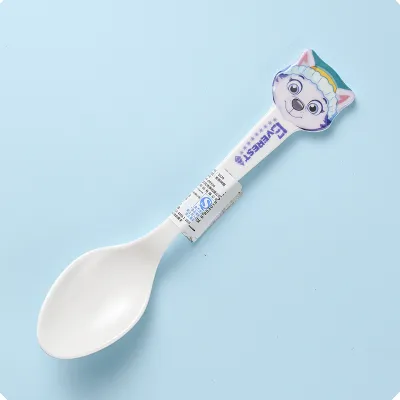
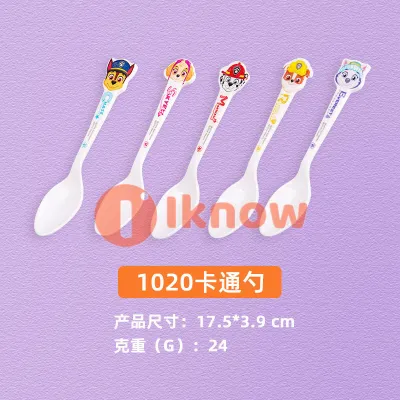
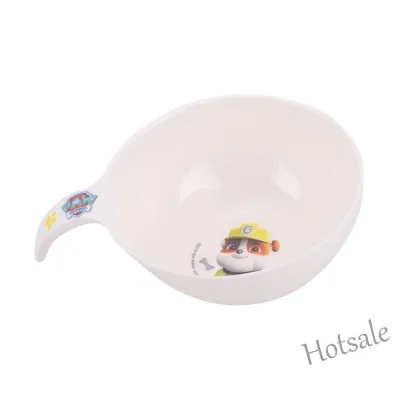
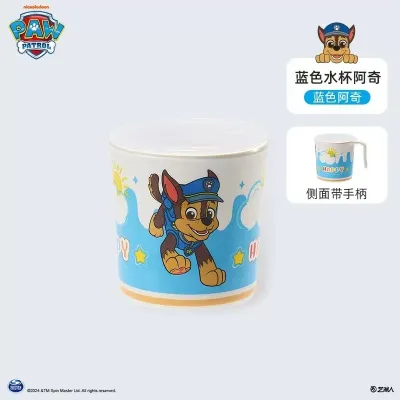
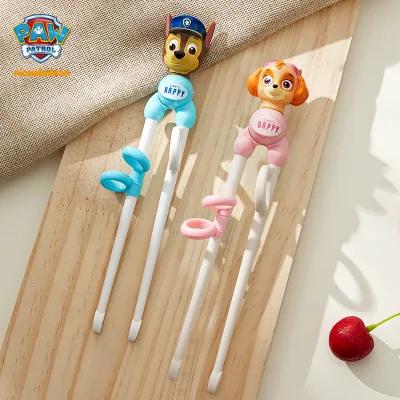
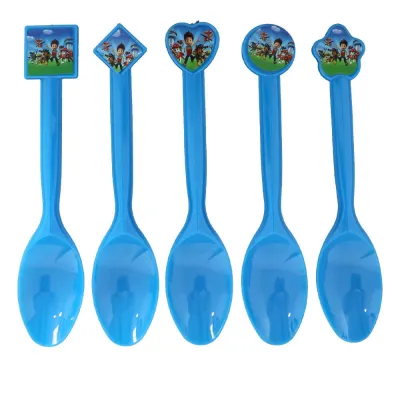
Prices are valid at publication and may change. Please refer to the product page for the latest price.
In contrast, older toddlers have refined their fine motor skills, allowing them to use a pincer grasp or a more controlled finger grip. They also have more teeth and a stronger bite, which changes how they interact with utensils. Toddlers can handle firmer materials and more complex utensil shapes without the same level of risk that a younger infant might face.
Licensed character merchandise, such as Paw Patrol utensils, is frequently designed and marketed for these older toddlers and preschool-aged children. Because these products are highly appealing to young kids, parents might assume they are suitable for any child starting solids. However, the structural design, weight, and materials of these items are often tailored to children who already possess advanced chewing and grasping abilities.
Before purchasing or using any character-themed feeding tools, you must locate and strictly verify the manufacturer’s minimum age recommendation printed on the packaging. If a set of spoons is labeled for ages 12 months or 3 years and older, it should not be used for an infant who is just starting weaning at six months. Always prioritize these developmental guidelines over the visual appeal of the characters.
Material Safety: What to Look for on the Label
When selecting feeding tools for your baby, verifying the chemical composition of the materials is a critical safety step. You should look for explicit markings on the product packaging indicating that the utensils are made from food-grade materials. Food-grade silicone, high-quality stainless steel, and certain BPA-free plastics are common choices that are designed to withstand contact with food without leaching substances.

Carefully inspect the packaging for clear claims such as BPA-free, PVC-free, and phthalate-free. Bisphenol A (BPA), polyvinyl chloride (PVC), and phthalates are chemical compounds that parents often seek to avoid in infant feeding products due to concerns about chemical migration. To ensure these claims are accurate, cross-reference the packaging details with the manufacturer’s official website or product specifications sheet.
Be particularly cautious of unbranded or generic character merchandise found on online marketplaces or informal retail channels. Authentic, licensed Paw Patrol utensils from reputable manufacturers will feature clear, traceable origin information, manufacturer contact details, and specific material listings. If a product lacks clear labeling, has no traceable brand information, or does not explicitly state its material composition, it is best to avoid using it for infant feeding.
Additionally, check if the packaging references compliance with recognized international food contact standards, such as those established by the European Union or the United States Food and Drug Administration. While you do not need to be a regulatory expert, the presence of these standard markings provides a verifiable point of reference that the manufacturer has subjected the materials to safety evaluations.
Choking Hazards and Structural Integrity
A physical inspection of any utensil is essential before it enters your baby’s mouth, especially since infants tend to chew on their spoons to soothe teething gums. Examine the utensil closely for any detachable parts or decorative elements. Some character-themed utensils feature 3D figurines or decorative toppers glued or snapped onto the end of the handle, which can become detached under pressure and present a severe choking hazard.
Run your fingers along the edges and tips of the spoons and forks to check for manufacturing defects. The surfaces should be completely smooth, rounded, and free from sharp molding seams or rough plastic edges that could scratch your baby’s delicate gums, lips, or tongue. Infant forks should have soft, rounded tines rather than sharp, rigid prongs.
Establish a strict household rule to inspect these utensils before every single meal. If you notice any signs of wear, such as cracks in the plastic, loose decorative parts, or deep teeth marks that have compromised the structural integrity, immediately discard the item or repurpose it away from feeding. A compromised utensil can easily break during use, leading to accidental ingestion of small plastic fragments.
Age-Appropriate Design and Usability
The physical dimensions of a utensil play a significant role in how safely and comfortably a baby can feed. During the early stages of weaning, infants require utensils with short, thick, and textured handles that fit easily into their small palms. These chunkier handles support their natural palmar grasp, allowing them to guide the spoon toward their mouth with better control and less risk of poking themselves too deeply.
The design of the spoon’s bowl is another critical factor to evaluate. For babies who are just learning to self-feed, shallow spoon bowls are highly recommended because they allow the infant to easily clear the food with their upper lip. Deeper spoon bowls, which are common in toddler utensil sets, can hold too much food at once, increasing the risk of gagging or making it difficult for the baby to remove the food successfully.
Many character-themed utensils feature elaborate handle shapes designed to look like characters or vehicles, which can make them top-heavy or awkwardly balanced. If a utensil is too heavy or poorly balanced, your baby may struggle to control it, leading to frustration and accidental drops. Opt for streamlined, lightweight designs that prioritize ergonomic functionality over decorative complexity during the initial months of solid feeding.
If you have persistent concerns about your baby’s ability to swallow, hold utensils, or transition to solids, consult a pediatrician or a pediatric feeding specialist for personalized guidance.
Safe Usage and Maintenance Boundaries
Proper maintenance and cleaning are vital to keeping your baby’s utensils hygienic and structurally sound over time. Always consult the manufacturer’s instructions regarding temperature limits for washing and sanitizing. Some plastics used in character-themed utensils are not designed to withstand the high temperatures of steam sterilizers, boiling water, or the heated dry cycle of a dishwasher, which can cause the material to warp or degrade.
Incorporate a regular visual inspection into your dishwashing routine to look for deep scratches, scuffs, or bite marks. Over time, deep grooves in plastic or silicone can harbor harmful bacteria that are difficult to clean out, even with thorough washing. If you observe any deep scratches or areas where the material feels rough or splintered, it is time to replace the utensil.
There are clear boundaries that indicate a utensil must be retired immediately. If the printed Paw Patrol design begins to peel, fade, or flake off, stop using the product immediately to prevent your baby from ingesting paint particles or microplastics. Similarly, if you notice any warping of the plastic, tearing of silicone components, or discoloration that does not wash away, replace the item to ensure your baby’s feeding environment remains safe.
Frequently Asked Questions (FAQ)
Can I sterilize Paw Patrol utensils in boiling water?
Whether you can sterilize these utensils in boiling water depends entirely on the specific materials used and the manufacturer’s official guidelines. Many plastic character utensils are made from materials that warp, melt, or release chemicals when exposed to extreme heat. Always check the product packaging or the manufacturer’s website for explicit instructions regarding sterilization, and avoid boiling any utensil unless it is explicitly labeled as boil-safe.
What should I do if the printed character design starts peeling?
If you notice the printed character design on a utensil starting to peel, flake, or wear away, you should stop using the utensil for feeding immediately. Peeling print poses a risk of your baby ingesting small paint chips, ink, or microplastics during mealtime. Do not attempt to scrub the remaining print off or seal it; instead, discard the utensil or transition it to a non-feeding play activity under close supervision.

Community discussion
Share your experience or ask a question. Comments are reviewed before publication.