
For parents navigating the bustling streets of Singapore, balancing child safety with the convenience of public transport, taxis, and private hire vehicles is a daily challenge. The inflatable car booster seat has emerged as a highly appealing solution for families on the go, promising a lightweight, packable alternative to bulky plastic booster seats. However, before relying on an air-filled cushion to protect your child in transit, it is essential to understand the legal requirements and safety realities of using these devices on Singapore roads.
In short, inflatable car booster seats are legal and safe to use in Singapore, but only under strict conditions. The seat must carry a recognized international safety certification approved by local authorities, it must be appropriate for your child’s current height and weight, and it must be installed and maintained correctly. Because these seats rely on pressurized air rather than a rigid frame, parents must be diligent in verifying their authenticity and monitoring their physical condition over time.
Understanding Singapore's Child Restraint Regulations
Singapore’s Road Traffic Act mandates strict safety measures for young passengers. By law, any passenger under the height of 1.35 metres must be properly secured using an approved child restraint, a booster seat, or an adjustable seatbelt appropriate for their height and weight. Failing to comply with these regulations can result in composition fines and demerit points for the driver, or court fines of up to S$1,000 for first-time convictions.
Products mentioned in this guide
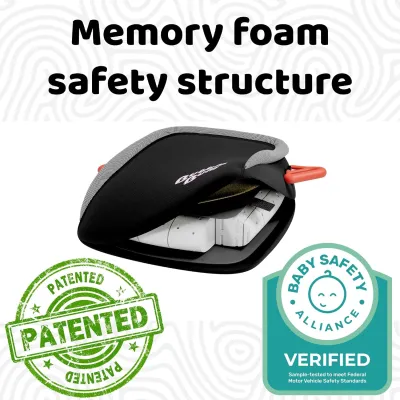
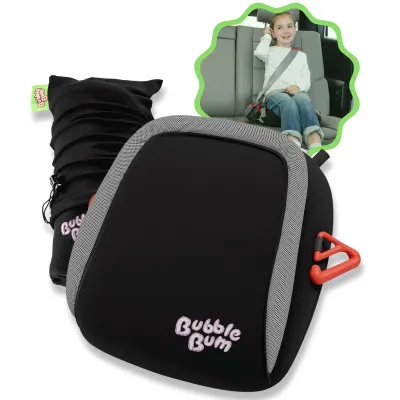
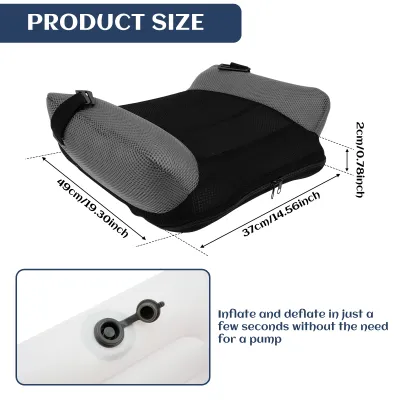
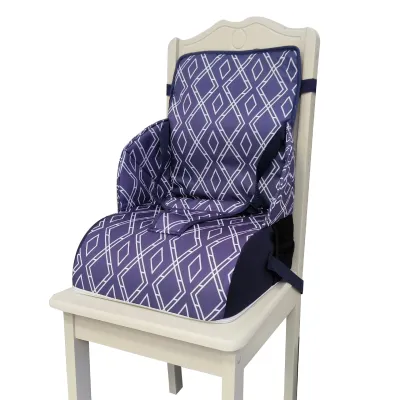
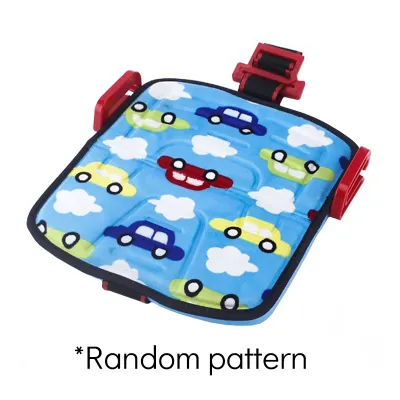
Prices are valid at publication and may change. Please refer to the product page for the latest price.
While traditional taxis are technically exempt from this law due to their public service vehicle status, private hire vehicles—such as those booked through ride-hailing apps—are not exempt. If you are traveling with a child under 1.35 metres in a private hire car, you are legally required to provide an appropriate restraint. This regulatory distinction is a primary reason why many parents in Singapore seek out portable options like inflatable booster seats, which can easily fit into a backpack or diaper bag when not in use.
To ensure an inflatable booster seat is legally compliant on Singapore roads, it must meet recognized international safety standards. The Land Transport Authority (LTA) and the Traffic Police recognize specific certification frameworks, such as the European standards (UN ECE R44/04 or R129) and the American standard (FMVSS 213). It is critical to distinguish between legally approved, crash-tested booster seats and simple travel comfort cushions. A comfort cushion merely raises a child but has not undergone dynamic crash testing; using an uncertified cushion as a safety restraint is illegal and highly dangerous.
Evaluating the Safety and Structural Limits of Inflatable Boosters
While certified inflatable booster seats meet the same baseline crash-test standards as their rigid counterparts, they possess unique physical characteristics that parents must evaluate. The most obvious difference is the structural material. Instead of a solid plastic or metal frame, these seats rely on heavy-duty fabrics, reinforced seams, and air pressure to support the child and position the vehicle’s seatbelt.

This reliance on air introduces specific vulnerabilities, particularly in Singapore’s hot and humid tropical climate. Cars parked in the sun can reach extreme internal temperatures, which can cause the air inside an inflated booster to expand, putting additional stress on the seams and valves. Over time, exposure to intense heat and friction can degrade the materials, leading to slow leaks or sudden valve failure. Furthermore, sharp objects commonly carried by children—such as toys, keys, or even sharp clothing fasteners—pose a continuous puncture risk.
In terms of crash dynamics, inflatable booster seats are designed primarily as belt-positioning devices. They raise the child so that the vehicle’s adult seatbelt fits safely across the strongest parts of their skeletal frame. However, they generally lack the rigid side-impact protection wings and energy-absorbing foam found on high-backed booster seats. In a side-impact collision, an inflatable seat offers minimal lateral containment. To mitigate these risks, caregivers must strictly adhere to the manufacturer’s weight and height limits; using the seat for a child who is too small can cause the seatbelt to ride up onto the soft abdomen, leading to severe internal injuries during sudden braking.
How to Verify Safety Certifications Before Purchasing
Given the rise of online shopping, parents must be highly vigilant when purchasing an inflatable car booster seat from online marketplaces or ecommerce platforms. Counterfeit products or uncertified seats with misleading safety claims are common. Before buying, you must perform a thorough verification of the product’s safety credentials.
First, look for physical, permanent certification labels on the product itself. Legitimate, approved booster seats will have a non-transferable label stitched into the fabric cover or molded directly into the base. For European-certified seats, look for the “E” mark (a circle containing the letter ‘E’ followed by a number, alongside the standard code ECE R44/04 or R129). For American-certified seats, the packaging and product labels must explicitly state compliance with FMVSS 213.
Be wary of online listings that use vague language such as “safety tested,” “approved for travel,” or “meets global standards” without specifying the exact certification body or standard number. If a seller cannot provide clear, high-resolution photos of the physical certification labels on the product, or if the price seems too low to account for rigorous safety testing, treat it as a red flag. Always purchase from reputable retailers or official brand stores, and cross-reference the model number on the manufacturer’s official website to confirm its certification status.
Safe Usage Boundaries and When to Retire the Seat
An inflatable booster seat can only protect your child if it is used correctly on every single journey. Because these seats do not feature an internal five-point harness, they rely entirely on the vehicle’s three-point lap-and-shoulder seatbelt. When installing the seat, ensure the lap belt is routed low across your child’s pelvis and hips—never across their stomach. The shoulder belt must cross the center of their chest and shoulder, staying clear of their neck and face.
Caregivers must establish a routine of pre-trip checks before placing a child in the seat. Always verify the inflation level; an under-inflated seat will sag, failing to raise the child to the correct height for proper seatbelt alignment, while an over-inflated seat is highly vulnerable to seam failure under the heat of a Singapore afternoon. Press firmly on the seat to check for firmness, and ensure the inflation valve is pushed in flush and securely sealed.
Knowing when to retire an inflatable booster seat is vital for maintaining child safety. You must discontinue use and replace the seat immediately if you detect a slow leak that requires frequent reinflation, if there are visible tears or fraying on the outer fabric, or if the valve mechanism shows signs of cracking or loose fit. Additionally, monitor your child’s growth closely; once they exceed the maximum weight or height limits specified by the manufacturer, they must transition to a different restraint system. Never attempt to patch a punctured booster seat with DIY repair kits, as the structural integrity of the seat during a high-force collision cannot be guaranteed after a puncture.
Frequently Asked Questions (FAQ)
Can I use an inflatable booster seat for a toddler or infant?
No, inflatable booster seats are not suitable for infants or toddlers. These seats are belt-positioning boosters designed exclusively for older children who have outgrown their forward-facing harnessed seats. Infants and toddlers do not have the skeletal development or bone density to withstand the concentrated force of an adult seatbelt. They require a dedicated car seat with a built-in five-point harness—ideally rear-facing for as long as possible—to distribute crash forces safely across their shoulders, chest, and pelvis. Only transition your child to an inflatable booster seat once they meet the manufacturer’s minimum weight and height thresholds, and when they are developmentally mature enough to sit upright properly for the entire journey without slouching or playing with the seatbelt.
Are inflatable booster seats approved for use on airplanes?
Generally, inflatable booster seats are not approved for use during a flight. Aviation authorities, including the Civil Aviation Authority of Singapore (CAAS) and the US Federal Aviation Administration (FAA), do not permit the use of booster seats during takeoff, landing, or turbulence. This is because aircraft seats are equipped only with lap belts, whereas booster seats require a three-point lap-and-shoulder belt to function safely; using a booster with a lap-only belt can increase the risk of injury in an aircraft. However, because they are highly compact when deflated, inflatable boosters are excellent travel companions. You can easily pack them in your carry-on luggage and inflate them immediately upon arrival for use in taxis, ride-hailing vehicles, or rental cars at your destination. Always check your specific airline’s cabin baggage guidelines before traveling.

Community discussion
Share your experience or ask a question. Comments are reviewed before publication.