
Securing your home for a curious toddler is a milestone that requires careful planning, especially when it comes to kitchen and bathroom cabinets. In Singapore, where modern built-in cabinetry, handle-less designs, and high-humidity environments are common, finding the right childproofing solution is not about picking a single brand. Instead, it is about understanding how different locking mechanisms interact with your specific home setup, furniture materials, and your child’s developmental stage.
By evaluating cabinet child locks based on their mechanical design, adhesive durability, and ease of daily use, you can create a secure environment without damaging your home’s interior. This guide provides a practical framework to help you assess the options available in Singapore, matching the right lock types to your household needs.
Understanding Common Cabinet Child Lock Mechanisms
To make an informed decision, you must first understand the primary categories of cabinet locks available on the market. Each mechanism offers distinct advantages depending on where and how it is installed.
Products mentioned in this guide
![[Ship in 24 Hours] Baby Safety Lock Cupboard Lock Cabinet Locks Wardrobe Drawer Fridge Lock Child Safe Lock Kid Safety Door Latches Children Day Gifts](https://img.lazcdn.com/g/p/e09ea02a4ce08945db1e68c840159c92.jpg_400x400q80.jpg_.webp)
![[SG Local Stock] Baby Safety Lock Childrens Anti-pinch Safety Lock Catch Anti-collision Premium Safety Locks Self-adhesive Baby Safety Buckle For Cabinet Drawer Fridge Door Wardrobe Children Day Gifts](https://img.lazcdn.com/g/p/638abdf5a97199a85681991ebc624026.jpg_400x400q80.jpg_.webp)
Prices are valid at publication and may change. Please refer to the product page for the latest price.
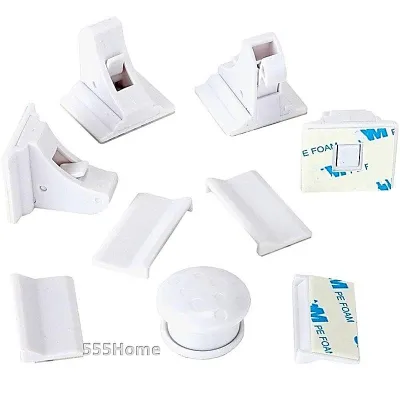
Magnetic locks are highly popular for parents who prefer a discreet, invisible safety solution. These systems consist of a latch installed inside the cabinet door and a spring-loaded lock mechanism mounted to the interior frame. The lock remains engaged until an external magnetic key is placed against the outside of the cabinet door, releasing the latch. Because the entire apparatus is hidden from view, magnetic locks do not alter the aesthetic of your kitchen or bathroom. They also prevent children from seeing the lock, which minimizes their curiosity and desire to pull on the door. However, they require careful alignment during installation and rely on you keeping the magnetic key in a safe, accessible spot.
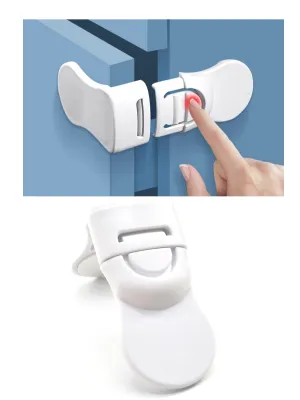
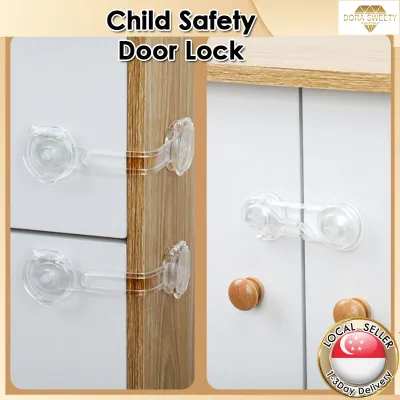
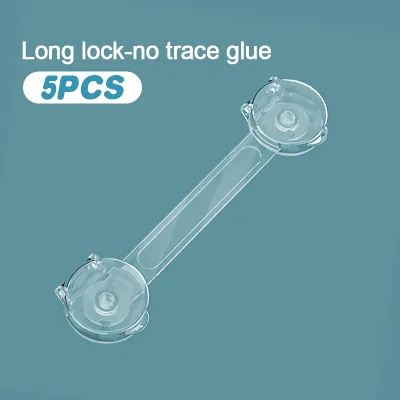
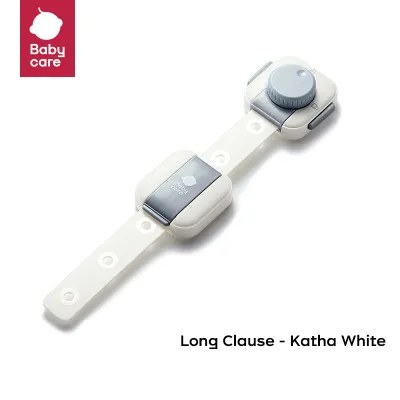
Adhesive strap locks are an exterior solution featuring a flexible plastic, silicone, or fabric strap anchored by two adhesive pads. One pad is mounted on the cabinet door, and the other is secured to the adjacent frame or the second door. To open the cabinet, an adult must press a multi-step release button on one of the anchors. Strap locks are incredibly versatile because they can bend around corners, making them suitable for curved cabinets, drawers, and even household appliances like refrigerators or microwaves. While highly functional, they are fully visible and may eventually be subject to wear from constant pulling or environmental exposure.
Sliding latch locks are designed specifically for double cabinet doors with handles or knobs. These locks feature a U-shaped plastic bar that slides through the handles and secures with a ratcheting mechanism or a squeeze-and-release latch. They require no installation tools, screws, or adhesives, making them an excellent temporary option for rental homes or visits to grandparents’ houses. The main limitation is that they can only be used on adjacent doors with suitable handles, and they must be completely removed and set aside every time you need to access the cabinet.
Spring-release latches are a classic interior option. Mounted inside the cabinet, they allow the door to open slightly—usually a few centimeters—before a plastic hook catches on a keeper mounted to the frame. To open the door fully, an adult must reach through the narrow gap and depress the flexible plastic hook. While simple and cost-effective, these locks do present a small risk of pinched fingers if a child attempts to slam the door shut while the latch is partially open.
Key Criteria for Evaluating Child Lock Brands
When comparing different child lock brands available in Singapore, focusing on specific quality indicators will help you avoid unreliable products. Rather than relying on generic brand popularity, look for concrete design features that ensure long-term performance.

Material durability is paramount. Toddlers are remarkably persistent and will often use their entire body weight to pull, twist, or shake cabinet doors. High-quality brands construct their locks from robust, non-toxic ABS plastic or reinforced nylon that resists cracking under sudden impacts. If you are opting for strap locks, the strap material should be flexible yet resistant to stretching or tearing. Inspect the product specifications to see if the manufacturer details the tensile strength or the specific plastics used in construction.
Ease of adult operation is another critical factor. A child lock must be secure enough to baffle a toddler but simple enough for an adult to operate with one hand. In a busy kitchen, you will frequently need to access cabinets while holding a baby, a cooking utensil, or a plate. Test the release mechanism if possible, or look for user demonstrations showing how the lock is disengaged. If a lock requires two hands or excessive force to open, it may lead to frustration and tempt family members to leave the lock permanently disengaged.
Safety testing standards provide an objective measure of a product’s design integrity. While there is no single universal certification for child locks, reputable brands often subject their products to voluntary safety testing. Look for packaging indicators that reference recognized standards, such as European (EN) or American (ASTM) safety specifications for child safety devices. These standards typically test for mechanical strength, the absence of small parts that could pose a choking hazard, and chemical safety of the plastics and adhesives used. Always verify these claims by checking the manufacturer’s official documentation or product guides.
The availability of replacement parts and accessories is a strong indicator of a brand’s commitment to long-term usability. Over time, you may need to relocate a lock, replace a worn-out adhesive pad, or purchase an extra magnetic key because the original was misplaced. Brands that sell individual replacement adhesive strips, extra keys, or mounting templates separately offer a significant advantage over those that require you to purchase an entirely new multi-pack lock set.
Matching Lock Types to Your Cabinet Materials and Hinges
Your choice of child lock should be heavily influenced by the physical design and materials of your home’s cabinetry. A lock that works perfectly on a standard wooden cabinet may be completely incompatible with modern, handle-less kitchen units.
Handle-less cabinets, which are highly popular in contemporary Singaporean interior design, present a unique challenge. Because there are no external handles or knobs to loop a strap or sliding latch around, you must rely on internal locking systems. Magnetic locks are the premier choice for handle-less cabinets because they require no external hardware and can be mounted entirely on the inside of the door and frame. Internal spring-release latches can also work, provided there is enough clearance at the top or side of the door for an adult finger to reach in and depress the latch.
Glass-fronted cabinets and display cases require non-invasive locking solutions. Drilling into glass is not an option, and using harsh adhesives on delicate glass surfaces can leave unsightly residues or cause damage. For these setups, high-quality adhesive strap locks are generally the safest choice. Before applying an adhesive lock to glass, verify that the manufacturer’s instructions explicitly state compatibility with glass surfaces and outline safe removal procedures.
The thickness of your cabinet doors and the material of the frames also dictate lock compatibility. Magnetic locks rely on magnetic force passing through the door panel to release the internal latch. Most standard magnetic locks are designed for wood or laminate doors with a thickness of up to 25 millimeters. If your cabinets are made of exceptionally thick solid wood, heavy MDF, or have decorative molding, the magnetic key may not be strong enough to trigger the release. Always measure your cabinet door thickness and compare it against the maximum operating depth specified by the lock manufacturer.
Sliding doors, often found on built-in wardrobes, pantries, or bathroom cabinets, require a completely different approach than standard hinged doors. Hinged doors swing outward, meaning any lock that prevents the door from moving away from the frame will work. Sliding doors, however, move laterally. To secure a sliding door, you need a lock that blocks this lateral sliding motion, such as a specialized wedge lock or a heavy-duty adhesive strap lock mounted across the seam where the doors overlap.
Installation, Maintenance, and Ongoing Safety Checks
Proper installation and regular maintenance are just as important as choosing the right lock. Even the highest-quality child lock will fail if it is poorly installed or neglected over time.
For adhesive-based locks, surface preparation is the single most critical step for ensuring a strong bond. Singapore’s warm, humid climate can cause adhesives to degrade or fail prematurely if they are applied to dusty, greasy, or damp surfaces. Before installing any adhesive lock, clean the target area thoroughly with isopropyl alcohol to remove all traces of kitchen grease, dust, and cleaning product residue. Avoid using household glass cleaners or multi-purpose sprays, as they often leave behind a thin film that prevents the adhesive from bonding fully. Allow the surface to dry completely before applying the lock.
Curing time is another essential factor that is frequently overlooked. Once you press the adhesive pad onto the cabinet surface, the bond needs time to chemically cure and reach its maximum strength. Most manufacturers recommend letting the adhesive cure for at least 24 to 48 hours before subjecting the lock to any pulling force. During this curing period, keep the cabinet unlocked or avoid using it entirely to prevent any tension on the fresh adhesive.
If you are using magnetic locks, safe storage of the magnetic keys is a critical safety protocol. These keys contain powerful magnets that can pose severe health risks if swallowed by children. Always store the keys on a high, metallic surface—such as the top of your refrigerator or a wall-mounted magnetic strip—well out of reach and sight of your child. It is highly recommended to keep at least one backup key in a secure, designated location in case the primary key is misplaced, preventing you from being locked out of your own kitchen cabinets.
Routine testing should be integrated into your weekly household cleaning schedule. Walk through your home and physically test each lock to ensure it engages securely and releases smoothly. Inspect adhesive pads for any signs of peeling, lifting at the edges, or stretching. For mechanical locks, check for loose screws, cracked plastic, or weakened springs. Children grow quickly and will continuously test the limits of these safety devices; a lock that successfully resisted a one-year-old may begin to give way under the strength of a determined two-year-old.
When you observe any signs of wear, damage, or adhesive failure, stop using the lock immediately. Do not attempt to repair a broken plastic latch with household glue or tape, as these temporary fixes are highly likely to fail under pressure. Instead, consult the manufacturer’s guidelines for replacement parts or replace the entire lock unit to maintain a secure environment.
Where to Buy and What to Verify Before Purchase
When you are ready to purchase cabinet child locks in Singapore, choosing the right retail channel and verifying the product’s authenticity will ensure you receive a reliable safety device.
It is highly recommended to purchase child locks from official brand stores, specialized baby safety retailers, or established e-commerce platforms that offer genuine products. Avoid purchasing ultra-cheap, unbranded bulk packs from unregulated online marketplaces. These products often use inferior plastics that crack easily and low-grade adhesives that fail quickly under Singapore’s humid conditions. Buying from reputable sellers ensures you receive authentic products that comply with safety standards and come with complete manufacturer support.
Upon receiving your purchase, perform a thorough inspection of the product packaging and contents before starting the installation process. Verify that the packaging is fully sealed and undamaged. Check that all necessary components—including mounting templates, screws, adhesive pads, keys, and user manuals—are present and complete. The instruction manual should contain clear, step-by-step diagrams and written guidelines in English to ensure you can install the lock correctly.
Finally, verify the retailer’s return and exchange policies before finalizing your purchase. Because cabinet designs, hinge styles, and door thicknesses vary widely, there is always a possibility that a specific lock mechanism may be physically incompatible with your home’s cabinetry. A flexible return policy allows you to exchange the product for a different lock type without incurring unnecessary expenses, ensuring you find the perfect fit for your home childproofing needs.
Frequently Asked Questions (FAQ)
Are magnetic cabinet locks safe for all types of wood?
Magnetic cabinet locks are generally safe for most wood and laminate cabinets, but you must check the manufacturer’s guidelines for specific surface compatibility. If you are installing drill-free magnetic locks that rely on adhesive, ensure the adhesive is rated for your cabinet’s finish to avoid peeling off paint or varnish upon removal. For delicate, antique, or high-value solid wood cabinets, consider using non-drill adapters or protective barriers to prevent direct contact with strong adhesives or screws.
How often should I replace adhesive cabinet locks?
The lifespan of adhesive cabinet locks depends heavily on environmental factors and usage frequency. In Singapore’s high-humidity climate, adhesives can degrade faster than in cooler, drier regions. You should inspect the locks regularly and replace them immediately if you notice visual signs of degradation, such as peeling edges, stretching straps, or a weakened bond. On average, high-quality adhesive locks may need replacement every 12 to 18 months, or sooner if subjected to frequent, heavy pulling by a growing toddler.
Can I use the same child lock for both drawers and cabinets?
Some child locks are designed for multi-use compatibility, but you must check the product specifications and packaging to ensure they are suitable for both drawers and cabinets. Adhesive strap locks are highly versatile and can easily transition between sliding drawers and hinged cabinet doors because of their flexible design. However, internal magnetic locks or spring-release latches require specific clearance and frame alignment, which may differ significantly between a sliding drawer track and a standard cabinet hinge.

Community discussion
Share your experience or ask a question. Comments are reviewed before publication.