
Finding the best yogurt melts for your baby in Singapore requires looking beyond colorful packaging and focusing on nutritional integrity, physical safety, and developmental readiness. While these freeze-dried snacks are highly popular for their convenient size and quick-dissolving texture, parents must carefully evaluate ingredient lists to avoid hidden sugars and fillers. By establishing a systematic verification process—checking for real yogurt as the primary ingredient, assessing the melt-in-mouth safety, and understanding how Singapore’s humid climate affects storage—you can confidently select a high-quality snack that supports your baby’s transition to solid foods.
Understanding Yogurt Melts and Baby Readiness
Yogurt melts are bite-sized, freeze-dried drops made from yogurt and fruit purees. Unlike standard baked puffs or biscuits, which rely on starches and grains, genuine yogurt melts are designed to retain the creamy texture and nutritional components of dairy in a dry, shelf-stable form. The freeze-drying process removes moisture while preserving the structure, allowing the drops to dissolve rapidly when they come into contact with a baby’s saliva. This unique texture makes them an appealing transitional snack for infants learning to manage solid textures.
Before introducing these snacks, you must ensure your baby has reached the necessary developmental milestones. Most infants are not ready for finger foods until they are around eight months old, though individual readiness varies. Your baby should be able to sit upright in a highchair completely unassisted, maintaining steady head and neck control throughout a meal. Additionally, they must demonstrate the “pincer grasp”—the ability to pick up small objects using their thumb and index finger—rather than just raking food with their entire palm.
Products mentioned in this guide
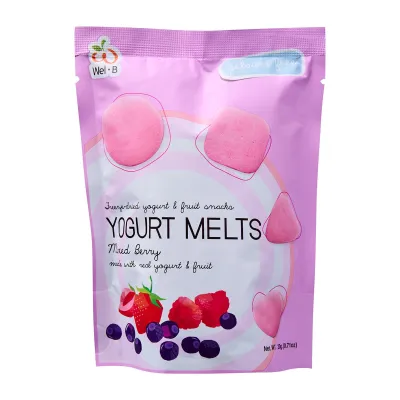
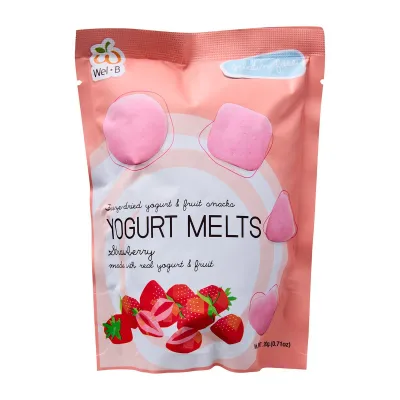
![[Carton of 7] Gerber Strawberry Yogurt Melts Baby Snack 28g - From 8 Months](https://img.lazcdn.com/g/p/e636c7e28b7cdf20104fd64a6066b360.jpg_400x400q80.jpg_.webp)
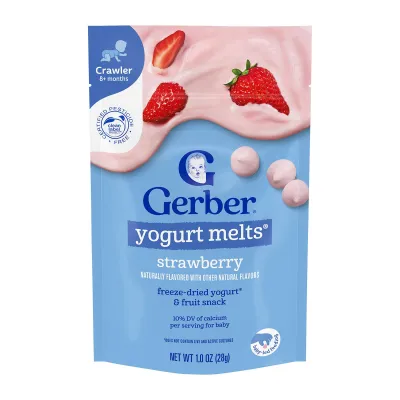
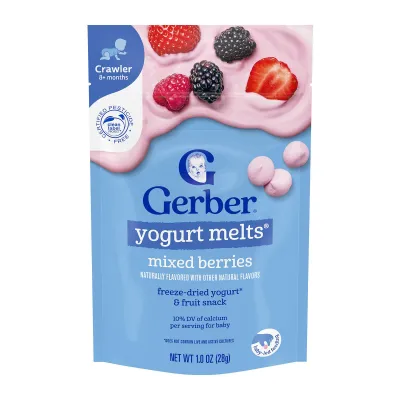
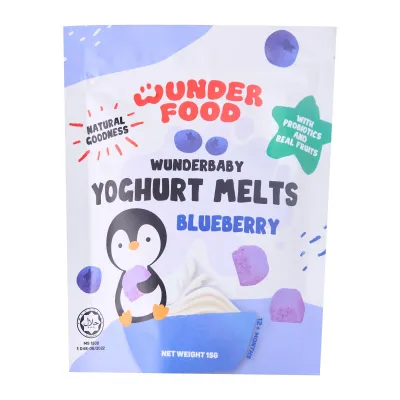
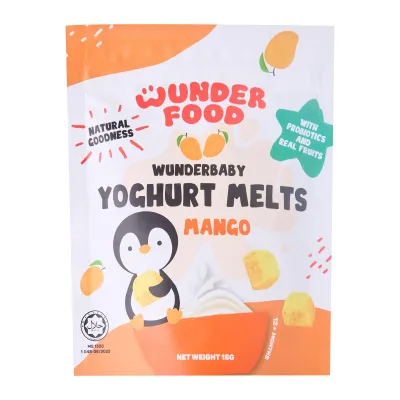
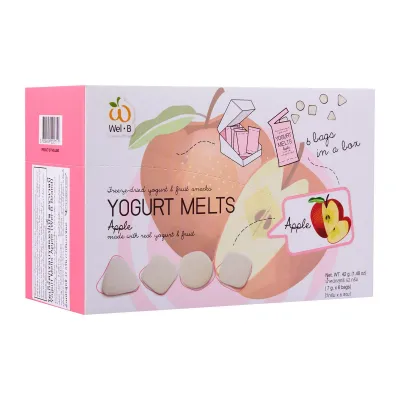
Prices are valid at publication and may change. Please refer to the product page for the latest price.
Another critical indicator is the disappearance of the tongue-thrust reflex, which naturally prevents young infants from swallowing solid objects. If your baby still pushes food out of their mouth with their tongue, they are not yet ready for yogurt melts. Even if your baby displays all these physical signs, it is highly recommended to consult your pediatrician before introducing dairy-based snacks. This is particularly crucial if there is a family history of food allergies, eczema, or asthma, as dairy is a common allergen that requires careful, monitored introduction.
Key Nutritional Standards to Check on the Label
When evaluating yogurt melts on Singapore retail shelves, the nutrition information panel and ingredient list are your most reliable tools. Many commercial baby snacks market themselves as healthy options while containing high amounts of added sugars. You should carefully distinguish between naturally occurring lactose from milk and added sweeteners. Look closely at the ingredient list for terms like cane sugar, sucrose, brown rice syrup, fruit juice concentrate, or maltodextrin, which are often added to enhance flavor but offer no nutritional benefit to a developing infant.

The order of ingredients on the packaging is determined by weight, meaning the first few items listed make up the majority of the product. For a high-quality yogurt melt, the primary ingredient should be whole milk, cultured milk, or real yogurt. If the list begins with sugar, fruit juice concentrate, or modified food starch, the product is primarily a sweet treat rather than a nutritious dairy snack. Starches and gelatin are frequently used as cheap binders to maintain the shape of the melt, but they can reduce the nutritional density and alter how quickly the snack dissolves in the mouth.
Many brands highlight fortification claims on their packaging, boasting added vitamins, minerals, or active probiotic cultures. While these additions sound beneficial, you should verify their actual dietary contribution by checking the daily value percentages on the nutrition panel. Probiotics, in particular, are sensitive to heat and processing; therefore, look for labels that specify the inclusion of live and active cultures at the time of consumption. Keep in mind that fortified snacks should never replace whole, nutrient-dense foods in your baby’s primary diet.
Allergen awareness is another vital component of label reading. Because yogurt melts are dairy-based, they are unsuitable for babies with diagnosed cow’s milk protein allergy (CMPA) or lactose intolerance. You must also check the packaging for cross-contamination warnings, such as “manufactured in a facility that processes soy, wheat, or tree nuts.” If your baby has known sensitivities, choose brands that explicitly state their allergen-control protocols or are certified free from the specific allergens of concern.
Evaluating Texture, Size, and Choking Safety
The primary safety feature of a high-quality yogurt melt is its ability to dissolve almost instantly upon contact with moisture. To test this yourself, place a single melt on your tongue without chewing; it should soften and break down within seconds. If the melt remains firm, gummy, or requires significant chewing pressure to dissolve, it poses a potential choking hazard for a baby who does not yet have molars. The texture must be light and airy, allowing saliva to penetrate and liquefy the structure rapidly.
The physical dimensions of the melts should align with your baby’s physical capabilities. Ideal yogurt melts are small, dome-shaped drops roughly the size of a chocolate chip. This size is large enough for an infant to practice their pincer grasp but small enough to fit comfortably inside their mouth without blocking the airway. Avoid products that are irregularly shaped, excessively large, or prone to crumbling into sharp, hard fragments inside the bag.
Singapore’s tropical climate presents a unique challenge for maintaining the safety of freeze-dried baby foods. The high ambient humidity can quickly compromise the structural integrity of the melts once the package is opened. When exposed to humid air, freeze-dried snacks rapidly absorb moisture, transforming from crisp, dissolvable drops into sticky, gummy, or rubbery pieces. These softened, chewy melts no longer dissolve quickly in the mouth and can easily stick to the roof of a baby’s mouth or throat, significantly increasing the risk of choking.
Regardless of how quickly a snack dissolves, active and seated adult supervision is mandatory during every feeding session. Never allow your baby to crawl, walk, or play while eating yogurt melts, as sudden movements can cause them to inhale the food. Ensure your baby is buckled securely into their highchair, sitting completely upright, and that you are watching them closely. Be prepared to intervene immediately if you notice any signs of silent choking, such as gasping, color changes, or an inability to make sound.
How to Build Your Shortlist of Suitable Brands
To build a reliable shortlist of yogurt melts in Singapore, start by exploring diverse sourcing options. While local supermarkets and hypermarkets carry a standard selection of international baby food brands, specialty baby boutiques and organic grocers often stock niche options with simpler ingredient profiles. Online marketplaces and dedicated baby e-commerce platforms provide access to a wider variety of imported brands, often at competitive prices. When shopping online, ensure you are purchasing from reputable, authorized distributors to guarantee product authenticity and proper storage during transit.
Create a personal comparison matrix to evaluate the brands you find. List each candidate brand along with its price per gram, primary ingredient, sugar content per serving, and any allergen warnings. This structured approach prevents you from being swayed by attractive packaging or vague marketing claims like “all-natural” or “organic.” By comparing the actual numbers and ingredient lists side by side, you can easily identify which options offer the best nutritional value and safety profile for your budget, which typically ranges from S$5 to S$10 per package.
Before finalizing any purchase, inspect the physical packaging for quality and freshness. Freeze-dried products require robust moisture barriers, so look for thick, multi-layered foil pouches with high-quality, resealable zip closures. Avoid packages that appear bloated, punctured, or have weak seals, as even a microscopic tear will allow humid air to enter and ruin the product. Always verify the expiration date printed on the pack, keeping in mind that products closer to their expiry may have already suffered minor texture degradation.
Implement a careful trial strategy when introducing a new brand to your baby. Purchase a single, small pack first rather than buying in bulk, even if bulk discounts are highly tempting. Offer one or two melts during a quiet, supervised daytime session, and monitor your baby closely for any immediate or delayed allergic reactions, such as hives, swelling, or digestive discomfort. Observing how the product holds up in your home environment over a few days will also help you determine if the packaging is effective at keeping the melts fresh and safe in Singapore’s climate.
Frequently Asked Questions (FAQ)
Can I make homemade yogurt melts instead of buying commercial brands?
Yes, you can prepare homemade yogurt melts, but they differ significantly from commercial versions. The basic preparation involves mixing plain, unsweetened Greek yogurt with a smooth fruit puree, piping small drops onto a baking sheet lined with parchment paper, and freezing them until solid. While this method allows you to control every ingredient and eliminate added sugars entirely, frozen homemade melts rely on cold temperatures to maintain their shape. Once removed from the freezer, they melt rapidly into a liquid state at room temperature, making them messy and unsuitable for on-the-go snacking. Furthermore, they do not possess the airy, porous structure of freeze-dried commercial melts, meaning they must be consumed immediately while frozen and under strict supervision to ensure they do not slide down the throat as hard, cold lumps. Homemade frozen melts must be stored in an airtight container in the freezer and generally should be consumed within one to two weeks.
How should I store yogurt melts in a humid climate?
Singapore’s high relative humidity requires strict storage practices to keep commercial yogurt melts safe and crisp. Once you open the original foil pouch, the freeze-dried drops begin absorbing moisture from the air almost instantly. To prevent them from becoming gummy, always squeeze out excess air from the pouch before sealing the built-in zip closure tightly. For optimal protection, transfer the sealed pouch or the loose melts into a high-quality, airtight glass or BPA-free plastic container equipped with a silicone gasket seal. Adding a food-safe silica gel desiccant packet to the container can help absorb any residual moisture. Before serving, always perform a quick tactile check: press a melt between your fingers. If it feels sticky, soft, or bends instead of snapping cleanly, it has absorbed too much moisture and must be discarded immediately to prevent choking.

Community discussion
Share your experience or ask a question. Comments are reviewed before publication.