
Quick Answer: Evaluating Wunder Puff for Your Baby's Diet
Determining whether Wunder Puff snacks are suitable for your baby requires a careful evaluation of the specific product variant, your baby’s current developmental stage, and their individual nutritional needs. While baby puffs are a popular transitional snack designed to help infants practice self-feeding, they are not a one-size-fits-all food. Parents must verify the ingredient list and nutritional label on the exact packaging of the variant they purchase, as formulations, sodium levels, added sugars, and allergen profiles can vary significantly.
Suitability ultimately depends on whether your baby has met the necessary developmental milestones to handle finger foods safely, their personal allergy history, and how the snack fits into their overall dietary plan. Rather than viewing any puff as an absolute safety guarantee, treat it as an optional snack that requires careful parental verification and alignment with your pediatrician’s advice.
How to Read and Evaluate the Ingredient List
When evaluating any baby snack, the ingredient list printed on the back of the packaging is your most reliable source of truth. Ingredients are always listed in descending order by weight, meaning the first three to four ingredients make up the vast majority of the product. When looking at Wunder Puff or similar snacks, check whether the primary ingredients are nutrient-dense whole grains, such as brown rice, whole oats, or quinoa, rather than highly refined flours, starches, or tapioca. Whole grains retain more of their natural fiber, vitamins, and minerals, making them a more wholesome foundation for your baby’s early diet.
Products mentioned in this guide
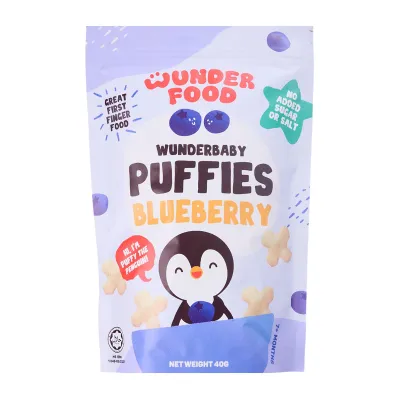
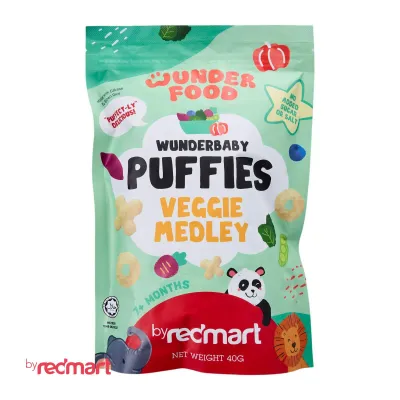
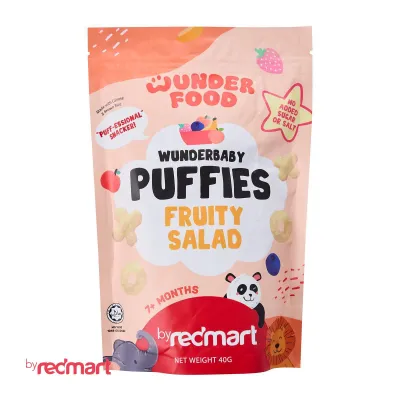
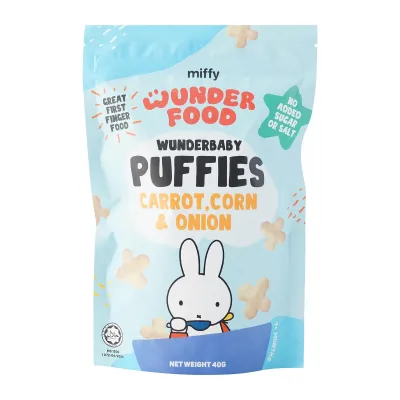
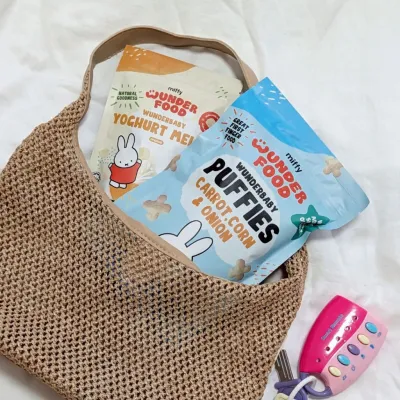
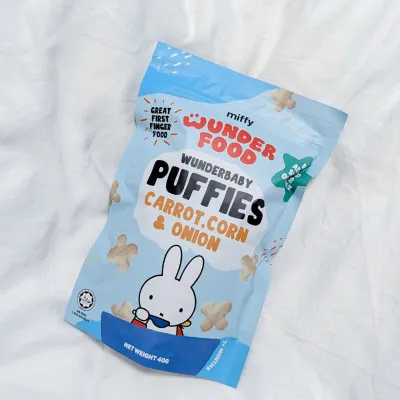
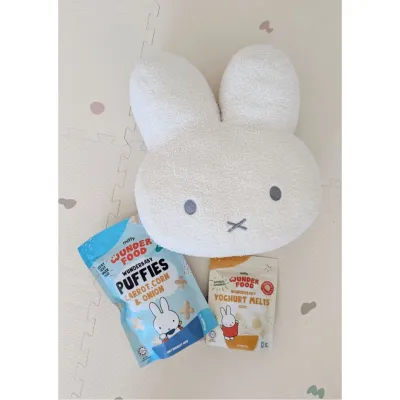
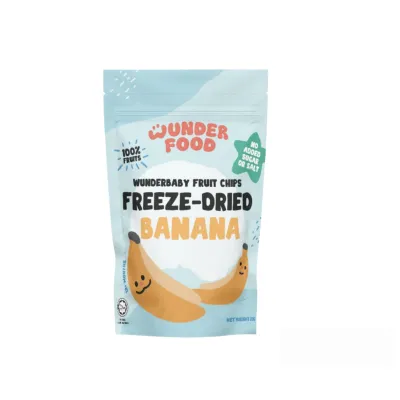
Prices are valid at publication and may change. Please refer to the product page for the latest price.

Identifying hidden sugars and sweeteners is another critical step in reading the label. Many commercial baby foods use sweet-sounding ingredients to appeal to infants’ natural preference for sweet tastes. Look closely for terms like organic fruit juice concentrate, cane syrup, brown rice syrup, maltodextrin, dextrose, or fructose. Even if labeled as organic or natural, these concentrates function as added sugars, which pediatric health organizations recommend avoiding entirely for infants under two years of age. Introducing added sugars too early can shape a baby’s taste preferences toward overly sweet foods and contribute to dental decay.
Sodium and artificial additives should also be carefully scrutinized on the ingredient list. A baby’s kidneys are still developing and cannot efficiently process high amounts of sodium, so snacks with added salt or sodium-containing preservatives should be avoided. Scan the label for artificial flavors, synthetic colors, or chemical preservatives, which have no place in an infant’s diet. A clean, minimal ingredient list with recognizable, whole-food components is always the safest and most nutritious choice for your growing child.
Finally, allergen identification is paramount for infant safety. Manufacturers are required to declare common allergens, but parents must still actively check the “contains” or “may contain” statements on the packaging. Common allergens to watch for include wheat, dairy, soy, egg, peanuts, and tree nuts. If your family has a history of food allergies, or if your baby has shown signs of sensitive skin or eczema, it is vital to introduce new ingredients one at a time. Always verify the allergen warnings on the specific batch you purchase, as manufacturing lines and product formulations can change without notice.
Assessing the Nutritional Value and Fortification
Beyond the raw ingredients, understanding the nutritional profile and fortification of baby puffs helps you determine if they offer genuine dietary value. Iron fortification is one of the most critical aspects to look for in early solid foods. Around six months of age, a baby’s natural iron stores begin to deplete, making dietary iron essential for healthy brain development and red blood cell production. Many commercial baby puffs are fortified with iron, which will be reflected on the Nutrition Facts panel. Parents should check this panel to see if iron is included and compare the percentage to their baby’s daily needs, keeping in mind that fortified snacks should complement, not replace, natural iron sources like pureed meats, legumes, and iron-fortified infant cereals.
Caloric density and portion sizes are equally important when assessing the role of puffs in your baby’s diet. Puffs are highly aerated, meaning they contain a lot of air and very few calories per serving. While this light texture makes them easy for babies to handle, it also means they provide minimal energy and nutrients. Review the serving size on the packaging to understand how much your baby is actually consuming. It is crucial to ensure that these light snacks do not fill your baby’s small stomach right before a main meal, which could cause them to reject more nutrient-dense foods like breast milk, formula, or wholesome vegetable and protein purees.
Lastly, examine the fiber and fat content on the nutritional label. Whole-grain snacks may provide a small amount of dietary fiber, which supports healthy digestion and helps prevent constipation as your baby transitions to solid foods. Additionally, check the fat profile to ensure there are absolutely no trans fats and only minimal saturated fats. While healthy fats from plant oils can be beneficial for a baby’s developing nervous system, the overall fat content in a light puff snack is typically negligible. Use the nutritional panel to verify that the product aligns with a balanced, whole-food-based feeding routine.
Safety First: Texture, Choking Risks, and Readiness
Feeding finger foods to an infant introduces physical safety considerations that every caregiver must prioritize. Before offering any puff snack, you must verify that your baby has reached the necessary developmental milestones, rather than relying solely on the age recommendation printed on the box. Signs of readiness include the ability to sit upright in a highchair unassisted with excellent head and neck control, showing active interest in the food on your plate, losing the tongue-thrust reflex that automatically pushes solid objects out of their mouth, and developing the pincer grasp, which allows them to pick up small items between their thumb and index finger. If your baby cannot yet perform these actions, they are not ready for finger foods.
The texture and dissolvability of the snack are critical factors in preventing choking. While baby puffs are engineered to melt quickly when mixed with saliva, parents should always perform a manual quality check. Place a puff in your own mouth to verify how quickly it dissolves without chewing, or crush it between your wet fingertips. Be highly aware that environmental factors can alter this texture. Exposure to air, humidity, or leaving the container open can cause the puffs to absorb moisture, making them rubbery, stale, or tough. When this happens, the puffs lose their quick-dissolving property and can easily lodge in a baby’s airway, posing a severe choking hazard.
To mitigate these risks, active, seated adult supervision is an absolute, non-negotiable rule during every feeding session. Your baby must be buckled securely in an upright highchair, never reclining, crawling, or walking while eating. Caregivers must learn to distinguish between normal gagging—a loud, active reflex that helps babies move food forward in their mouths—and true choking, which is silent, quiet, and life-threatening. If you observe persistent gagging, coughing, or if your baby struggles or refuses to swallow, stop feeding immediately. If your baby experiences ongoing feeding difficulties, consult a pediatrician, pediatric dentist, or a certified speech-language pathologist for professional guidance.
Safe Serving and Storage Practices in Singapore
Implementing safe serving routines and proper storage practices is essential to protect your baby and maintain the quality of their snacks. When serving puffs, avoid placing the entire container or a large pile of snacks directly on the highchair tray. An abundance of food can overwhelm a young baby or tempt them to stuff multiple puffs into their mouth simultaneously, significantly increasing the risk of choking. Instead, place only two or three puffs on the tray at a time. This controlled pacing encourages the baby to focus on grasping and chewing one piece at a time, promoting safer eating habits and better motor skill development.
Hydration plays a supportive role during snack time, especially with dry, starch-based foods like puffs. Always offer small sips of water from a straw cup or an open cup alongside dry snacks. Puffs can sometimes stick to the roof of a baby’s mouth or dry out their oral cavity, making swallowing more difficult. A quick sip of water helps moisten the mouth, facilitates smooth swallowing, and assists in rinsing away any lingering food particles from the gums and tongue.
In Singapore, the tropical climate presents unique challenges for food storage due to consistently high humidity levels. Moisture in the air can rapidly ruin the crisp, melt-in-the-mouth texture of baby puffs, turning them into a dangerous choking hazard within a short period. To prevent this, transfer the puffs to a high-quality, airtight glass or BPA-free plastic container immediately after opening the original packaging. Store this container in a cool, dry pantry away from direct sunlight and heat sources. Always test the texture of a puff yourself before offering it to your baby; if it has lost its crispness or feels soft and bendable, discard the batch immediately to ensure your baby’s safety.
Frequently Asked Questions (FAQ)
Can I give baby puffs to my 6-month-old?
Age alone is not a reliable indicator of whether your baby is ready for finger foods like puffs. While some product packaging may suggest suitability starting at six months, every infant develops at their own unique pace. A six-month-old who is still adjusting to smooth purees and cannot sit upright independently is not developmentally ready for puffs. Instead of focusing on the calendar, look for physical milestones such as independent sitting, strong head control, and the ability to grasp objects and bring them to the mouth. Always consult your pediatrician before introducing finger foods to ensure your baby is ready.
Are baby puffs a good substitute for regular meals?
No, baby puffs are not a suitable substitute for regular, nutrient-dense meals. Puffs are highly processed, aerated snacks that offer very little caloric density, protein, or healthy fats. They are primarily useful as a tool to help your baby practice fine motor skills, such as the pincer grasp, rather than as a source of primary nutrition. Your baby’s main source of nourishment must continue to be breast milk or infant formula, complemented by wholesome, nutrient-dense solid foods like vegetables, fruits, meats, fish, and iron-rich whole grains.
Community discussion
Share your experience or ask a question. Comments are reviewed before publication.