
The journey of weaning your baby off the breast or bottle and introducing them to solid foods and cup-drinking is a major developmental milestone. When selecting the right cup to support this transition, your choice should depend on your baby’s current oral motor skills, grip strength, and overall weaning progress. There is no single “correct” cup for every infant; rather, different designs serve distinct developmental purposes.
Mushie straw cups are highly effective for transitioning away from bottles or breastfeeding because they utilize a familiar sucking motion while minimizing spills. This makes them a practical choice for hydration during family outings or busy days. In Singapore’s warm tropical climate, keeping your baby hydrated during outdoor trips to the Singapore Botanic Gardens or East Coast Park is essential, and a spill-resistant straw cup is highly practical for these excursions.
On the other hand, Mushie open training cups are specifically designed to build advanced oral muscles, proper swallowing patterns, and hand-eye coordination. By sipping from an open rim, babies learn to control the flow of liquid using their lips and tongue, which supports long-term speech development. For home practice, the open training cup works beautifully on a high chair mat inside your dining area, where cleanups are quick and manageable.
Products mentioned in this guide
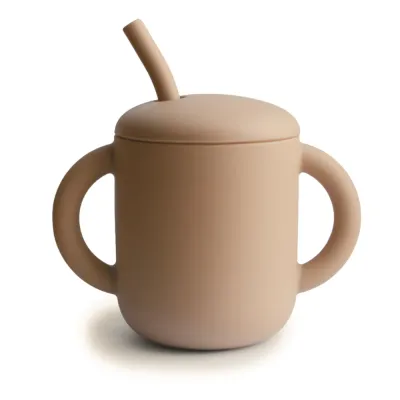
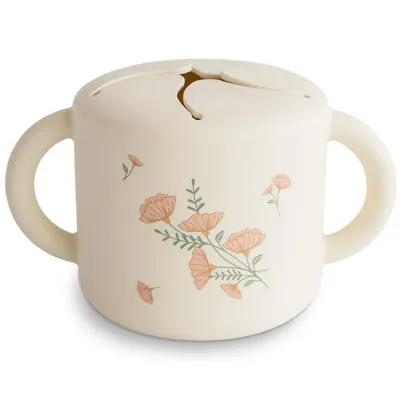
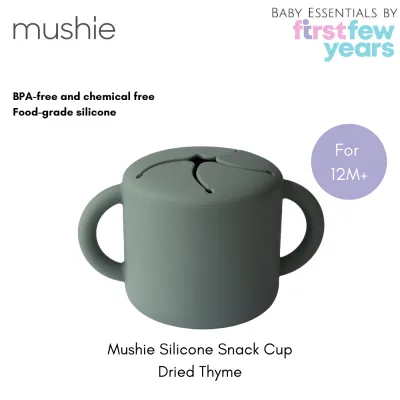
Prices are valid at publication and may change. Please refer to the product page for the latest price.
Rather than choosing just one style, many parents find that using both types concurrently offers the most balanced approach. For instance, you can offer an open cup for supervised practice during mealtimes at home, while relying on a straw cup for convenient, independent hydration when you are out and about. This hybrid method supports both developmental progress and parental convenience.
Assessing Your Baby's Readiness for Different Cup Types
Before introducing any new drinking vessel, it is essential to observe your baby’s physical and cognitive milestones. Introducing cups too early can lead to frustration or safety hazards, while waiting for the right signs ensures a smoother, more successful transition.
The most critical physical milestone is the ability to sit upright with minimal support and maintain excellent head and neck control. When a baby sits securely, their airway is aligned, which significantly reduces the risk of choking or aspiration when swallowing liquids. If your baby is still slumping or requires significant support to sit, it is best to wait before introducing cups.
Cognitive readiness often manifests as a keen interest in family meals. You may notice your baby watching you intently as you drink from a glass, reaching out to touch your cup, or attempting to grab spoons and food from your plate. This natural curiosity indicates that they are mentally prepared to explore new feeding tools and copy your drinking movements.
When it comes to using a straw cup, your baby must develop basic suction skills. Unlike drinking from a breast or bottle—which involves a combination of compression and sucking—drinking through a straw requires the baby to seal their lips around the tip and draw liquid upward using negative pressure. Some babies master this skill quickly, while others may take several weeks to understand the concept.
Drinking from an open or training cup demands even more advanced coordination. Your baby must be able to bring their hands to their mouth reliably, tilt their head back slightly without losing balance, and coordinate their jaw and upper lip to control the incoming liquid. This transition marks a shift from the primitive infantile suckle (where the tongue moves forward and backward) to a mature swallow pattern (where the tongue tip elevates to the roof of the mouth).
Because every child develops at their own pace, there is no strict chronological age for introducing these cups. Caregivers must provide constant, active supervision during all cup-drinking sessions to ensure safety. The transition should be a gradual, pressure-free process that aligns with your baby’s unique developmental timeline, allowing them to explore and learn at their own comfort level.
Mushie Straw Cup vs. Open Training Cup: Core Differences
Mushie Silicone Straw Cup
The Mushie Silicone Straw Cup is engineered with a soft, food-grade silicone straw that is exceptionally gentle on your baby’s sensitive gums and developing teeth. This flexible, pliable material provides a comforting tactile experience that can ease the transition for infants who are hesitant to move away from the familiar feel of a bottle nipple.

From a developmental perspective, drinking from a straw helps strengthen the muscles of the cheeks, lips, and tongue. It encourages a lip-seal pattern that is different from bottle feeding, helping to transition your baby toward mature swallowing habits. The straw’s design prevents the tongue from thrusting forward, which is a common habit in early infancy.
Practically, this cup is designed with busy parents in mind. It features a secure, press-fit lid that keeps the liquid contained, making it highly spill-resistant. If you are navigating daily life, this cup allows your baby to stay hydrated without soaking their clothes or diaper bag. The soft silicone construction also means the cup will not crack or break if dropped repeatedly onto hard tile floors.
Many Mushie straw cups also come equipped with sturdy side handles, allowing babies with developing fine motor skills to hold and tilt the cup independently. The textured, matte finish of the silicone provides a natural, non-slip grip that is easy for small hands to manage, even when their fingers are sticky from food.
However, caregivers should expect a slight learning curve. Many babies will initially bite down on the silicone straw rather than sucking, treating it as a teething toy. This is a normal sensory response, and with gentle encouragement, most babies quickly learn how to draw liquid up instead of chewing on the tip.
Additionally, cleaning a straw cup requires a bit more effort. Because liquid can cling to the inside of the narrow straw, you will need to use a dedicated, fine-bristled straw brush to clean it thoroughly. Regular, detailed washing and complete air-drying are essential to prevent any mold or bacteria from developing inside the straw channel.
Mushie Silicone Open and Training Cups
The Mushie Silicone Open and Training Cups are designed to encourage a direct transition to mature drinking habits, bypassing the sucking mechanism entirely. These cups are intentionally scaled down to fit comfortably in an infant’s small hands, making them far less intimidating than standard household glasses.
To support physical stability, these cups feature a wide, weighted base that helps prevent them from tipping over when placed on a high chair tray. The exterior is often textured, providing an easy-grip surface that helps babies maintain control even when their hands are wet or covered in food. The small capacity, typically around 60 ml to 120 ml, is perfect for early learners who only need small sips.
Drinking from an open rim is widely recommended by pediatric feeding specialists because of its profound benefits for oral motor development. It forces the baby to seal their upper lip against the rim, tilt the cup at a controlled angle, and use their tongue to guide the liquid toward the back of the throat. This process promotes tongue elevation and lateralization, which are critical foundations for speech development and safe solid-food swallowing.
Because there is no valve, lid, or straw to slow down the flow, the baby must learn to coordinate their breathing and swallowing rapidly. This active engagement makes the open cup an outstanding tool for building hand-eye coordination, spatial awareness, and jaw stability. The weight of the cup also provides helpful sensory feedback (proprioception) to the baby’s hands and jaw.
The primary trade-off with an open cup is, of course, the high likelihood of spills. During the learning phase, your baby will inevitably pour water down their chin, tilt the cup too quickly, or drop it on the floor. This is not a failure; it is a necessary part of the physical learning process.
To manage this, open training cups are best suited for supervised mealtimes at home. By offering only a tiny amount of water at a time—perhaps just one or two tablespoons—you can minimize the mess while still giving your baby valuable opportunities to practice. Placing a waterproof splash mat under the high chair or using a silicone bib with a deep pocket can also make the cleanup process much easier for parents.
Side-by-Side Feature Comparison
To help you quickly evaluate the key differences between these two popular cup styles, the table below summarizes their primary developmental benefits, ideal usage scenarios, and practical considerations.
| Feature / Dimension | Mushie Silicone Straw Cup | Mushie Silicone Open & Training Cup |
|---|---|---|
| Primary Developmental Benefit | Sucking transition, hand grip coordination, independent hydration | Mature oral posture, lip sealing, tongue elevation, speech muscle development |
| Ideal Usage Scenario | On-the-go travel, stroller rides, daycare, active outdoor settings | Supervised mealtimes, structured skill-building at home |
| Spill Risk Level | Low to moderate (press-fit lid minimizes major spills) | High (requires active learning and physical control) |
| Cleaning Complexity | Moderate (requires a dedicated straw cleaning brush) | Low (simple, open design with no hidden crevices) |
| Key Readiness Indicator | Basic suction ability, interest in holding objects with both hands | Strong head/neck control, ability to tilt head back, safe swallowing of solids |
Note: Always verify the specific product packaging, age recommendations, and material certifications before introducing any feeding accessory to your child. Manufacturer guidelines may vary across different product lines and batches.
Decision Framework: Which Mushie Cup Should You Choose?
Selecting the right cup for your baby involves balancing their current physical capabilities with your family’s lifestyle and daily routines. Use the following condition-based framework to help guide your purchasing and usage decisions:
- Choose the Mushie Straw Cup if: Your baby is currently transitioning away from breastfeeding or bottle-feeding and needs a familiar, comforting oral sensation to encourage hydration. This style is also ideal if you require a highly portable, spill-resistant option for outings, stroller trips, or daycare environments where mess must be kept to a minimum, or if your baby has mastered basic grasping but still struggles with the precise hand-eye coordination needed to tilt an open cup without pouring the contents out.
- Choose the Mushie Open/Training Cup if: Your baby is already showing excellent hand-eye coordination, easily bringing toys and food directly to their mouth without overshooting. This option is perfect if you want to prioritize the development of mature oral motor skills, proper swallowing patterns, and speech muscles from an early stage, and you are practicing drinking skills primarily at home, where spills are expected, easily managed, and viewed as a natural part of the learning process.
- Consider Using Both if: You want to adopt a balanced, dual-track approach to weaning. You can offer the open cup during breakfast and dinner for active skill-building, while utilizing the straw cup for independent, mess-free hydration throughout the rest of the day. This hybrid method ensures your baby reaps the oral development benefits of open-cup drinking while still maintaining adequate fluid intake during busy hours or outdoor activities.
- Verify First if: Your baby has any known oral motor delays, sensory aversions, or swallowing difficulties. In these situations, it is crucial to consult a pediatrician, pediatric feeding therapist, or speech-language pathologist before introducing new cup styles to ensure the chosen design is safe and appropriate for your child's specific needs.
Safety, Cleaning, and Care for Silicone Weaning Cups
Maintaining the hygiene of your baby’s feeding utensils is essential for their health and well-being. Food-grade silicone is highly durable and naturally resistant to bacteria, but it still requires proper daily care to remain safe.
Before using any Mushie cup, always check the applied product’s label and the treated item’s manufacturer instructions. If instructions conflict, the item is unidentified, or the use is not covered, stop and consult the manufacturer or a qualified professional. Never invent instructions, parameters, or safety guarantees. Generally, silicone cups should be washed thoroughly in warm, soapy water using a mild, baby-safe detergent.
For straw cups, pay close attention to the internal channel of the straw. Use a specialized, thin wire straw brush to scrub away any milk or juice residue that can accumulate and harbor bacteria. Rinse all parts copiously with clean water and allow them to air-dry completely in a well-ventilated area before reassembling. To avoid soapy tastes, use an unscented baby bottle wash, as silicone can sometimes absorb strong synthetic fragrances.
While many food-grade silicone products are dishwasher safe (typically on the top rack) or compatible with steam sterilization and boiling water, you must verify the specific temperature limits and sterilization compatibility for your exact model. Some cups may feature plastic lids or reinforcing rings that cannot tolerate high heat.
Safety inspections should be performed before every single feeding. Inspect the silicone material closely, stretching it gently to check for any tiny tears, deep bite marks, or structural weakening. Babies who are teething can easily damage soft silicone with their sharp new teeth. If you detect any signs of damage, cracking, or wear, discard the cup immediately to eliminate any potential choking hazards.
Never leave your infant unattended while they are using any cup, and do not allow them to walk or run with a cup or straw in their mouth, as this poses a significant risk of physical injury. Stop using the cup and consult a pediatrician or pediatric feeding specialist if your child exhibits persistent coughing, gagging, or choking during use.
Frequently Asked Questions (FAQ)
Can I use a Mushie straw cup for hot liquids?
No, it is highly recommended to avoid using Mushie straw cups for hot liquids. While food-grade silicone can withstand high temperatures, hot liquids inside a sealed cup can create pressure, causing the liquid to spray out of the straw unexpectedly. Furthermore, drinking hot liquids through a straw bypasses the lips’ natural temperature-sensing ability, delivering hot liquid directly to the back of the throat and significantly increasing the risk of severe burns. Always test the temperature of any liquid on the inside of your wrist before offering it to your baby, and ensure liquids are lukewarm or cool.
When should I transition from a straw cup to an open cup?
There is no rigid chronological timeline or mandatory age limit for transitioning from a straw cup to an open cup. Instead, the transition should be guided by your baby’s unique motor skills, interest, and developmental readiness. Many pediatric feeding experts suggest introducing small sips from an open cup as early as six months of age under close supervision. It is entirely normal, healthy, and practical to use both cup types concurrently throughout the toddler years, relying on the open cup for structured mealtimes and the straw cup for convenient, spill-free hydration on the go.
Community discussion
Share your experience or ask a question. Comments are reviewed before publication.