
Finding the right breast pump is one of the most personal decisions you will make during your breastfeeding journey. As a mother navigating the fast-paced lifestyle of Singapore, balancing family, career, and recovery requires tools that fit seamlessly into your day. Momcozy has become a prominent name in the parenting space, offering a diverse lineup of breast pumps designed to cater to various routines. However, because no two breastfeeding journeys are identical, the ideal model depends heavily on your daily logistics, your baby’s feeding stage, and your personal comfort.
To select the right Momcozy breast pump, you must evaluate how you plan to use the device. If your days are filled with active multitasking, commuting, or returning to a busy office, a wearable, hands-free model that slips directly into your nursing bra is often the most practical choice. For mothers who travel frequently or need occasional relief, a compact, pocket-sized pump offers the perfect balance of portability and minimal bulk. Meanwhile, if you are focusing on establishing your milk supply at home or require maximum suction customization during dedicated pumping sessions, a traditional double-electric stationary setup remains the gold standard. By understanding the practical trade-offs of each design, you can make an informed decision that supports your physical well-being and feeding goals.
Quick Guide: Which Momcozy Pump Type Fits Your Routine?
To simplify your decision-making process, it helps to categorize your primary pumping environment and daily schedule. The “best” breast pump is not necessarily the one with the most advanced technical specifications, but rather the one that eliminates friction from your daily routine. Consider the following conditional framework to identify your ideal category:
Products mentioned in this guide
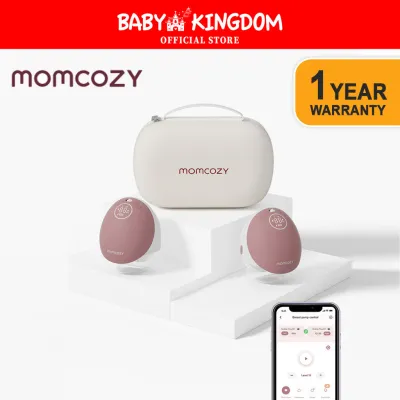
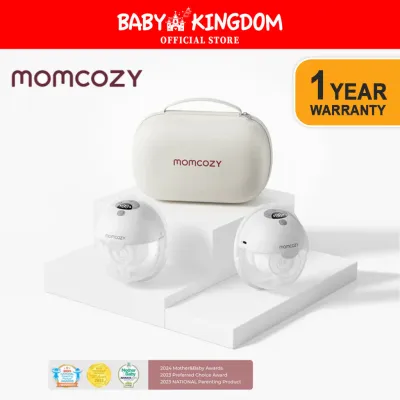
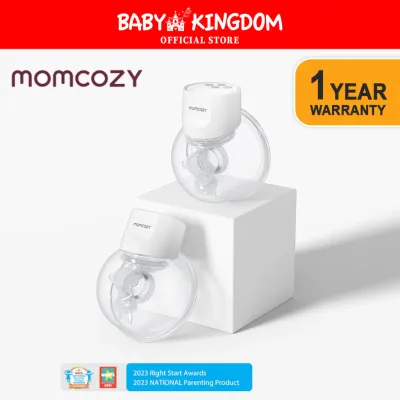
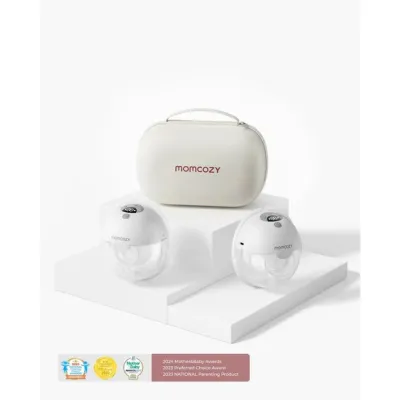
![[Early access on 7.31]Momcozy Wellness 1 Wearable Breast Pump Warm-Massage Hands-Free Pump with Heated Flange&Simulated Massage for Comfortable Breastfeeding&Let-Down App-Controlled 4 Modes 12 Levels 180ml/6oz](https://img.lazcdn.com/g/ff/kf/Sc232a2a3778f42658bf1e3f0d80f37ee9.png_400x400q80.png_.webp)
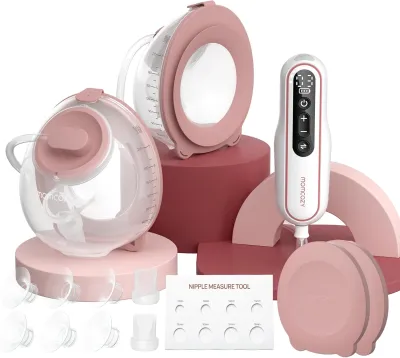
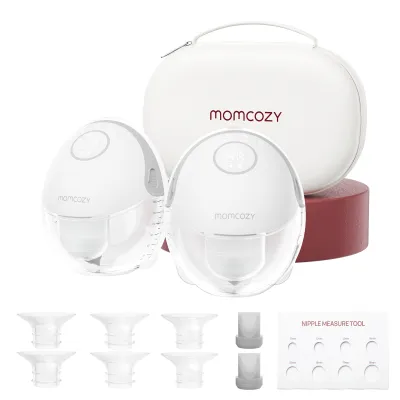
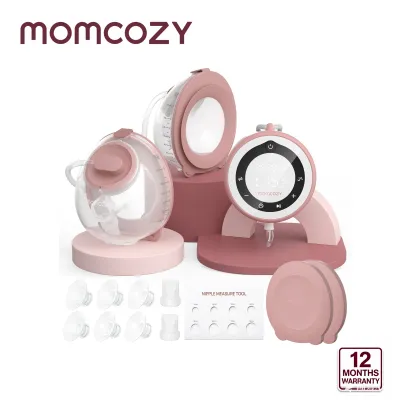
Prices are valid at publication and may change. Please refer to the product page for the latest price.
- Choose a Wearable or Hands-Free Model if: You need to multitask around the house, care for other children, commute on public transport, or pump discreetly at your office desk. These models eliminate external tubes and wires, allowing you to maintain mobility while expressing milk.
- Choose a Compact or Pocket-Sized Model if: Your priority is travel, occasional relief from engorgement, or minimizing the weight of your diaper bag. These units feature small, highly portable motors that can be slipped into a handbag, offering a middle ground between wearable convenience and stationary power.
- Choose a Traditional or Double-Electric Stationary Model if: You are exclusively pumping, prioritizing maximum customizable suction, or conducting dedicated pumping sessions at home. These setups are ideal when mobility during the session is not a priority and you want to maximize milk expression in the shortest time possible.
Ultimately, aligning your pump selection with your daily logistics ensures that you do not view pumping as an inconvenient chore. A mother who spends her day commuting via the MRT will have vastly different requirements than a mother who primarily pumps in a dedicated home nursery.
Comparing Form Factors: Wearable, Portable, and Traditional
Understanding the physical design, weight distribution, and operational limits of each form factor is essential to choosing a pump that feels comfortable and sustainable over many months.

Wearable and Hands-Free Designs
Wearable breast pumps represent a significant shift in how modern mothers manage milk expression. By integrating the motor, collection cup, and breast shield into a single unit that fits inside a standard nursing bra, these pumps allow you to express milk without being anchored to a wall outlet or holding bottles in place. This design is incredibly liberating for mothers who need to prepare meals, tend to a newborn, or reply to emails during their pumping sessions.
However, hands-free designs come with specific physical and practical trade-offs. The weight of the integrated motor sits directly on your chest, which requires a highly supportive, well-fitting nursing bra to hold the pump securely against the breast and maintain a proper seal. If the bra is too loose, the pump may shift, leading to lost suction and potential leaks; if it is too tight, it can compress the breast tissue and restrict milk flow. Additionally, because wearable pumps contain multiple small parts—such as silicone diaphragms, valves, and linkers—the learning curve for assembly, disassembly, and cleaning is often steeper than that of traditional models.
Compact and Travel-Friendly Options
Compact and travel-friendly pumps offer a versatile compromise for mothers who find themselves frequently on the move. These models typically feature a small, lightweight motor unit that can easily fit into a handbag, desk drawer, or diaper bag, connected by thin tubing to lightweight collection cups or bottles. This setup keeps the weight off your chest while still providing excellent portability.
These models are particularly well-suited for short trips, office use, or as a secondary pump kept at your workplace. While they are highly convenient, they do require some minor compromises. Because the motors are scaled down to minimize bulk, their battery life may be shorter than that of larger stationary units, and they may offer slightly fewer advanced customization settings. However, for occasional use or structured sessions away from home, their small footprint makes them an invaluable tool.
Traditional and Stationary Setups
For mothers who require maximum efficiency and robust performance, traditional double-electric stationary pumps remain an irreplaceable option. These systems utilize a larger, more powerful motor unit that sits on a tabletop, connected via tubing to standard bottles and breast shields. Because these units do not have to fit inside a bra or a pocket, they are engineered for heavy-duty use and consistent performance.
The primary advantage of a stationary setup is its ability to deliver highly consistent, strong suction that closely mimics a baby’s natural nursing pattern. They often feature a wider range of suction levels and cycle speeds, allowing you to fine-tune the settings to your exact comfort level. Furthermore, because the collection bottles hang below the breast, they typically have a larger milk capacity than wearable cups, making them ideal for mothers with a high milk yield. Cleaning is also simplified, as traditional setups generally have fewer intricate parts to wash and sterilize after each use.
Matching the Pump to Your Breastfeeding Stage
Your physiological needs and milk production patterns change dramatically from the moment your baby is born until the time you decide to wean. Matching your pump to your current breastfeeding stage ensures optimal comfort and milk expression.
Early Postpartum and Establishing Supply
During the first few weeks postpartum, your body is working hard to establish a robust milk supply. This phase is highly sensitive, and your breast tissue may be tender or prone to engorgement. To stimulate a healthy milk supply without causing tissue trauma, you need a pump that offers gentle stimulation and expression modes, alongside highly customizable suction levels.
If you are using a pump during this early stage, look for models that feature a dedicated massage or “let-down” mode. This fast, shallow suction pattern mimics the baby’s initial nursing behavior to trigger milk flow, which is then followed by a deeper, slower expression mode. Because breast tissue undergoes significant swelling and shape changes in the weeks following birth, it is critical to verify your flange sizing regularly. Using an improperly sized flange can lead to painful friction, blocked ducts, and reduced milk output. Always refer to the manufacturer’s official sizing guides and consider consulting an International Board Certified Lactation Consultant (IBCLC) to ensure a safe, comfortable fit.
Return to Work or Exclusive Pumping
Returning to a professional workplace or committing to an exclusive pumping routine demands high efficiency, reliability, and discretion. When you are pumping multiple times a day on a strict schedule, saving time is paramount. A double-electric pump that allows you to express from both breasts simultaneously is essential, as it can cut your pumping time in half while helping to maintain your milk supply.
In a shared office environment or a quiet home office, the noise level of the pump motor becomes a major consideration. Look for models with quiet motor technology that allows you to pump discreetly during virtual meetings or phone calls. Reliable battery life is equally critical; your pump should easily last through a full workday without requiring constant recharging. Additionally, memory functions that save your preferred suction and speed settings can save valuable minutes during busy workdays, allowing you to start your session with a single touch.
Weaning and Occasional Relief
As your baby transitions to solid foods and your milk supply naturally decreases, or if you are primarily direct latching and only need to pump occasionally, your equipment requirements will simplify. During the weaning phase, the primary goal of pumping is often to relieve physical discomfort and engorgement without overstimulating your breasts and signaling your body to produce more milk.
For occasional relief or infrequent use, investing in a premium, high-end wearable pump is rarely necessary. A simpler, single electric pump or even a high-quality manual pump can be highly effective for taking the edge off engorgement while on the go. These simpler devices are easy to clean, require no battery charging, and can be kept in your bag as a reliable backup. Avoiding prolonged, high-suction pumping sessions during this stage will help your body naturally adjust its supply downward in a safe, comfortable manner.
Key Specifications to Compare Across Models
Before making a purchase, it is important to review the technical and operational specifications of different Momcozy models. Comparing these key features will help you select a pump that aligns with your physical comfort and daily environment.
- Suction Levels and Modes: Evaluate the range of adjustable settings. A good pump should offer multiple levels of suction intensity across both stimulation and expression modes, allowing you to adjust the power as your comfort levels change throughout a single session.
- Battery Life and Charging: Look for models that utilize universal USB-C charging, which makes it easy to power up your device at your office desk, in the car, or via a portable power bank. Verify the estimated battery run time and check whether the specific model can be operated while plugged into a power source.
- Noise Level: Quiet operation is essential for nighttime pumping sessions next to a sleeping baby or for maintaining privacy in a shared workspace. Verify the manufacturer's decibel (dB) claims in the product manual; a noise level of 50 dB or lower is generally considered quiet enough for discreet use.
- Parts and Cleaning: Carefully check the number of components that come into direct contact with breast milk, as these must be thoroughly washed and sterilized after every use. Verify which parts are made of food-grade silicone and whether they are labeled as dishwasher-safe under specific temperature limits.
- Smart Features: Some modern models offer Bluetooth connectivity and companion mobile apps. While app tracking can be incredibly helpful for logging your output, session duration, and historical data, consider whether you prefer a simple, tactile button interface over potential app connectivity troubleshooting.
Evaluating Budget, Accessories, and Local Warranty
When planning your purchase, looking beyond the initial retail price of the pump motor is crucial. Evaluating the total cost of ownership, accessory availability, and local support will prevent unexpected expenses and operational downtime.
- Hidden Costs: Keep in mind that breast pump consumables require regular replacement to maintain optimal suction and hygiene. Silicone valves, diaphragms, and flanges wear out over time due to frequent washing and sterilization. Factor in the ongoing cost and local availability of these replacement parts when calculating your budget.
- Warranty and Support: Electronic pump motors can occasionally experience technical issues. Purchasing your Momcozy pump through authorized local channels in Singapore ensures that you have access to a valid local warranty. This coverage is vital for receiving timely replacements or repairs without the hassle of shipping devices internationally.
- Insurance and Subsidies: While breast pumps are an essential healthcare tool, coverage policies vary widely. If you have corporate health insurance or access to flexible spending accounts through your employer in Singapore, check whether breast pumps and maternity accessories are eligible for reimbursement. Be sure to verify the exact documentation, such as a doctor's prescription or a detailed itemized receipt, required by your provider before making your purchase.
Frequently Asked Questions (FAQ)
Can I use a Momcozy wearable pump while sleeping?
No, you should not use a wearable breast pump while sleeping. Doing so goes against manufacturer safety guidelines and poses several risks. When you lie down or fall asleep, the change in position can cause milk to backflow into the pump motor, potentially damaging the electronic components and voiding your warranty. Furthermore, leaving a pump active while asleep can lead to prolonged suction on your breast tissue, which may cause skin irritation, bruising, or tissue trauma. Always operate your pump while sitting or in a slightly reclined position as specified in your model’s user manual, and turn the device off once your session is complete.
How do I know which flange size I need for my Momcozy pump?
Finding the correct flange size is essential for both comfort and maximum milk expression. To determine your size, use a nipple measuring tool or a ruler to measure the diameter of the base of your nipple (excluding the areola) in millimeters. Do this measurement before a pumping session, and keep in mind that your nipple size can change postpartum as swelling subsides. Once you have your measurement, add 2 to 3 millimeters to find your recommended flange size. If your measurement is 17 mm, for example, a 19 mm or 20 mm flange is typically the best fit. If you experience persistent pain, friction, or low milk yield, consult an IBCLC for a professional fitting.
Are Momcozy parts compatible with other breast pump brands?
Generally, you should avoid mixing critical suction components, such as valves, membranes, and tubing, across different breast pump brands. Each manufacturer designs these parts to work with specific motor pressures and seal requirements; using mismatched parts can compromise suction strength, reduce milk yield, or even damage the motor. While some standard wide-neck baby bottles may physically thread onto certain pump adapters, you must carefully verify the exact seal and thread size to prevent leaks. To ensure safe, hygienic, and efficient operation, always use genuine parts designed specifically for your exact Momcozy model.

Community discussion
Share your experience or ask a question. Comments are reviewed before publication.