
Choosing the right weaning gear is about matching a product’s physical features to your baby’s developmental milestones. As your baby transitions from milk to solid foods, their physical capabilities, motor skills, and sensory preferences change rapidly. Selecting the appropriate Infantino bib or weaning tool requires observing how your baby sits, grasps, chews, and reacts to different textures. By aligning these developmental cues with specific product designs, you can create a supportive, safe, and less stressful feeding environment.
Identify Your Baby's Current Feeding and Developmental Milestones
Before purchasing any weaning accessories, observe your baby’s physical readiness. The first stage of weaning typically begins when your baby can sit upright with minimal support and has good head and neck control. At this point, they may start showing interest in the food on your plate, leaning forward, and opening their mouth when food is offered. Their tongue-thrust reflex, which automatically pushes solid objects out of the mouth, will also begin to diminish, allowing them to swallow smooth purees successfully.
As your baby grows, they will transition from passive swallowing to active self-feeding. You will notice them reaching out to grab the spoon, dipping fingers into bowls, and attempting to bring food to their mouth. This stage is characterized by increased mealtime messiness and often coincides with the onset of teething. Babies at this stage use their hands to explore textures, making a reliable barrier against spills and stains essential for keeping clothing clean.
Products mentioned in this guide

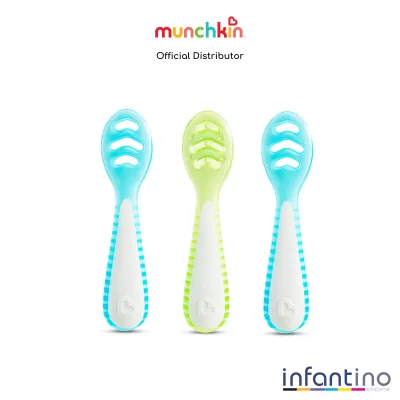
Prices are valid at publication and may change. Please refer to the product page for the latest price.
Eventually, your baby will reach advanced eating milestones that require more sophisticated tools. They will begin to master the pincer grasp, picking up small pieces of finger food between their thumb and index finger. They will also show interest in using child-sized utensils and drinking from open or training cups. At this stage, their coordination improves, resulting in fewer spills and a reduced need for heavy-duty splash protection, allowing you to transition to lighter, more flexible feeding gear.
Match Infantino Bibs to Your Baby's Mess Level and Comfort Needs
Selecting the right bib style depends heavily on your baby’s current feeding stage, drooling habits, and sensory tolerance. For the early stages of weaning and teething, soft fabric or bandana-style bibs are highly effective. These bibs absorb drool and catch minor drips from purees without adding bulk around your baby’s neck. Because early feeding sessions are usually controlled by the caregiver, heavy catch pockets are unnecessary at this stage, and soft fabric helps prevent skin irritation around the neck and chin.
As your baby begins to feed themselves, a bib with a built-in catch pocket becomes an invaluable tool. These pockets stay open, trapping falling crumbs, liquids, and purees before they reach your baby’s lap or the floor. When choosing a catch-pocket bib, check the product packaging to verify that the material is lightweight, flexible, and free from harmful chemicals. It is also important to look for adjustable neck fasteners, such as multi-position snaps, which allow the bib to grow with your baby without chafing.
For high-mess meals, sensory-sensitive babies, or when introducing foods that stain easily, long-sleeve smocks offer the most comprehensive protection. These full-coverage bibs cover your baby’s torso and arms, preventing food from seeping onto sleeves and cuffs. This style is particularly beneficial for babies who dislike the feeling of wet food on their skin, as it keeps their arms dry and clean. In warm climates like Singapore, look for lightweight, breathable fabrics that prevent your baby from overheating during mealtimes.
Regardless of the style you choose, always verify the manufacturer’s age recommendations, weight limits, and material care instructions printed on the packaging before use. Some bibs are designed specifically for older infants who can sit independently, while others are soft enough for newborns. Checking these details ensures that the bib fits securely without posing a choking or suffocation hazard, and that you can clean it effectively according to the manufacturer’s guidelines.
Select Infantino Weaning Tools Based on Developing Motor Skills
As your baby’s fine motor skills and oral coordination develop, the tools they use must adapt to support their independence. Paced feeders and silicone or mesh fruit pouches are excellent for introducing new tastes and textures during the early stages of weaning. These tools allow your baby to safely explore the flavors of fresh fruits or cooked vegetables without the risk of choking on large pieces. When using these feeders, strictly follow the manufacturer’s age guidelines and maintain continuous adult supervision to ensure safety.
When your baby begins learning to scoop food, choosing the right tableware can significantly reduce frustration. Bowls and plates with suction bases stick firmly to flat surfaces, preventing your baby from tipping their food onto the floor. Before purchasing, verify the suction strength and compatibility with your high chair tray or dining table surface, as textured wood or uneven surfaces can compromise the suction grip. Divided plates are also helpful at this stage, as they keep different food groups separate and provide a vertical edge that helps your baby scoop food.
Introducing independent eating also requires utensils designed specifically for small hands. Training spoons and forks with short, textured, and ergonomic handles are easier for babies to grip and maneuver. Look for spoons with shallow bowls that allow your baby to easily clear the food with their lips, and forks with rounded, blunt tines that are gentle on sensitive gums. Transition cups with dual handles and weighted straws can also help your baby learn to tilt and drink from a cup independently.
Before introducing any new weaning tool, inspect all product safety warnings, choking hazard labels, and recommended usage conditions printed on the original packaging. Ensure that all components are intact and free from defects before giving them to your baby. By choosing tools that match your baby’s current physical capabilities, you encourage self-feeding confidence while maintaining a safe environment.
Recognize When to Transition or Upgrade Your Feeding Gear
Weaning is a dynamic process, and the gear that worked perfectly during the first few months may eventually become obsolete or unsuitable. One clear sign that it is time to transition is when your baby consistently bypasses the bib’s catch pocket, either because they are leaning forward more or because they have developed the coordination to bring food directly to their mouth. If your baby frequently pulls their bib off, struggles against the neck fastening, or shows signs of discomfort, it is time to look for a larger size or a different style of protection.
You should also observe how your baby interacts with their tableware. If your baby has developed the arm strength to easily pull suction bowls off the table, the current suction design may no longer be effective. This behavior indicates that your baby is ready for heavier, slip-resistant tableware or that they need to transition to standard plates under closer supervision. Similarly, if your baby is consistently successful with training utensils, they may be ready to transition to standard child-sized metal or hard plastic forks and spoons.
Another critical transition point occurs when your baby outgrows introductory feeders, such as mesh or silicone pouches. If your baby is chewing confidently and swallowing textured foods without difficulty, they no longer need the barrier of a pouch to explore flavors. Continuing to use these feeders past their developmental usefulness can delay the development of mature chewing patterns, so it is important to transition to direct finger foods and family meals as soon as your baby shows consistent readiness.
Finally, routine safety inspections are essential for determining when to replace your feeding gear. Over time, exposure to heat, dishwashing, and constant chewing can degrade silicone, plastic, and fabric materials. Inspect all bibs, spoons, bowls, and feeders regularly for signs of wear, such as tears, cracks, bite marks, or persistent mold that cannot be cleaned. In humid environments like Singapore, mold can easily develop in hidden crevices, so any item showing signs of degradation or stubborn mold should be replaced immediately to protect your baby’s health.
Frequently Asked Questions (FAQ)
How do I clean and maintain silicone bibs and weaning tools?
To keep your silicone feeding gear hygienic and durable, always check the product label for specific cleaning instructions and dishwasher safety ratings. Many silicone bibs, bowls, and spoons are top-rack dishwasher safe, which allows for convenient sanitizing. If you prefer hand-washing, or if the item is not rated for dishwasher use, wash it thoroughly with mild dish soap and warm water, using a soft sponge to avoid scratching the surface. After washing, ensure that all items are allowed to air-dry completely in a well-ventilated area. Paying close attention to crevices, catch pockets, and suction bases is particularly important in humid climates like Singapore, where trapped moisture can quickly lead to mold growth.
Are paced feeders and fruit pouches safe for babies without teeth?
Yes, paced feeders and silicone fruit pouches are designed to be used by babies who do not yet have teeth, but you must rely strictly on the manufacturer’s minimum age and developmental guidelines rather than making assumptions. These tools allow babies to use their gums to mash soft fruits or vegetables through small holes, providing a safe way to experience new flavors. However, continuous adult supervision is absolutely necessary during every use to prevent accidental choking or material failure. Before each feeding session, inspect the feeder thoroughly for any signs of degradation, tears, or weakening of the silicone or mesh, and discard the item immediately if you notice any damage.
Community discussion
Share your experience or ask a question. Comments are reviewed before publication.