
Selecting the right baby wipe is a foundational step in your daily diapering routine, directly impacting your baby’s skin comfort and health. With several Huggies wipes variants available on the market, the choice comes down to matching your baby’s specific skin sensitivity with the formulation and physical characteristics of each product line. By evaluating whether your baby has highly reactive skin, standard skin, or is prone to heat rash in warm climates, you can narrow down the options to the most compatible variant.
To make an informed decision, you must look beyond the front packaging and understand how to verify ingredients, calculate the cost per wipe, and perform safe patch tests. This guide provides a structured framework to compare Huggies Pure, Huggies Sensitive, and Huggies Natural Care variants, helping you select the ideal option for your household’s needs and budget.
Identifying Your Baby's Skin Sensitivity and Daily Needs
Every baby’s skin barrier is unique, and its condition can change based on age, health, and environmental factors. In warm and humid tropical climates, such as Singapore’s, babies are particularly susceptible to skin issues like heat rash, chafing, and diaper dermatitis. Sweat and friction from diapers can compromise the skin barrier, making it highly reactive to external triggers, including the ingredients found in everyday cleansing wipes.
Products mentioned in this guide
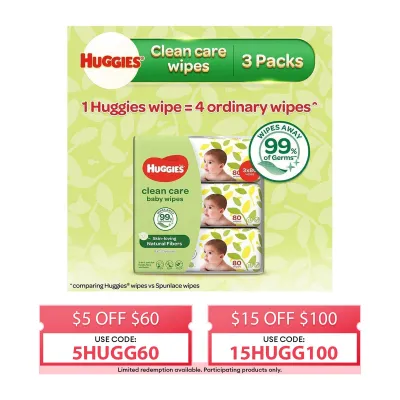
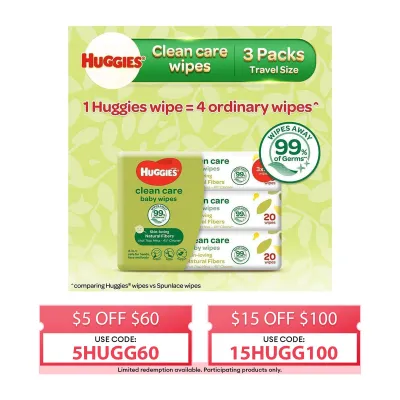
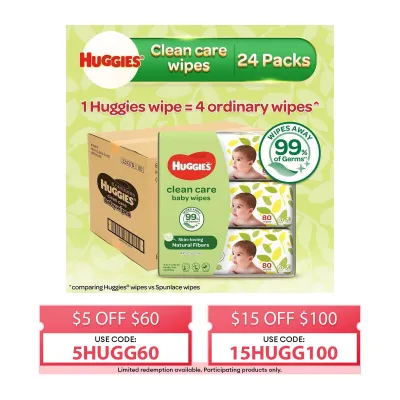
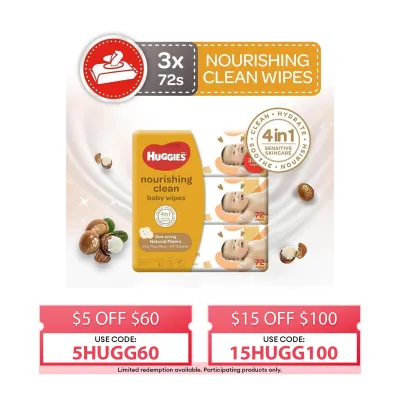
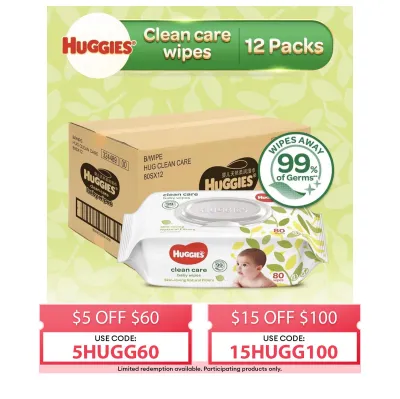
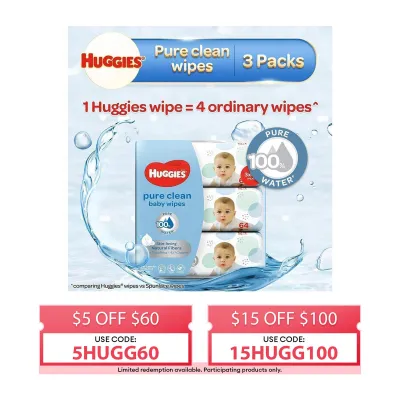
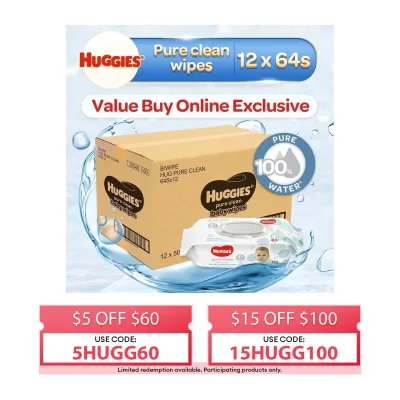
Prices are valid at publication and may change. Please refer to the product page for the latest price.
To determine your baby’s skin sensitivity, observe how their skin reacts after diaper changes or exposure to different fabrics and soaps. Signs of sensitive or reactive skin include localized redness, dry patches, small bumps, or immediate flaring when a fragranced product is applied. If your baby frequently experiences diaper rash, their skin barrier is already compromised, requiring a highly gentle cleansing approach that minimizes friction and chemical exposure.
Your daily cleaning requirements also dictate the type of wipe you need. Routine wet diaper changes may only require a light, water-based wipe to refresh the skin. In contrast, cleaning up heavy, sticky messes requires a wipe with sufficient thickness, tensile strength, and texture to lift waste efficiently without requiring excessive wiping or harsh rubbing. Repeatedly rubbing the skin with a thin or dry wipe can cause micro-tears and worsen irritation.
For newborns and babies with known skin sensitivities, prioritizing fragrance-free, alcohol-free, and highly water-based formulations is a practical necessity. Fragrances and alcohol are common sensitizing agents that can strip natural lipids from the skin, leading to dryness and increased vulnerability to irritants. By establishing your baby’s baseline skin sensitivity and your typical usage scenarios, you can establish clear criteria before evaluating specific product lines.
Comparing Huggies Wipes Variants by Manufacturer Positioning
Huggies categorizes its wipes portfolio to address different skin types and usage preferences, ranging from ultra-minimalist formulations to everyday cleansing options. Understanding how the manufacturer positions each variant allows you to match them systematically to your baby’s skin profile.

Huggies Pure and other water-based variants are positioned as the most minimalist options in the lineup. These wipes are typically formulated with a high percentage of water and a minimal list of secondary ingredients, making them the primary choice for newborns whose skin barriers are still developing. When selecting these variants, check the packaging label to verify the exact water percentage and ensure that the ingredient list remains as short as possible to minimize the risk of contact dermatitis.
Huggies Sensitive variants are specifically formulated for babies with known reactive skin or those prone to frequent diaper rash. The manufacturer typically designs these wipes to be hypoallergenic and free from common irritants like added fragrances, parabens, and alcohol. The formulation often includes mild skin-conditioning agents to help soothe the skin barrier during cleansing. Always verify the packaging claims to confirm that the specific pack in hand is labeled as fragrance-free and dermatologically tested.
Huggies Natural Care and other everyday variants are positioned for general use on babies with normal, non-reactive skin. These wipes often incorporate botanical extracts, such as aloe vera or chamomile, and may feature a light fragrance or remain fragrance-free depending on the specific sub-variant. They are designed to offer reliable, everyday cleaning for older babies who have a more resilient skin barrier and do not show signs of irritation from standard formulations.
To help you compare these options at a glance, the following table maps the typical positioning, key label claims to verify, and physical characteristics of each primary variant:
| Variant | Intended Skin Type | Key Label Claims to Verify | Texture and Thickness |
|---|---|---|---|
| Huggies Pure | Newborn & Highly Sensitive | Fragrance-Free, Alcohol-Free, High Water Content | Soft, smooth, moderate thickness |
| Huggies Sensitive | Sensitive & Reactive | Hypoallergenic, Fragrance-Free, Dermatologically Tested | Thick, embossed texture for gentle lifting |
| Huggies Natural Care | Normal to Mildly Sensitive | Aloe & Vitamin E, Fragrance-Free or Lightly Scented | Standard thickness, soft fibers |
| Huggies Everyday / Clean Care | Normal | Reliable Cleansing, Lightly Scented or Fragrance-Free | Standard thickness, durable weave |
To guide your final selection, you can apply this conditional decision framework based on your baby’s current skin condition:
- Choose Huggies Pure if your baby is a newborn, has extremely delicate skin, or if you prefer a wipe with the absolute minimum number of chemical ingredients.
- Choose Huggies Sensitive if your baby has a history of eczema, frequent diaper rash, or reactive skin, and you require a thicker, fragrance-free wipe that minimizes friction.
- Choose Huggies Natural Care if your baby has normal skin and you want a balanced, everyday wipe that incorporates soothing ingredients like aloe vera.
- Choose Huggies Everyday / Clean Care if your baby has resilient skin and you prioritize a durable, cost-effective wipe for general cleanup tasks.
Beyond skin compatibility, evaluating the financial value of different packaging configurations is essential for long-term household budgeting. Because wipes are sold in single packs, multi-packs, and bulk refill boxes, comparing the upfront retail price can be misleading. To find the true value, calculate the price per individual wipe using this simple formula:
Price per Wipe = Total Pack Price (S$) / Total Number of Wipes in the Pack
For example, if a single pack of 80 wipes costs S$3.50, the cost is approximately S$0.044 per wipe. If a bulk box of 4 packs (80 wipes each, totaling 320 wipes) costs S$12.00, the cost drops to S$0.038 per wipe. Tracking this metric across local supermarkets and online marketplaces allows you to identify genuine savings without compromising on the specific variant your baby’s skin requires.
Reading the Label: Key Ingredients and Claims to Verify
Because product formulations can change over time without prominent warnings on the front cover, parents must learn to read the ingredient list on the physical packaging. Relying solely on marketing titles can sometimes lead to purchasing a product that contains a newly introduced preservative or fragrance compound to which your baby is sensitive.
When reviewing the ingredient list on a pack of Huggies wipes, look specifically for potential irritants that are best avoided for sensitive skin. Avoid products containing added synthetic fragrances (often listed simply as “Parfum” or “Fragrance”), as these are primary triggers for allergic contact dermatitis. Additionally, check for specific preservatives such as parabens, phenoxyethanol, or methylisothiazolinone (MIT), which some parents prefer to avoid due to potential skin sensitivity. Ensure the label explicitly states “alcohol-free,” referring to the absence of drying alcohols like isopropyl alcohol or ethanol.
It is also important to understand what standard marketing claims actually mean and how to verify them. A claim of “hypoallergenic” indicates that the product has been formulated to minimize the likelihood of causing an allergic reaction, but it does not guarantee absolute safety for every individual baby. “Dermatologically tested” means the product was tested on human skin under the supervision of a dermatologist, but the specific testing protocols, sample sizes, and results are determined by the manufacturer. You can often verify the details of these tests by visiting the manufacturer’s official website or contacting their customer service department directly.
Finally, always inspect the physical packaging before purchasing or using a new pack of wipes. Check for a clearly printed batch code and expiration date, which are typically stamped on the back or bottom of the plastic wrap. Ensure the resealable plastic lid or adhesive sticker is completely intact and sealed tightly; a compromised seal can allow bacteria or mold to enter the package, especially in warm, humid environments, rendering the wipes unsafe for use on delicate skin.
Patch Testing and Monitoring for Skin Reactions
Even when a wipe variant is labeled as hypoallergenic or designed for sensitive skin, your baby may still experience an individual reaction to one of its components. To prevent widespread skin irritation, establish a safe protocol for introducing any new wipes variant into your diapering routine.
Before using a new variant across the entire diaper area, conduct a simple patch test on a small, discreet area of your baby’s skin. Select an area such as the inner forearm or the upper thigh, where the skin is clean and dry. Gently wipe this small patch with the new wipe and allow the liquid to air dry naturally. Do not wash the area immediately; let it remain exposed to the formulation as it would during a normal diaper change.
Monitor the test area closely over the next 24 to 48 hours for any observable signs of skin irritation. Look for localized redness, swelling, tiny raised bumps, dry or flaky patches, or signs of discomfort such as your baby scratching the area. If the skin remains clear and shows no signs of reaction after 48 hours, you can proceed to use the wipes for routine diaper changes.
If you observe any signs of irritation, redness, or distress during or after the patch test, discontinue use of that specific variant immediately. Wash the affected area gently with plain, lukewarm water and pat it dry with a clean, soft towel. Do not apply medicated creams or ointments without professional guidance. If the reaction persists, spreads, or causes significant discomfort to your baby, consult a pediatrician or a qualified healthcare professional for an accurate assessment and personalized advice.
Frequently Asked Questions (FAQ)
Can I use Huggies diaper wipes on my baby's face and hands?
You should always check the specific manufacturer guidelines and packaging instructions on your pack of Huggies wipes before using them on your baby’s face or hands. Diaper wipes are formulated to cleanse the diaper area and balance the skin’s pH in that specific region, which may differ from the delicate skin around the mouth and eyes. While some variants, like Huggies Pure, are formulated with minimal ingredients and may be labeled as suitable for multi-purpose use, other variants containing specific cleansing agents or fragrances can cause irritation if they come into contact with the eyes or are accidentally ingested. If you need to clean your baby’s face and hands, look for variants that explicitly state they are safe for facial use on the packaging, or use a clean washcloth dampened with plain water.
How should I store Huggies wipes to prevent them from drying out?
To maintain the moisture, integrity, and safety of your Huggies wipes, store them in a cool, dry place away from direct sunlight and extreme heat sources. In tropical climates with high ambient temperatures, storing wipes near windows, inside hot vehicles, or next to heating appliances can cause the liquid solution to evaporate quickly and may degrade the preservatives, increasing the risk of bacterial growth. Always ensure that the plastic flip-top lid or the adhesive sealing sticker is pressed down firmly and sealed completely after pulling out each wipe. If you purchase bulk refill packs, keep the unused packs sealed in their original outer packaging until you are ready to transfer them to a dedicated, airtight wipes dispenser box.
Community discussion
Share your experience or ask a question. Comments are reviewed before publication.