
Selecting the right weaning utensil is a critical step in your baby’s feeding journey, marking a major transition from a purely liquid diet to a world of diverse textures and flavors. While chronological age is a common benchmark, matching a spoon to your baby’s physical development and motor skills is the most effective way to support their growing independence. Beaba offers a structured range of spoons designed to align with specific developmental stages, ensuring that each tool matches your child’s current abilities.
To find the right model, you must assess whether your baby is still learning to swallow smooth purees from a parent’s hand, beginning to grasp objects with their whole palm, or attempting to navigate the complex wrist rotation required for self-feeding. By choosing a spoon with the appropriate handle length, grip thickness, and bowl depth, you can make mealtimes safer, less messy, and highly encouraging for your little one.
How to Match a Beaba Spoon to Your Baby's Development
The weaning journey is a progressive transition that shifts from passive, parent-led feeding to active, independent eating. In the initial phase, your baby relies entirely on you to deliver food safely to their mouth. Over several months, this dynamic evolves as your baby develops the curiosity and motor control required to grab the utensil, scoop up food, and guide it to their mouth independently.
Products mentioned in this guide
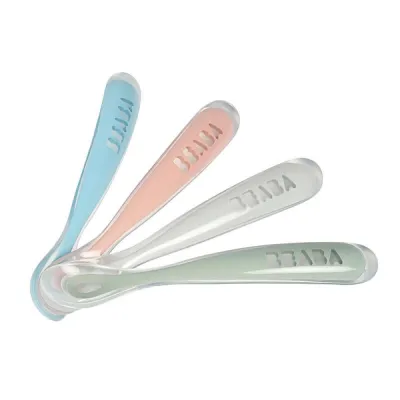
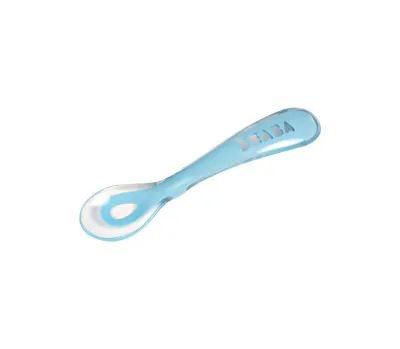
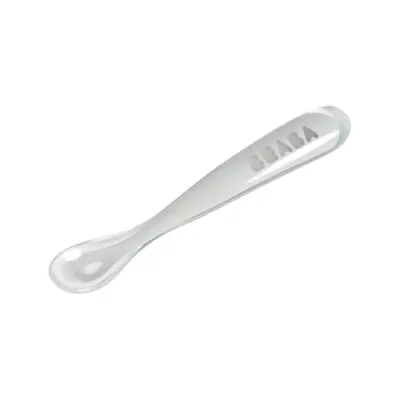
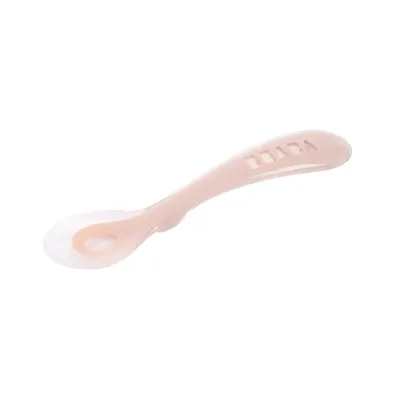
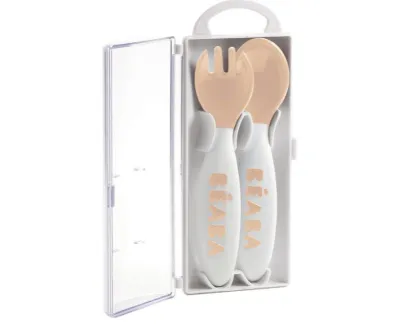
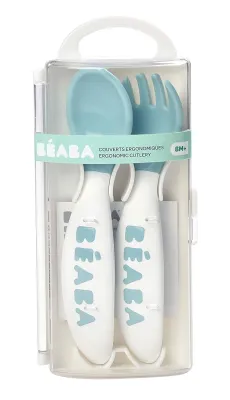
Prices are valid at publication and may change. Please refer to the product page for the latest price.
This physical progression relies heavily on the development of specific motor skills. At the start of weaning, a young baby lacks the coordination to hold a spoon and instead focuses on mastering the swallow reflex for solid foods. As they grow, they develop a palmar grasp, which allows them to clutch objects tightly using their entire fist. Much later, they refine this control into a pincer grasp, using their thumb and index finger, and begin to master the complex wrist rotation needed to keep a spoon level.
Spoon anatomy plays a direct role in supporting these motor milestones. The length of the handle dictates who is in control of the feeding process: long handles are built for an adult’s hand to navigate deep baby food jars comfortably, while short, bulbous handles are designed to fit snugly inside a baby’s small palm. Similarly, the depth and material of the spoon bowl affect how easily food is cleared; shallow, flexible bowls are ideal for babies who are still learning to use their upper lip to scrape food, whereas deeper bowls accommodate larger, textured bites for toddlers.
Because every baby develops at their own unique pace, chronological age guidelines should only serve as a starting point. It is essential to prioritize your child’s physical readiness and always verify the manufacturer’s recommended age, weight, and stage guidelines printed on the product packaging before introducing a new spoon. Observing your baby’s daily behavior will provide the best clues for when to transition to a new utensil.
Key physical cues can help you determine when your baby is ready to move to the next stage of spoon feeding. If your baby is consistently reaching for your spoon during meals, successfully bringing toys and other objects directly to their mouth, or showing visible frustration when they are not allowed to hold a utensil, they are likely ready to transition from parent-led feeding to a training spoon designed for self-feeding.
Beaba Spoon Models by Weaning Stage
Early Weaning (First Purees): First Stage Spoons
During the initial phase of weaning, which typically begins around four to six months depending on your pediatrician’s advice and manufacturer labels, your baby’s oral motor skills are highly basic. At this stage, they are transitioning from the sucking motion used for breast or bottle feeding to swallowing smooth purees. Their mouths are highly sensitive, and their gums are often tender from teething.

Beaba’s First Stage spoons are engineered specifically to support this initial, parent-led phase. These spoons feature long, slender handles that allow you to maintain a comfortable, steady grip while feeding your baby. The extended length is highly practical, enabling you to reach easily into the bottom of deep baby food jars or food maker containers without getting puree on your hands.
Crucially, these spoons feature shallow, ultra-soft silicone bowls. Because young babies do not yet have the coordination to clear food from a deep spoon using their upper lip, a flat, shallow bowl allows them to easily slide the puree off using basic licking and sucking motions. The soft silicone construction ensures that even if your baby bites down suddenly, their sensitive, toothless gums and emerging baby teeth are protected from hard impacts.
However, these first-stage spoons have clear limitations. The long, thin handle creates an unbalanced center of gravity for a baby’s small hands, making it highly difficult for them to hold or steer. If a baby attempts to use this spoon independently, the excessive length also presents an accidental throat-poking hazard. For these reasons, first-stage models are strictly intended for parent-led feeding and should not be left in a baby’s hands.
Learning to Self-Feed: Second Stage Training Spoons
As babies approach the middle of their first year, usually between six and twelve months, they often display a strong desire for independence. They will begin grabbing at your utensil, dipping their fingers into their food, and attempting to mimic your eating motions. This shift signals that they are ready to transition to self-feeding with a training spoon.
Beaba’s Second Stage training spoons are designed to accommodate a baby’s natural full-hand palmar grasp. The handles on these models are significantly shorter, thicker, and rounded, making them easy for a baby’s small fist to clutch securely. By reducing the physical distance between the baby’s hand and the food bowl, this ergonomic design drastically improves hand-to-mouth coordination.
To further assist early self-feeders, these spoons often incorporate non-slip textures or contoured ridges along the handle. This prevents the spoon from slipping out of greasy, puree-covered hands during enthusiastic eating sessions. Additionally, the short handle length acts as an important safety feature, naturally limiting how far your baby can push the spoon into their mouth, which helps minimize the risk of gagging.
While second-stage spoons are excellent for building confidence, they do have limitations. The bowl of a training spoon is intentionally small and shallow to prevent your baby from overloading their mouth with too much food at once. As your child’s appetite increases and their motor skills sharpen, this small capacity may become less efficient, requiring more frequent scooping and potentially causing frustration during meals.
Independent Eating: Toddler and 360-Degree Spoons
Once your child reaches toddlerhood, their eating habits and food textures change significantly. They are no longer eating smooth purees; instead, they are consuming textured stews, rice, small pasta shapes, and soft grains. This stage requires a more advanced utensil that can handle heavier, chunkier foods while accommodating their developing coordination.
For toddlers who are still mastering wrist rotation, specialized options like the Beaba 360-degree spoon offer an innovative solution. This design features a rotating handle that automatically keeps the spoon bowl horizontal, regardless of how your toddler twists or turns their hand. This self-leveling mechanism prevents food from spilling before it reaches the mouth, helping to reduce mealtime mess and build your child’s self-feeding confidence.
As your child’s wrist control matures and they learn to keep a utensil level on their own, they can transition to standard toddler spoons. These models feature longer, stiffer handles and slightly deeper bowls. The deeper bowl is essential for holding larger bites and more complex food textures that do not easily cling to a flat surface, allowing your toddler to eat a wider variety of family meals.
Even when your toddler has transitioned to advanced self-feeding spoons, active adult supervision remains absolutely mandatory. Self-feeding is still a developing skill, and children can easily become distracted or attempt to move around while holding a utensil. Always monitor your child’s behavior closely during meals to ensure they use the spoon safely and remain seated.
Quick Comparison: Beaba Spoon Features at a Glance
To help you identify the right model for your baby’s current developmental stage, the table below summarizes the key qualitative design differences across the Beaba spoon range. While this comparison highlights general design principles, you should always refer to the specific product packaging for exact material listings, age recommendations, and safety instructions.
| Spoon Type/Stage | Best For (Developmental Milestone) | Handle Design | Bowl Characteristics | Key Benefit |
|---|---|---|---|---|
| First Stage | Parent-led feeding; initial smooth purees | Long, slender, and ergonomic for parents | Shallow, flat, and made of ultra-soft silicone | Protects sensitive gums; allows easy food clearing with lips |
| Second Stage | Early self-feeding; development of palmar grasp | Short, thick, and textured for baby's fist | Medium depth; soft silicone construction | Improves hand-to-mouth coordination; reduces gagging risk |
| Toddler / 360-Degree | Independent eating; learning wrist rotation | Rotating or slightly curved for toddler grip | Deeper, structured bowl for thicker foods | Minimizes spills; accommodates complex textures and larger bites |
Safety, Care, and What to Check Before Buying
Silicone is a highly durable, food-safe material, but it is not indestructible. Before every single feeding session, you must thoroughly inspect the spoon for any signs of wear. Gently pull the silicone tip in all directions and check closely for tiny tears, bite marks, or structural cracks, especially if your baby has started teething. If you detect any damage or compromise to the material, discard the spoon immediately to prevent a potential choking hazard.
Proper cleaning and hygiene are essential, particularly in Singapore’s warm, humid climate, which can promote mold growth on damp baby accessories. You must verify dishwasher, microwave, and sterilizer compatibility directly on the product packaging before cleaning. Different manufacturing batches and materials—such as spoons that feature a rigid plastic or metal core encased in silicone—have varying heat tolerances. Subjecting incompatible models to high-heat steam, boiling water, or UV sterilization can cause warping, cracking, or material degradation.
To ensure you are purchasing authentic, high-quality products that comply with local safety standards, always buy Beaba spoons from authorized baby specialty stores, official brand websites, or reputable local retailers in Singapore. Purchasing from unverified third-party sellers on online marketplaces carries a risk of acquiring counterfeit items that may not use food-grade silicone or meet strict safety regulations.
Finally, remember that no feeding utensil can replace the safety provided by active adult supervision. Never leave your baby or toddler unattended while they are eating or holding a spoon. Ensuring your child remains seated and focused on their food during mealtime is the most effective way to prevent choking and ensure a safe, positive weaning experience.
Frequently Asked Questions (FAQ)
Can I use a second-stage spoon for early purees?
While it is physically possible to use a second-stage spoon for early purees, it is not ideal. The short handle makes it difficult for parents to reach comfortably into deep food jars, and the bowl shape may not be optimized for a young baby’s lip-clearing mechanism. Dedicated first-stage spoons are much better suited for parent-led feeding.
How do I know when my baby is ready to switch spoon stages?
Your baby will show clear behavioral cues when they are ready to transition. Look for signs such as consistently reaching for your spoon during meals, successfully bringing toys directly to their mouth, sitting upright with minimal support, or showing visible frustration when they are not allowed to hold a utensil themselves.
Are Beaba spoons safe for sterilization?
Sterilization safety depends entirely on the specific Beaba spoon model and its materials. You must check the product packaging for sterilization guidelines, as spoons with internal plastic or metal cores have different heat tolerances than solid silicone models when subjected to boiling, steam, or UV sterilization.
Community discussion
Share your experience or ask a question. Comments are reviewed before publication.